An Extraordinary Trail Has Limits
The number of people entering the Inca Trail network is regulated. These limits help control the pressure that tourism exerts on the paths, services, and surrounding environment.
The established daily capacity includes:
| Inca Trail Network Routes | Daily Capacity |
|---|
| Routes 01 to 04 | 500 users |
| Route 05 (via the km 104 checkpoint) | 250 users |
| Route 06 | 100 users |
These figures apply to all network users, including tourists, guides, and support staff; they do not represent exclusive slots for travelers alone. The amendment to Article 14, published in November 2025, expressly incorporated the capacity for Route 06. (Peruvian Government Platform)
For those wishing to visit, this means planning must begin with permit availability. Respecting quotas and authorized accesses is part of caring for the destination.
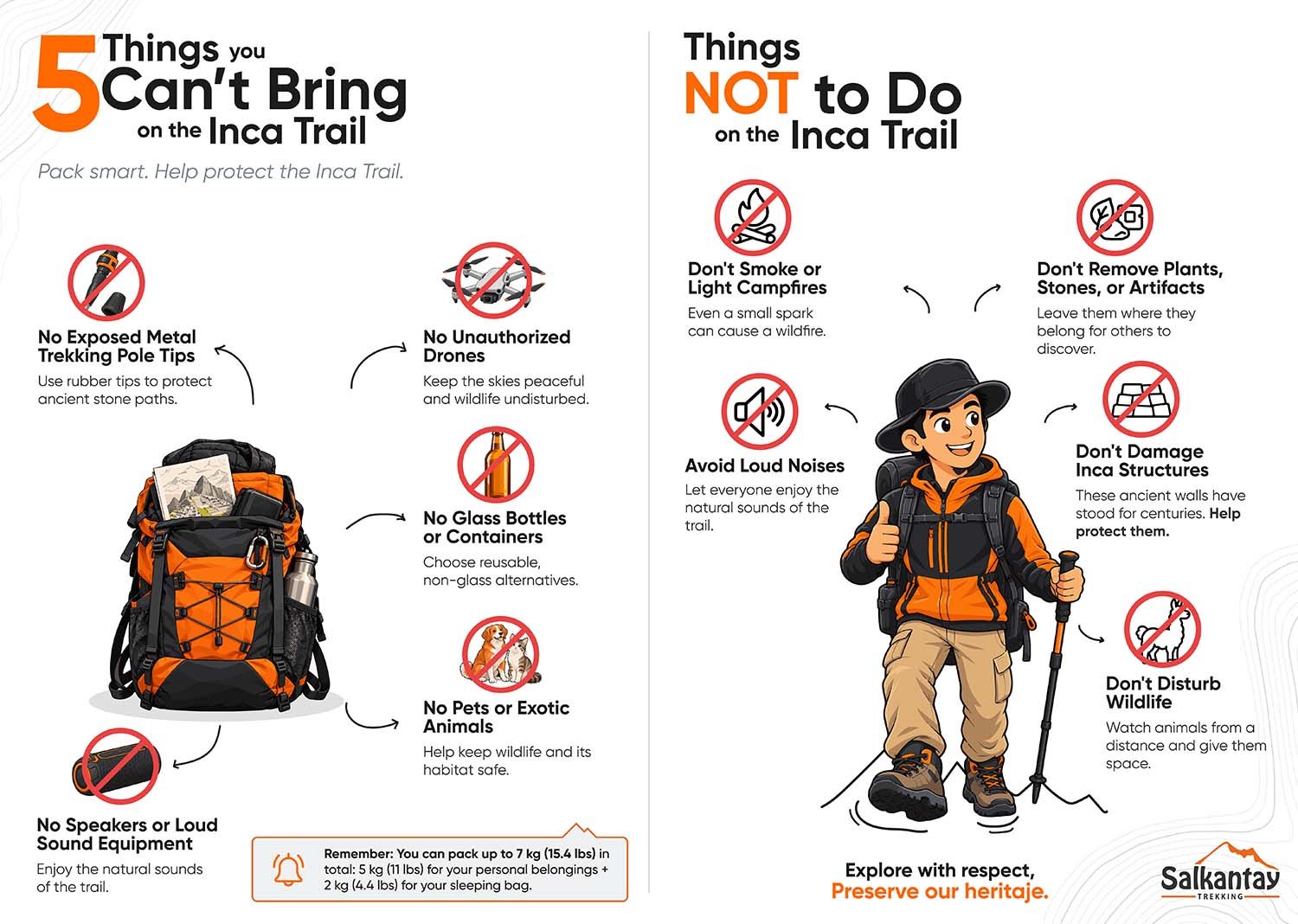
Your part: coordinate your booking in advance, provide your details accurately, and follow the authorized itinerary. Entry limits also protect the experience you have come to live.
February: A Necessary Pause for Conservation
During February, the Inca Trail network closes to tourism to allow the natural recovery of ecosystems and to carry out conservation and maintenance work.
This pause facilitates monitoring flora and fauna and allows specialists to work on trails, campsites, and infrastructure. Maintenance tasks include clearing drainage systems, reinforcing stairways, and preserving stone walls and pathways. (Peruvian Government Platform)
Respecting this period is also a way to travel responsibly. When planning, remember that the closure of the Inca Trail network is a specific measure and should not be interpreted as the automatic closure of the entire Machu Picchu destination.
As an operator, our role is to help you organize your trip while accounting for access periods and official regulations communicated by the authorities.
All Waste Must Leave the Trail
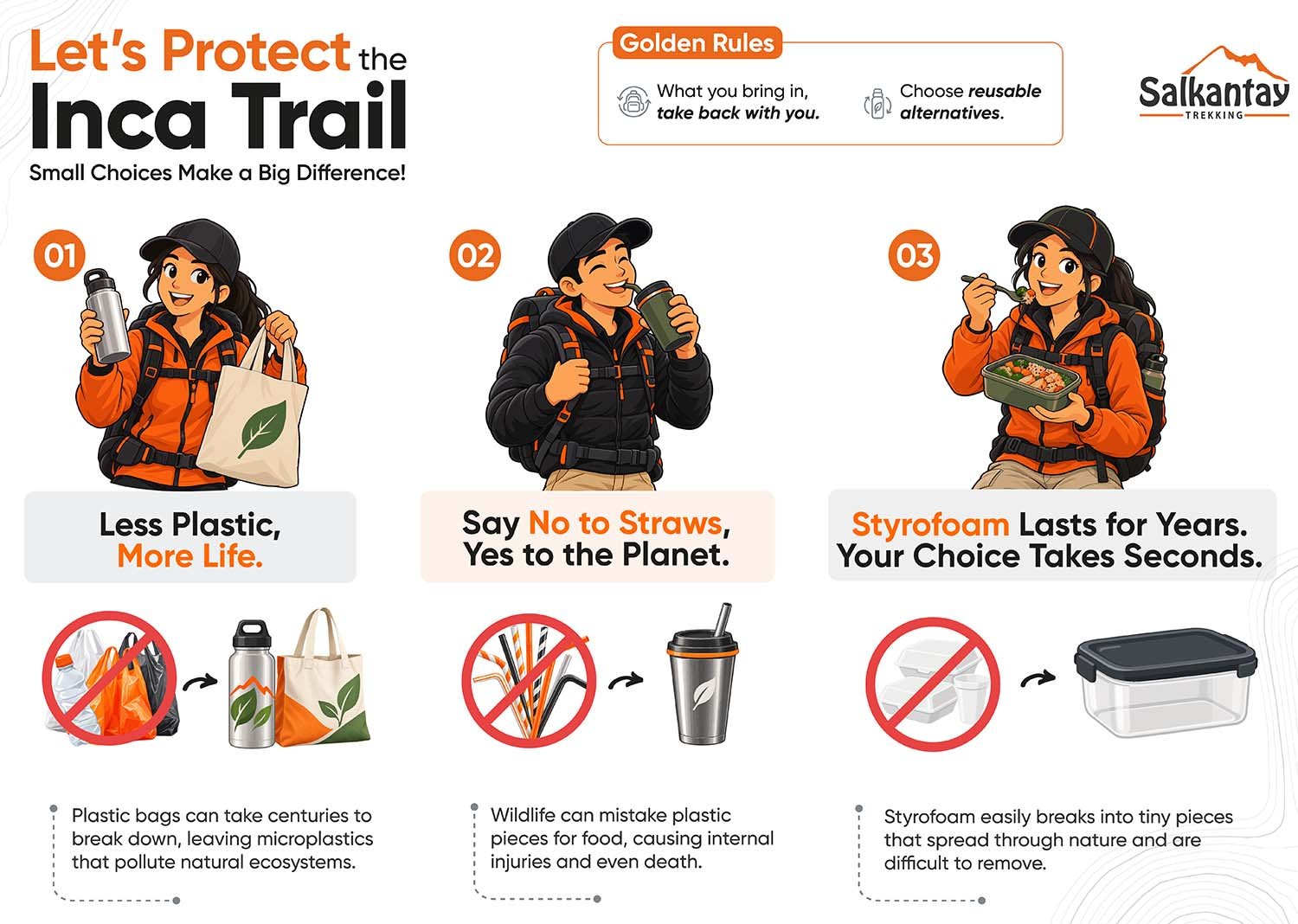
A small wrapper, a napkin, or a fruit peel is still waste. Leaving them among plants or behind a rock alters the environment and shifts a responsibility onto others that is ours to shoulder.
Regulations require agencies to handle the sorting, transport, and final disposal of waste outside the Machu Picchu Historical Sanctuary. They also mandate training for guides, chefs, and porters in best environmental practices.
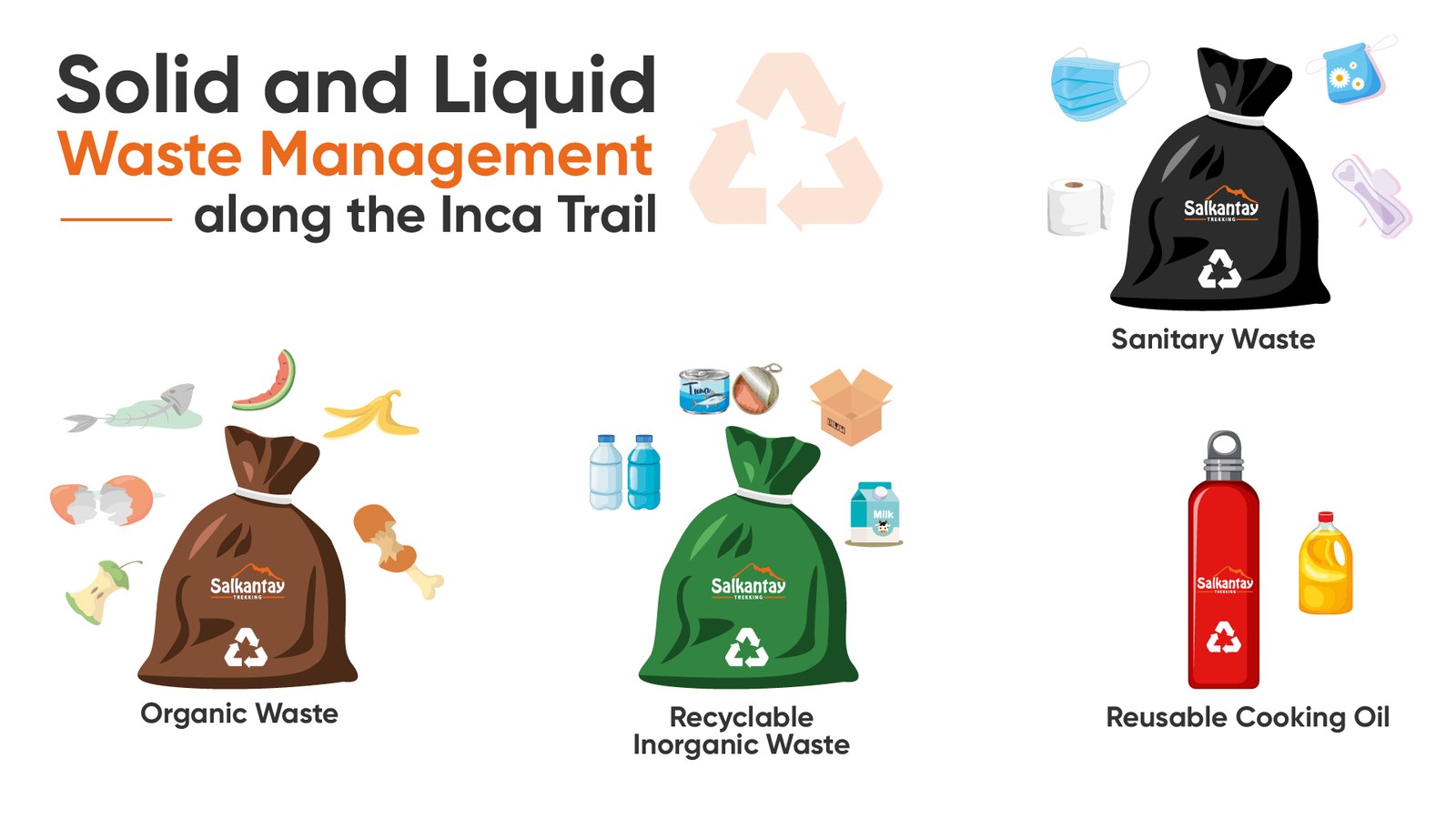
Article 28 of the referenced regulation establishes the following classification:
| Bag Color | Waste Indicated in the Regulation |
|---|
| Red | Metals, paper, cardboard, and multi-layer packaging, among others |
| White | Bags, bottles, and other plastic containers |
| Black | Toilet paper and biodegradable collection bags |
| Green | Organic matter |