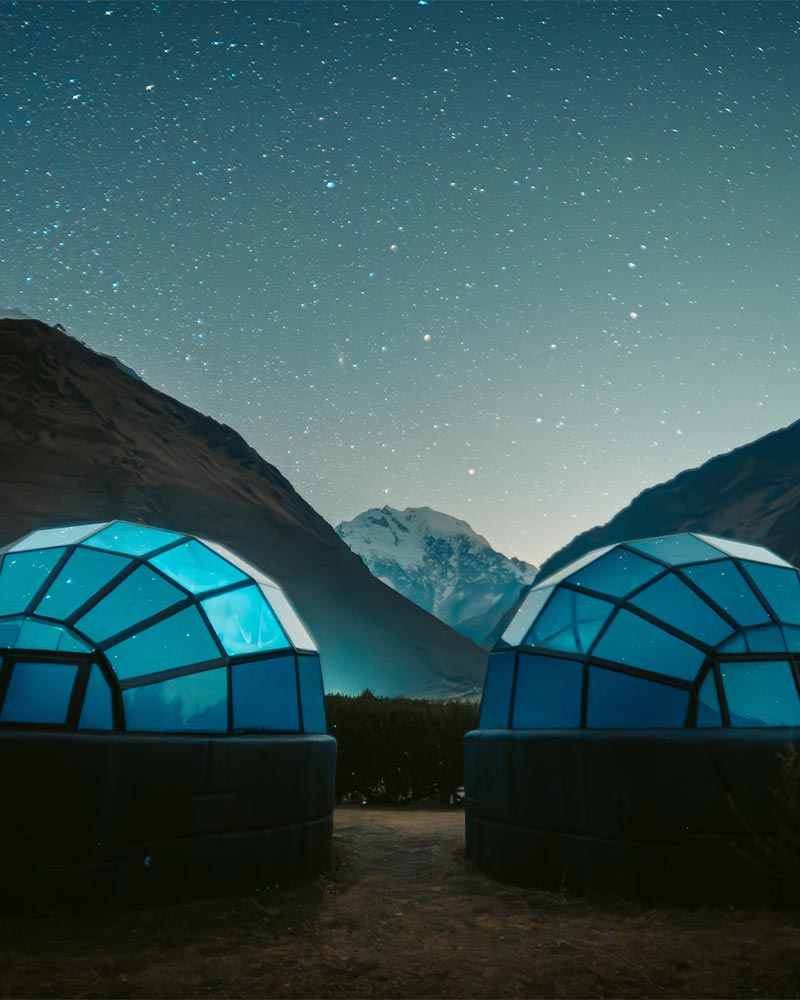
Machu Picchu Treks Highlights
Here are the top highlights that you'll enjoy on the excursion:
- Visit historical sites and learn all about their past.
- Be amazed by the beautiful landscapes of the Andean mountains.
- Pass through small communities and see how people live in the rural areas of Peru.
- Enjoy the flora and fauna of the zone, including llamas, alpacas, and sheep, as well as some tropical plants.
- Make new friends on your hike from across the globe.
- Sample various typical dishes from Peru as your chef prepares tasty food high in the mountains.
- End every trek at one of the New Seven Wonders of the World: Machu Picchu.
Salkantay Trek
This is the second most popular trek to Machu Picchu, and it’s no surprise why. This trail is perfect for adventurers and offers a very diverse landscape. You’ll pass through high-altitude and cold climates to see Humantay Lake and Salkantay Mountain before heading down through the cloud forest to the warm, tropical jungle.
On your journey, you’ll see some amazing flora and fauna, including many different animals, coffee plantations, and exotic flowers and fruits. You’ll also make your way through small communities where you get the chance to enjoy a break and experience rural Andean life.
You need to acclimate for a few days in Cusco beforehand, as you’ll reach 4,600 m (15,091 ft). Trekking can be tough at this altitude, so you need to make sure you’re well-prepared. It doesn’t matter your age or fitness level as long as you know what to expect. This hike is of a moderate to challenging level. You can opt for options lasting from 3 to 7 days.
Choquequirao Trek
Treks that visit Choquequirao on the way to Machu Picchu range from 4 to 8 days, and it’s a relatively challenging route. This is a quiet trail, as it’s long and the site can only be visited on foot, unlike Machu Picchu where a train is an option.
It’s a fascinating trek to opt for as you get to see two grand Inca sites in one trip. Choquequirao is still being uncovered, and it’s just as amazing as Machu Picchu. Due to far fewer crowds, you can enjoy Choquequirao in peace and walk around the site, looking at every part in detail.
Be prepared for some fantastic views and to learn a lot along the way about the Incas’ history and the surrounding wildlife. Choquequirao was a very important site as it was one of the last refuges of the Incas before the Spanish invasion.
Lares Trek
If you’re looking for a quiet trek that gets you up close and personal with the Andean people living in rural areas, this is a great choice. You’ll pass through several remote communities dedicated to working the land and raising livestock. They keep their traditions alive with their beautiful textiles.
This route is moderately challenging and offers some stunning scenery, including lagoons, rivers, waterfalls, and breathtaking views of the snowy Andean mountain range. It’s perfect for soaking up the fresh air and feeling relaxed.
The typical trek lasts 4 days, and you’ll camp along the way. The temperature can get very chilly, so make sure you pack accordingly.
Huchuy Qosqo Trek
Another trek off the beaten path, where you can enjoy some peace and take in your surroundings. You’ll meander through hills and small communities along the way, while also staying with local families, meaning you get to immerse yourself in their culture.
Huchuy Qosqo is an Inca archaeological site that’s visited by very few tourists, so is perfect if you like to stay away from the crowds. It was an administrative and military center and has some intriguing structures to observe. It also offers a stunning view of the Sacred Valley of the Incas.
This is one of the less strenuous treks to Machu Picchu, as it only takes 3 days, and the terrain and altitude aren’t as tough as some of the others
Ancasocha Trek
This is one of the least-known routes to get to Machu Picchu, meaning it’s very quiet. However, National Geographic named it one of the 20 dream walks to take around the world.
You’ll see many amazing things on this trip — from guided tours of other Inca archaeological sites and locals working the land in extensive fields, to small traditional towns. You’ll also spot plenty of llamas and alpacas. Best of all, you’ll be constantly surrounded by the stunning Andean mountains.
As with most treks in this part of the world, you’ll be heading to high altitude again. You should spend 2–3 days in Cusco beforehand and take precautions for the elevation. You can opt for a 4- or 5-day trip.
Inca Jungle Trek
This trail is the perfect choice for adventure and thrill seekers. It combines both walking and cycling, making for an exciting route. You’ll come across some small archaeological sites before you finally reach Machu Picchu.
Along the route, you’ll see some beautiful tropical plants and fruits, as well as perhaps spot some of the unique Andean jungle wildlife, including the ‘Cock of the Rock,’ Peru’s national bird.
The Inca Jungle route is moderate to challenging, so as long as you are well-prepared, you'll be able to complete the trek. Be aware that you’ll need plenty of mosquito repellent, as they are prevalent in this part of Cusco.
Inca Quarry Trek
This is another route traveled by very few visitors and is perfect for history lovers. You’ll learn a lot about the Incas’ past as well as how life in the Andes works. It’s an excellent alternative route to Machu Picchu.
You’ll visit some of the beaten path archaeological sites that not many get to see. The quarry is also on your route, where the stones to build the Ollantaytambo complex were taken from. You’ll observe some stones that were cut by the Incas there.
This is a moderate option, making it a good choice for most hikers and for those not looking for anything too challenging. It’s a 4-day trek.