
Machu Picchu is Peru’s most iconic destination and one of the most visited wonders in the world. In this complete guide, you’ll find everything you need to plan your trip: where it is, the best time to visit, how to get there, which tickets to choose, and what to expect during your experience.
Beyond its impressive ruins, this historic sanctuary in Cusco offers a unique combination of culture and cloud forest landscapes. Here, you’ll discover key tips and practical recommendations to make the most of your visit.
Table of contents
- What is Machu Picchu and why is it one of the most important destinations in the world?
- Where is Machu Picchu?
- History of the Historic Sanctuary of Machu Picchu
- Machu Picchu elevation and how altitude affects your trip
- Best time of year to visit Machu Picchu
- Weather in Machu Picchu
- How to Visit Machu Picchu Step by Step (Practical Guide)
- Machu Picchu Tickets: Types and How to Buy Them
- Best Places to Visit in Machu Picchu
- Important Rules Inside Machu Picchu
- How to Get to Machu Picchu
- Trekking
- Machu Picchu Packages: Is It Worth Booking with an Agency?
- Where to Stay and Eat in Machu Picchu
- Things to Do in Aguas Calientes
- Approximate Costs to Travel to Machu Picchu
- What to Pack for Machu Picchu: Essential Checklist
- Key Tips to Visit Machu Picchu Without Mistakes
- Frequently Asked Questions
- Conclusion
What is Machu Picchu and why is it one of the most important destinations in the world?
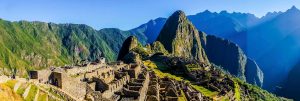
Machu Picchu is a 15th-century Inca citadel recognized for its extraordinary architecture, its integration with the natural environment, and its high level of preservation, making it one of the most impressive archaeological sites in the world.
Declared a UNESCO World Heritage Site and one of the New Seven Wonders of the World, it stands out not only for its historical value but also for the unique experience it offers visitors: walking through its terraces, temples, and pathways surrounded by an exceptional Andean landscape, creating a connection that’s hard to replicate anywhere else.
Where is Machu Picchu?
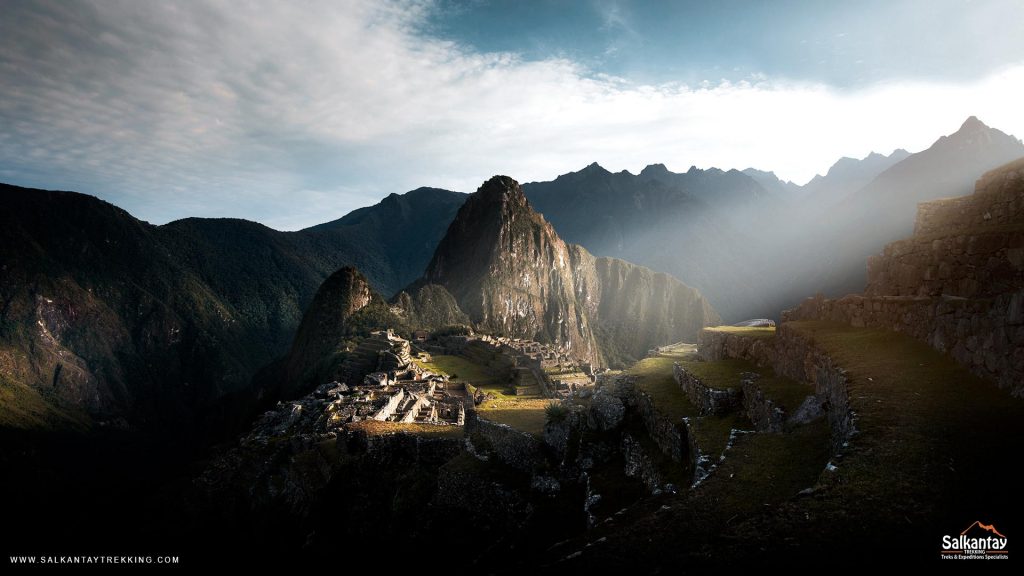
Machu Picchu is located in the Cusco region of Peru, within the province of Urubamba and the district of Machupicchu, approximately 80 km (50 miles) northwest of the city of Cusco. It sits high on a mountain at 2,430 meters (7,972 feet), in a high jungle area overlooking the Urubamba River valley.
Geographic Information
- Region: Urubamba Province, Cusco Region, Peru
- Distance from Cusco: 75 kilometers (47 miles) northwest of the city
- Elevation: 2,430 meters (7,972 feet) above sea level
- Mountain range: Eastern Andes, specifically within the Vilcabamba range
- Terrain: Steep mountain slopes, deep valleys, and dense cloud forests
- Rivers: The Urubamba River flows through the valley below Machu Picchu, carving impressive canyons
- Climate: Subtropical highland climate, with a mix of Andean and Amazonian influences due to its cloud forest location
- Temperatures: Between 12 and 24 °C (50–75 °F), with humid conditions year-round
- Biodiversity: The area is part of the Historic Sanctuary of Machu Picchu, home to orchids, spectacled bears, Andean condors, and a wide variety of bird species
History of the Historic Sanctuary of Machu Picchu
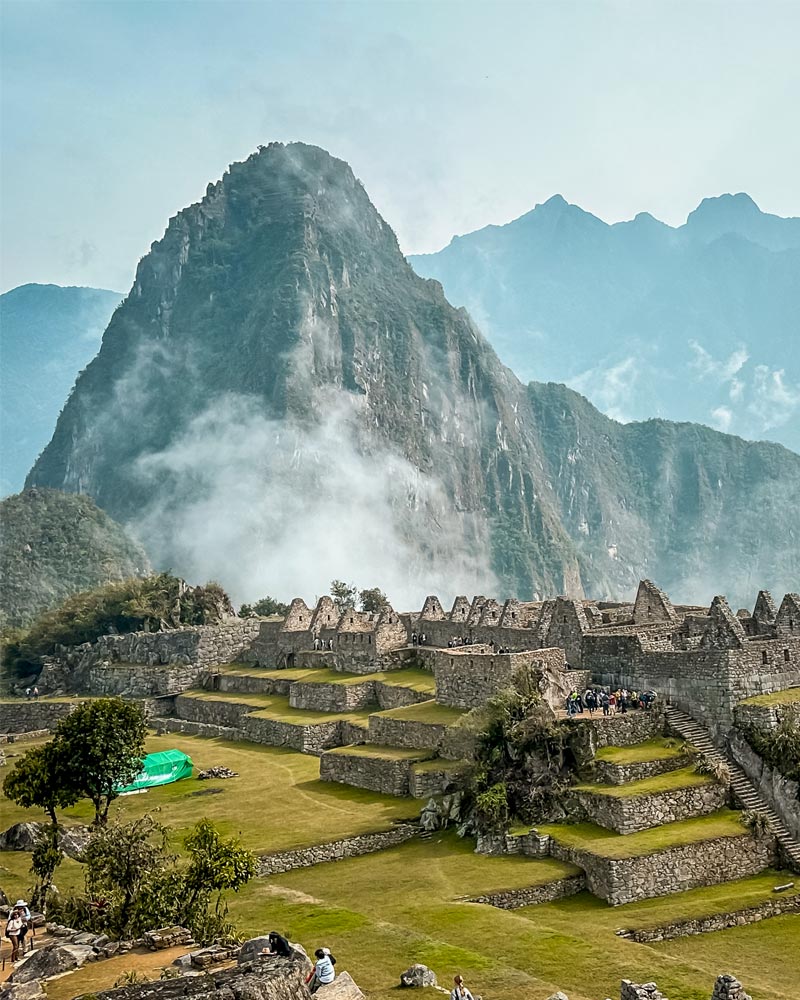
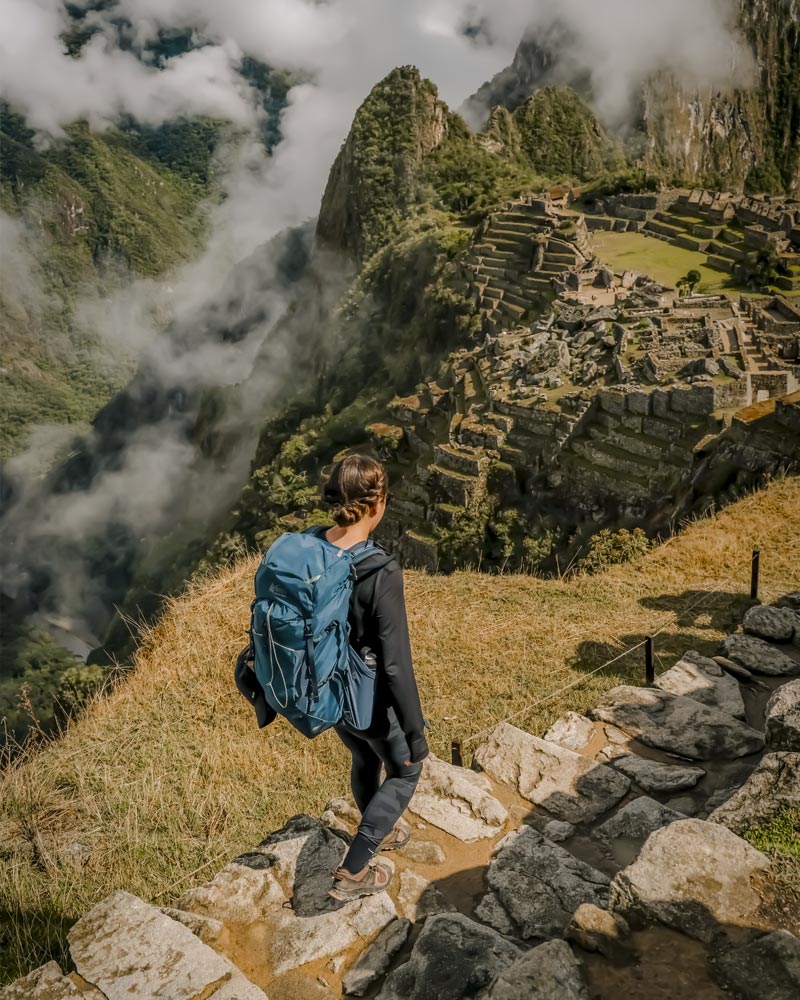
The Historic Sanctuary of Machu Picchu dates back to the 15th century, during the height of the Inca Empire under the rule of Pachacutec (c. 1438–1471). It is believed that Machu Picchu was built as a royal estate and ceremonial center linked to sun worship, while also serving agricultural, religious, and strategic purposes. Its design reflects advanced engineering knowledge, with drainage systems, water channels, and terraces that stabilize the mountain.
After the Spanish conquest in the 16th century, Machu Picchu was not recorded by chroniclers and remained outside colonial control, which allowed for its preservation. Over time, it was abandoned and covered by vegetation, remaining relatively isolated for centuries, although local communities were aware of its existence.
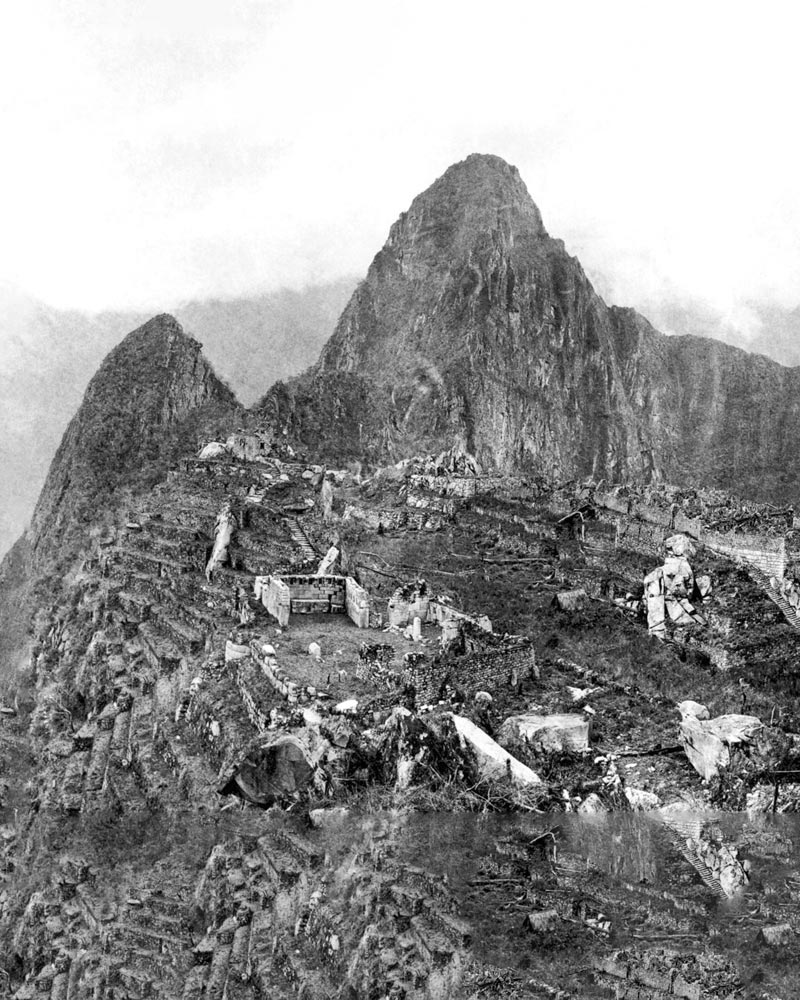
The site gained international recognition in 1911, when Yale University explorer Hiram Bingham reached the area guided by local residents. His expeditions (1912–1915) helped document and promote Machu Picchu worldwide, initiating its scientific study and eventual restoration.
In 1981, the Peruvian government declared the area a Historic Sanctuary to protect both its cultural and natural value. Two years later, in 1983, it was designated a UNESCO World Heritage Site, recognizing its universal importance. In 2007, Machu Picchu was named one of the New Seven Wonders of the World, solidifying its status as one of the most iconic destinations on the planet.
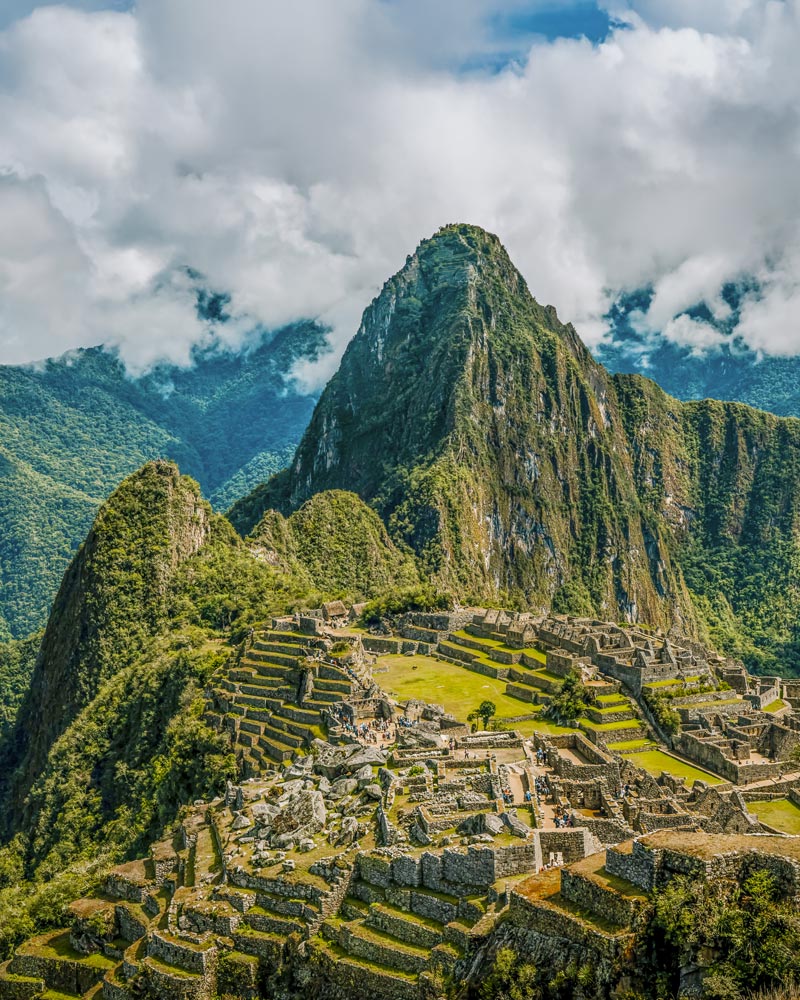
Machu Picchu elevation and how altitude affects your trip
Machu Picchu sits at 2,430 meters (7,972 feet), a moderate altitude compared to Cusco (3,400 m / 11,154 feet). This means that while the risk of altitude sickness is lower, you may still experience mild effects such as fatigue or shortness of breath, especially if you arrive without prior acclimatization.
To avoid discomfort, it is recommended to spend at least 1 or 2 days in Cusco or the Sacred Valley before your visit, stay well hydrated, and avoid intense physical activity at the beginning. Proper acclimatization not only improves your well-being but also allows you to fully enjoy your experience at Machu Picchu.
Best time of year to visit Machu Picchu
Machu Picchu is open year-round, but the best time to visit depends on what you’re looking for: dry weather, fewer crowds, or greener landscapes.
- Recommended best months: April, May, September, and October offer a great balance of good weather and fewer visitors.
- Dry season (May to October): Sunny days, ideal for trekking and clear views. It’s also the busiest season (June to August).
- Rainy season (November to April): Greener landscapes and fewer tourists, but with frequent rain. February is the rainiest month, and the Inca Trail is closed for maintenance.
- Shoulder months (March, April, September, October): The best combination of weather and crowd levels.
Quick recommendation:
- Fewer crowds + good weather: April, May, September, October
- Green landscapes: December and January
- Lowest crowds: March and November
Read our blog for a complete guide on the best season to visit Machu Picchu.
Weather in Machu Picchu
Dry season (May to October):
Mostly sunny and stable days, ideal for visiting.
- Daytime temperature: 18 °C to 24 °C (64 °F – 75 °F)
- Nighttime temperature: 8 °C to 12 °C (46 °F – 54 °F)
This is the best time for clear views, although mornings can be chilly
Rainy season (November to April):
More frequent rainfall and mist, with greener landscapes
- Daytime temperature: 17 °C to 22 °C (63 °F – 72 °F)
- Nighttime temperature: 10 °C to 14 °C (50 °F – 57 °F)
- Rain tends to be heavier between January and February
Transition months (April and October):
A mix of sunny days and occasional rain.
- Average temperature: 18 °C to 23 °C (64 °F – 73 °F) during the day
How to Visit Machu Picchu Step by Step (Practical Guide)
If you choose to visit Machu Picchu with a tour operator, the process is much simpler: you only need to select a reliable provider and book in advance. The agency takes care of the entire logistics (tickets, transportation, guide, and often accommodation), allowing you to focus on enjoying the experience without worrying about the details.
Now, if you prefer to organize your trip on your own, these are the key steps you should follow:
1. Set your travel date in advance
Machu Picchu has a daily visitor limit, so choosing your date is the first step to securing availability.
2. Buy your official entrance ticket
You must purchase your ticket based on the circuit you want to visit. Tickets sell out weeks or even months in advance during high season.
3. Book transportation to Aguas Calientes
The most common option is to take a train from Ollantaytambo to Aguas Calientes. Alternatively, you can choose more budget-friendly routes such as the Hydroelectric route.
4. Decide how to get up to Machu Picchu
From Aguas Calientes, you can take a 25–30 minute bus ride or hike up in approximately 1.5 to 2 hours.
5. Consider hiring a guide
While not always mandatory, having a guide significantly enhances the experience, helping you understand the history and meaning of the site.
6. Plan your stay in Aguas Calientes (if applicable)
Depending on your entry time, you may need to spend a night in town to optimize your visit.
Traveler tip: Planning Machu Picchu on your own is completely possible, but it requires coordination and planning. If you’re looking for convenience, safety, and time efficiency, booking through an agency is usually the most practical option—especially during high season.
Machu Picchu Tickets: Types and How to Buy Them
Visiting Machu Picchu requires purchasing an official ticket in advance, as access is limited and organized by circuits and time slots. Choosing the right ticket is key, as it determines which areas you’ll be able to explore within the citadel.
Types of Tickets (by circuit)
Machu Picchu is divided into an upper section (panoramic views) and a lower section (urban area and temples). Based on this, there are 3 main circuits with different routes:
Circuit 1 – Panoramic
Ideal if you’re looking for the best views and the classic photo from above.
Includes the upper terrace (Guardhouse) and routes such as:
- Machu Picchu Mountain
- Intipunku (Sun Gate) (high demand / high season)
- Inca Bridge (high season)
Recommended for: views, photography, and additional hikes
Circuit 2 – Classic (most complete)
Combines the classic photo + a full tour of temples and plazas.
Includes:
- Lower terrace (iconic photo)
- Urban sector: temples, fountains, and main structures
Recommended for: first-time visitors (most balanced option)
Circuit 3 – Royalty
Explores the lower section and more sacred areas, with mountain options:
- Huayna Picchu
- Huchuy Picchu (high season)
- Great Cavern (high season)
Recommended for: more specific experiences + challenging hikes
Which circuit should you choose?
- First time → Circuit 2 (Classic)
- Best views → Circuit 1
- Adventure (mountains) → Circuit 3 + Huayna Picchu
How to Buy Machu Picchu Tickets
Buy online (most recommended option)
The safest way is through the official Ministry of Culture platform.
Basic steps:
- Go to the official website: tuboleto.cultura.pe
- Choose your date, time slot, and circuit
- Fill in your information
- Complete the payment
Payment options:
- Credit card (Verified by Visa)
- Payment at Banco de la Nación (Peru)
- Payment at offices in Cusco
Advantages: you secure your entry and avoid missing out on availability
Through a tour operator (highly recommended)
An authorized operator can manage:
- Tickets
- Transportation (train + bus)
- Guide and accommodation
Ideal if you’re looking for convenience and zero booking mistakes.
In-person purchase in Cusco (not recommended)
Available at Ministry of Culture offices, but:
- High risk of no availability
- Time-consuming
Purchase in Aguas Calientes (last option)
A limited number of tickets are available daily (approx. 1,000), but:
- Very limited availability
- Long lines
- Only viable as an emergency plan
Discover More: We invite you to watch our YouTube video and read our blog about Machu Picchu tickets, where we explain each option in detail.
Best Places to Visit in Machu Picchu
Machu Picchu was a place of great importance for the Incas, and within the citadel you can find various areas that played a key role in its time. Today, these sites help us better understand Inca culture, religion, and daily life.
Discover the must-see places within the ancient Inca citadel. Here’s a list of sites you shouldn’t miss during your visit to this world wonder:
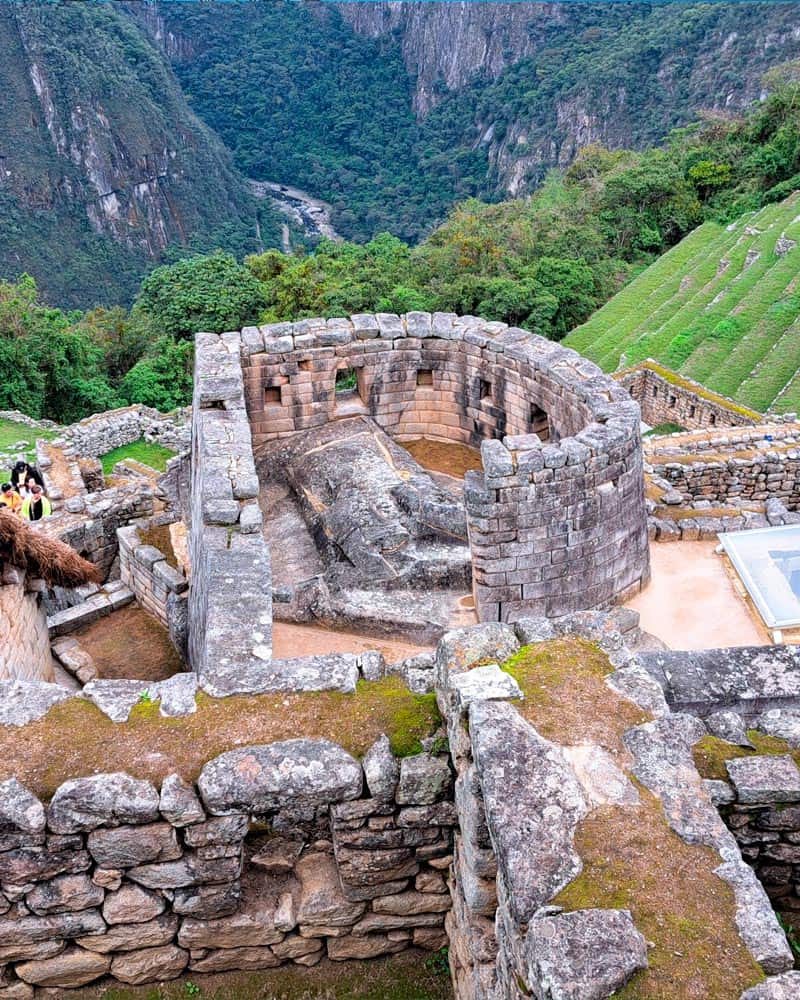
- Temple of the Sun: An important religious site dedicated to Inti, the sun god, featuring finely crafted stonework and precise alignment with the solstices.
- Royal Tomb: A cave beneath the Temple of the Sun, believed to have been a burial site for Inca nobility. Its intricate masonry and ceremonial niches highlight its spiritual significance.
- Main Temple: A large structure with three walls and impressive architecture, believed to have been a key site for religious ceremonies and offerings to the gods.
- Main Plaza: A wide open space at the heart of Machu Picchu, used for gatherings, ceremonies, and daily activities.
- Temple of the Condor: A carved stone shaped like a condor, symbolizing the connection between the earthly and spiritual worlds in Inca mythology.
- Sacred Rock: A massive stone that mirrors the surrounding mountain peaks. It was likely used for rituals and spiritual ceremonies, reinforcing the Incas’ deep connection with nature.
- Huayna Picchu, Huchuy Picchu, and Machu Picchu Mountains: Climb them and enjoy breathtaking views of the citadel and the Andean landscape. A separate ticket is required and must be purchased in advance.
- Sun Gate (Inti Punku): Offers a spectacular view of the citadel and surrounding mountains. It is the main entrance to Machu Picchu for Inca Trail hikers. The hike takes approximately 3 to 4 hours round trip.
Other points of interest include:
- Inca Bridge
- Guardhouse
- Funeral Stone
- Water Fountains
- Temple of the Three Windows
- High Priest’s House
- House of the Ornaments
- Mortar/Industrial Section
- The Prison Group
- Inca terraces
Note: The Intihuatana, a sacred Inca stone used as a solar clock, is currently not accessible to the public due to site protection measures.
Important Rules Inside Machu Picchu
Machu Picchu is a UNESCO World Heritage Site, and there are specific rules in place to ensure its preservation and protect visitor safety.
- To enter, you must present your ticket and original passport.
- You must stay on the designated visitor paths at all times.
- You must not feed wildlife within the archaeological site.
- You must not make loud noises, such as shouting, whistling, or clapping.
- You must not leave any trash on the ground.
- You must carry out everything you bring in.
- You must not lean on any walls, buildings, or structures.
- Smoking and vaping are not allowed.
- Drones are not permitted at the site.
- You must not engage in obscene acts within the archaeological site.
- You must not jump, perform flips, or engage in actions that disturb the nature of the sanctuary.
The following items are not allowed inside the Machu Picchu sanctuary:
- Firearms
- Hunting or fishing tools, machetes, knives, etc.
- Animal traps
- Fossil fuels
- Stimulants and drugs
- Sound equipment or other noise-generating devices
- Domestic animals and exotic species
- Picks, shovels, or other tools
- Walking sticks made from native wood species
- Tripods, stands, or extensions for cameras or mobile phones (such as selfie sticks)
- Backpacks or bags exceeding 5 kg (11 lbs)
- Food or large luggage
- Aerosols or paints
- Musical instruments, megaphones, or loudspeakers
- Hard-soled high-heeled shoes
- Baby strollers
- Flags, photos, and/or signs
- Clothing intended for advertising purposes
- Walking sticks with metal tips (only rubber-tipped ones are allowed when necessary)
Although hiring a guide is not mandatory, it is recommended to help you follow the rules and fully understand the site.
Penalties for not following the rules: If you are seen violating any rules at Machu Picchu, you will be removed from the site immediately, with no refund or re-entry allowed.
How to Get to Machu Picchu
There are several ways to reach Machu Picchu, each offering a unique experience. Whether you’re looking for comfort, adventure, or a mix of both, here are the main options to help you choose the best route for your trip.
Trekking
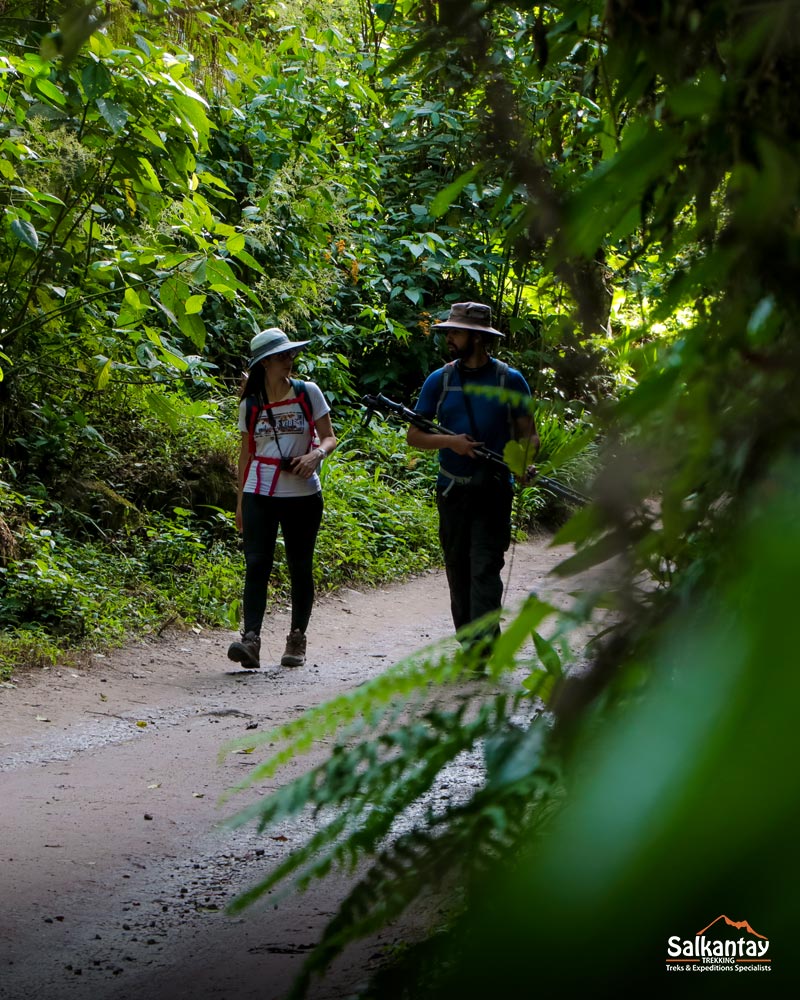
If you’re passionate about adventure and breathtaking landscapes, you can reach Machu Picchu by trekking. This option allows you to experience the nature and history of the Andes up close, exploring parts of Peru that are inaccessible by car or train. There are several routes available depending on your time and preferences.
These are the most popular options:
- Inca Trail:
The most famous route to Machu Picchu, combining spectacular landscapes and Inca sites, ending at the Sun Gate. It requires booking months in advance due to high demand. - Salkantay Trek:
A scenic alternative with diverse landscapes, from snow-capped mountains to jungle. Highlights include Humantay Lake and Apu Salkantay. - Lares Trek:
A cultural and less crowded route, ideal for connecting with Andean communities and enjoying authentic landscapes. - Ancascocha Trail:
A challenging and remote trek, with views of snow-capped peaks and lesser-explored valleys—perfect for those seeking off-the-beaten-path adventure.
The Many Routes to Machu Picchu: Check out our blog to discover the best treks to Machu Picchu.
By Car
Another option that doesn’t require a full trek—but takes more time—is traveling to Machu Picchu by car. You can combine car travel with hiking for a more adventurous and budget-friendly experience, or combine it with the train for a more comfortable journey.
- Car + Hiking
The journey begins with a shared transport ride from Cusco to the small town of Santa María, a trip of approximately four hours. From there, you’ll take another 30-minute car ride to Santa Teresa, followed by another 30 minutes to the Hydroelectric train station.
At this point, you have two options:
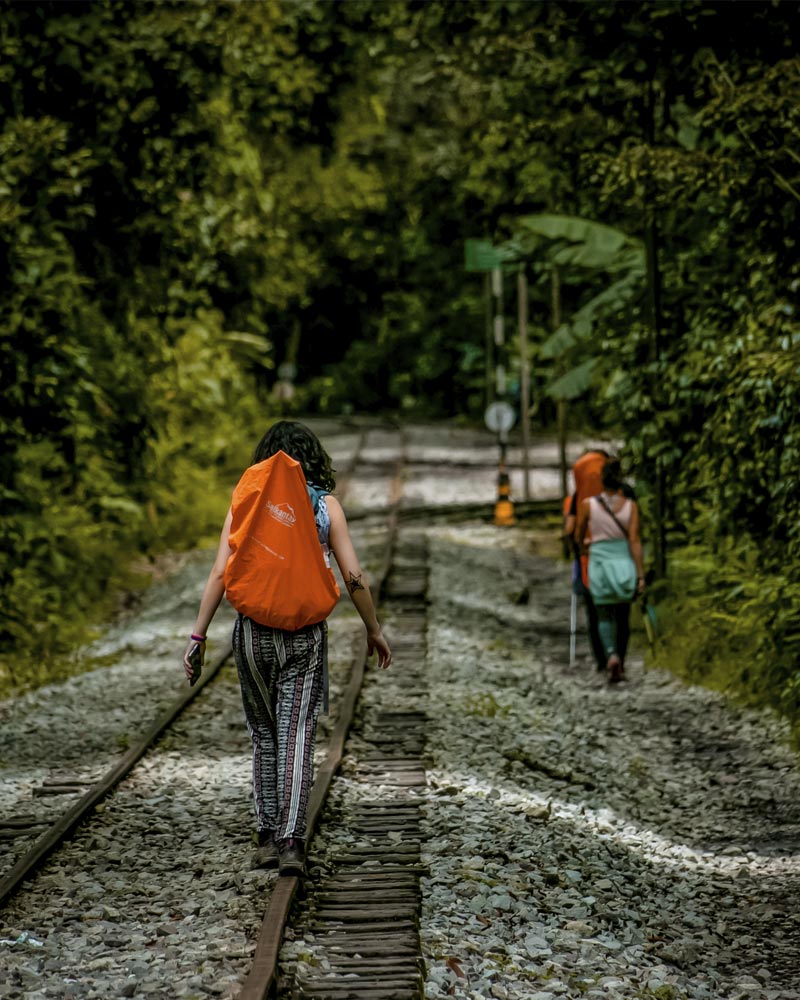
- Walk for approximately two hours along the train tracks to reach Aguas Calientes
- Take a 30-minute train that goes directly to Aguas Calientes
The total cost of shared transportation (colectivos) is approximately $15 USD (52.33 soles), while the one-way train ticket costs around $39 USD (136 soles). There are two daily departures: at 7:54 am and 4:35 pm.
- Car + Train
From Cusco, you can take a car to Ollantaytambo and then board the train to Aguas Calientes. Many trains depart from this town, making it easier to find tickets. It is also very close to Machu Picchu, so the train ride takes no more than 1 hour and 45 minutes. Ollantaytambo also features valuable archaeological sites that you can visit before continuing your journey to Aguas Calientes.
Check out our complete guide to the easiest route to Machu Picchu, with more details if you prefer a hassle-free trip.
By Train
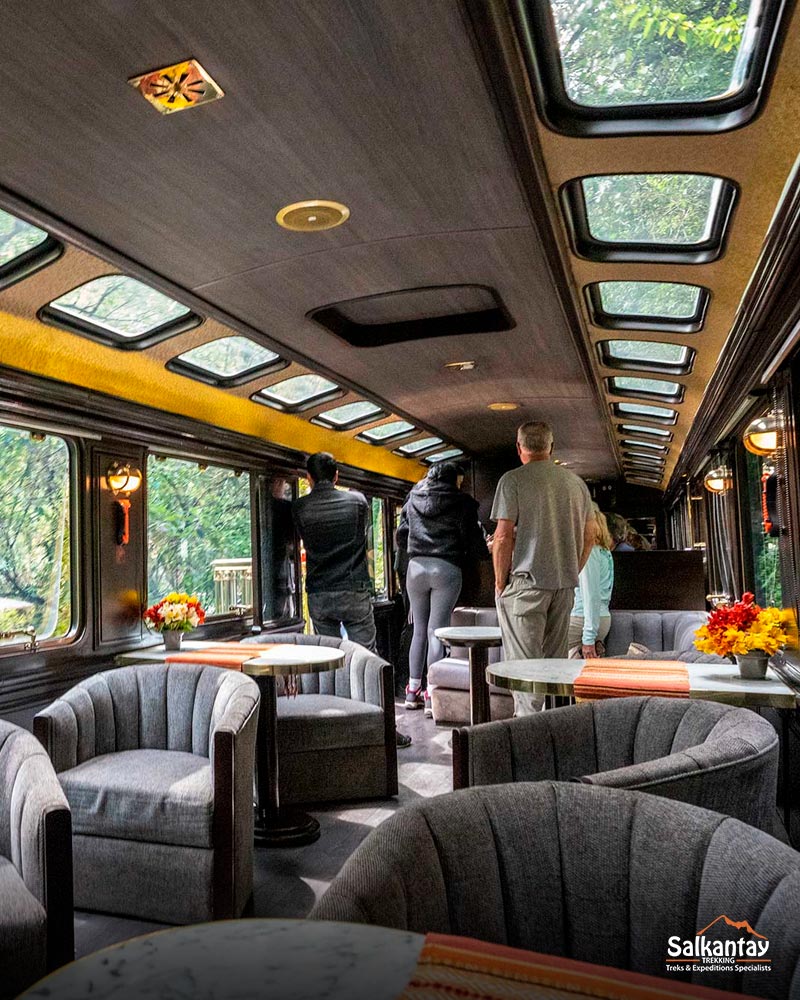
The train to Machu Picchu is the most comfortable and fastest way to get there—ideal if you want to avoid long hikes and optimize your time. You can take it directly from Cusco (San Pedro or Poroy stations) to Aguas Calientes, the base town located at the foot of the citadel.
The service is operated by PeruRail and Inca Rail, offering different categories ranging from basic options to luxury experiences. During the journey, you’ll enjoy scenery that transitions from the Andes to the cloud forest.
Prices typically start at around $55 USD and vary depending on the service type and season. From Aguas Calientes, you can either take a 25–30 minute bus ride or hike up to the entrance of Machu Picchu.
Getting up to Machu Picchu: To reach the archaeological site, you can choose between a hike of approximately 1.5 to 2 hours or a bus ride to the entrance. The same applies for the descent.

Machu Picchu Packages: Is It Worth Booking with an Agency?
Booking a Machu Picchu package with a tour operator is not just about convenience—it’s about optimizing your trip. Instead of coordinating tickets, trains, buses, and schedules separately (all of which have limited availability), an agency handles the entire logistics and reduces the risk of planning mistakes.
What does a Machu Picchu package usually include?
While it varies depending on the type of tour (1 day, 2 days, or trekking), most packages include:
- Full transportation (transfers + train + bus)
- Official Machu Picchu entrance ticket
- Professional guide during the visit
- Assistance throughout the entire trip
- In some cases: accommodation and meals
In organized tours, everything is typically coordinated from hotel pickup to return, including train, bus, and guide.
Advantages of traveling with an agency
1. Avoid critical mistakes
Machu Picchu has daily visitor limits and specific circuits. A wrong choice can affect your entire experience.
2. Save time
No need to manage multiple bookings or understand complex logistics.
3. Guided experience
A guide transforms your visit—you don’t just see ruins, you understand their history.
4. Customized options
You can choose from classic train tours to trekking experiences like the Inca Trail or Salkantay.
Traveler tip: If it’s your first time visiting Machu Picchu, we recommend traveling with an agency to enjoy a stress-free experience.
Where to Stay and Eat in Machu Picchu
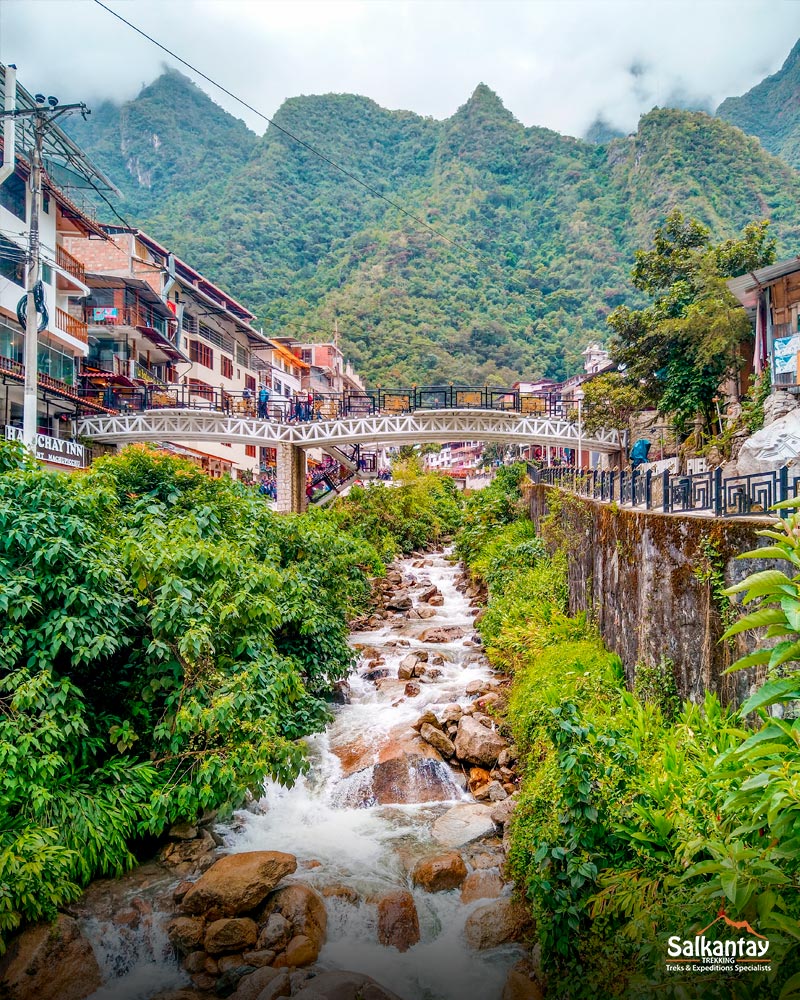
There’s nothing better than a great meal and a cozy place to relax. Whether you’re getting ready for Machu Picchu or unwinding after an epic day, Aguas Calientes has something for everyone!
Accommodation in Machu Picchu
Aguas Calientes, the closest town to Machu Picchu, offers a surprising variety of accommodations for such a small place, even though it receives a high number of visitors passing through. You’ll find everything from budget hostels with shared bathrooms to luxury 5-star hotels. Let’s find the perfect place for you to stay before exploring the ancient Inca citadel!
Here are our top hotel and hostel recommendations in Aguas Calientes:
- Inkaterra Machu Picchu Pueblo Hotel
- Sanctuary Lodge, Machu Picchu
- Andean Terra
- Hotel Hanaq Pacha
- Andina Luxury
- Waman Hotel
- Inti Punku – Machu Picchu
- La Cabaña Boutique
Restaurants in Machu Picchu
There are many places to eat and drink in Aguas Calientes. You’ll notice that many offer similar options, but here are some of our favorites with a great variety to choose from:
- Indio Feliz: This restaurant offers French-Peruvian fusion cuisine with a unique decor. Not ideal if you’re looking for budget-friendly options.
- Mapacho Craft Beer & Peruvian Cuisine: If you’re a fan of craft beer and great food, this is the perfect spot. The menu is mainly Peruvian cuisine.
- Incontri del Pueblo Viejo: Everyone enjoys Italian food on vacation, and this is the best place to try it in Aguas Calientes.
- The Tree House: A long-standing favorite among visitors, offering both Peruvian and international cuisine.
- Café Inkaterra: Located in one of the most luxurious hotels in town, offering a fantastic dining experience.
- La Boulangerie de Paris: As the name suggests, this is a French spot where you can enjoy a delicious coffee with pastries or sandwiches.
- Full House Peruvian Cuisine: Enjoy excellent Peruvian fusion dishes while sitting on a balcony overlooking the river below.
- Chullpi Machu Picchu Restaurante: A rustic-chic atmosphere with gourmet versions of classic Peruvian dishes. They also offer a tasting menu.
- Qunuq Restaurant: Part of the Sumaq Hotel, this is one of the most exclusive dining spots in town and another excellent choice for Peruvian fusion cuisine.
- Toto’s House: Another long-standing restaurant offering buffet-style lunches for large groups at a reasonable price. In the evening, it becomes more intimate, where you can order traditional Peruvian dishes.
Things to Do in Aguas Calientes
The town of Aguas Calientes is small, so Machu Picchu is the main attraction. However, there are a few activities to keep you busy during your stay.
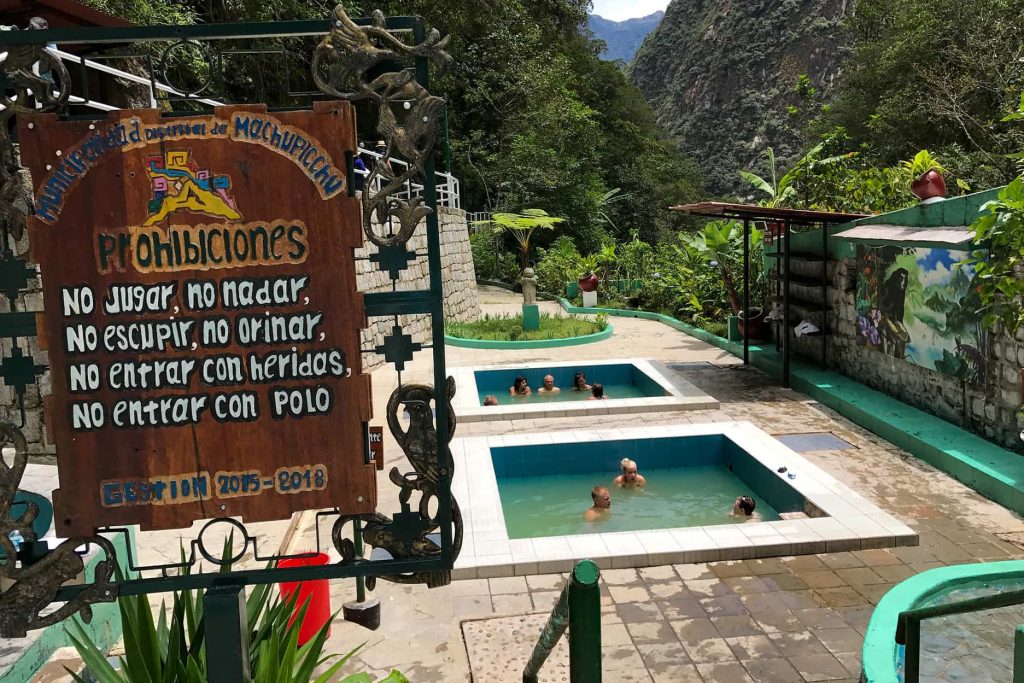
- Visit the Hot Springs: Visit the hot springs: the name “Aguas Calientes” isn’t just a coincidence, so it’s definitely worth stopping by. If you can, go early to avoid the afternoon crowds.
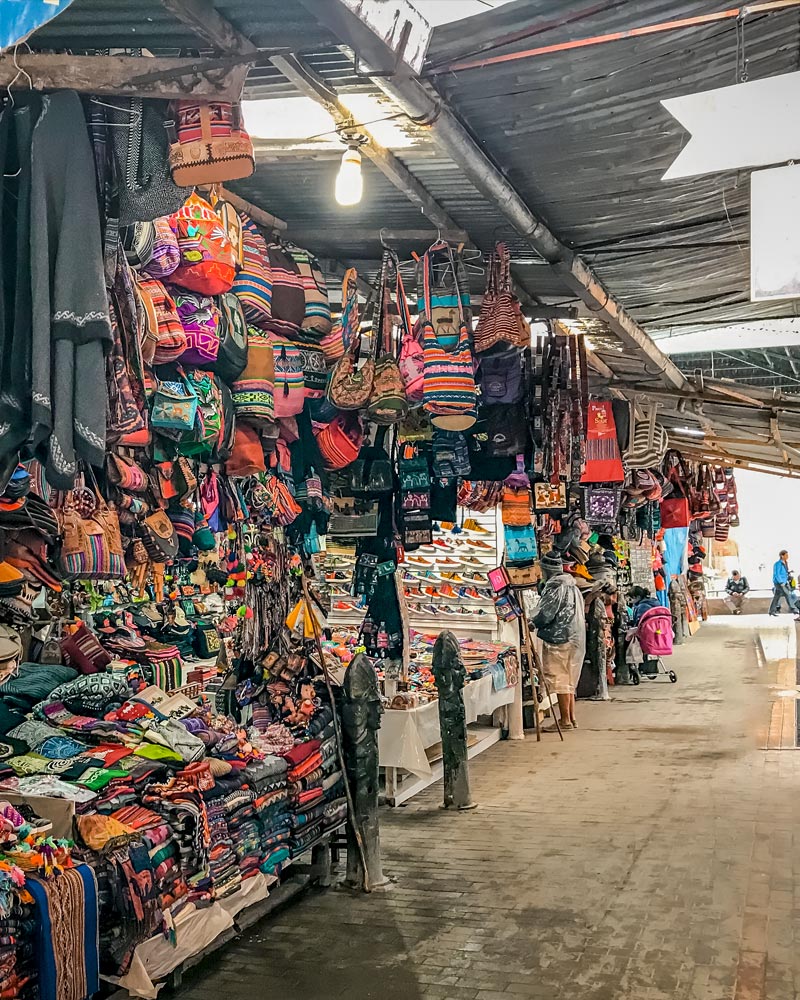
- Souvenir Shopping: Like many places in Peru, Aguas Calientes has plenty of souvenir shops. If you haven’t had the chance to shop elsewhere, you can find some interesting items here. However, prices are slightly higher than in most other parts of the country.
- Visit the Machu Picchu Museum: Learn about the history, archaeology, and discoveries of Machu Picchu at the Manuel Chávez Ballón Museum. It features a fascinating collection of tools, ceramics, and textiles uncovered from the Inca city. Your ticket also includes access to a charming botanical garden.
- Explore the Butterfly House: Discover more than 300 species of butterflies native to the region and learn about local conservation efforts. Located about a 25-minute walk from Aguas Calientes, this site allows you to explore the fascinating life cycle of these creatures and their importance in the ecosystem.
- Discover Mandor Waterfall: Enjoy a scenic walk through lush gardens and waterfalls—a peaceful escape from the crowds. To reach the Mandor Gardens, an ecological oasis with orchids, ferns, and begonias, you’ll walk for about an hour along the train tracks. At the end, you’ll be rewarded with the spectacular Mandor Waterfall.
- Try Local Cuisine: Enjoy traditional Peruvian dishes like lomo saltado and fresh trout at one of the town’s restaurants, or explore the local market to experience regional culture. There are also many bars where you can try a pisco sour, Peru’s national drink.
Approximate Costs to Travel to Machu Picchu
Total Estimated Cost (2026)
- Budget: 1326 – 2269 soles ($380 – $650 USD)
- Mid-range: 2967 – 5235 soles ($850 – $1,500 USD)
- Luxury: 6282 – 15705 soles ($1,800 – $4,500+ USD)
From the U.S. (including international flights):
- Budget: 2792 – 4188 soles ($800 – $1,200)
- Mid-range: 5235 – 8725 soles ($1,500 – $2,500)
- Luxury: 10470 – 20940 soles ($3,000 – $6,000)
Cost Breakdown
1.- Machu Picchu Entrance Ticket
- Classic entry: 77 – 152 soles (~$40–45 USD)
- With mountain (Huayna Picchu or Machu Picchu): ~200 soles (~$55 USD)
- Small additional fees may apply starting in 2026
2.- Transportation (the biggest cost factor)
- Lima → Cusco
200 – 450 soles ($60 – $130 USD approx.) - Cusco → Ollantaytambo
10 – 15 soles ($3 – $5 USD) - Train to Machu Picchu
- Budget: 420 – 523 soles ($120 – $150 round trip)
- Standard/panoramic: 385 – 665 soles ($110 – $190)
- Luxury: 2094 soles ($600+)
- Bus Aguas Calientes → Machu Picchu
Approx. 80 soles (~$24 round trip)
3.- Accommodation
- Budget: $20 – $50 per night
- Mid-range: $60 – $150
- Luxury: $200+
Aguas Calientes is usually more expensive than Cusco
4.- Food
- Budget: 35 – 70 soles per day (~$10 – $20)
- Mid-range: 70 – 175 soles per day (~$20 – $50)
- Tourist restaurants: higher prices
5.- Tours and Guide
- Shared guide: 87 – 122 soles ($25 – $35)
- Full-day tour (train + entry): 700 – 1200 soles (~$200 – $350)
6.- Trekking (optional)
- Inca Trail 4 days: from 2000+ soles (~$600+)
- Other treks (Salkantay, etc.): similar or variable pricing
What to Pack for Machu Picchu: Essential Checklist
Pack smart and make the most of your adventure! Here’s everything you need to stay comfortable and enjoy your visit:
- Long-sleeve shirt and pants to protect against insects
- Lightweight sweater for changing temperatures
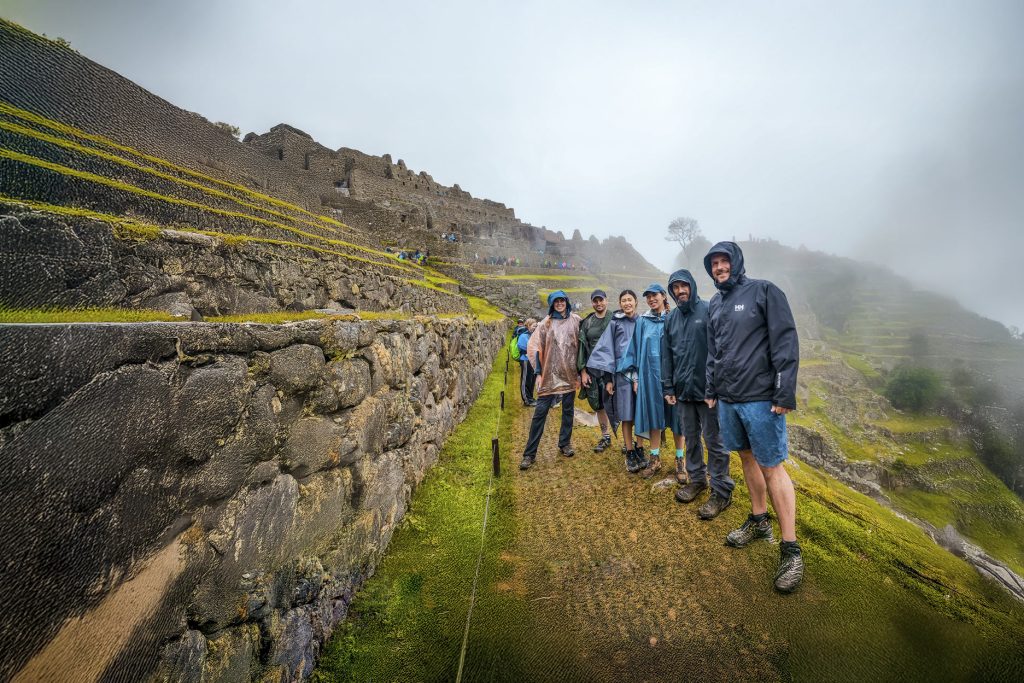
- Waterproof jacket or light rain poncho
- Hiking boots or water-resistant shoes with good traction
- Sun hat, sunglasses, and sunscreen
- Small backpack
- Reusable water bottle (plastic is not allowed)
- Good-quality camera or phone
- Passport and ticket (required for entry)
The Ultimate Packing List: Check out the perfect packing list for trekking in Peru with all the essential items you’ll need for your visit.
Key Tips to Visit Machu Picchu Without Mistakes
Make the most of your trip with these helpful tips and tricks. The more you follow, the smoother your experience will be!
- Stay overnight in town: If you have time, spend a night in Aguas Calientes. You’ll be able to visit Machu Picchu at a more relaxed pace and enjoy the hot springs—something not possible on a day trip.
- Be patient: Machu Picchu is one of the world’s wonders and receives many visitors daily, so finding empty spots can be difficult. Be prepared to wait for photos at popular viewpoints—it’s absolutely worth it.
- Use the restroom before entering: Once inside, there are no bathrooms, and re-entry is not allowed. Bring cash in case you need to pay for restroom use before entering.
- Pack light: Bags larger than 40 x 35 x 20 cm (16 x 14 x 8 inches) are not allowed inside Machu Picchu. They must be stored in lockers at the entrance. Bring only essentials.
- Be prepared for mosquitoes: They’re not dangerous, but bites can be annoying. Bring repellent and wear long sleeves and lightweight pants.
- Buy tickets in advance: Not only for the citadel but also for Huayna Picchu and Machu Picchu Mountain. These cannot be purchased at the entrance and must be booked months in advance.
- Acclimate to the altitude: Cusco is much higher than sea level, so take it slow, stay hydrated, and consider altitude medication if needed. Machu Picchu is lower, but it’s still best to be prepared.
- Visit early in the morning: Arrive as early as possible to avoid crowds and enjoy the sunrise—it’s spectacular.
A Little Extra Magic! You can stamp your passport if you’d like. At the entrance, they have a Machu Picchu stamp with the date so you can keep a memorable souvenir of your trip. Passport is required for entry!
Frequently Asked Questions
Machu Picchu stands out for its Inca architecture, its perfect integration with nature, and its state of preservation. It combines history, unique Andean landscapes, and an energy that’s hard to find elsewhere, making it one of the most powerful travel experiences in the world.
From Aguas Calientes, it takes about 1.5 to 2 hours on foot via steep stairs. By bus, the ride takes approximately 25–30 minutes.
Yes. The visit itself is considered low difficulty, with well-defined paths and some stairs. It’s accessible to most travelers as long as they choose the appropriate circuit. For a relaxed pace, Circuit 3B (Royalty Route) is recommended, especially for older visitors or those with limited mobility.
Machu Picchu was chosen for its historical value, advanced architecture, and unique location in the Andes. Its preservation, mystery, and natural beauty make it a globally recognized cultural symbol.
Yes. In 2026, visiting Machu Picchu is safe. Access is regulated, visitor flow is controlled, and tourism services are well organized. Peru is a safe destination if you take basic precautions, like in any country.
The most common way is to travel by road to Ollantaytambo and then take a train to Aguas Calientes (Machu Picchu Pueblo). From there, you can take a 25–30 minute bus or hike for about 1.5 to 2 hours to reach the entrance.
Conclusion
Visiting Machu Picchu is much more than a trip—it’s an experience that blends history, nature, and emotion in one of the most breathtaking settings in the world. With proper planning, you’ll be able to make the most of every moment and experience this wonder the way it truly deserves.
If you want to do it hassle-free with everything organized, we invite you to explore our Machu Picchu packages, designed so you can focus entirely on enjoying the journey.
You May Also Be Interested In:


Leave A Reply