
Machu Picchu is already breathtaking from below. But when you start climbing one of its mountains, everything changes. The air feels different. The stone paths tell a different story. The citadel begins to look small amid giant mountains, moving clouds, and terraces that seem to hang suspended in time.
That’s when you realize that the Machu Picchu mountains aren’t just an accessory, they’re part of the soul of the place. Huayna Picchu, Huchuy Picchu, and Machu Picchu Mountain offer three trails, three challenges, and three unforgettable ways to view the sanctuary from above.
- What are the 3 Machu Picchu mountains?
- What can I expect from the three mountains?
- Huayna Picchu: The challenge that will take your breath away
- Machu Picchu Mountain: The Peak of Panoramic Views
- How do I get to each mountain?
- Differences between the 3 Machu Picchu mountains: Which one to choose?
- Huchuy Picchu vs. Huayna Picchu
- Machu Picchu Mountain vs. Huayna Picchu Mountain
- Machu Picchu Mountain vs. Huchuy Picchu Mountain
- Exploring the Mountains with Family: Machu Picchu for Everyone
- Tips for Visiting the Machu Picchu Mountains
- Frequently Asked Questions
- You may be interested in:
What are the 3 Machu Picchu mountains?
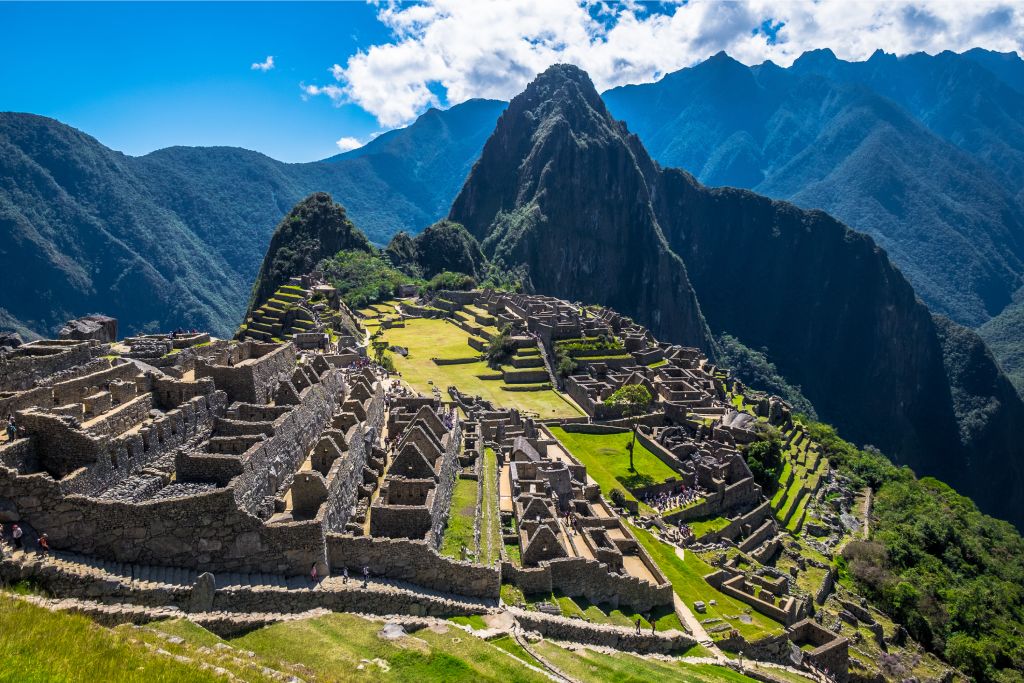
When most travelers think of Machu Picchu, they imagine the majestic Inca citadel surrounded by mountains covered in vegetation. But beyond the archaeological site, there are three mountains that form a fundamental part of the landscape and the visitor experience: Huayna Picchu, Huchuy Picchu, and Machu Picchu Mountain.
In addition to offering hikes and spectacular views, these mountains also hide a curious detail that many visitors discover only when someone points it out to them. If you observe the landscape from a certain distance, the silhouettes of Huayna Picchu and Huchuy Picchu seem to form the profile of an Inca’s face looking up toward the sky. For many local guides, this natural formation reflects the deep connection between Inca architecture and the natural environment.
What can I expect from the three mountains?
Climbing one of the mountains within Machu Picchu is much more than just a simple hike. It involves traversing ancient stone paths built by the Incas, with uneven steps, terraces, and trails that wind through the jungle and mountains. Each route has its own character and offers a unique experience, ranging from physical challenges to views that reveal new perspectives of the citadel.
These three mountains offer distinct experiences: some stand out for their physical challenge, others for their accessibility, and others for the panoramic views they offer of the historic sanctuary. Here’s a brief summary of what characterizes each one keep reading to discover more about them:
- Huayna Picchu: The most famous of the three and the one that appears in almost all classic photos of Machu Picchu. Known for its challenging trail and breathtaking views, it’s ideal for adventure lovers.
- Huchuy Picchu: The smallest and most accessible. Its route is shorter and less demanding, but no less impressive; it offers an elevated view that allows you to better appreciate the citadel’s architecture. Perfect for those seeking a more relaxed experience.
- Machu Picchu Mountain: The highest of the three, it offers a longer hike and a true personal challenge, though it is less steep than Huayna Picchu. Ideal for those seeking a complete experience with spectacular views.
Huayna Picchu: The challenge that will take your breath away
Huayna Picchu is the second-highest mountain within Machu Picchu, standing at approximately 8,923 feet (2,720 masl) and rising about 952 feet (290 meters) above the citadel. Located just behind the citadel on the north side, it appears in most of the site’s classic photographs.
Beyond its iconic shape, Huayna Picchu is also one of the favorite hikes for travelers seeking a challenge, excitement, and spectacular views.
The name Huayna Picchu comes from the Quechua words huayna, meaning young, and picchu, meaning mountain or peak. Therefore, its most widely accepted translation is “Young Mountain.”
During the Inca era, this mountain was not merely a scenic feature. It served agricultural, religious, and environmental control functions. As you ascend, you’ll encounter agricultural terraces, stone staircases, and small Inca enclosures that were part of the site’s organization.
What is it like to climb Huayna Picchu?
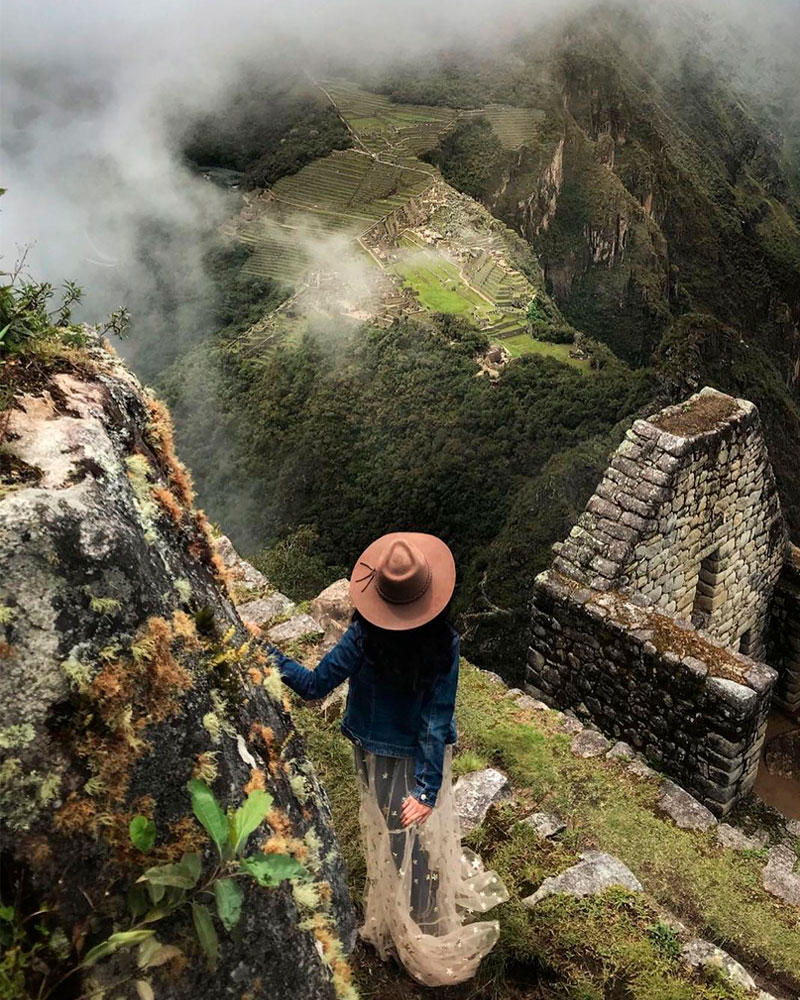
Climbing Huayna Picchu is one of the most intense and memorable experiences within the Machu Picchu sanctuary. The hike is one-way and follows ancient Inca trails that ascend the steep mountain, offering increasingly breathtaking views as you gain altitude.
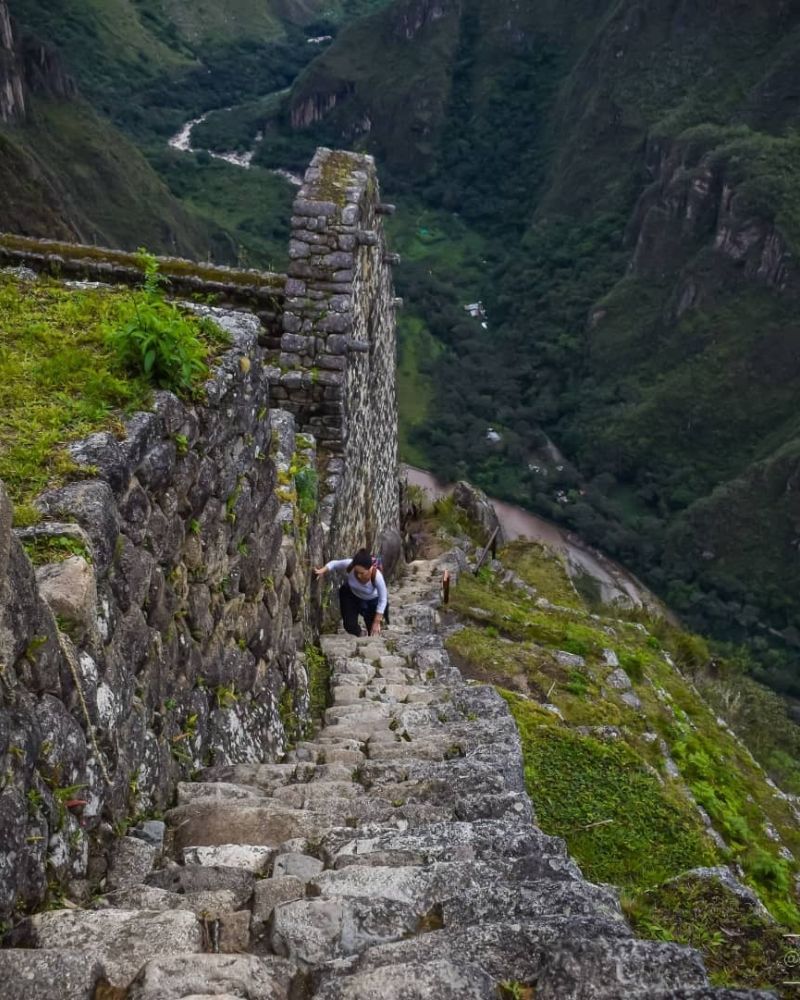
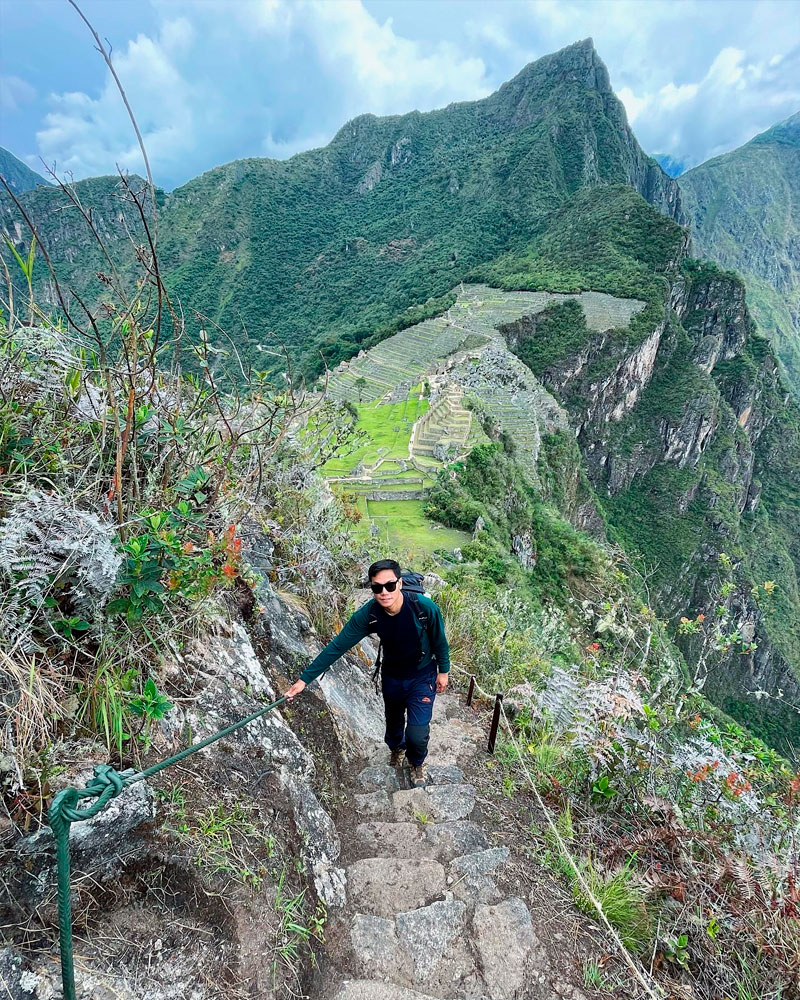
Along the way, you’ll encounter Inca stone staircases of various sizes, narrow trails, small enclosures, and agricultural terraces built into the hillsides. It’s estimated that the trail has between 500 and 650 steps, many of which are carved directly into the rock.
One of the most famous sections is the so-called “Stairway of Death,” a very steep stretch of narrow steps built on an almost vertical wall. Although the name sounds intimidating, this section has handrails, so with patience and caution, it can be navigated without much trouble.
The hike usually takes between 1 hour and 1 hour and 30 minutes to climb, and between 45 minutes and 1 hour to descend, depending on each visitor’s pace. In total, the entire experience typically lasts between 2 and 3 hours.
Many visitors also wonder if there are places to rest. Yes, there are. Upon reaching the agricultural terraces, you can sit for a few minutes to regain your energy. It’s also possible to stop briefly at various points along the trail, as the steps usually have spaces where hikers can take a break while others continue climbing.
The most important thing to remember is that everyone can hike at their own pace.
Hike Difficulty
The climb up Huayna Picchu is usually classified as moderate to strenuous, mainly due to the trail’s steepness and the large number of Inca steps.
Some factors that contribute to its difficulty include:
- Steep inclines in several sections
- Uneven stone steps
- Narrow trails near the summit
- An approximate elevation of 8,923 feet (2,720 masl)
Along the way, you’ll also find cables and ropes embedded in the rock, which help you maintain your balance on the steepest sections.
Even so, you don’t need to be an athlete to complete the hike. Many people of average fitness can make the climb without difficulty if they wear proper footwear, maintain a steady pace, and take breaks when needed.
Additionally, if at any point a visitor feels dizzy, tired, or simply decides not to continue, they can return along the same path without needing to complete the climb to the summit.
Archaeological Remains on Huayna Picchu
During the climb, you’ll not only enjoy the scenery but also various Inca archaeological remains that show how this mountain was integrated into the Machu Picchu ceremonial complex.
Among the most important features are:
Agricultural terraces
Along the trail, you can see numerous terraces built on the mountain’s slopes. These structures helped stabilize the terrain and likely also served agricultural or ritual purposes.
Inca enclosures and structures
At various points along the trail, small stone structures appear that probably served as resting areas, checkpoints, or sites for ceremonial activities.
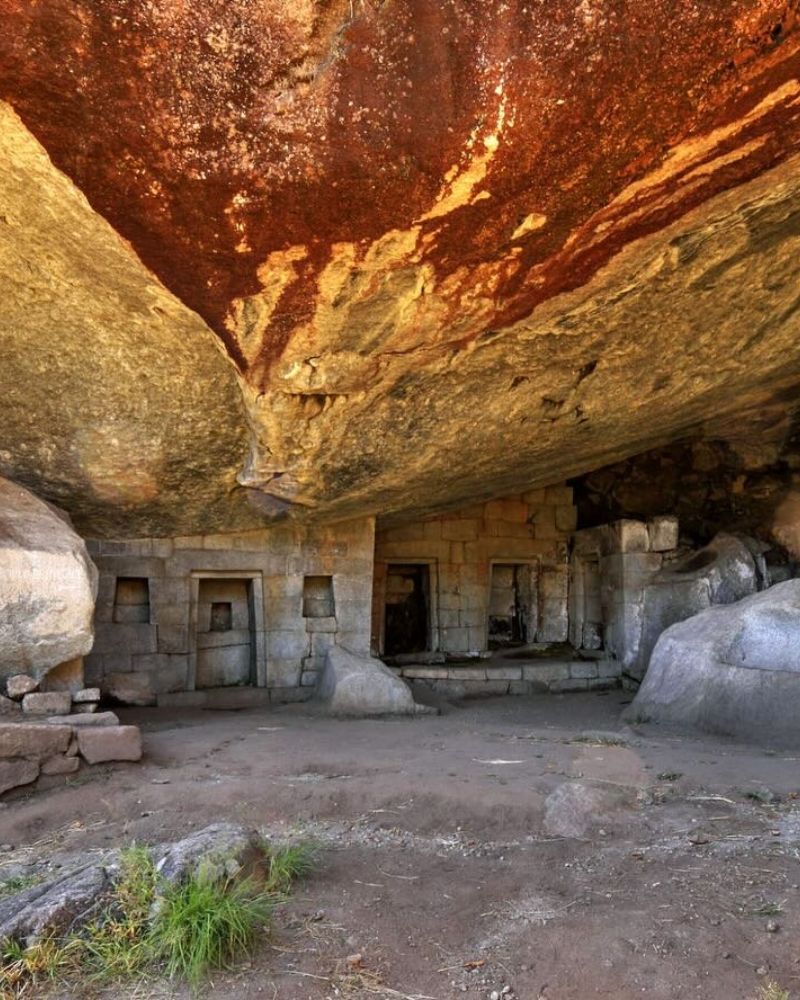
The Great Cavern or Temple of the Moon
One of the most impressive sites associated with Huayna Picchu is the Great Cavern, also known as the Temple of the Moon. This ceremonial complex was built within a massive natural rock formation on the backside of the mountain.
It’s important to note that this site can only be visited with a specific ticket, separate from the one for the classic Huayna Picchu hike, as it’s located off the main trail.
The Views from Huayna Picchu
One of the main attractions of this hike is the unique perspective of Machu Picchu it offers throughout the ascent. From various points along the trail, you can see:
- The main plaza of Machu Picchu
- The agricultural terraces surrounding the city
- The Urubamba River winding at the bottom of the valley
- The mountains that form the sanctuary’s breathtaking landscape
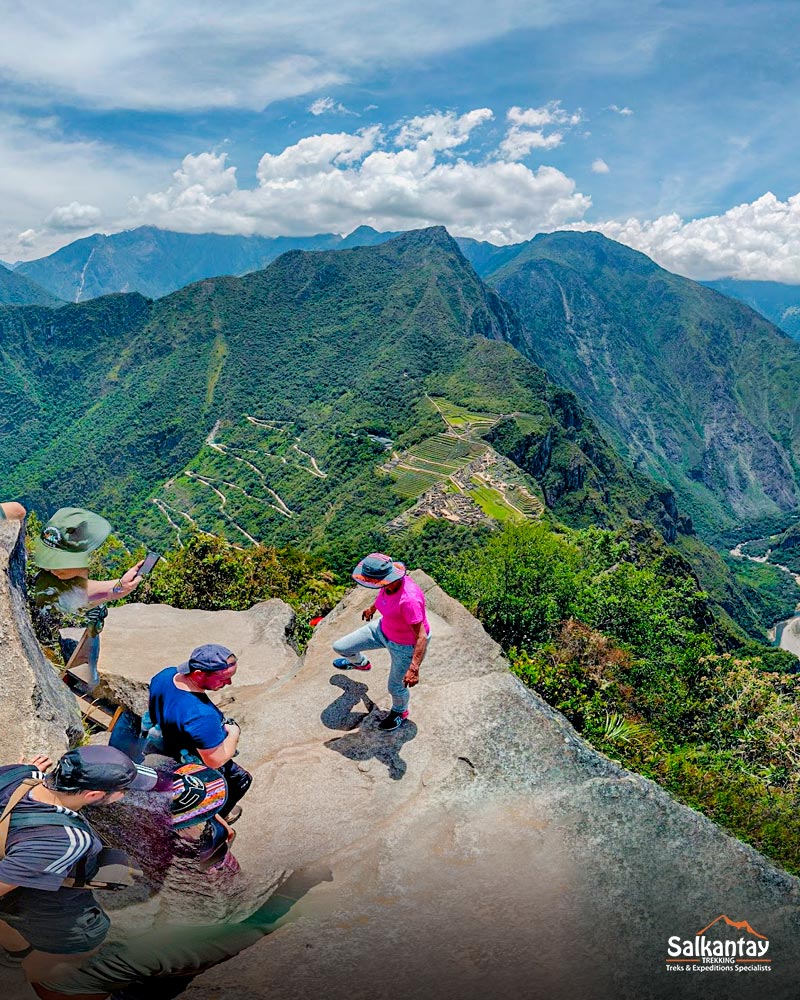
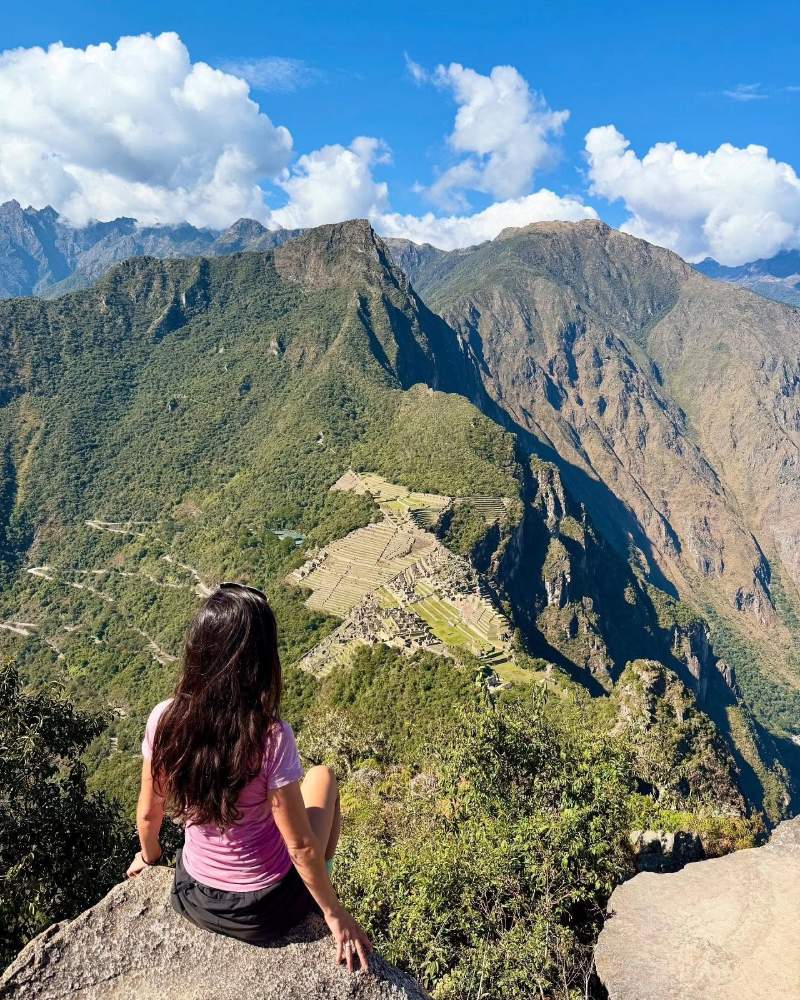
From the summit, the view is simply spectacular. Machu Picchu lies directly below, surrounded by a sea of green mountains and clouds drifting slowly over the valley.
It is one of the few places from which you can see the entire citadel from above, allowing you to better understand how the Incas integrated their architecture with the natural landscape of the Andes.
Fun fact: Some interpretations suggest that Machu Picchu was designed in the symbolic shape of a condor. From the heights of Huayna Picchu, you can picture this figure: the Temple of the Condor would represent the head, the main plaza the body, and the agricultural terraces the outstretched wings.
Because of this combination of history, adventure, and extraordinary views, the climb to Huayna Picchu is considered by many travelers to be one of the most exciting experiences within Machu Picchu.
Huchuy Picchu: Tranquility and Beauty at Every Step
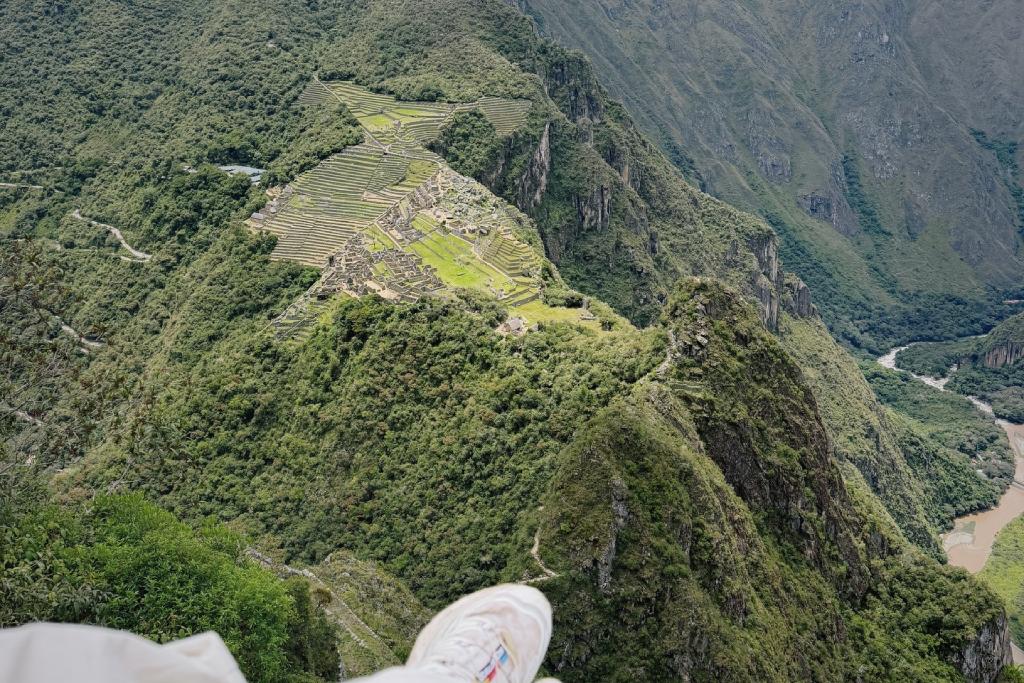
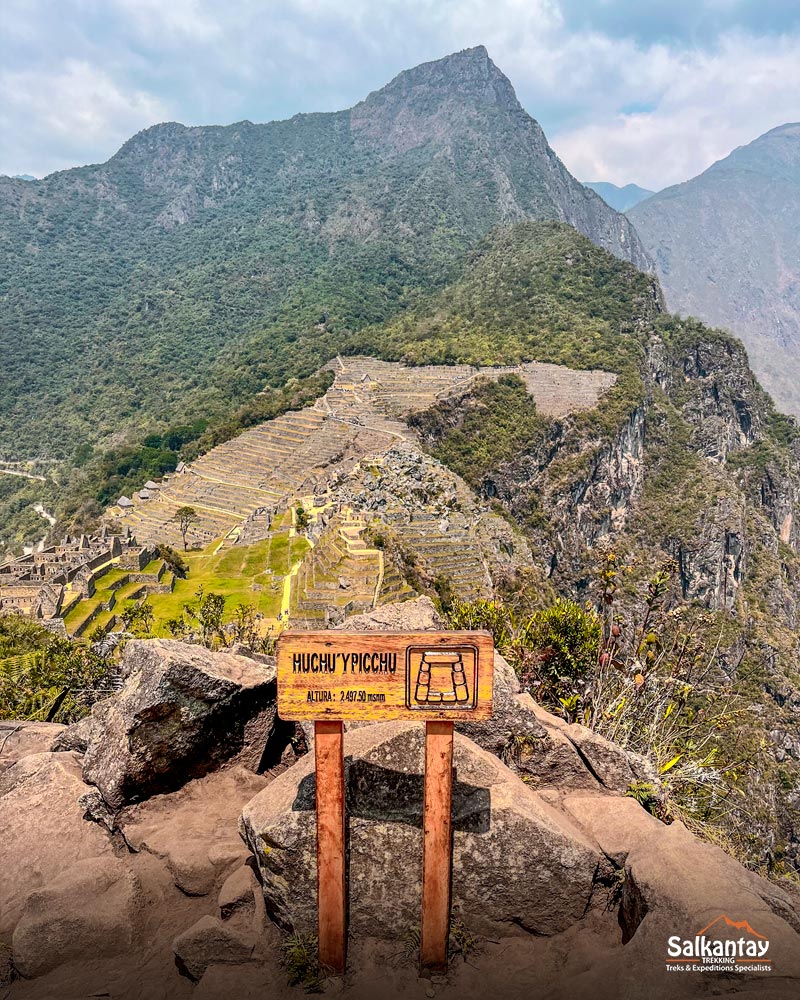
Huchuy Picchu is the smallest mountain within Machu Picchu, with an approximate height of 8,192 ft (2,497 m a.s.l.). It is easy to spot, as it lies behind the citadel, on the north side and right next to Huayna Picchu.
The hike is the ideal option for those seeking a more relaxed experience, one that isn’t physically demanding but is equally rewarding. The trail is shorter and less steep, yet it offers spectacular views of the citadel and the landscape surrounding Machu Picchu.
The name Huchuy Picchu comes from Quechua and means “Little Mountain,” a very apt description for this peak located next to the imposing Huayna Picchu.
What is it like to climb Huchuy Picchu?
The hike to Huchuy Picchu is one of the shortest within the sanctuary. The total round-trip distance is approximately 0.6 miles (1km).
Much of the trail is relatively flat, though it also includes some sections with stone steps leading to the summit. These sections add a bit of a challenge, but they remain accessible to most visitors.The ascent usually takes between 30 and 45 minutes, while the descent can be completed in 20 to 30 minutes. In total, the experience lasts approximately 1 to 2 hours, especially if you take advantage of the natural viewpoints along the way to rest or take photos.
Hike Difficulty
The hike to Huchuy Picchu is generally classified as easy to moderate.
Although the trail includes some sections with Inca steps and certain inclines, the short distance makes it much more accessible than other mountains in the sanctuary.
Route characteristics:
- Short duration
- Moderate incline
- Well-defined Inca steps
- Approximate elevation of 8,192 ft (2,497 m a.s.l.)
- Total walking distance of 0.6 miles (1km)
Thanks to these characteristics, people of average physical condition can complete the hike without major difficulty, as long as they maintain a leisurely pace and take breaks when necessary.
The Views from Huchuy Picchu
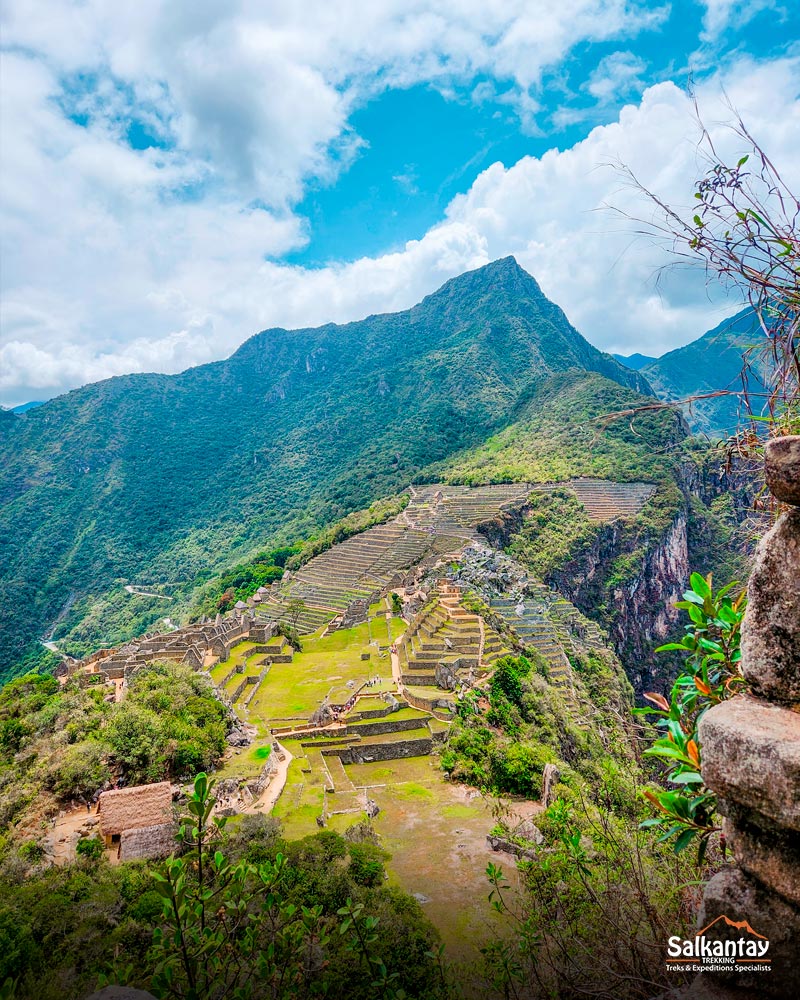
One of the main attractions of this hike is the direct, close-up view of Machu Picchu from a moderate elevation.
From various points along the trail, you can see:
- The entire citadel from a slightly elevated angle
- The agricultural terraces surrounding Machu Picchu
- The green mountains that form the backdrop of the sanctuary
Although it does not reach the height of other mountains, Huchuy Picchu offers a very clear and balanced perspective of the citadel, making it an excellent option for those who wish to enjoy the views without undertaking a particularly demanding hike.
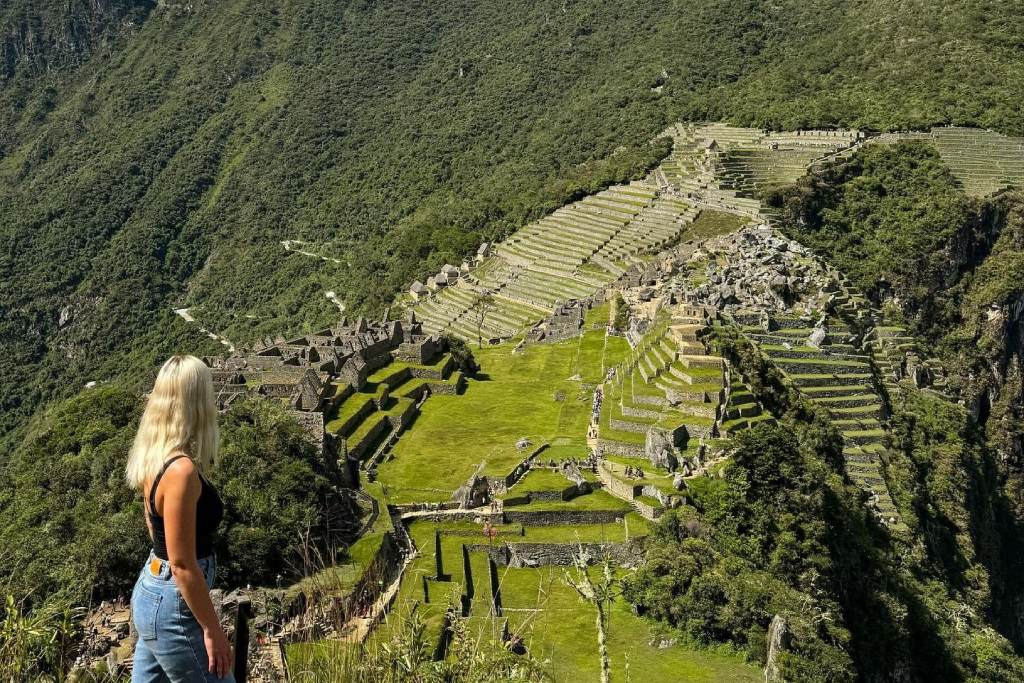
Machu Picchu Mountain: The Peak of Panoramic Views
Machu Picchu Mountain is locatedsouth of the citadel, directly across from the main sector of Machu Picchu. Unlike Huayna Picchu, which is located on the opposite side and appears in classic photos, this mountain lies in front of the archaeological complex, so it is not usually seen in those traditional images.
With an approximate elevation of 10,111 feet (3,082 m. a.s.l.), it is the highest of the three mountains that can be visited within the sanctuary. It stands out especially for its sweeping panoramic views of Machu Picchu and the surrounding valley. It is also a favorite hike for those seeking a greater physical challenge, as the route is longer and requires more stamina.
The name of this mountain can be confusing because it is identical to that of the citadel. However, there is an interesting historical fact: the mountain was already known as Machu Picchu before the archaeological site gained worldwide fame. When Hiram Bingham arrived in the area in 1911 accompanied by a local boy named Pablito Álvarez, he asked what the place was called. Due to confusion about which point he was pointing to, he was told the name of the mountain: Machu Picchu. Over time, that name came to refer to the citadel as well.
The term comes from two Quechua words: machu, meaning old, and picchu, meaning mountain or peak. Therefore, its most widely accepted meaning is “Old Mountain.”
What is it like to climb Machu Picchu Mountain?
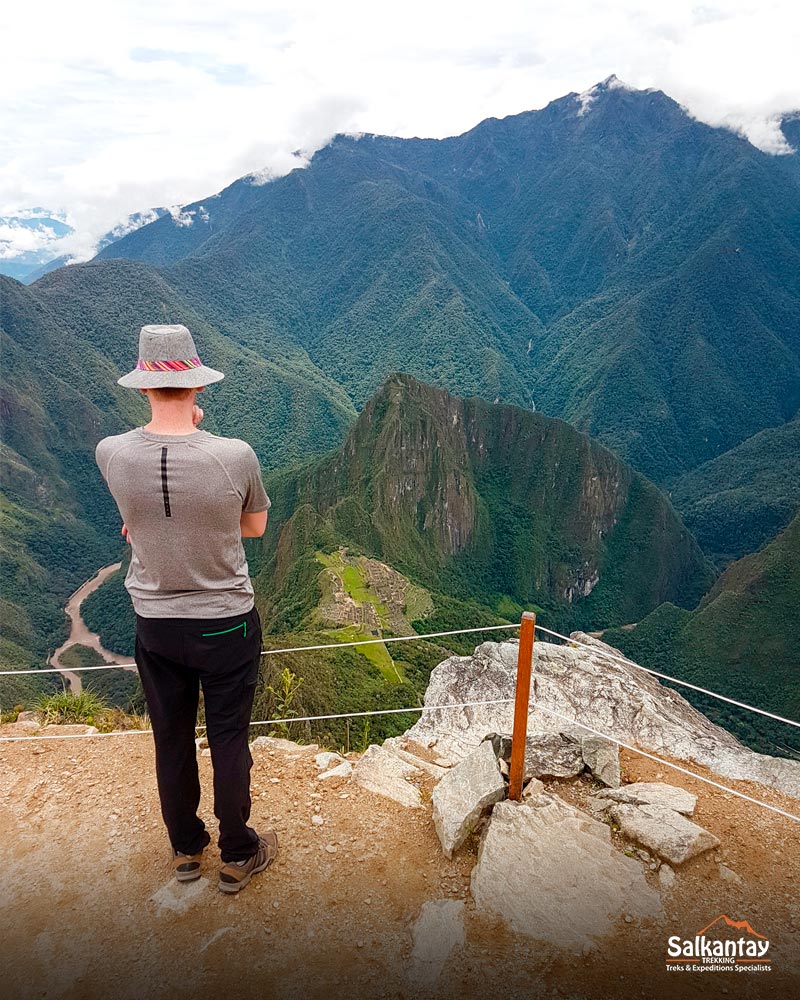
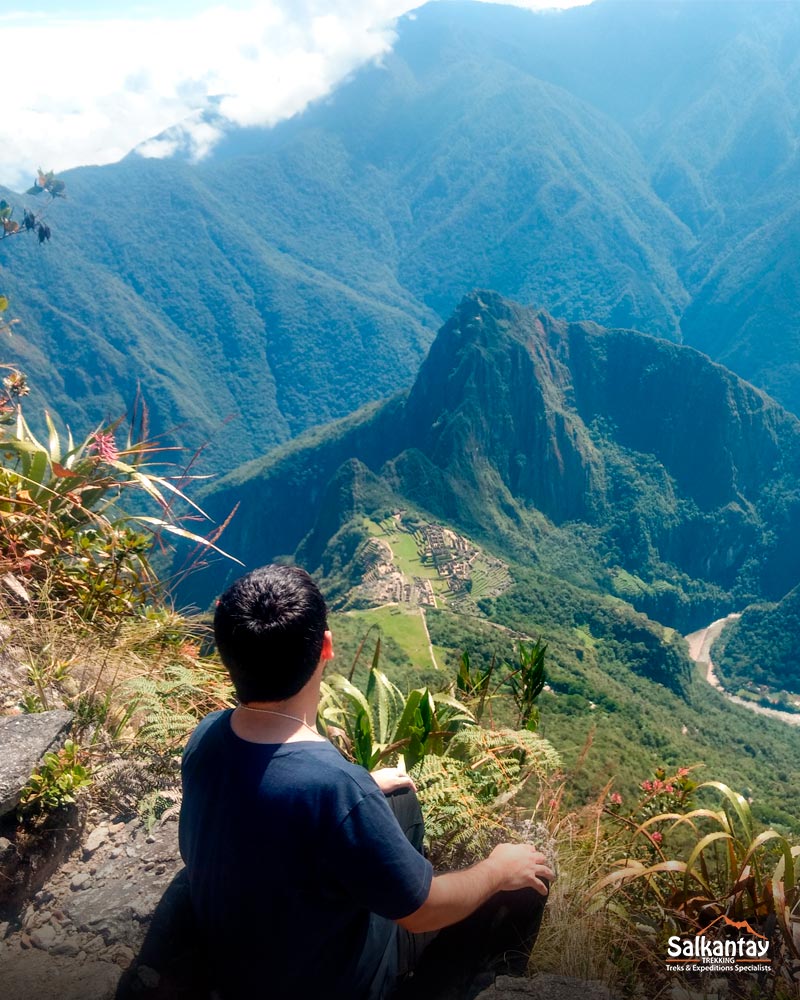
The climb up Machu Picchu Mountain is one of the most scenic hikes within the sanctuary. The trail is characterized by a long, steady, and relatively open ascent, ideal for those who want to gain elevation and take in the landscape surrounding the citadel.
The hike begins at the upper part of the archaeological complex, and from the very first minutes, the trail begins to climb via Inca staircases, stone paths, and compacted dirt trails. It is estimated that the route includes around 1,600 steps distributed along the way.
The ascent usually takes between 1 hour and 30 minutes and 2 hours, while the descent can take between 1 hour and 1 hour and 30 minutes, depending on each hiker’s pace. In total, the entire experience typically lasts between 3 and 4 hours.
On this route, the challenge usually doesn’t come from vertigo or narrow passages, but rather from the length of the climb, the altitude, and the sustained effort required to reach the summit. Fortunately, there are several natural spots where hikers often stop to rest, catch their breath, or take photos.
Hike Difficulty
The climb up Machu Picchu Mountain is generally classified as moderate to challenging.
It is not usually as intimidating as Huayna Picchu in terms of exposure or narrow sections, but it can feel more demanding due to the distance and total walking time.
The factors that most influence its difficulty are:
- The 2.4-mile (3.9 km) ascent
- The altitude
- The sections of Inca stairways
- The cumulative physical effort during the climb
Even so, you don’t need to be an athlete to complete it. Many people of average fitness manage to reach the summit if they maintain a steady pace, take breaks when needed, and carry the right gear.
For those afraid of heights, this mountain is usually easier to handle than Huayna Picchu, as the trail generally feels wider and less exposed. Only in the final stretch, near the viewpoint, does the path become a bit narrower and one-way, which may be daunting for some visitors.
The Views from Machu Picchu Mountain
One of the main attractions of this hike is the sweeping, ever-expanding views that unfold throughout the ascent.
From various points along the trail, you can see:
- The citadel of Machu Picchu from an elevated perspective
- The Urubamba River valley winding through the mountains
- The silhouette of Huayna Picchu rising on the other side of the sanctuary
- The vegetation-covered mountains surrounding the entire complex
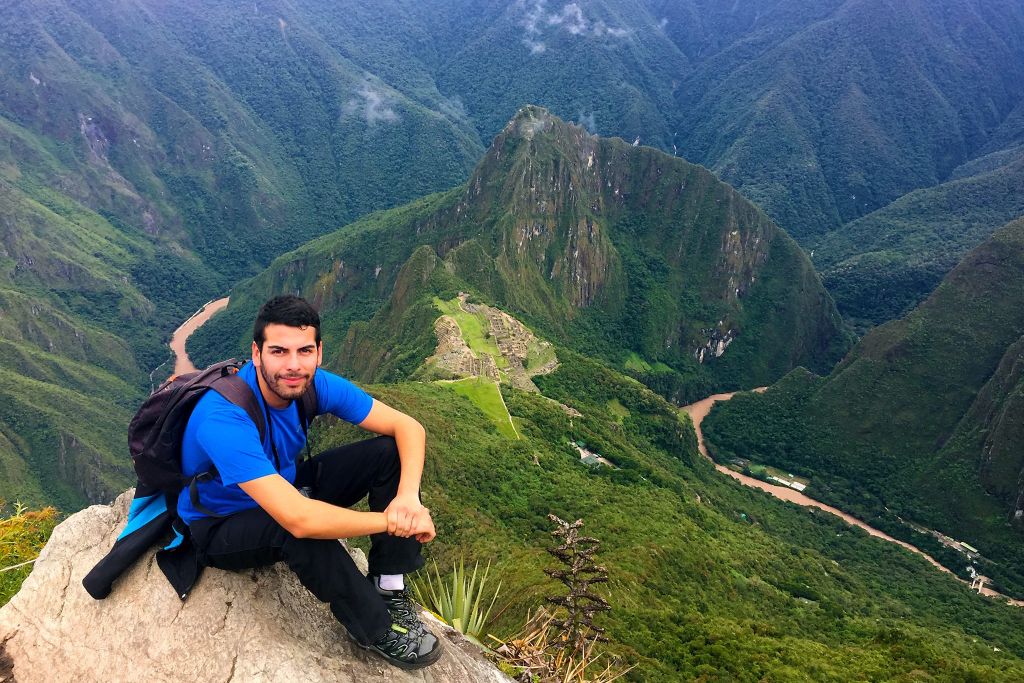
From the highest point, the sensation is different from what you experience on Huayna Picchu. Here, the view is more open and panoramic, allowing for a better appreciation of the scale of the landscape where the Incas built Machu Picchu.For this reason, many visitors value this hike not only for the physical challenge but also for the opportunity to view the citadel as part of a much broader mountainous setting, revealing the impressive relationship between Inca architecture and the geography of the Andes.
How do I get to each mountain?
To visit the Machu Picchu mountains, you must first enter the Machu Picchu citadel with a ticket that includes the correct trail. Each mountain has its own trail, and each trail passes through different parts of the archaeological site before reaching the trailhead.
Think of the circuits as guided paths within Machu Picchu. As you follow the route, you’ll see different sections of the citadel, and at a certain point along the way, you’ll find the entrance to the mountain you’ve chosen.
Below, we explain what you’ll see on each circuit and how access to each mountain works.
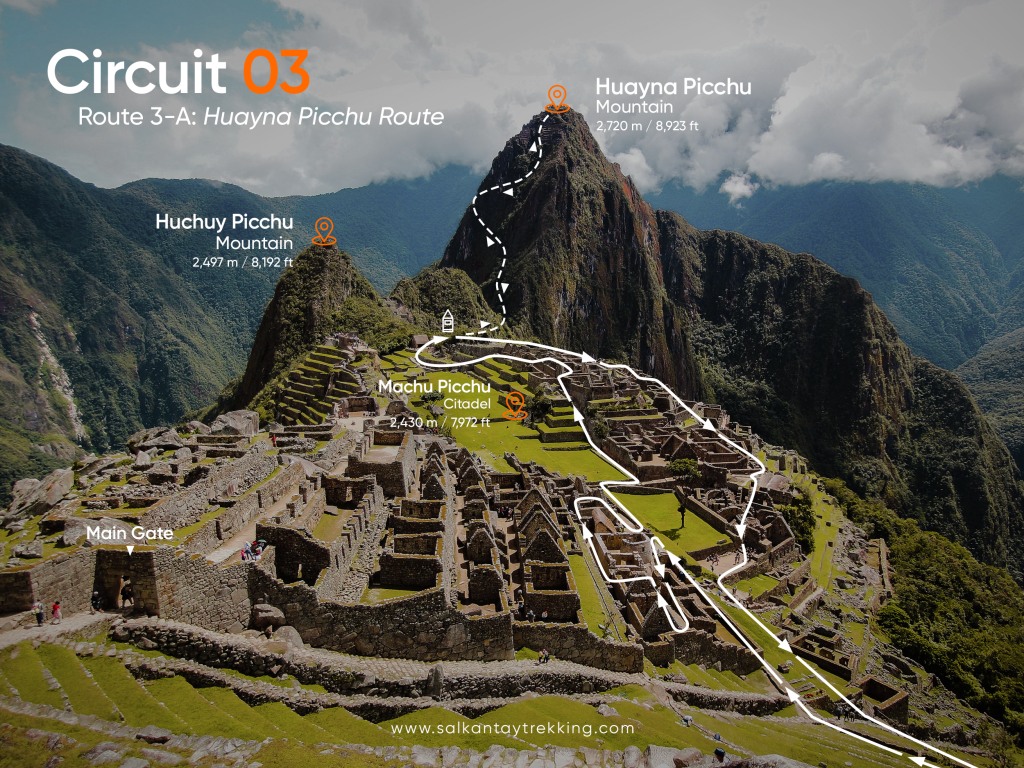
Circuit 3-A: Huayna Picchu
This circuit allows you to climb the famous Huayna Picchu and covers the lower part of Machu Picchu, known as the agricultural and royal sector.
During the tour, you’ll see agricultural terraces and sites associated with the Inca nobility, such as:
- Temple of the Sun
- Pisonay Plaza
- The Amphitheater
- Sacred Rock
Near the Sacred Rock is the checkpoint for entering Huayna Picchu.
After completing the hike up the mountain, you can continue exploring other areas of the circuit, such as:
- Temple of the Condor
- Eastern Qolqas
- Sector of the Twelve Arches
By 2026, this circuit will have a maximum stay of 6 hours within the sanctuary.
Available times:
- 7:00 a.m.
- 10:00 a.m.
Each time slot has a maximum capacity of 175 tickets.Since Huayna Picchu is one of the most popular attractions at Machu Picchu, it is recommended that you purchase your ticket at least 2 or 3 months in advance, especially during the high season.
Circuit 3-D: Huchuy Picchu
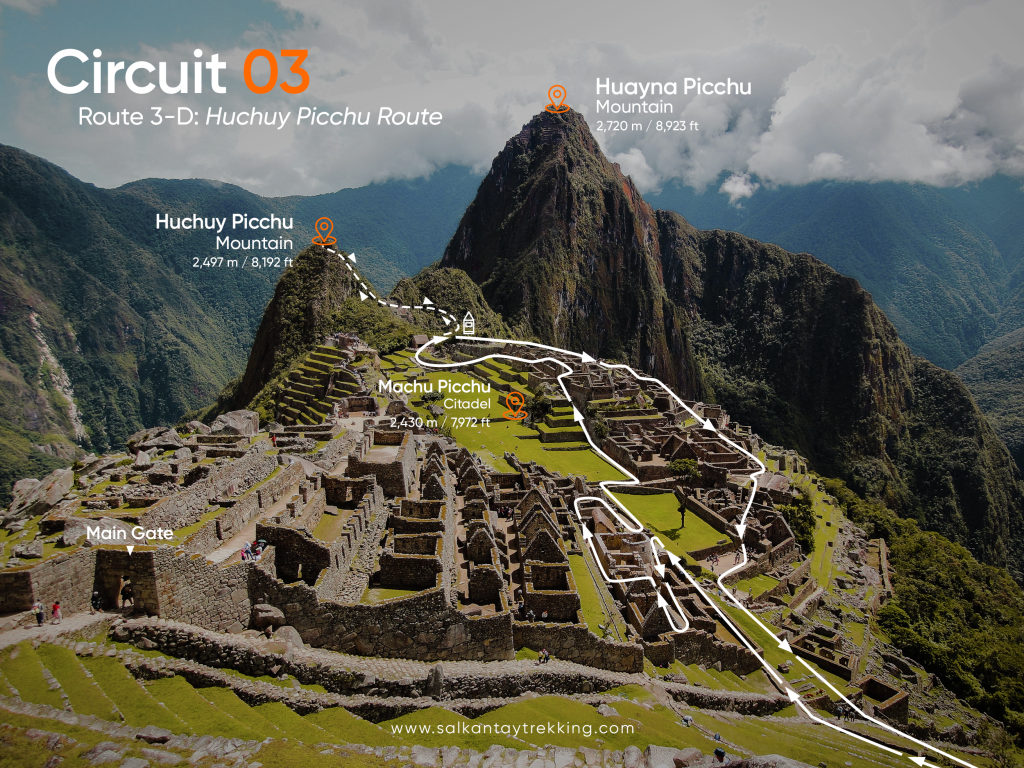
Circuit 3-D allows you to climb Huchuy Picchu and also covers the lower part of Machu Picchu. In fact, it shares the same checkpoint where access to the nearby mountains begins.
The route is the same as the one you would take on Circuit 3-A, but it is designed for visitors who wish to climb a mountain with less physical exertion.
This circuit has a maximum stay of 3 hours and 30 minutes inside the sanctuary.
Available times:
- 9:00 a.m.
- 11:00 a.m.
Only 20 tickets are available for each time slot, so access is quite limited.
Unlike the other mountains, Huchuy Picchu is not open year-round. It is typically only accessible during the high season (approximately June through December).
For this reason, in most cases, booking a month in advance is usually sufficient to secure availability.
Circuit 1-A: Machu Picchu Mountain
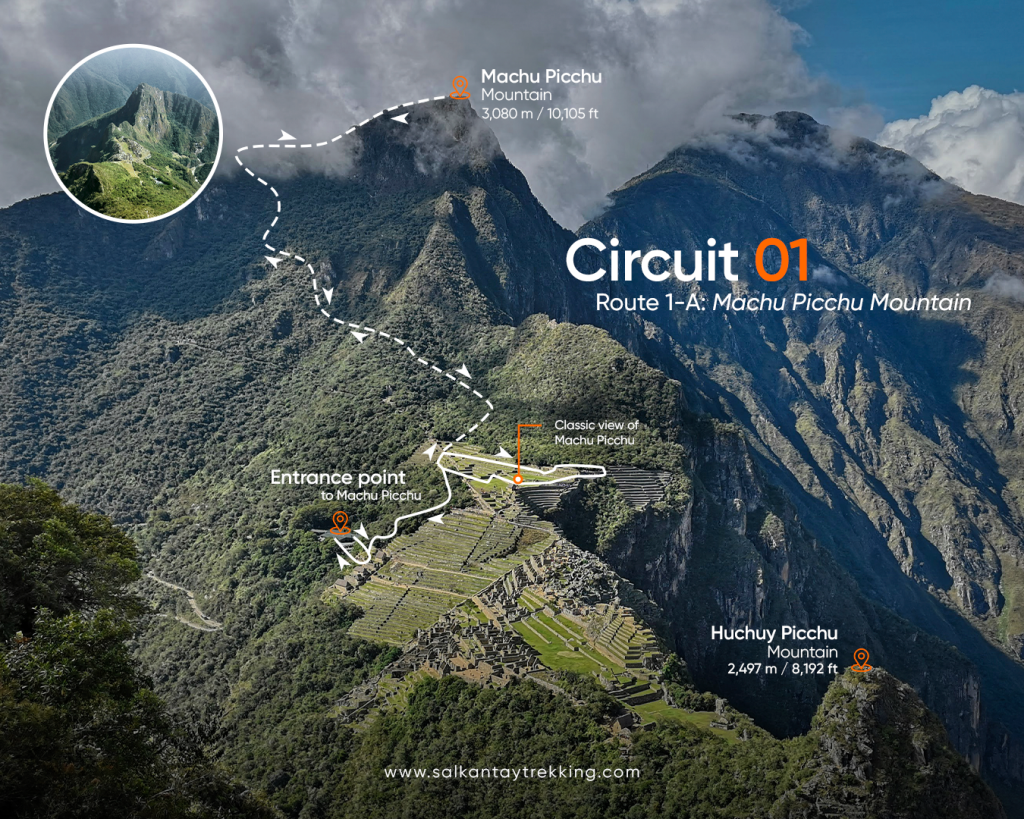
This Circuit takes you up Machu Picchu Mountain and begins in the upper, agricultural section of the archaeological site, so right from the start you’ll have to climb stairways until you reach the higher areas of the complex.
In this part of the tour, you can visit the famous Guardian’s House, one of the best-known viewpoints offering a classic panoramic view of Machu Picchu. From there, you can better understand how the Incas integrated the citadel with the surrounding mountain landscape.
After exploring this area and taking photos, you’ll continue to the checkpoint that grants access to Machu Picchu Mountain, where the hike to the summit begins.
Currently, this circuit has two entry times:
- 7:00 a.m.
- 9:00 a.m.
There are 150 tickets available for each time slot.
Because this hike is longer, the maximum time allowed inside the sanctuary is 7 hours.
How does access to the mountains work?
It’s common for many visitors to be confused when they see the time printed on their ticket.
The time shown on your ticket indicates the entry time to the citadel, not necessarily the exact time you must begin the climb up the mountain.
For example, if your ticket says 7:00 a.m., you must enter Machu Picchu at that time. From that moment on, you will have approximately one hour to explore the first part of the circuit.
Access to the mountains usually begins an hour later, around 8:00 a.m. However, there is some leeway regarding entry times. If you’re running a little late, you’ll typically still be able to enter until around 9:00 a.m. This applies to all the mountains
At the mountain checkpoint, park staff will ask you for:
- Your Machu Picchu entrance ticket
- Your passport or ID
You will then need to register your information at the entrance checkpoint, and finally, you can begin your hike up the mountain of your choice.


Differences between the 3 Machu Picchu mountains: Which one to choose?
The three mountains surrounding Machu Picchu: Huayna Picchu, Huchuy Picchu, and Machu Picchu Mountain offer unique experiences, each with its own character and level of challenge.
Although all offer spectacular views of the ancient Inca citadel and the surrounding mountainous landscape, each route has distinct differences in difficulty, hike duration, and type of trail.
Some hikes are designed for those seeking an intense and exciting challenge, while others allow you to enjoy the mountain with a more moderate physical demand.
Understanding these differences will help you choose the mountain that best suits your schedule, physical condition, and the type of experience you want to have in Machu Picchu.
Below, you’ll find a clear overview of what each mountain has to offer to help you make the best decision before your visit.
Below, you’ll find a clear overview of what each mountain has to offer to help you make the best decision before your visit.
| HUAYNA PICCHU MOUNTAIN | MACHU PICCHU MOUNTAIN | HUCHUY PICCHU MOUNTAIN | |
| Location | North of Machu Picchu | South of Machu Picchu | North of Machu Picchu |
| Altitude | 8,923 ft / 2,720 masl | 10, 111 ft / 3,082 masl | 8,192 ft / 2,497 masl |
| Difficulty | Moderate-difficult | Moderate | Easy |
| Approximate duration of the hike (round trip) | 2-3 hours | 3-4 hours | 1-2 hours |
| Capacity | 350 people per day | 300 people per day | 40 people per day (available only during high season) |
| Type of photos | Mountain landscape photo | Classic postcard photo and mountain landscape photo | Mountain landscape photo |
Price | Foreign Adults: 200 soles (59 USD) | Foreign Adults: 200 soles (59 USD) | Foreign Adults: 152 soles (45 USD) |
| Foreign College and/or Technical School Students: 125 soles (37 USD) | Foreign higher education and/or technical students: 125 soles (37 USD) | Foreign higher education and/or technical students: 77 soles (22 USD) | |
| Adult from CAN countries or foreign resident: 112 soles (33 USD) | Adult from CAN countries or foreign resident: 112 soles (33 USD) | Adults from CAN countries or foreign residents: 64 soles (19 USD) | |
| Higher education and/or technical students from CAN countries: 80 soles (24 USD) | Higher education and/or technical students from CAN countries: 80 soles (24 USD) | Higher education and/or technical students from CAN countries: 32 soles (10 USD) | |
| Children (minimum age 12): 118 soles (35 USD) | Children (ages 3–17): 118 soles (35 USD) | Children (ages 3–17): 70 soles (21 USD) | |
| NOT SUITABLE FOR CHILDREN UNDER 12 | Children under 3 years old: FREE | ||
| Available tours | Circuit 3 (Route 3-A) | Circuit 1 (Route 1-A) | Circuit 3 (Route 3-D) |
| Age requirement | 12 years and older | Suitable for all | Suitable for all |
Huchuy Picchu vs. Huayna Picchu
Behind the citadel rise two mountains that often catch the eye of the most curious travelers: Huchuy Picchu and Huayna Picchu. Both offer a unique view of Machu Picchu, but the experience is completely different.
| HUCHUY PICCHU MOUNTAIN | HUAYNA PICCHU MOUNTAIN |
| A moderate hike: If you’re looking for an accessible hike that combines breathtaking scenery without excessive exertion, Huchuy Picchu is your best option. With a hike of approximately 30 minutes, this trail offers a moderate challenge, ideal for those who want to enjoy the surroundings without pushing themselves too hard. | Adrenaline rush: For lovers of extreme challenges, Huayna Picchu is the ideal choice. Its steep and demanding ascent, with narrow trails and Inca staircases, will test your endurance and adventurous spirit. Every step will bring you closer to an unforgettable experience. |
| Panoramic Views: Imagine reaching the summit, at 8,192 feet (2,497 masl), and feeling the world open up before your eyes. From this vantage point, you’ll be treated to breathtaking, up-close views that encompass the majestic citadel of Machu Picchu, the winding Sacred Valley, and the imposing mountains that surround it. | Breathtaking views: Once at the summit, at 8,923 feet (2,720 masl), you’ll be rewarded with the most stunning panoramic views of Machu Picchu, the Urubamba River, and the snow-capped peaks of the Andes. Prepare to be left breathless, not just from the effort, but from the beauty that surrounds you. |
| An oasis of tranquility: Unlike other tourist spots, Huchuy Picchu is a haven away from the crowds. Here, you can connect with nature and Inca history in a serene and relaxed atmosphere. It’s the perfect place to enjoy moments of peace while admiring the panoramic views of Machu Picchu and the Sacred Valley. | A face-to-face encounter with history: As you ascend, you’ll walk along ancient Inca trails and discover archaeological remains that will transport you back in time. Huayna Picchu isn’t just a mountain; it’s a journey through time that connects you with the grandeur of the Inca Empire. |
| Perfect for families: Thanks to its accessible trail and lower difficulty level, Huayna Picchu is an excellent option for families with children over 8 years old. However, it is suitable for anyone seeking a rewarding experience without major physical challenges. | For adventurers only: This climb is not for everyone. It requires good physical condition, a head for heights, and an intrepid spirit. It is not recommended for people with heart conditions, a fear of heights, or children under 12. If you dare, you’ll have one of the most thrilling experiences of your life. |
So, which one should you choose?
The choice between Huchuy Picchu and Huayna Picchu depends on the kind of experience you’re looking for. If you prefer a leisurely and accessible hike, Huchuy Picchu is an excellent option.
If, on the other hand, you want a more intense challenge and a thrilling climb, Huayna Picchu is the perfect choice.
In any case, both mountains offer unforgettable views and a unique way to discover Machu Picchu from above.
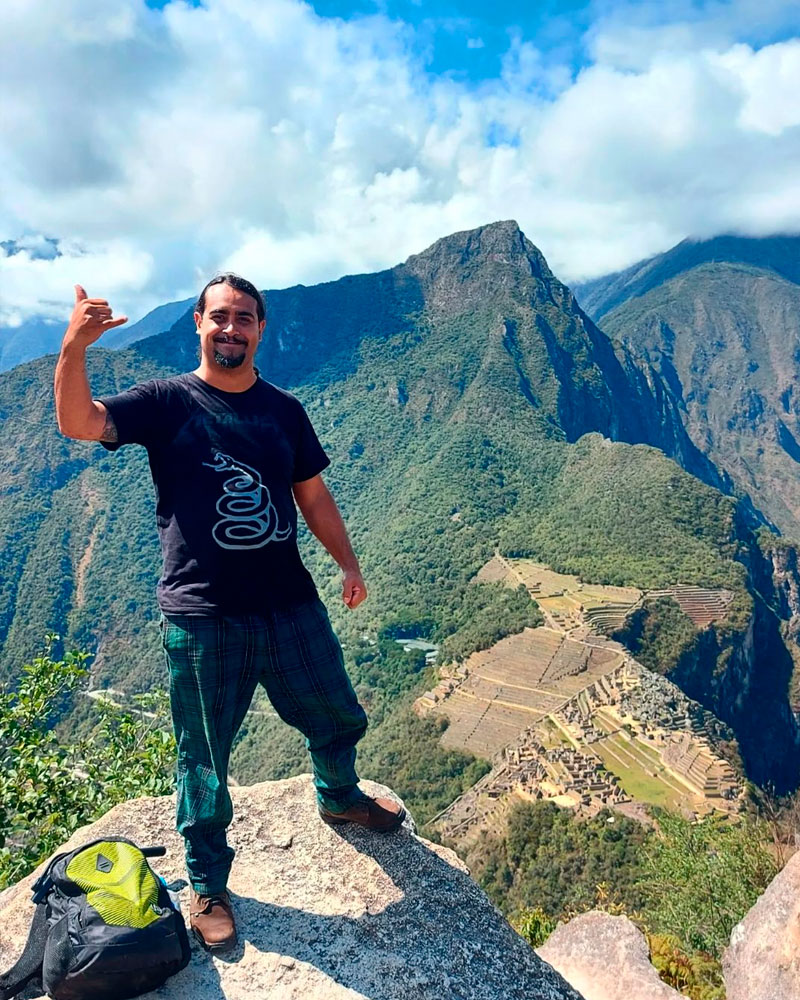
Machu Picchu Mountain vs. Huayna Picchu Mountain
In the heart of the Peruvian Andes, two majestic mountains dominate the landscape surrounding the citadel of Machu Picchu: Machu Picchu Mountain and Huayna Picchu. Both offer spectacular views, historic trails, and an unforgettable experience within the historic sanctuary.
However, each offers a different kind of adventure. While one stands out for its scenic and more accessible hike, the other is famous for its steep, adrenaline-filled ascent. Understanding their differences will help you choose which one best suits your travel style.
| MACHU PICCHU MOUNTAIN | HUAYNA PICCHU MOUNTAIN |
| A trail accessible to everyone: Machu Picchu Mountain welcomes you with a moderate trail that takes about 2 hours to complete. This less demanding and longer, yet equally rewarding, route is ideal for those seeking to enjoy a pleasant hike without sacrificing the beauty of the landscape. It’s perfect for families, travelers who prefer a more relaxed pace, or those who wish to connect with nature without strenuous physical effort. | Pure adrenaline with every step: If you’re looking for an experience full of excitement and challenge, Huayna Picchu Mountain is your destination. With a steep and demanding ascent, this mountain will put you to the test with narrow trails and the famous “Stairs of Death.” It is an adventure designed for those in good physical condition, with a head for heights, and an unbreakable spirit. |
| A dreamlike viewpoint: Upon reaching the summit, at 10,111 feet (3,082 masl), you’ll be rewarded with a 360-degree panoramic view encompassing the Inca citadel, the Sacred Valley, and the majestic Andes mountain range. This setting will allow you to capture stunning photographs and enjoy a unique perspective of Machu Picchu, different from the one offered by Huayna Picchu. | An intimate encounter with history: The path to the summit is dotted with archaeological remains and ancient Inca structures, offering you an intimate glimpse into the engineering and spirituality of this civilization. It is an experience that combines adventure, history, and nature at their finest. |
| A journey through time: As you ascend, you’ll walk along ancient Inca trails, explore archaeological ruins, and immerse yourself in the history of the Inca Empire. Every step is an opportunity to connect with the legacy of a civilization that knew how to live in harmony with nature. | Breathtaking views: At 8,835 feet (2,693 masl), the summit of Huayna Picchu offers dramatic views of the Machu Picchu citadel, the Urubamba River, and the snow-capped peaks of the Andes. Every view from here is a reward that justifies the effort of the climb. |
| Ideal for the whole family: If you’re looking for an experience to enjoy with your family, this trail is the perfect choice. With moderate difficulty and an accessible path, it’s designed so that everyone, from the youngest children to adults, can enjoy it without complications.With a well-marked route and a gradual ascent, it’s ideal for introducing children to hiking or simply enjoying a day outdoors without demanding physical exertion. | For adventurers only: If you’re the type who seeks thrills and heart-pounding challenges, this climb is for you. The route requires excellent physical fitness, a head for heights, and an adventurous spirit ready to overcome obstacles. Every step is a test of strength and determination, designed for those who aren’t afraid to face the unknown.However, this experience is not for everyone. It is not recommended for people with heart conditions, a fear of heights, or children under 12, due to the physical demands and the terrain conditions. |
So, which one should you choose?
The choice between Machu Picchu Mountain and Huayna Picchu depends mainly on the kind of experience you’re looking for.
If you prefer a longer hike with a gradual ascent and sweeping panoramic views, Machu Picchu Mountain is an excellent option. The trail allows you to take in the scenery at a more leisurely pace and enjoy a broad view of the sanctuary and the surrounding mountains.
On the other hand, if you’re looking for a more intense and exciting experience, Huayna Picchu offers a more challenging climb and one of the most iconic views of Machu Picchu from above.
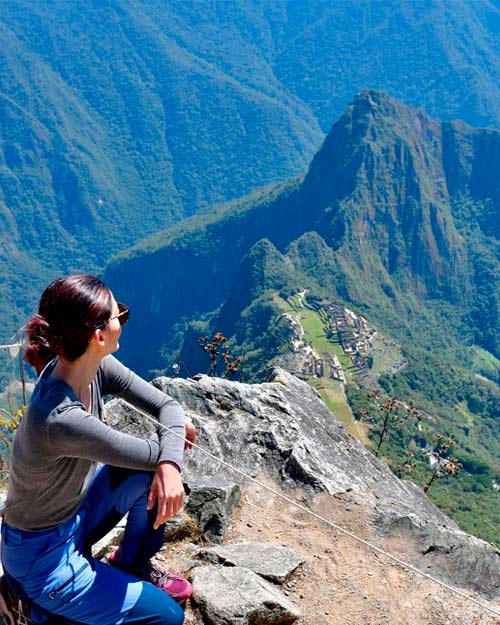
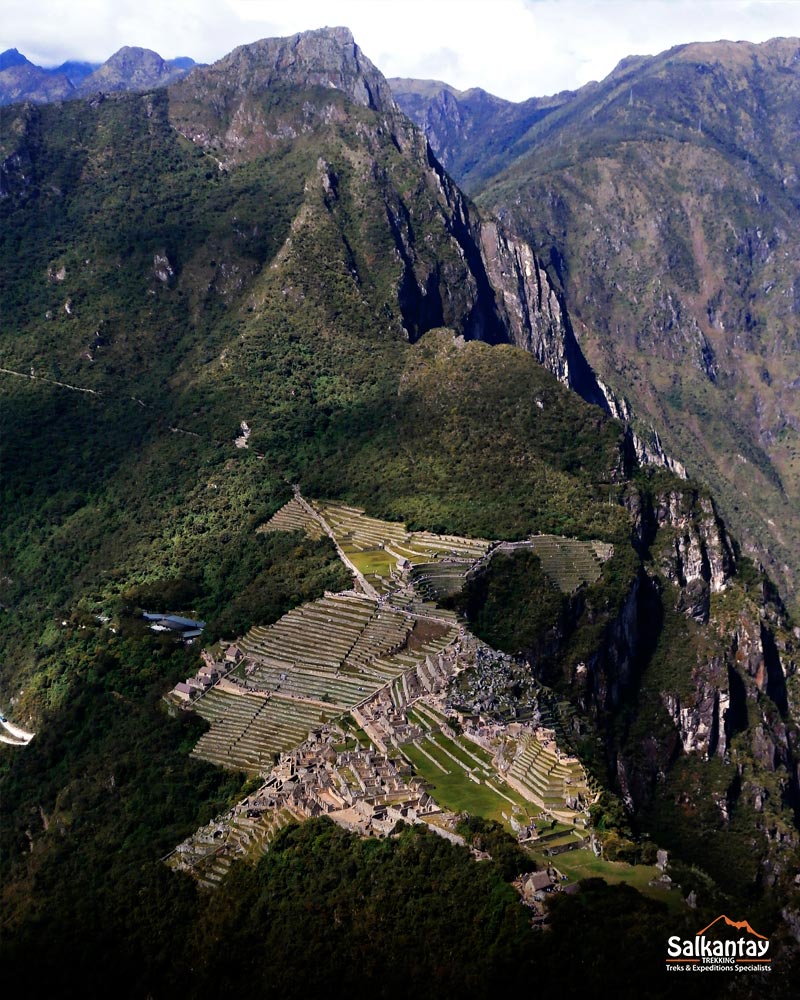
Machu Picchu Mountain vs. Huchuy Picchu Mountain
If you’re looking to enhance your visit with a hike but don’t want to go to extremes, this comparison is key. Machu Picchu Mountain and Huchuy Picchu offer incredible views, but at different paces.
| MACHU PICCHU MOUNTAIN | HUCHUY PICCHU MOUNTAIN |
| A trail accessible to everyone: With a hike of approximately 3 hours, Machu Picchu Mountain is perfect for those seeking a moderate climb and wanting to enjoy the scenery without significant physical demands. Its wide, well-marked trail is ideal for families and travelers who prefer a leisurely pace. | A quick and accessible climb: With a hike of approximately 2 hours, Huchuy Picchu is the perfect option for those seeking a shorter but equally rewarding experience. Its moderate trail is ideal for families with children and for those who want to avoid the crowds. |
| Dreamlike views: From its summit, at10,111 feet (3,082 masl), you’ll witness a 360-degree panoramic view encompassing the Inca citadel, the Sacred Valley, and the imposing Andes mountain range. It’s a natural viewpoint that will allow you to capture spectacular photographs and experience unforgettable moments. | Unique panoramic views: From its summit, at 8,192 feet (2,497 masl), you’ll enjoy privileged views of Machu Picchu, the Sacred Valley, and the surrounding mountains. It’s a peaceful place away from the hustle and bustle, ideal for connecting with nature and history. |
| A journey through time: As you ascend, you’ll walk along ancient Inca trails and discover archaeological remains that will transport you back to the era of the Inca Empire. It’s an experience that combines nature, history, and culture in a single journey. | An oasis of serenity: Huchuy Picchu is known for its relaxed atmosphere and fewer visitors. It’s the perfect choice if you’re looking for a moment of peace while admiring the beauty of the landscape. |
| For the whole family: The accessible trail and lower difficulty level make it an excellent option for families. | Perfect for families: The accessible trail and lower difficulty level make it an excellent option recommended for families with children. But remember, it’s suitable for everyone. |
Which one should you choose?
The choice between Machu Picchu Mountain and Huchuy Picchu depends mainly on the kind of experience you’re looking for.
If you prefer a longer hike with sweeping panoramic views, Machu Picchu Mountain is an excellent option. Its gradual ascent allows you to take your time enjoying the scenery as you climb above the sanctuary.
On the other hand, if you’re looking for a shorter, more relaxed route, Huchuy Picchu offers a brief hike with close-up views of the citadel, ideal for those who want to complement their visit with an easy climb.
No matter which one you choose, either of these mountains will show you Machu Picchu from a different angle and give you an experience you’ll remember forever.
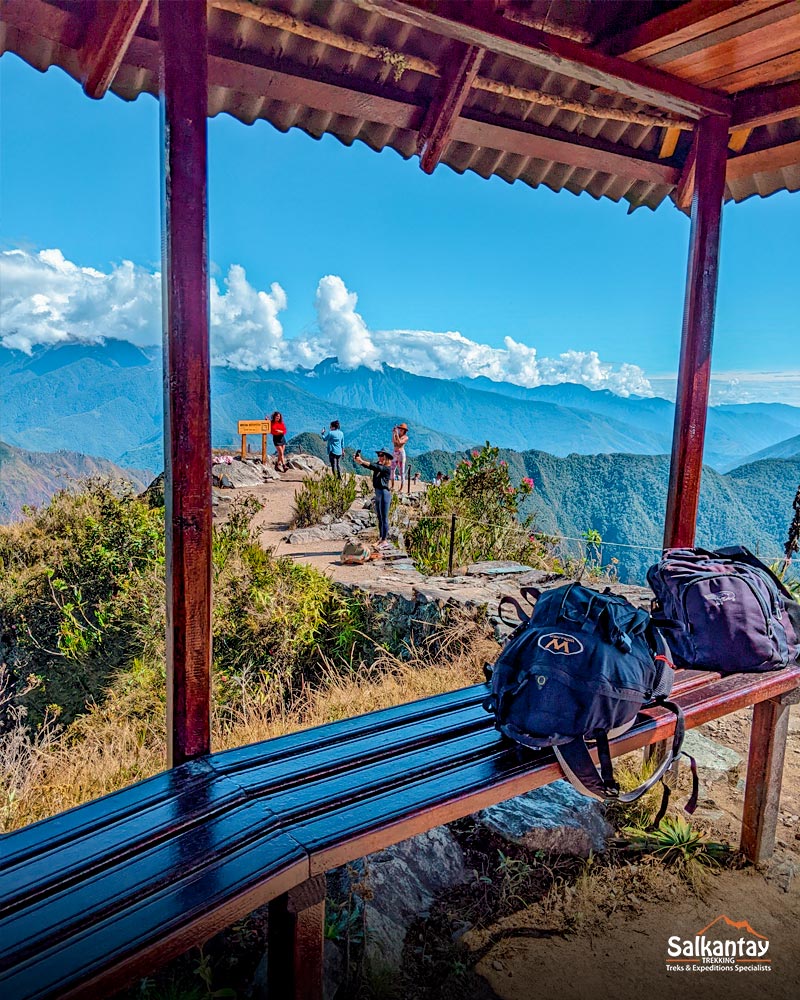
Exploring the Mountains with Family: Machu Picchu for Everyone
Visiting Machu Picchu doesn’t have to be a physically demanding experience. There are several options for exploring the site comfortably and easily, even if you’re traveling with children.
Accessible trails within the citadel
Inside the citadel, you’ll find relatively flat paths that allow you to explore iconic areas without much effort.
Some of the easiest places to visit include:
- The Main Plaza
- The Temple of the Sun
- The Sacred Rock
These routes allow you to enjoy the site’s architecture and history at a relaxed pace.
Huchuy Picchu: The Best Hike for Families
The climb to Huchuy Picchu is an excellent option if you want to add a short hike to your visit.
The ascent takes approximately 30 to 40 minutes, and from the top, you’ll have a spectacular view of the citadel and the surrounding mountains.
Plus, since it’s less popular than other routes, it offers a more peaceful atmosphere.
But it’s not the only option. If your children are 12 years old and enjoy hiking, you can hike to Machu Picchu, and they can also hike to Huayna Picchu. However, since the trail is more rugged, we recommend assessing their energy levels and following the rules.
Other Options for Families with Older Children
Although Huayna Picchu is usually the easiest option for families, it’s not the only one. If your children are over 12 and enjoy hiking, they can also explore other trails within the sanctuary.
Machu Picchu Mountain is an excellent option for active families, as its trail is longer but the ascent is gradual and well-marked, allowing you to enjoy the hike at a leisurely pace.
On the other hand, it’s also possible to hike up Huayna Picchu with teenagers. However, this hike is steeper and more demanding, so it’s recommended to assess the group’s physical condition and energy levels beforehand and always follow the park’s safety guidelines.
Choosing the right route will ensure that the whole family enjoys an unforgettable experience at Machu Picchu.
Can someone with a fear of heights climb up?
Having acrophobia, or a fear of heights, is more common than you might think. Many people visit Machu Picchu with the same question: Will I be able to climb one of its mountains if I’m afraid of heights? The answer depends on each person’s level of acrophobia, because we all experience it differently.
Some visitors only feel a little nervous when they look down. Others may feel uneasy even at lookouts or on high staircases. And there are also people who think they can handle it, but as they climb, they start to feel anxious or even have a minor panic attack. In fact, there have been cases where tourists try to climb Huayna Picchu thinking they can handle it, only to discover halfway up that the height affects them more than they expected.
The important thing is not to judge yourself or feel pressured. Everyone has their own limits.
Some tips if you have acrophobia
If your fear of heights isn’t too severe, many people manage to enjoy the experience by following a few simple tips:
- Focus on the path, not the void. Look at the steps or the trail in front of you.
- Avoid looking down if that makes you anxious.
- Breathe deeply and move forward calmly, without rushing.
- Take short breaks to regain your composure and enjoy the scenery.
- Remember that you can turn back at any time if you don’t feel comfortable.
- You don’t have to go all the way to the most exposed spot to take the photo; you can stop a few meters before and enjoy an equally incredible view.
Many people find that when they focus on the challenge and take it one step at a time, their fear subsides.
Which mountain feels safer?
If you want to take on the challenge even though you have a fear of heights, you might wonder which mountain feels safer or more stable. Generally speaking, many travelers perceive the mountains this way:
- Huchuy Picchu: This is usually the shortest and easiest option.
- Huayna Picchu: It’s famous for its steep steps, but the hike is short.
- Machu Picchu Mountain has a wider, more even path, though it’s the highest.
You might wonder why we ranked Huayna Picchu ahead of Machu Picchu Mountain.
There’s something many people don’t know: although the Machu Picchu Mountain hike usually feels more stable while walking, the elevation is higher, and the feeling of exposure can be more intense for some people.
Additionally, near the end there is a section of stairs on a narrow, one-way path, which can be a bit intimidating for some visitors. For many people, that moment is the most challenging part of the hike.
An experience that many end up loving
We want to share something with you based on our experience as specialists in trekking and travel to Machu Picchu.
Over the years, we’ve accompanied many travelers who had mild or moderate acrophobia. Many of them managed to climb Huayna Picchu, and once they reached the summit, they told us it was one of the most exciting experiences of their trip.
For some, facing that little fear became a very special moment, because they discovered they were stronger and more capable than they ever imagined.
That’s why we can tell you this with confidence: yes, it is possible to do it, as long as you honestly assess your level of acrophobia.
If your fear is mild or moderate, and you follow the tips we share with you, it’s very likely that you’ll be able to enjoy the experience and take home one of the most incredible memories of your visit to Machu Picchu.
The best time to hike the mountains
Choosing the right time can make your experience in the Machu Picchu mountains much more enjoyable. The weather, the number of visitors, and the temperature all play a significant role when deciding to hike Huayna Picchu, Huchuy Picchu, or Machu Picchu Mountain.
The best months to hike the mountains
In Aguas Calientes, there are two distinct weather seasons: the rainy season and the dry season.
The rainy season usually lasts from approximately October to April, while the dry season runs from May to September.
Although many people think the dry season is the best time to visit Machu Picchu because it rains less, this doesn’t always mean it’s the most comfortable. During these months, the sun can be quite intense during the day, and since Machu Picchu is located in a jungle foothills area, it’s also common to encounter mosquitoes, especially in the vegetated sections.
For this reason, many travelers prefer to visit Machu Picchu during the transitional months, such as April, May, September, and October.
During these months, conditions are usually very pleasant for hiking:
- Rainfall tends to be lighter or intermittent.
- Temperatures are milder during the day.
- The weather is generally more stable for hiking.
First time slot or second time slot?
Most trails to Machu Picchu have two main entry time slots.
For many visitors, the first time slot is usually the most recommended, for several reasons:
- There are fewer people on the trail.
- The weather is generally cooler.
- The hike feels more peaceful.
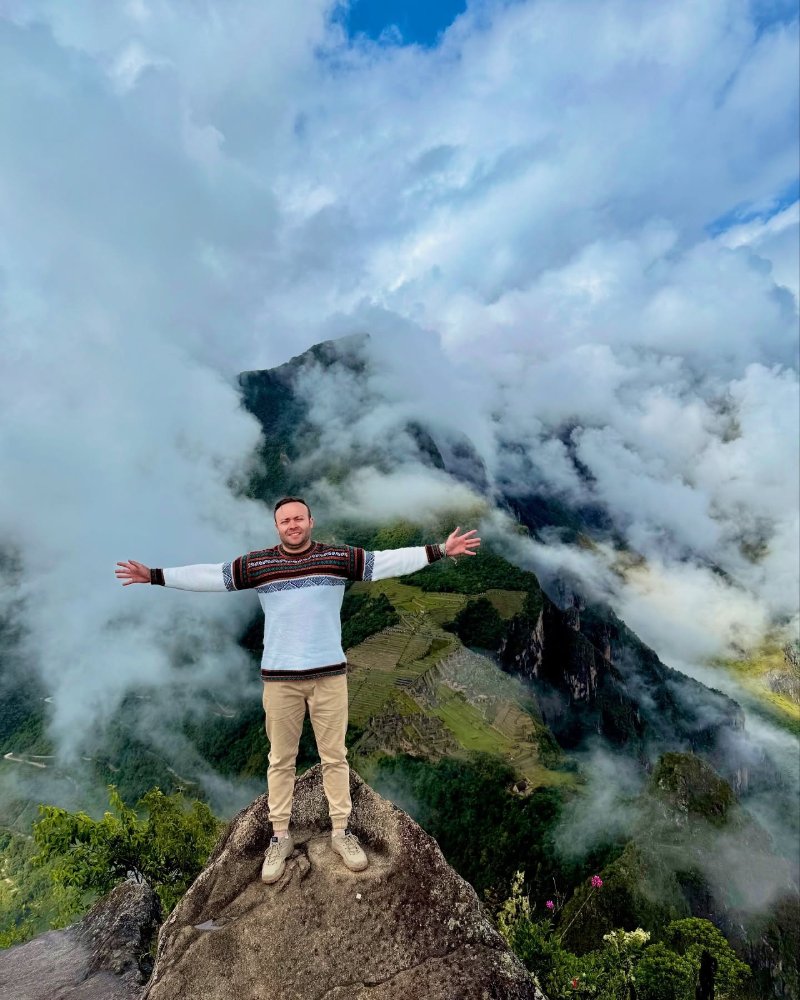
Some people worry about possible morning fog. However, one curious thing about Machu Picchu is that the fog often clears as you’re climbing or when you reach the summit.
In fact, watching the clouds gradually part to reveal the landscape can become one of the most magical moments of the experience.
The second time slot also has its advantages, but there are a few factors you should consider:
- The sun will be stronger.
- The hike may feel hotter.
- There are sometimes more visitors on the trail.
Tips for Visiting the Machu Picchu Mountains
Climbing Huayna Picchu, Huchuy Picchu, or Machu Picchu Mountain is an incredible experience, but it also requires preparation. The hikes not only demand physical energy; they also require you to be mindful of the terrain, the weather, and the time available on the trail.
If you prepare well, you’ll be able to enjoy the hike much more and avoid unnecessary setbacks.
1. Pack only the essentials in your backpack
When you climb a mountain in Machu Picchu, every ounce of weight feels heavier. The more you carry, the more exhausted you’ll be by the time you reach the summit.
That’s why it’s best to bring only what’s necessary:
- Passport or ID (they check these at the checkpoints).
- Ticket to Machu Picchu and the mountain.
- Enough water or a sports drink.
- Light snacks (nuts, energy bars, or cookies).
- Sunscreen.
- Mosquito repellent.
- Hat or cap.
- Sunglasses.
- Rain poncho (in case of the rainy season)
An important tip: bring enough water. As the sun gets stronger, your body will need more hydration during the climb.
2. Wear comfortable clothing and appropriate footwear
The mountains around Machu Picchu have many stone steps and uneven trails, so the gear you bring can make a big difference.
We recommend:
- Lightweight, breathable clothing, such as what you would wear for exercise.
- Hiking shoes or boots with non-slip soles.
- Trekking poles with rubber tips (very helpful for your knees, especially on the descent).
Many travelers also pack a spare T-shirt in their backpack, as they’re usually sweaty after the climb and prefer to change before taking photos at the summit.
3. Use the restroom before starting the climb
This seems obvious, but many travelers forget.
Before starting the hike up the mountain, use the restrooms near the entrance to Machu Picchu, as there are no restrooms along the way.
Once you start the climb, you’ll have to complete the entire route before finding restrooms again.
4. Assess your fitness level
You don’t need to be an athlete to climb these mountains, but it is important to honestly assess your fitness level.
Keep in mind that:
- You’ll climb many steps
- You’ll be walking at high altitude
- The climb can be demanding on your legs
If you regularly go hiking or engage in moderate physical activity, you’ll likely be able to do this without any problems.
However, if you have serious blood pressure, heart, or mobility issues, it’s best to consult a doctor beforehand.
5. Walk at your own pace (no one is judging you)
Many people worry about climbing too slowly. The reality is that every visitor walks at their own pace.
If you get tired:
- Take a few minutes to rest
- Take a deep breath
- Continue when you feel ready
It’s not a race. The important thing is to enjoy the experience.
6. Don’t forget your camera
The views from these mountains are truly breathtaking.
From the summit, you’ll be able to see:
- The entire citadel of Machu Picchu
- The Urubamba River winding through the valley
- The surrounding mountains covered in vegetation
That’s why it’s a good idea to bring your camera or phone with enough battery to capture the moment.
7. Always follow the signs
Along the trails, you’ll find ropes, railings, and signs installed by the park. These markers are designed to keep visitors safe in areas where the terrain may be slippery or steep.
To enjoy the experience safely, avoid crossing these boundaries or getting too close to the edges, even if you’re trying to get a better photo.
Frequently Asked Questions
Is Machu Picchu a mountain?
No. Machu Picchu is an Inca citadel, an archaeological site built among mountains. The mountains you can climb are Huayna Picchu, Huchuy Picchu, and Machu Picchu Mountain, from which you get panoramic views of the sanctuary.
Can I buy a ticket on the day of my visit?
It’s not recommended. Tickets for the mountains tend to sell out quickly, especially during peak season. Ideally, you should book them at least one month in advance, and for Huayna Picchu, even earlier.
Do you need a guide to hike up?
It’s not mandatory. The trails are well-marked, so many people hike on their own. However, a local guide can enhance the experience, especially on Huayna Picchu.
Are there age or physical fitness restrictions for climbing Machu Picchu Mountain?
There is no official minimum age, but the hike is demanding. It is recommended that you be in reasonably good physical condition and assess the ability of children, seniors, or visitors with health issues.
Who can climb Huayna Picchu Mountain?
Admission is restricted to people over 12 years of age. The hike is steep and requires good physical fitness to complete safely.
Can I visit Huayna Picchu and Machu Picchu Mountain on the same day?
It is not recommended. Both mountains feature physically demanding trails and require time and energy. Ideally, you should hike them on different days to fully enjoy each experience without exhausting yourself.
Are there other mountains around Machu Picchu?
Yes. Other notable mountains in the region include Salkantay, Verónica (Wakaywillca), Pumasillo, and Yanantin. However, these are not part of the citadel’s tourist circuit.
Which mountain is best if I don’t have much time?
The best option is usually Huchuy Picchu, since the hike is shorter and allows you to get an elevated view of Machu Picchu in less time.
What happens if it rains on the day of my visit?
Rain usually doesn’t prevent the hike. In Machu Picchu, most rain is light or brief. Just bring a poncho or waterproof jacket and continue the hike with caution.
Which mountain is best for photographers?
Machu Picchu Mountain usually offers the widest view of the citadel. Huayna Picchu is also very popular for photography due to its iconic perspective of Machu Picchu from above.
In what mountain range is machu picchu?
Machu Picchu is located in the Andes, the longest mountain range in South America. It is situated in the Cusco region, in southern Peru, on a mountain overlooking the Urubamba River valley, at an elevation of about 7,972 feet (2,430 masl).
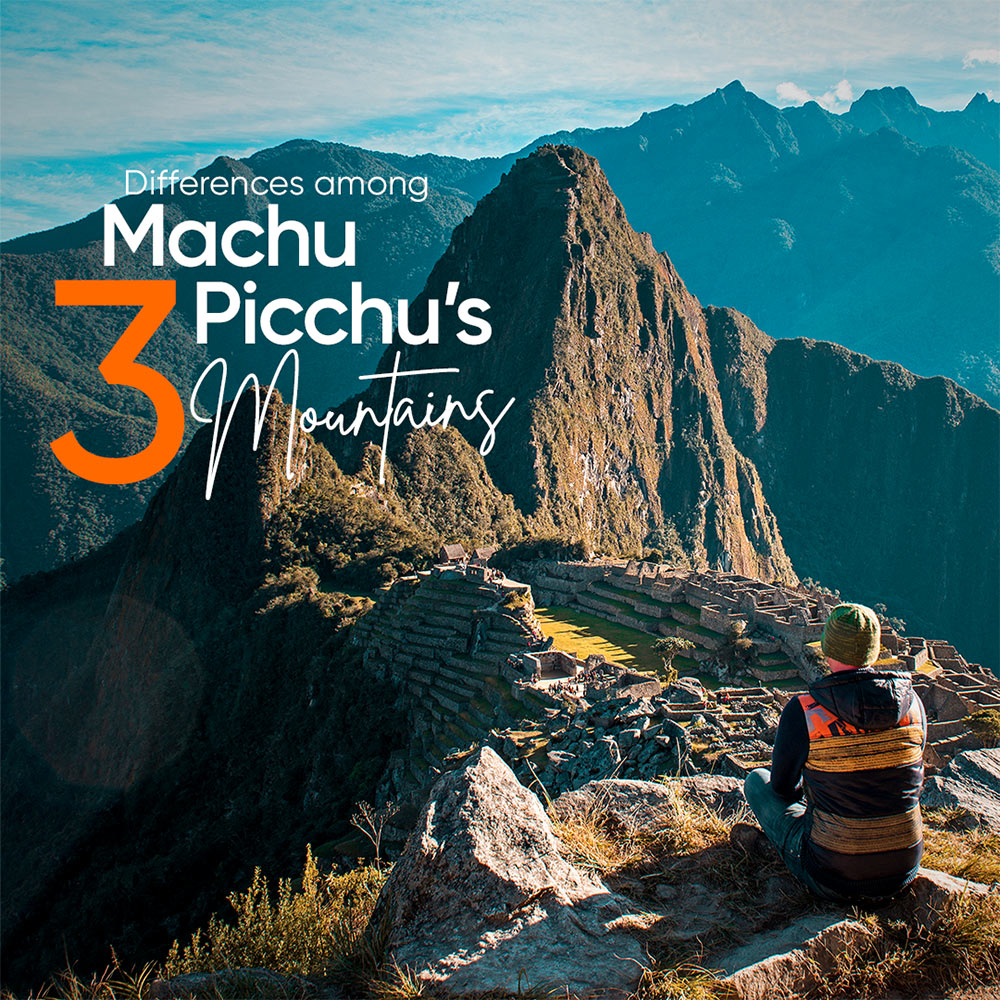
After seeing the views these mountains offer, it’s easy to understand why many travelers consider these hikes to be one of the most memorable moments of their visit to Machu Picchu. If you want to make your visit even more special, you can enjoy the experience with us on one of our tours to Machu Picchu, which are comfortably organized and carefully designed so that all you have to do is enjoy the trip.
You may be interested in:
- Machu Picchu tickets: Everything you need to know!
- How to Get to Machu Picchu: The Complete Guide
- The 7 Best Treks to Machu Picchu
- All About Machu Picchu Circuit 3
Written by: Hillary Quispe



Leave A Reply