
From our experience running treks across Peru, we often hear the question: ‘How much should we tip in Peru?’ Well, there’s no one simple answer, and it depends on where you are and what you’re doing.
Perhaps you’ve just enjoyed a delicious meal in one of the top restaurants, and when confronted with the bill, you’re not sure how much to tip in Peru or if it’s even the norm. Or you might be coming to the end of your trek to Machu Picchu and wonder if you should tip all the trekking team and how much.
Every country has tipping etiquette, and in some, it’s even rude to leave anything at all. So, we get that you want to understand the tipping culture in Peru before you come on vacation. This way, you can avoid uncomfortable situations and always be prepared with some cash on hand.
In this article, we’ll cover how much to tip in various situations and what to do if you’re confronted for a tip in a moment that doesn’t merit one.
Table of contents
Do You Tip in Peru?
To begin with, tipping is generally considered good practice amongst travelers to Peru. You’ll find you’re expected to tip at most establishments that you would normally, such as restaurants, bars, hotels, airports, on tours, etc. You can also tip in a situation where you feel you received outstanding service.
Quick tip: Just a little note before we get started, we recommend you always keep a handful of coins and small change on you. In many situations, it’s customary to give a very small amount. Many people who work in the establishments listed below will earn around the national minimum wage, so even small tips can make a meaningful difference. If you’re ever unsure, rounding up or leaving a small amount is always appreciated but never obligatory.

How Much Should You Tip in Peru?
If you’re short on time, here’s a quick breakdown of tipping in Peru depending on the situation:
- Restaurants: Around 10% (if not already included)
- Bars: 1–2 soles per drink
- Tour guides (day tours): 20–60 soles per person
- Trekking staff: 30–40 soles per day per trekker
- Hotels: 3–10 soles per day, depending on service
- Taxis: Not expected, but you can round up
As a general rule, tipping in Peru is appreciated but not always mandatory. In tourist areas, it’s more expected, whereas in smaller, local establishments, it’s less common.
Tipping in Restaurants and Bars
Let’s start by saying that in most bars and restaurants in Peru, gratuity isn’t included in your bill. If it is, it’ll only be at high-end places, and you’ll see it mentioned at the bottom of the check, where it’ll say something like ‘10% service charge.’
The general rule at restaurants, especially in a busy zone and the tourist areas, is 10%, but feel free to give more or less if the service deserves it. In some, you can tip with a credit card and will often be asked if you want to, but most prefer it in cash if you have it to hand.
The smaller, local places don’t usually expect you to leave anything. However, there’s no harm in leaving a couple of soles on the table when you leave.
At bars, most people tend to leave 1 or 2 soles per drink, but if you order any food, it’s better to apply the 10% rule.
Extra tip: You’ll often hear the waiter ask you whether you want a boleta or a factura. In most cases, travelers choose a boleta (receipt), as a factura is typically used for registered businesses

Tipping Tour Guides and Trekking Staff
While you’re on your vacation in Peru, chances are you’ll take part in at least one guided tour or trek, especially if you’re heading to Machu Picchu. In these situations, tipping is customary and widely expected, as it forms an important part of the team’s income.
Tipping usually takes place on the final day of the trek, often as part of a small thank-you moment with the team. Your guide will normally explain how it works and help organize the process.
It’s best to bring enough cash with you in small denominations, as you won’t have access to ATMs during the trek.
On a Day Tour
If you join a group tour for the day, like a visit to Maras and Moray, it’s customary to tip your guide at the end of the experience. For a half-day tour, around 15–17 soles ($5–$6) per person is appropriate, while for a full-day tour, 20–25 soles ($7–$8) per person is a good guideline.
If you opt for a private tour, tips are typically higher since the guide is dedicated solely to your group. In this case, you might consider 30–35 soles ($10–$12) for a half-day and 50–60 soles ($17–$20) for a full day.
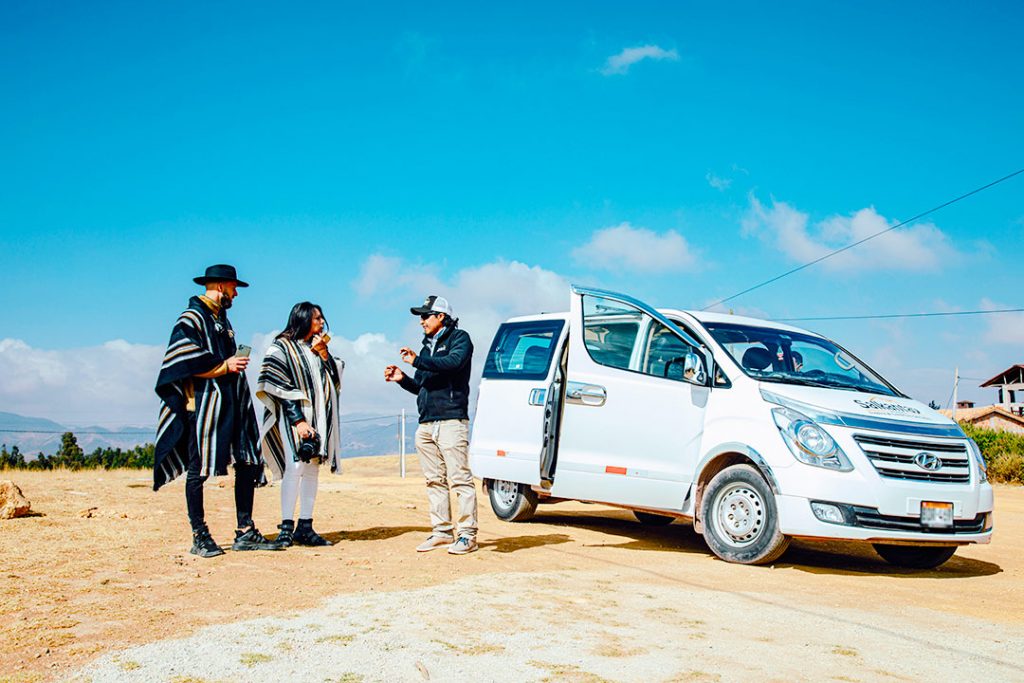
For drivers, a tip of around 10 soles ($3–$4) for the day is appreciated, especially if they’ve provided a safe and comfortable journey.
On a Multi-Day Tour
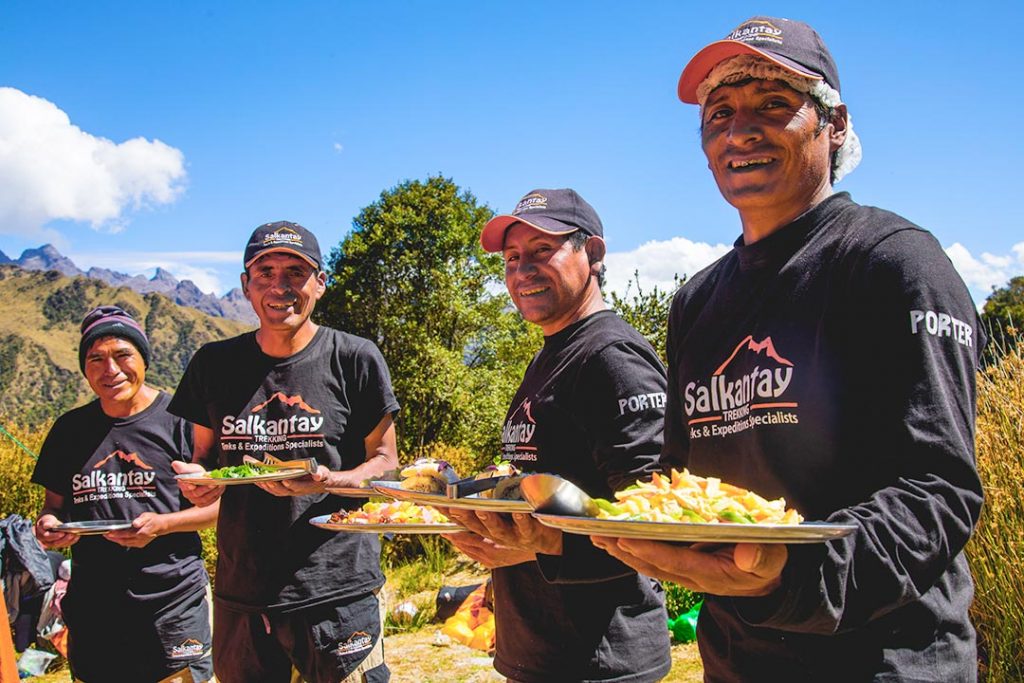
Tipping becomes a little more structured on multi-day treks, like the Salkantay Route, as there’s a full team working behind the scenes to make your experience possible. This often includes guides, cooks, porters, and/or horsemen.
From our experience running treks across the Cusco region, this team plays a huge role in your overall experience, often working long hours in challenging conditions to ensure everything runs smoothly.
Trekking Staff: The trekking staff is responsible for carrying equipment, preparing meals, setting up camp, and supporting the group throughout the journey. A typical contribution is around 30–40 soles per day per trekker, which usually totals around 120–160 soles ($35–$45) depending on the length of the trek.
Tips are normally collected as a group and handed to the lead guide at the end of the trek, who then distributes them fairly among the team.

The Guide: Your guide is with you every step of the journey—sharing local knowledge, managing logistics, and making sure everyone stays safe and enjoys the experience.
A fair tip for a guide is usually 60–80 soles ($15–$20) per person for the entire trek, depending on the level of service and the length of the trip.
A quick note on trekking tips: While tipping is expected, it should always reflect your experience. These are guidelines rather than strict rules, so feel free to adjust based on the level of service you receive. Even a modest tip is genuinely appreciated and goes a long way in supporting the people who make your trek possible.
Tipping in Hotels and Spas
Tipping in hotels in Peru often depends on the kind of hotel. More economical hotels and hostels often don’t see tips, unlike the luxury hotels in larger cities. However, this doesn’t mean that if you receive excellent service, you shouldn’t tip. In fact, they’re more likely to appreciate it.
If you stay in the larger chain hotels, about 3 soles ($1) per day is a decent tip for housekeeping and porters between $1-$3 a day for all their help.
In the Sacred Valley, there are many luxury spa hotels, for which around 10 soles should be well-received for each service. If you head to a smaller spa for the day in Cusco, 5 soles should be enough for each service.
Tipping in Taxis and Public Transport
When you use public transport or taxis, it’s not commonplace to leave a tip. Buses have a set fare, but taxis don’t, so you should negotiate a price before getting in. You might feel the urge to give a little extra for great service, but most Peruvians would tell you it’s not needed. You could give 2-3 soles if a driver helps you take your bags into your accommodation.
Tipping at the Airport
The first place you’ll experience when you arrive in Peru is the airport. You’ll likely notice a lot of porters offering to help with your bags who’ll expect a little in return. You don’t need to accept their help if you prefer to do things by yourself. Just kindly say no to them.
If you already have a designated person or guide meeting you at the airport, there should be someone with a board or piece of paper with your name on it. They’ll likely have someone to help you with your bags, so you definitely won’t need the help of an extra porter in this case. A reasonable tip if you do use a porter is about two soles a bag.
Tipping in Gas Stations and Public Restrooms
When you stop at gas stations, you’ll notice that the service attendants fill your gas for you. You can tip for extra services like checking tire pressure and cleaning windows if you rent a car. 1 sol is sufficient.
For restrooms, you’ll often find you need to pay a small fee (usually 20 cents) to use them. In some, there won’t be a fee, and you’ll see a little basket or pot inside for you to leave a little something inside for the maintenance.
Quick Peru Tipping Guide
| Service | Suggested Tip | Expected Or Optional |
| Restaurants | 10% | Yes, especially in tourist areas |
| Bar drinks | 1–2 soles | Yes, but small amounts |
| Tour guide (per day) | 20–60 soles | Yes |
| Trek staff (per day) | 30–40 soles | Yes |
| Hotels | 3–10 soles | Common, but not always expected |
| Taxis | Not expected | Yes |
| Aiport porter (per bag) | 2 soles | No |
Common Tipping Mistakes in Peru
Even if you’re familiar with tipping in other countries, Peru has its own customs. Here are a few common mistakes to avoid to help you navigate situations with more confidence.
Assuming a Tip Is Always Included
Sometimes it is. Often it isn’t. In higher-end restaurants, you might see a 10% service charge added to the bill, but this isn’t standard across the board. It’s always worth checking before you automatically add another tip on top.
Not Carrying Small Change
A lot of tipping in Peru involves small amounts of money. Think a couple of soles here and there in most places. Trying to tip with a large note either creates an awkward wait for change or quietly ends with you tipping far more than planned.
Having small coins and low-value notes on you makes everything easier.
Overtipping Without Realizing
It might be easy to just tip what you would at home, but that doesn’t always translate well.
Tipping far above the local norm can feel out of place, especially outside of tourist-heavy areas. The standard amounts are already considered fair, so there’s no need to go beyond them unless the service genuinely warrants it.
Thinking You Have to Tip Everyone
You don’t. In some situations, it’s not expected at all, like in taxis or small local spots. Feel free to round up or add a little extra, but there’s no pressure to do so.
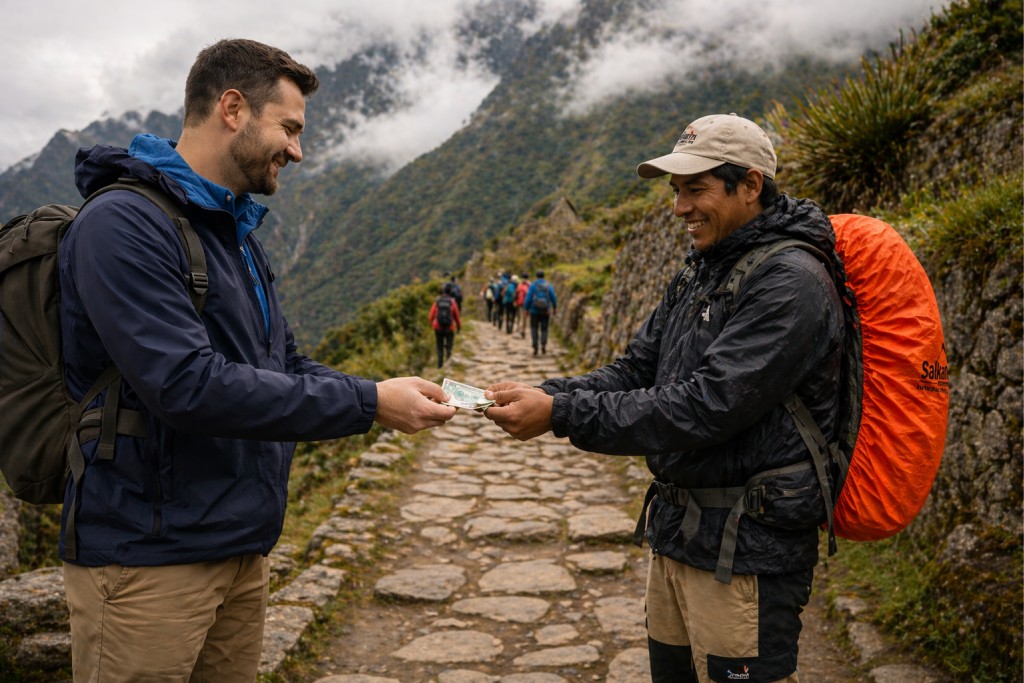
Giving Out Trekking Tips Individually
Tipping in Peru works a little differently on multi-day treks, like the Inca Trail.
Behind your incredible experience, there’s a whole team of guides, chefs, and porters. It might feel nice to hand everyone their own tip, but it can actually make things unnecessarily complicated. Your guide will normally explain how it works at the end, so it’s best to follow their lead.
Taking Photos Without Asking First
This one often catches people off guard. In places like Cusco, you’ll often see locals in traditional dress with llamas or alpacas, which we’re sure you’ll agree makes for perfect photo material. But in many cases, a photo comes with the expectation of a small payment.
A quick ask beforehand avoids any awkward follow-up.
What to Do in Unexpected Tipping Situations
Occasionally on your vacation in Peru, you might sometimes be asked to tip someone out of the blue. This can happen in larger tourist areas, like Cusco, Arequipa, and Lima.
A typical example is when locals in traditional dress, often with alpacas or llamas, invite you to take a photo. It may seem like a friendly gesture, but in most cases, they’ll expect a small payment afterwards. To avoid any awkwardness, it’s always best to ask beforehand if there’s a cost.
Similarly, if someone approaches you offering directions and then insists on guiding you to your destination, they may expect a tip at the end. If you don’t need assistance, it’s perfectly acceptable to politely decline from the start.
In general, if someone offers a service you didn’t ask for, you’re under no obligation to pay. A simple “no, thank you” goes a long way and helps you avoid uncomfortable situations.
FAQs About Tips in Peru
Still worried about being put in a difficult situation? These answers to the most frequently asked questions should help.
Do people tip in Peru outside tourist areas?
Tipping is less common in smaller towns and local establishments. However, leaving small change is always appreciated, especially if you receive good service.
Is 20 soles a good tip in Peru?
Yes, 20 soles is a good tip in many situations. It would be considered appropriate for a full-day tour guide or as a generous tip in a restaurant.
Should I tip taxi drivers in Peru?
Tipping taxi drivers isn’t an expectation in Peru. Most locals simply pay the agreed fare. However, rounding up the bill or adding a couple of soles for extra help, like carrying your luggage or shopping, is a nice gesture.
How far does $100 go in Peru?
$100 USD (roughly 370 soles, depending on exchange rates) can go a long way in Peru, particularly outside of luxury settings. It can cover several meals, transport, and small tips over a few days, depending on your travel style.
Stick to the Tipping Customs in Peru
When travelling in Peru, understanding the local tipping culture helps you enjoy your trip without worrying whether you’re doing it right or not. While tipping is appreciated in many settings, it’s rarely an obligation, and it should always reflect the level of service you receive.
As a general rule, carrying small coins and low-value notes will make things easier, especially in places where you can’t pay with a card. That way, you’re always prepared to leave a tip when it feels appropriate.
In the end, tipping is simply a way to recognise good service. A small gesture can go a long way, but it should always feel comfortable and natural for you.







Leave A Reply