Do you want to hike the Inca Trail but worry that you might not be fit enough? Maybe you’ve never done a multi-day hike, spend most of your day sitting at a desk, or have come across very different answers to the question: How hard is the Inca Trail?
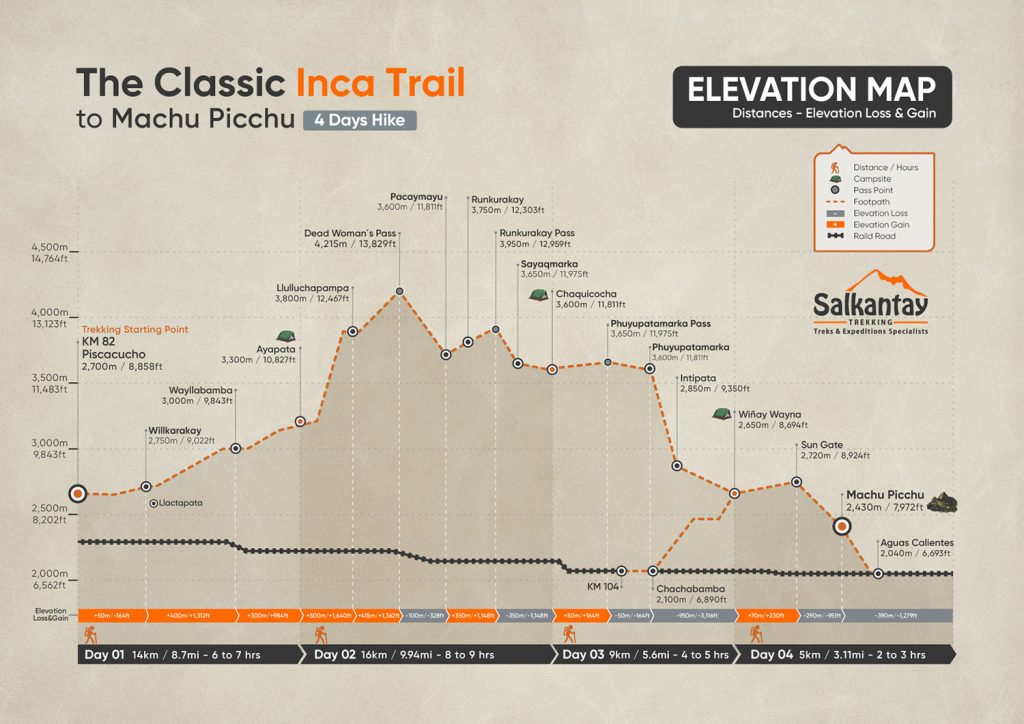
The Classic Inca Trail covers approximately 27.3 miles (44 kilometers) over 4 days, reaches 13,829 ft (4,215 m), and combines long climbs, descents, and ancient stone paths. At Salkantay Trekking, we rate it as a moderate to challenging trek.
But what does that really mean for you?
You don’t need to be an experienced mountaineer to consider this hike, but you do need to prepare. Below, we’ll look at what makes the Inca Trail demanding, what you’ll face each day, and how to assess whether you’re ready.
Table of contents
- How Difficult Is Inca Trail, Really?
- Exploring the Inca Trail’s Difficulty Day by Day
- What Is the Hardest Part of Inca Trail?
- Hiking the Inca Trail With Vertigo or a Fear of Heights
- How Difficult Are the Shorter Inca Trail Options?
- The 3 Inca Trail Challenges You Shouldn’t Underestimate
- How Do I Know If I’m Ready for the Inca Trail?
- Preparing for the Inca Trail
- Tips and Recommendations
- Which Inca Trail Option Should You Choose?
- Frequently Asked Questions
- Are You Ready to Hike the Inca Trail?
- You May Also Be Interested In:
How Difficult Is Inca Trail, Really?
At Salkantay Trekking, we classify the Inca Trail as a moderate to challenging trek, although the difficulty can vary from person to person.
Our experience guiding many different travelers has helped us understand why the same trail can feel relatively easy for some and like a major challenge for others.
That’s why, to determine the Inca Trail difficulty rating, we consider both the trail’s characteristics and the preparation of those hiking it:
- Altitude: Hiking at high elevations can make you tire more quickly, especially if you haven’t acclimatized yet.
- Hiking time: On some days, you’ll walk for several hours, so you’ll need enough energy to reach camp.
- Climbs and descents: You’ll encounter long slopes that will test your legs both uphill and downhill.
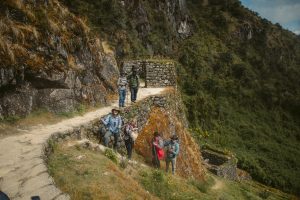
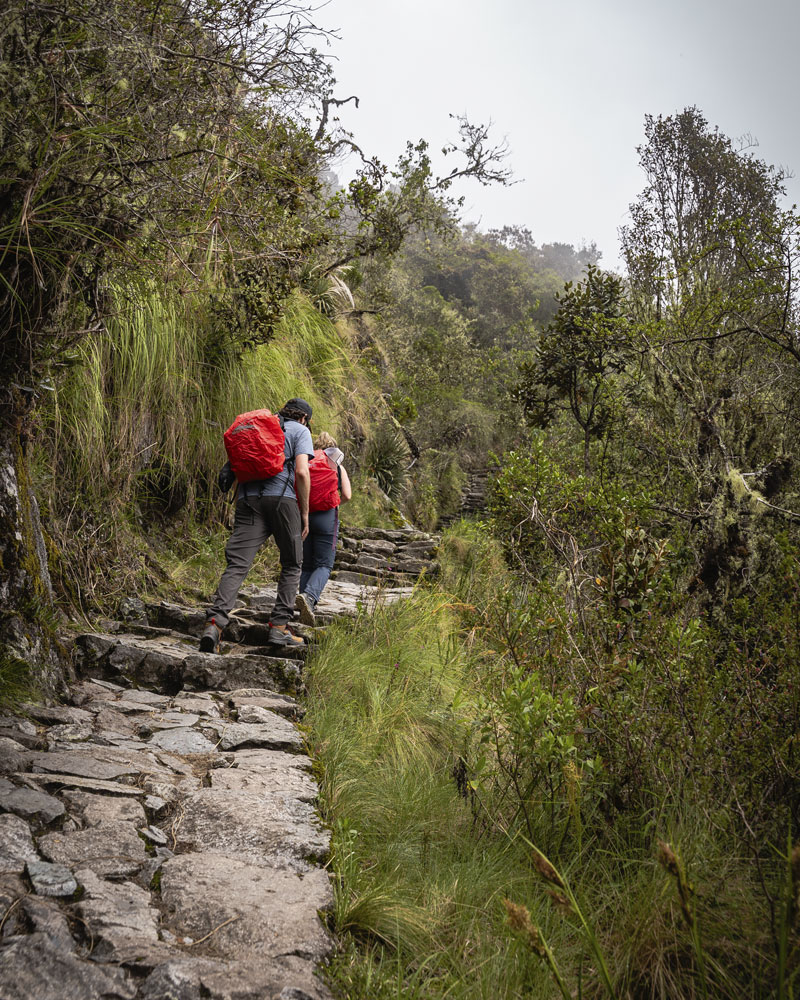
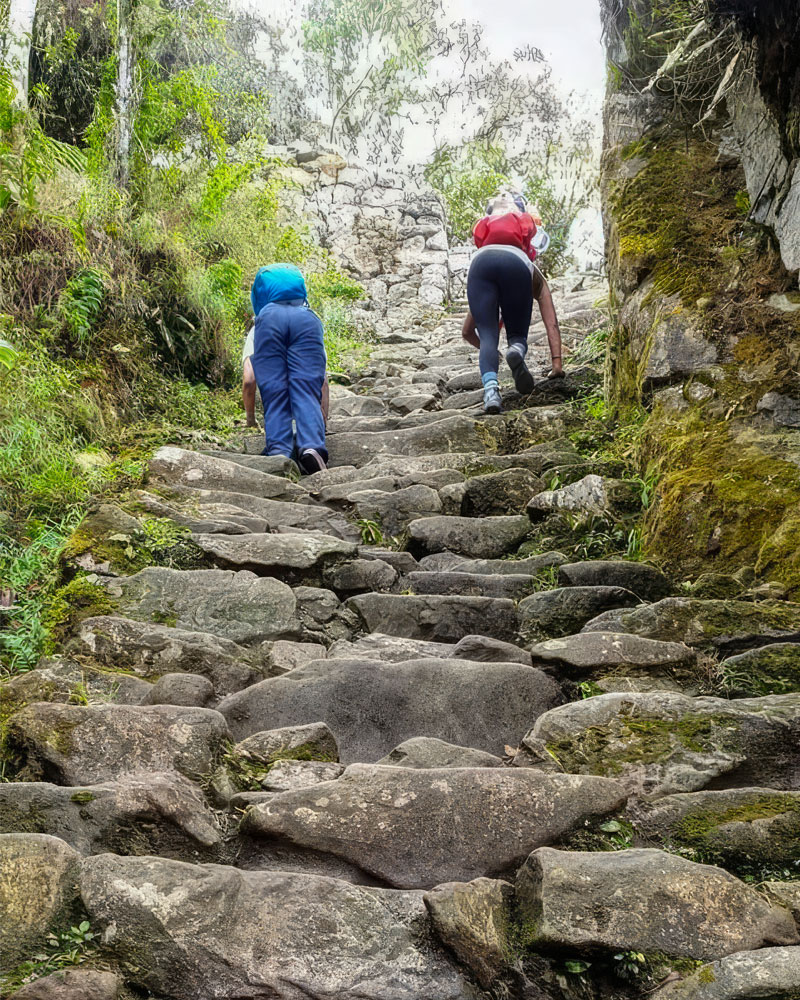
- Terrain: You’ll walk along ancient stone steps, uneven trails, and paths through the cloud forest.
- Weather: Conditions depend on the season. Along the route, you’ll pass through colder areas and warmer, more humid ones, especially as you approach the cloud forest.
- Physical fitness: Your strength and endurance will affect how you feel throughout the hike.
- Previous experience: If you’ve hiked before, you’ll probably be more accustomed to mountain trails and difficult terrain.
On the Inca Trail, these factors come together differently each day. That’s why some days will feel easier, while others will demand a little more from you.
Why Do Some People Consider It Moderate and Others Challenging?
Because not all travelers arrive with the same level of preparation or are used to the same conditions.
For example, if you ask someone who has lived in Cusco for years and regularly hikes at high altitude and on difficult terrain, they’ll probably tell you the Inca Trail is easy to moderate. On the other hand, for a traveler who works in an office, lives at sea level, and has never been trekking, those same miles can be a major challenge.
Travelers who already have trekking experience and are well acclimatized may find the Inca Trail much easier. Their experience helps them maintain a steady pace, manage their energy, use the right gear, and handle the climbs and descents.
But what about people who exercise regularly? The answer depends on the type of activity they do. Even if they’re physically fit, they may still feel the effects of altitude or experience knee fatigue.
So, rather than asking whether the Inca Trail is difficult, ask yourself another question: how prepared are you for the conditions on this trail?
Exploring the Inca Trail’s Difficulty Day by Day
The Classic Inca Trail covers approximately 27.3 miles (44 kilometers) from Piscacucho, known Moderateas Kilometer 82, to Machu Picchu.
That distance is spread over four days, but not every day requires the same amount of effort.
| Day | Approximate Distance | Hiking Time | Difficulty |
|---|---|---|---|
| Day 1 | 8.7 miles / 14 km | 6–7 hours | Moderate |
| Day 2 | 9.94 miles / 16 km | 8–9 hours | Challenging |
| Day 3 | 5.6 miles / 9 km | 4–5 hours | Moderate |
| Day 4 | 3.11 miles / 5 km | 2–3 hours | Moderate |
*Times are estimates and may vary depending on the group’s pace, trail conditions, and other factors.
Day 1: The First Miles and Finding Your Pace
- Distance: 8.7 miles / 14 km
- Time: 6-7 hours
- Maximum altitude: 10,827 ft / 3,300 m
- Difficulty: Moderate
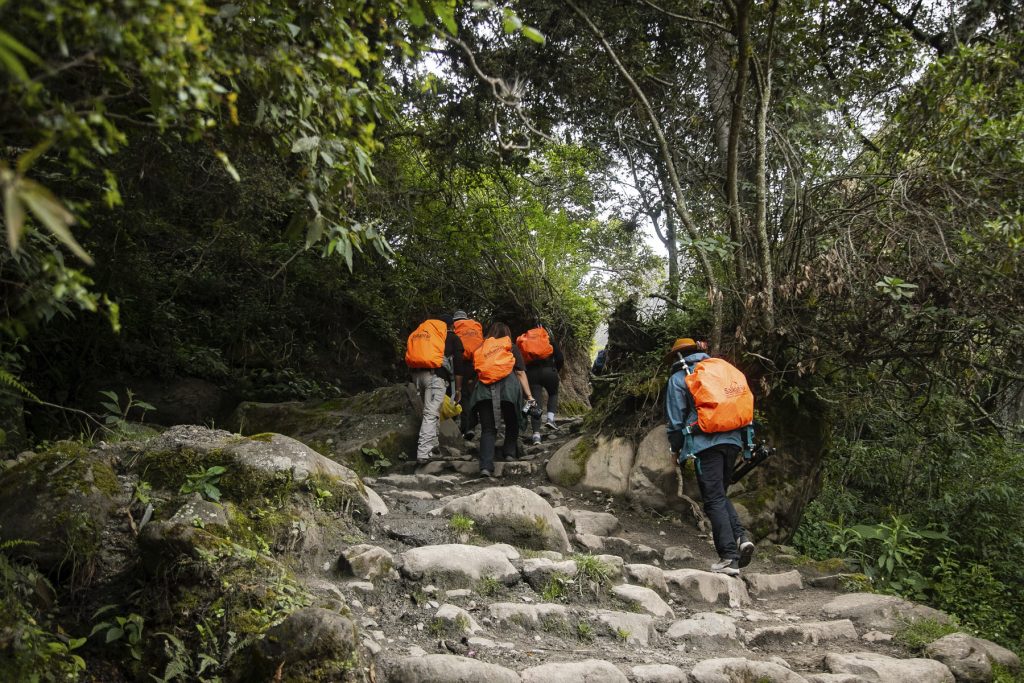
The hike begins in Piscacucho, at approximately 8,858 ft (2,700 m) above sea level. During the first few hours, you’ll walk over relatively gentle terrain until you reach Miskay. Along the way, you’ll encounter descents with stone steps and see the archaeological site of Llactapata before continuing the gradual climb to your first campsite in Ayapata.
Although this day is rated moderate, you shouldn’t underestimate it.
You’ll spend several hours hiking and gradually gain altitude. If you start too fast, you could build up unnecessary fatigue before facing the demands of the second day.
What do we recommend? Use this first day to find a comfortable pace. You don’t need to compete with other travelers or prove how fast you can go.
Day 2: The Biggest Challenge on the Inca Trail
- Distance: 9.94 miles / 16 km
- Time: 8-9 hours
- Maximum altitude: 13,829 ft / 4,215 m
- Difficulty: Challenging
If you’ve heard the second day is the toughest on the Inca Trail, there’s a good reason.
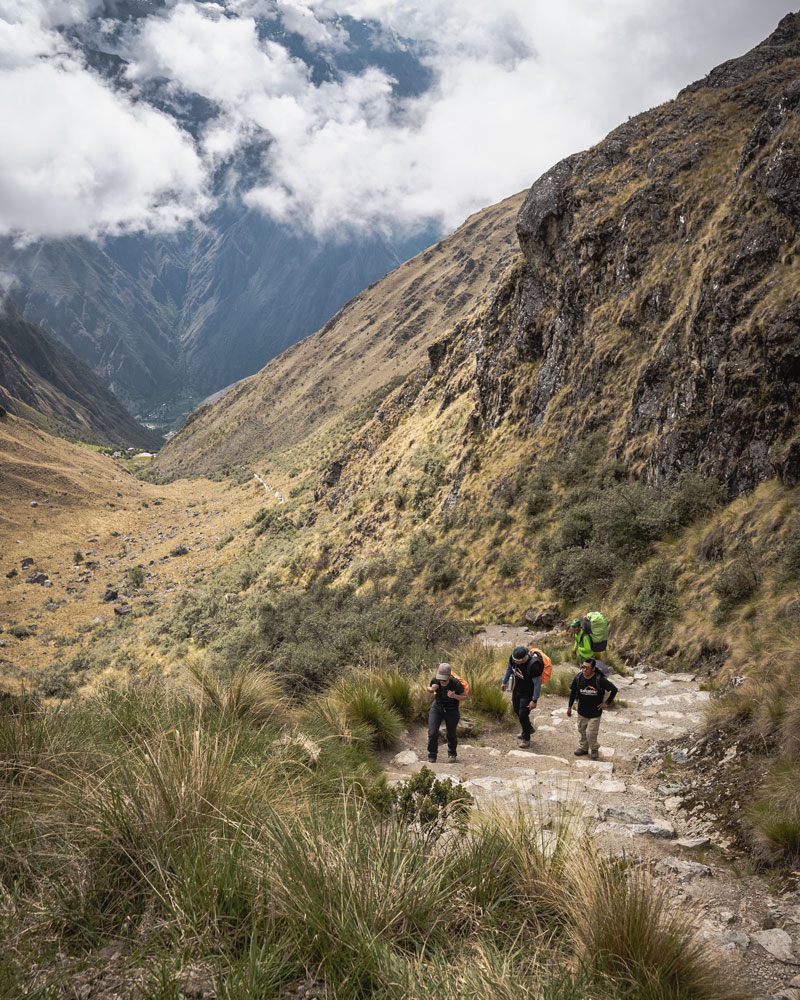
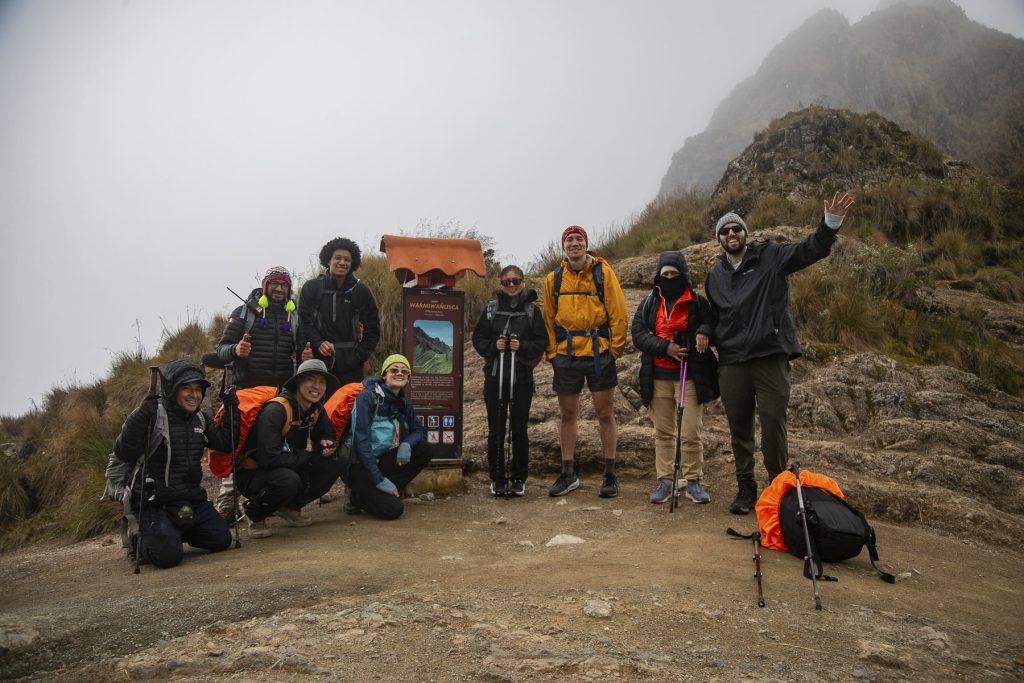
From Ayapata, you’ll begin a long climb toward Warmiwañusca, known as Dead Woman’s Pass. This pass reaches 13,829 ft (4,215 m) above sea level and is the highest point of the entire trek.
The ascent takes approximately four hours. As you gain altitude, you may notice that you need to walk more slowly or stop more often to catch your breath.
And the challenge doesn’t end when you reach the top.
You’ll then descend toward Pacaymayu and climb again toward Runkurakay Pass, the second-highest mountain pass on the route. From there, you’ll continue through sections with stone steps and steep descents, passing Sayacmarca before reaching the campsite at Chaquicocha.
In other words, you won’t be facing just one climb. You’ll have a long day with constant elevation changes that will test both your endurance and your legs.
The weather can also add to the difficulty. At higher elevations, wind and low temperatures can make the hike more demanding. It can even snow during certain months.
That’s why this is the day when you’ll need to manage your energy most carefully and maintain a steady pace.
Day 3: Fewer Miles, but Plenty of Stone Steps
- Distance: 5.65 miles / 9 km
- Time: 4-5 hours
- Maximum altitude: 11,975 ft / 3,650 m
- Difficulty: Moderate
After Day 2’s effort, a shorter hiking day awaits. However, that doesn’t mean your legs get a break.
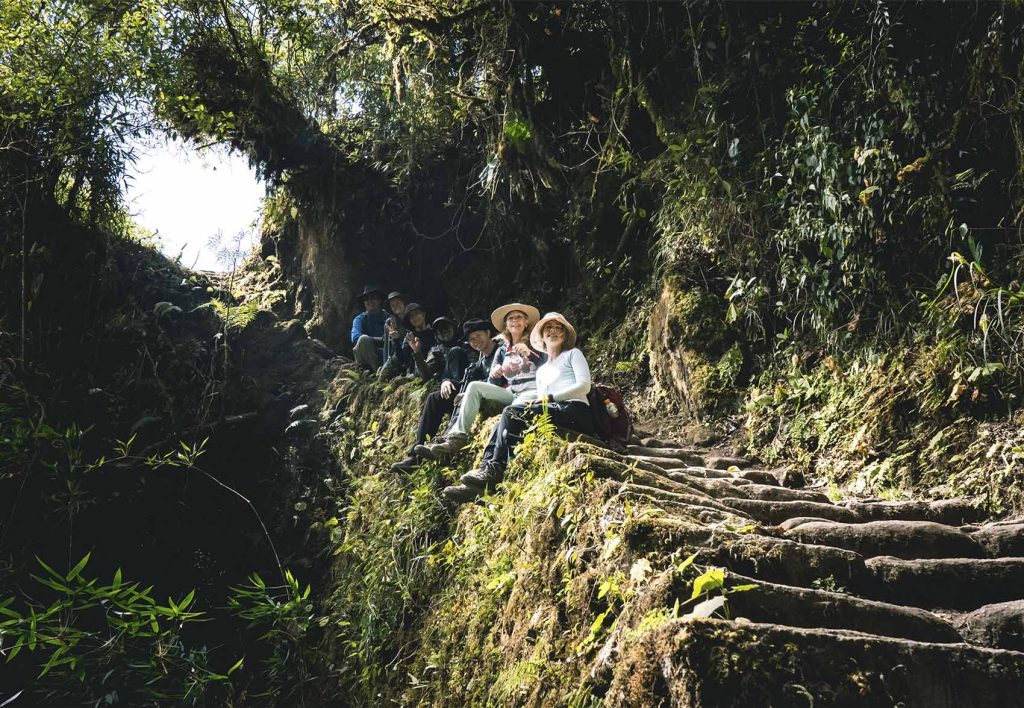
From Chaquicocha, you’ll head toward Phuyupatamarca and continue descending along ancient Inca paths, stone stairways, and sections of uneven terrain until you reach the area near Wiñay Wayna.
One of the main challenges of this day is the long descents. You’ll encounter plenty of steps, especially around Phuyupatamarca and along the route toward Intipata.
Some stairways are narrow and have steps of different heights, so you’ll need to watch your footing. If it rains, the stone surfaces can become slippery.
If you’re not used to going down stairs for long periods, you may feel considerable strain on your knees and leg muscles.
You’ll also reach this section after two days of hiking. Even though the distance is shorter, accumulated fatigue will affect your experience too.
Day 4: The Final Push Before Reaching Machu Picchu
- Distance: 3.11 miles / 5 km
- Time: 2-3 hours
- Maximum altitude: 8,924 ft / 2,720 m
- Difficulty: Moderate
The final day has the shortest hiking distance, but it starts very early, while it’s still dark and sunrise is a few hours away.
From Wiñay Wayna, you’ll head toward Inti Punku, the Sun Gate, before continuing to Machu Picchu.
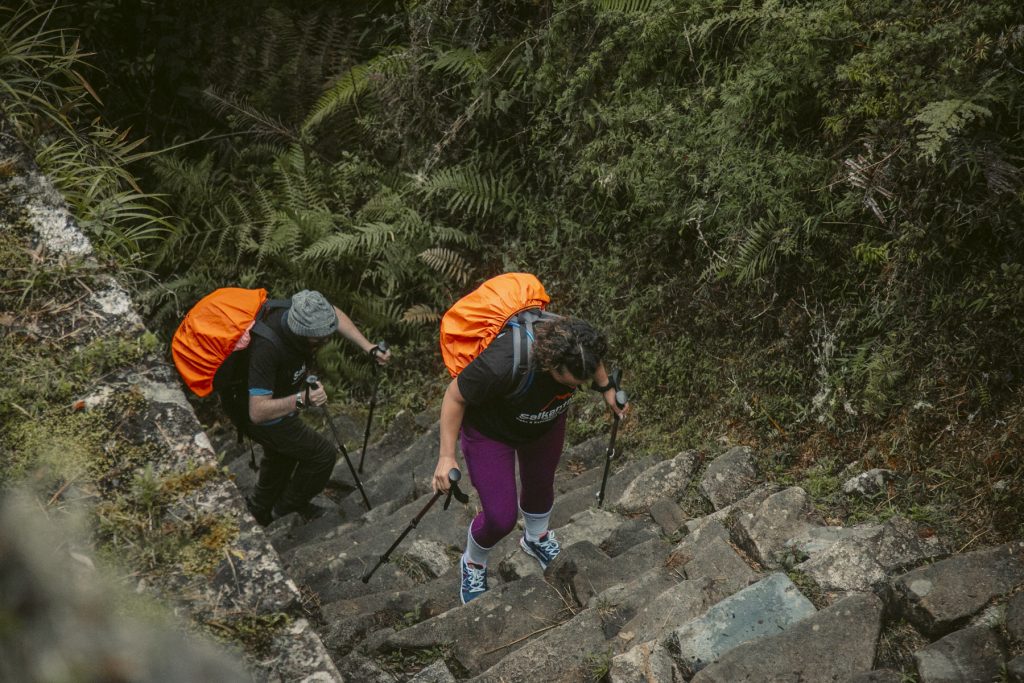
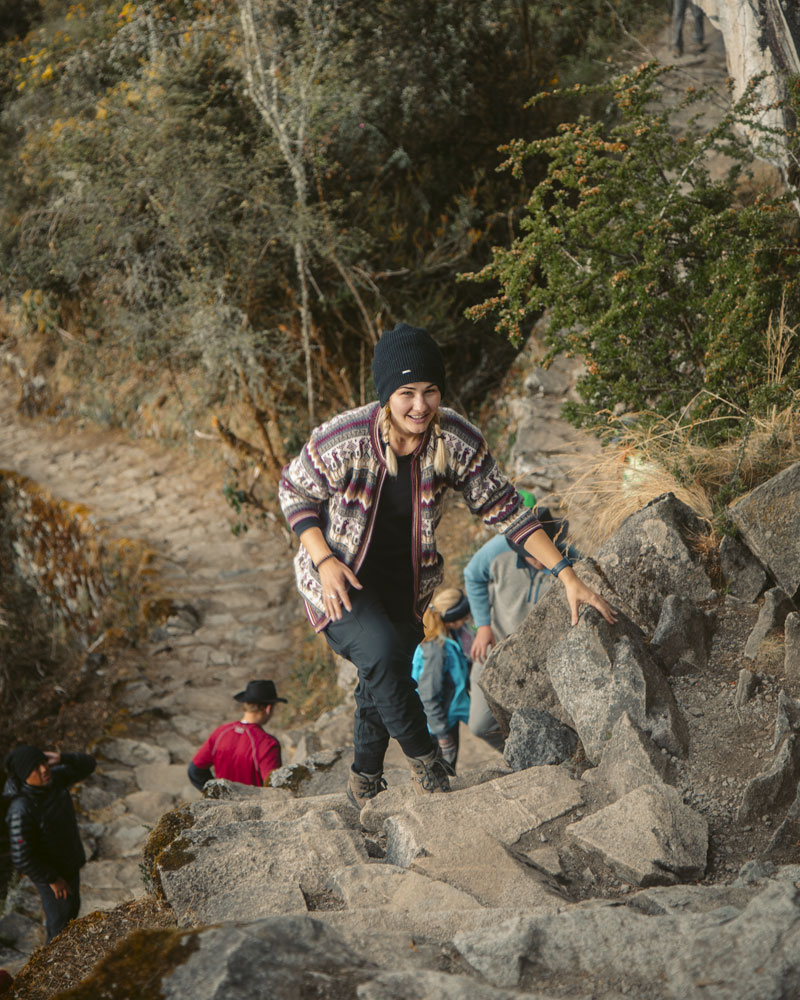
Although the hike is shorter, you’ll still encounter uneven paths and stone steps. One of the most demanding sections comes near Inti Punku, where you’ll have to climb a staircase with particularly high steps.
At certain points, you’ll need to lift your legs quite high and may even use your hands to help keep your balance.
Add to that the fatigue from previous days and the effort of starting your hike before dawn.
The difference is that you’re now very close to the destination that inspired you to take on this trek.
There’s no need to rush to get there. Keep a safe pace and watch your step until you complete the hike.
What Is the Hardest Part of Inca Trail?
If you ask what the hardest part of the Inca Trail is, most travelers will probably give you the same answer: Dead Woman’s Pass.
And they’re right. However, it’s not the only section that can put you to the test.
Over the four days, you’ll encounter other climbs, descents, and stairways that can be especially tiring. Some demand physical endurance; others require balance, concentration, and a certain level of comfort with heights. You may even hear about the Gringo Killer on the Inca Trail, a nickname used for some of the route’s steepest and most demanding stone stairways.
Warmiwañusca Pass: The Biggest Altitude Challenge
Warmiwañusca reaches 13,829 ft (4,215 m) and is the highest point on the Classic Inca Trail.
The ascent is long and steady. As you climb, reduced oxygen can make you tire more quickly, even if you’re in good physical shape.
After reaching the summit, you’ll still need to descend numerous stone steps to Pacaymayu.
For many travelers, this combination of altitude, a long climb, and a steep descent makes Warmiwañusca the biggest physical challenge of the entire trek.
Runkurakay Pass and Its Descents
After making it over Dead Woman’s Pass, you’ll still have the second mountain pass ahead of you: Runkurakay, at 12,303 ft (3,750 m).
The climb can feel particularly exhausting because it comes after several hours of hiking.
But there’s another challenge here: the descent.
On the way to Sayacmarca, you’ll encounter sections with stone steps, steep slopes, and an Inca tunnel. Although some sections are short, they require concentration and can feel demanding when your legs are already tired.
So don’t assume the hardest part is over once you’ve crossed the first pass.
The Stairways of Sayacmarca, Phuyupatamarca, and Intipata
There’s a phrase some travelers repeat on the Inca Trail: “The Incas really loved their stairs!”
And it’s easy to see why. People talk about approximately 70,866 steps over the four days. What is certain is that after so many climbs and descents, they can seem endless.
But not all steps are the same. Some are quite high, others are narrow, and several run alongside steep slopes. Here are some of the sections that may put you to the test:
Sayacmarca
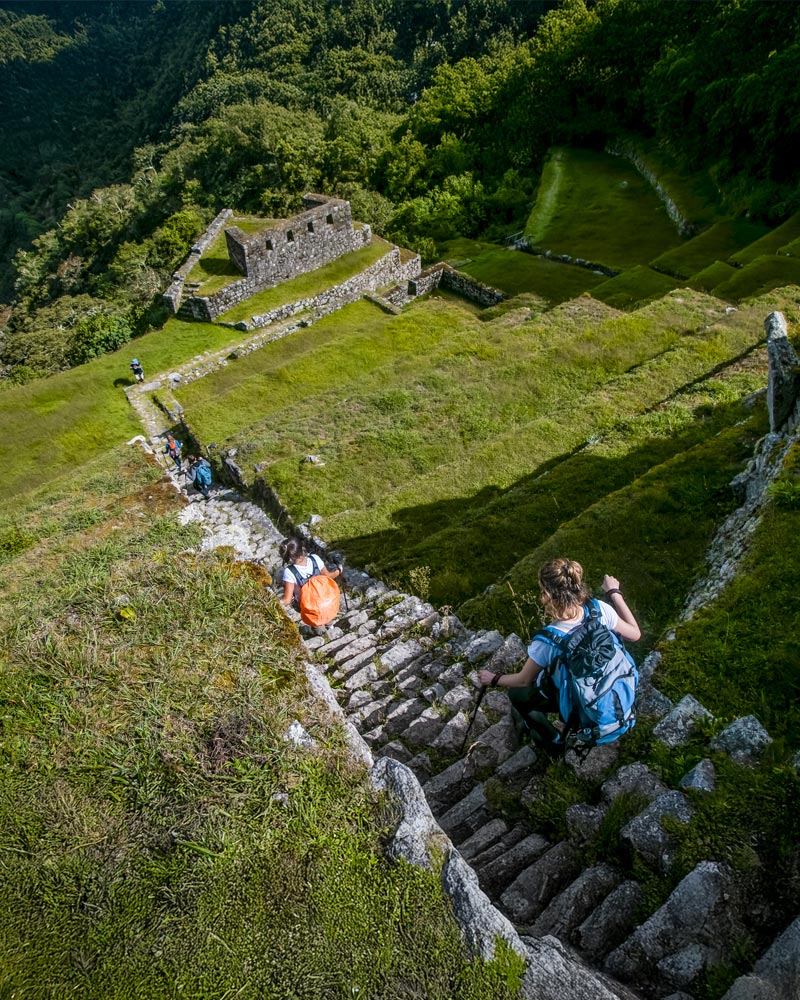
To access the archaeological site of Sayacmarca, you’ll need to climb a narrow, steep stone staircase, with exposed sections along the hillside.
After a demanding day, this climb may feel harder than it looks. Some travelers prefer not to climb up to the site, especially if they’re very tired or uncomfortable with heights.
An overly heavy backpack can also make it harder to maintain your balance in these tight spaces.
Phuyupatamarca
Around Phuyupatamarca, you’ll encounter narrow stairways and stone sections that require extra attention.
Depending on the route and your guide’s instructions, it may be possible to take an alternative path to avoid certain stairways, although the walk may be longer.
After visiting the site, the descent continues down a series of stone steps. Some sections are carved directly into the rock and can become slippery during the rainy season.
Intipata
In the Intipata area, you’ll also find steep stairways connecting different levels of the agricultural terraces.
After the visit, you’ll continue descending toward Wiñay Wayna. Although the scenery may tempt you to stop for photos, make sure you do so only in safe places, without blocking the path or getting unnecessarily close to the edges.
Hiking the Inca Trail With Vertigo or a Fear of Heights
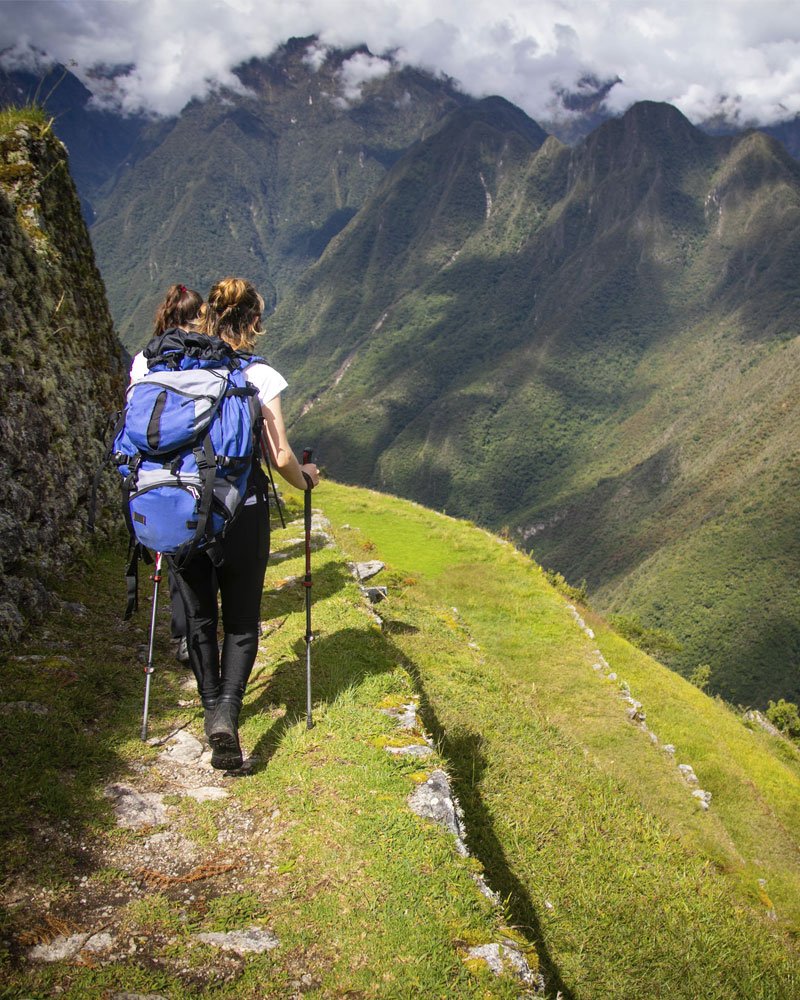
If you’re afraid of heights, you’re probably concerned about encountering narrow stairways, steep slopes, or paths alongside drop-offs.
And yes, there are sections of the Inca Trail where you may feel exposed.
On some stairways, the steps are so narrow that it may feel more comfortable to turn your feet slightly sideways. On other sections, you’ll find steep slopes right beside the path.
But being afraid of heights doesn’t automatically mean you can’t complete the trek.
In our experience guiding travelers, we’ve met people who started the trek feeling quite afraid and still managed to finish it. Some climbed the stairways without much trouble but needed more time and support on certain descents.
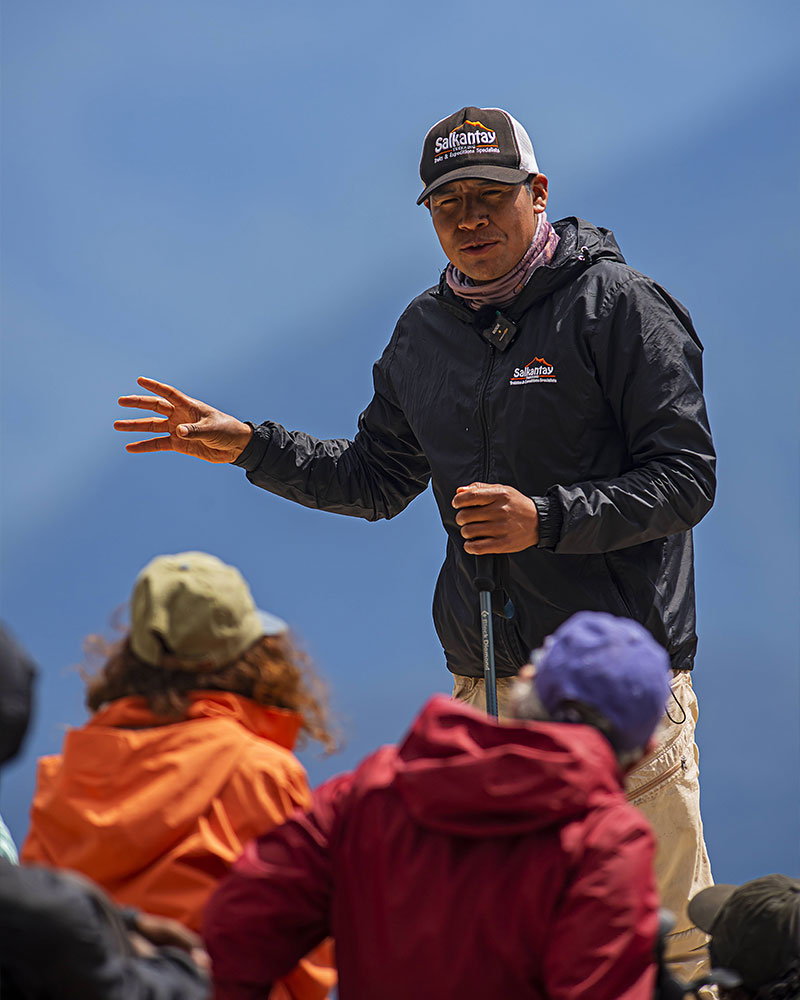
In those situations, our guides stayed with them, helped them maintain a safe pace, and gave them the time they needed to move forward.
For several of these travelers, completing the Inca Trail was especially meaningful because they achieved a personal goal despite their fears.
However, everyone reacts differently.
If your fear of heights is intense or could prevent you from moving forward safely, we recommend carefully evaluating the route before booking. You can also look into shorter versions, such as the 2-Day or 1-Day Inca Trail.
These alternatives avoid the two major mountain passes of the classic route, although they still include stairways and an exposed section.
The important thing is to choose an experience that suits your abilities and lets you enjoy the hike without taking unnecessary risks.
How Difficult Are the Shorter Inca Trail Options?
If you’re concerned about the difficulty of the Classic Inca Trail, the 1-day and 2-day versions can be good alternatives. Both let you hike part of the original trail without crossing the two major mountain passes or facing the most demanding descents of the four-day route.
How hard is the short Inca Trail?
The 2-Day Inca Trail is generally considered moderately difficult, although you shouldn’t confuse a shorter route with an effortless hike.
You’ll usually start at Kilometer 104 and follow stone paths, stairways, and uphill sections toward Wiñay Wayna and Inti Punku.
The main advantage is that you won’t have to cross Warmiwañusca and Runkurakay, the two biggest altitude challenges of the classic route.
However, you’ll still need a reasonable level of fitness to hike for several hours and handle the elevation changes on the first day.
How hard is the one day Inca Trail?
The 1-Day Inca Trail is also generally considered moderate in difficulty, but it concentrates the effort into a single day.
You’ll follow the section that starts at Kilometer 104, so the most demanding part you’ll encounter is the same ascent toward the Sun Gate, with its distinctive tall, steep steps.
If you’re reasonably fit and prefer a shorter experience, this option lets you explore part of the Inca Trail without tackling its highest mountain sections.
The 3 Inca Trail Challenges You Shouldn’t Underestimate
The Inca Trail won’t just test your legs. Altitude, elevation changes, and mental resilience will also shape your experience over the four days of hiking.
Altitude: Why Acclimatization Makes a Difference
The Inca Trail reaches 4,215 m (13,829 ft) above sea level at Dead Woman’s Pass, where the reduced availability of oxygen can make hiking feel more exhausting.
That’s why we recommend spending 2 to 3 days acclimatizing before starting the trek. Remember that even someone in good physical shape can experience altitude sickness.
If you travel with Salkantay Trekking, our guides are trained to recognize the symptoms of altitude sickness and respond to these situations. We also carry supplemental oxygen and a pulse oximeter as part of our safety and first-aid equipment.
If you experience symptoms, tell your guide immediately. Do not continue ascending if you have symptoms of altitude sickness.
Climbs and Descents: Why Do Elevation Changes Matter So Much?
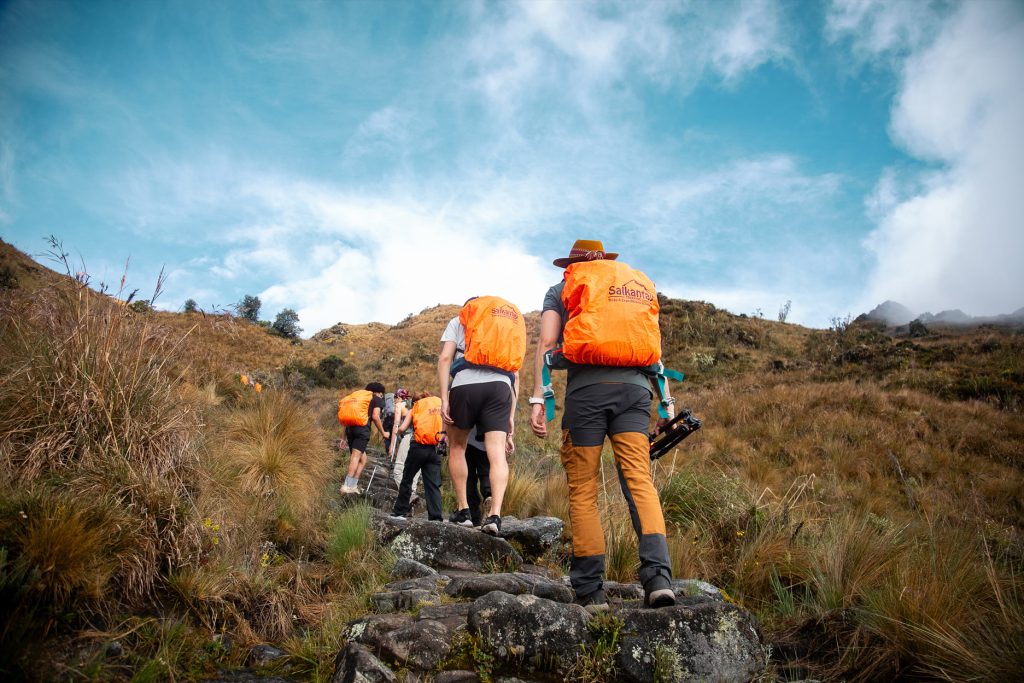
On the Inca Trail, much of the climbing and descending happens on stone stairways, which can be more tiring than walking on a regular trail.
Going uphill, you’ll need to lift your legs over and over to clear steps of different heights, which requires more muscular effort and can leave you out of breath more quickly. Going downhill, your legs must control your body weight with every step, increasing the strain on your muscles and knees.
Mental Strength: Don’t Give Up Before You Try
Sometimes, the biggest challenge begins before you even take your first step. Some travelers rule out the Inca Trail because they believe they don’t have enough endurance or are afraid they won’t be able to finish.
And although the trek is demanding, you don’t need to be the fastest hiker or have mountaineering experience. What matters is preparing, trusting your abilities, and moving at your own pace.
Focus on maintaining your own pace, taking breaks when you need them, and enjoying each stage of the hike. Often, making it up a climb that seemed endless can become one of the most rewarding memories of your trip.
How Do I Know If I’m Ready for the Inca Trail?
You don’t need the fitness level of a professional athlete, but you do need enough endurance to walk for several hours and recover well enough to keep going the next day.
Remember that walking several miles on flat ground isn’t the same as hiking in the mountains, where you’ll encounter climbs, descents, and plenty of stone steps.
5 Signs You’re Physically Prepared
There’s no simple test that can guarantee you’ll complete the Inca Trail. However, you can assess your readiness by answering these five questions:
Can you walk for several hours without becoming extremely exhausted?
Do you recover well after physical activity?
Can you maintain a steady walking pace without becoming excessively out of breath?
Can you keep your balance when walking on uneven ground?
Can you handle uphill hikes without constantly stopping because of exhaustion?
If you answered “yes” to most of these questions, you probably have a good fitness foundation to begin preparing for the Inca Trail.
If you answered “no” to several, that doesn’t necessarily mean you should give up on the trip. You may simply need more training time or to consider which Inca Trail option best suits your abilities.
What If I Work in an Office or Don’t Exercise Regularly?
If you spend much of your day sitting and don’t exercise often, the Inca Trail may be quite demanding for you. But that doesn’t mean you should rule it out.
What matters is having enough time to improve your fitness before the trip. Keep in mind that you’ll hike for four consecutive days, so you’ll need endurance to handle the climbs and descents and recover between hiking days.
If you don’t feel ready yet, we’ll explain further how you can start training for this hike.
Preparing for the Inca Trail
Preparation can make a big difference to your Inca Trail experience.
You don’t need to become an athlete, but you do need to get your body used to the kind of effort you’ll face on the route.
Does Age Affect How Difficult the Inca Trail Is?
Age can affect your endurance and recovery, but it doesn’t determine whether you can complete the Inca Trail. Both teenagers and travelers over 60 have successfully completed the four-day hike.
What really matters is your physical fitness, health, preparation, and ability to adjust to the altitude. A 60-year-old who hikes regularly may be better prepared than a 25-year-old who leads a sedentary lifestyle.
So, rather than asking whether you’re the right age, assess your fitness and how much time you can devote to preparation. If you have a medical condition or concerns about your ability to handle the trek, consult a healthcare professional before traveling.
How Far in Advance Should You Start Training?
Ideally, you should start training at least eight weeks before your trip, although the time you’ll need depends on your current fitness level.
You can organize your preparation as follows:
| Period | Goal |
|---|---|
| Weeks 1–2 | Establish a walking routine and basic strength exercises |
| Weeks 3–4 | Gradually increase your walking time and add hills |
| Weeks 5–6 | Practice longer hikes and, if possible, hike on uneven terrain |
| Weeks 7–8 | Build on your preparation, practice with your backpack, and reduce your training load before the trip |
This plan is a general guide. Adjust the intensity and progression to your fitness level and available time.
If you trek regularly, you may only need to work on specific areas, such as long descents or hiking on consecutive days. On the other hand, if you lead a sedentary lifestyle, you may need more time to prepare.
What Exercises Will Help You With Climbs and Stairs?
Try combining three types of training:
- Progressive walks: Gradually increase your walk length and practice maintaining a steady pace for several hours.
- Leg strengthening: Include squats, step-ups, and controlled step-downs to improve your strength, stability, and balance.
- Practice on real terrain: Hike trails with slopes, stairways, and uneven surfaces. This will help you become familiar with the terrain and learn how to manage your energy.
Remember to increase the intensity gradually and make time for rest. Recovery is also part of good preparation.
Want to prepare in more detail? Check out our guide, How to Prepare for the Inca Trail, where you’ll find advice on physical training, acclimatization, and other things to consider before starting the trek.
Tips and Recommendations
How Can You Maintain Your Energy During the Trek?
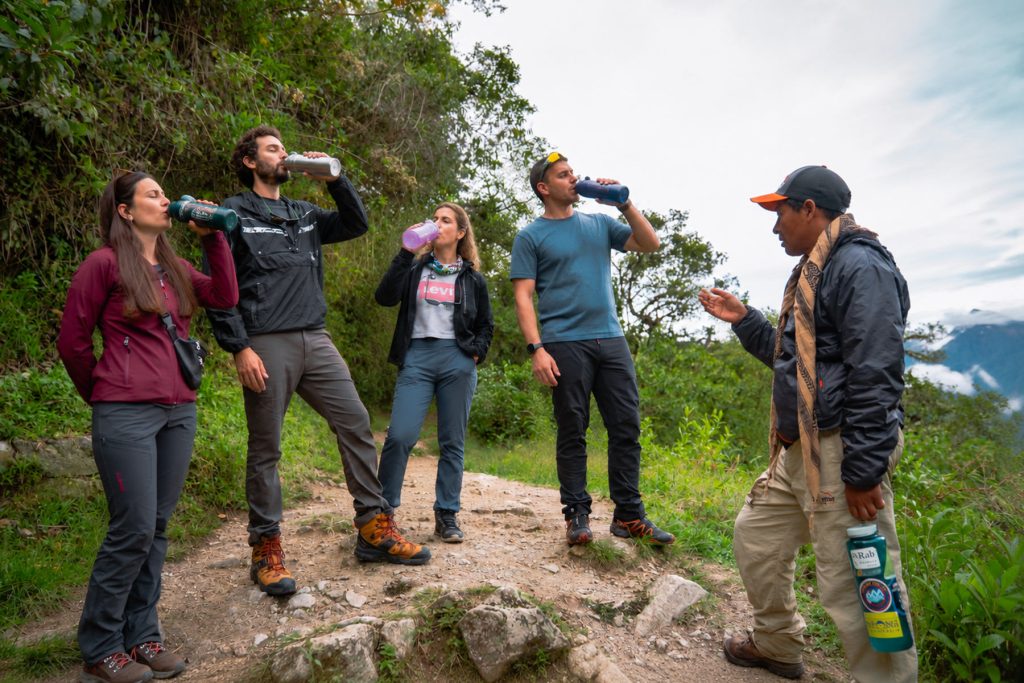
Over the four days of the Inca Trail, managing your energy will be just as important as being physically fit. To avoid unnecessary exhaustion, we recommend:
- Walk at a steady pace: Avoid rushing, especially on climbs.
- Stay hydrated: Drink water regularly, even before you feel very thirsty.
- Take short breaks: Use rest stops to catch your breath and relax your legs.
- Eat properly: Choose foods that give you energy throughout the hiking days.
- Listen to your body: Recognize when you need to rest and tell your guide if you feel unwell.
Remember that keeping a comfortable, steady pace is usually more effective than trying to hike quickly and wearing yourself out before reaching camp.
What Should You Pack to Hike Comfortably and Avoid Unnecessary Weight?
Carrying too much weight can increase fatigue, especially on climbs and stone-step sections.
That’s why we recommend carrying only what you need for the hike in your daypack. Before traveling, check which items the porters will carry and which ones you’ll need to carry yourself.
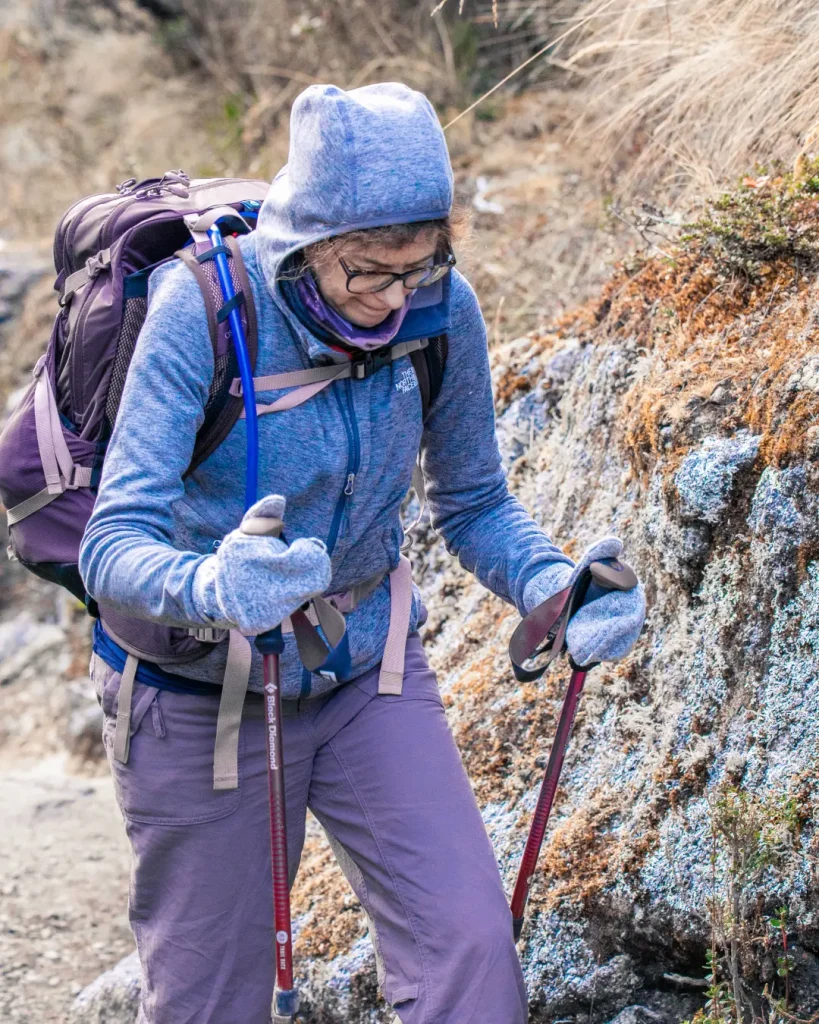
Pay special attention to your hiking footwear, layered clothing, rain protection, and trekking poles with rubber tips, which are permitted under the Inca Trail’s conservation rules.
Not sure what to pack? Check out our Inca Trail packing list, where you’ll find a complete list of clothing, accessories, and essentials to prepare your backpack without carrying unnecessary weight.
Which Inca Trail Option Should You Choose?
Now that you know what makes the Inca Trail challenging, choose the route that best matches your fitness level, experience, and available time.
Who Should Consider the Classic Inca Trail?
The 4-Day Inca Trail is a good choice if you enjoy long hikes, are willing to prepare physically, and want to experience walking along ancient Inca paths all the way to Machu Picchu.
Even if you’re a beginner, you can consider this route with proper preparation and acclimatization.
What Are Your Options If You Want a Shorter Hike?
If you’d rather avoid four days of trekking and three nights of camping, you can choose the 1-Day or 2-Day Inca Trail. Although these routes are shorter, they still require physical effort.
Explore the Inca Trail options and choose the itinerary that suits you best. If you’re still unsure, our team can help you decide before booking.
Frequently Asked Questions
If you feel excessively tired or have trouble continuing, tell your guide immediately. The team will assess your situation and the possible alternatives based on where you are. Access points on the Inca Trail are limited, so stopping or leaving the trek isn’t always easy.
Not all travelers hike at the same speed. However, you do need to maintain a pace that works with the route’s schedule and conditions. Before booking, ask how Salkantay Trekking supports participants and what happens if someone hikes more slowly.
Yes, it can. Rain can make stone steps and paths slippery, reduce visibility, and require you to walk more carefully.
That’s why you should bring waterproof clothing and footwear with good traction, even if you’re traveling during a relatively dry season.
You won’t have to carry all your luggage. On our treks, we have porters who carry the camping equipment and the permitted luggage in your duffel bag.
You’ll carry a daypack with personal items, water, extra clothing, and anything else you need during the hike.
Yes, a beginner can complete the Inca Trail as long as they’re properly prepared and their health allows them to handle the physical effort.
However, we don’t recommend making the Inca Trail your first long-distance hike without prior training.
It’s estimated that between 5% and 10% of travelers don’t complete the Inca Trail, which would mean a completion rate of 90% to 95%. Although many people finish the trek, some have to stop because of health problems, altitude sickness, or exhaustion.
Yes. An overly heavy backpack increases the effort required on climbs and can make it harder to balance on narrow stairways. We recommend carrying only what you need for the day and checking which items porters can carry.
If you’d prefer more hiking, you can choose the Salkantay Trek, Lares Trek, or Ancascocha. These options offer major mountain passes, although they also include climbs and stone steps.
The best alternative will depend on your fitness level, experience, and available time.
Are You Ready to Hike the Inca Trail?
Now you know what makes this route demanding and how to start preparing. If you want to learn about the schedules, campsites, and places you’ll visit along the way, take a look at our Classic 4-Day Inca Trail itinerary.
And if you still have questions about your preparation, you can speak with our team before making a decision.
You May Also Be Interested In: