
If you’re searching for the best treks in South America, you’re already on the right track, literally. This continent doesn’t do things halfway. We’re talking snow-capped South American peaks, jungle trails that hum with life, glacier views that feel like they might be fake, and ancient paths that end at places like Machu Picchu.
The problem? There are too many good options. One minute you’re dreaming about Patagonia, the next you’re googling altitude sickness at 2 am and wondering if you’ve made a terrible life choice.
This guide cuts through the noise. These are the best hikes in South America, broken down by region, difficulty, scenery, and traveler type, so you can stop scrolling and start planning.
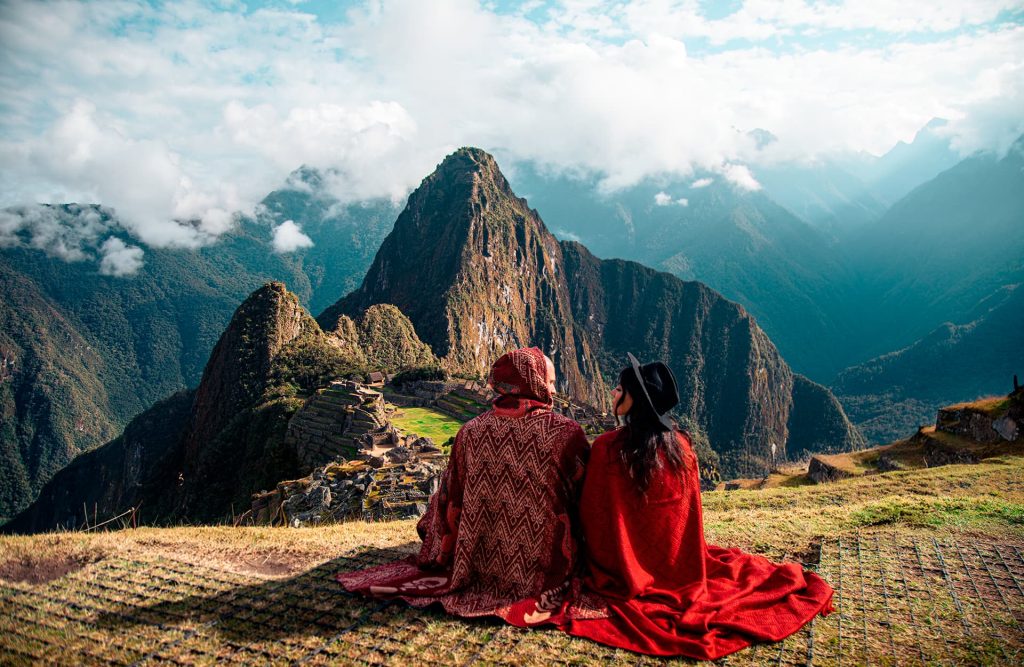
Table of contents
- Quick Comparison of the Best Treks In South America
- Best Treks in Peru
- Best Treks in Patagonia (Chile & Argentina)
- Best Treks in Bolivia
- Best Treks in Ecuador
- Best Treks in Colombia
- Best Treks in Brazil
- How to Choose the Best Trek in South America
- Best Time to Trek in South America
- Trekking Difficulty Explained
- Guided vs Independent Trekking in South America
- What to Pack for Treks in South America
- FAQs About Trekking in South America
- Which Trek Should You Choose?
Quick Comparison of the Best Treks In South America
Before diving in, here’s the cheat sheet.
| Trek | Country | Days | Difficulty | Max Elevation | Best Time | Ideal For |
| Salkantay Trek | Peru | 5 | Moderate to Challenging | 15,190 ft / 4,630 m | Apr–Oct | Scenery + variety |
| Inca Trail | Peru | 4 | Moderate to Challenging | 13,829 ft / 4,215 m | Apr–Oct | History lovers |
| Ausangate Trek | Peru | 5 | Moderate to Challenging | 17,060 ft / 5,200 m | Apr–Oct | Experienced trekkers |
| Lares Trek | Peru | 4 | Moderate to Challenging | 15,420 ft / 4,700 m | Apr–Oct | Culture + quieter routes |
| W Trek | Chile | 4–5 | Moderate | 3,000 ft / 915 m | Nov–Mar | Patagonia highlights |
| O Circuit | Chile | 7–9 | Challenging | 3,937 ft / 1,200 m | Dec–Mar | Full Patagonia immersion |
| Fitz Roy Trek | Argentina | 1 | Moderate to Challenging | 3,840 ft / 1,170 m | Oct–Apr | Iconic views |
| Huemul Circuit | Argentina | 4 | Challenging | 5,000 ft / 1,550 m | Dec–Mar | Remote adventure |
| Condoriri Trek | Bolivia | 3–5 | Moderate to Challenging | 17,550 ft / 5,350 m | May–Sep | Short high-altitude trek |
| Takesi Trail | Bolivia | 2–3 | Moderate to Challenging | 15,256 ft / 4,650 m | May–Oct | Inca trail alternative |
| Quilotoa Loop | Ecuador | 3–4 | Moderate to Challenging | 12,890 ft / 3,930 m | Jun–Sep | Beginners |
| Cotopaxi Trek | Ecuador | 2 | Challenging | 19,347 ft / 5,897 m | Aug–Sep / Dec–Jan | Peak enthusiasts |
| Lost City Trek | Colombia | 4–5 | Challenging | 3,937 ft / 1,200 m | Dec–Mar | Jungle adventure |
| Chapada Diamantina | Brazil | 3–5 | Moderate to Challenging | 4,921 ft / 1,500 m | Apr–Oct | Waterfalls + variety |
Best Treks in Peru
Peru is where hiking in South America really hits its stride. You’ve got towering Andean peaks, deep cultural roots, and trails that range from beginner-friendly to properly brutal. If you’re only choosing one country, this is usually the one.
Salkantay Trek to Machu Picchu
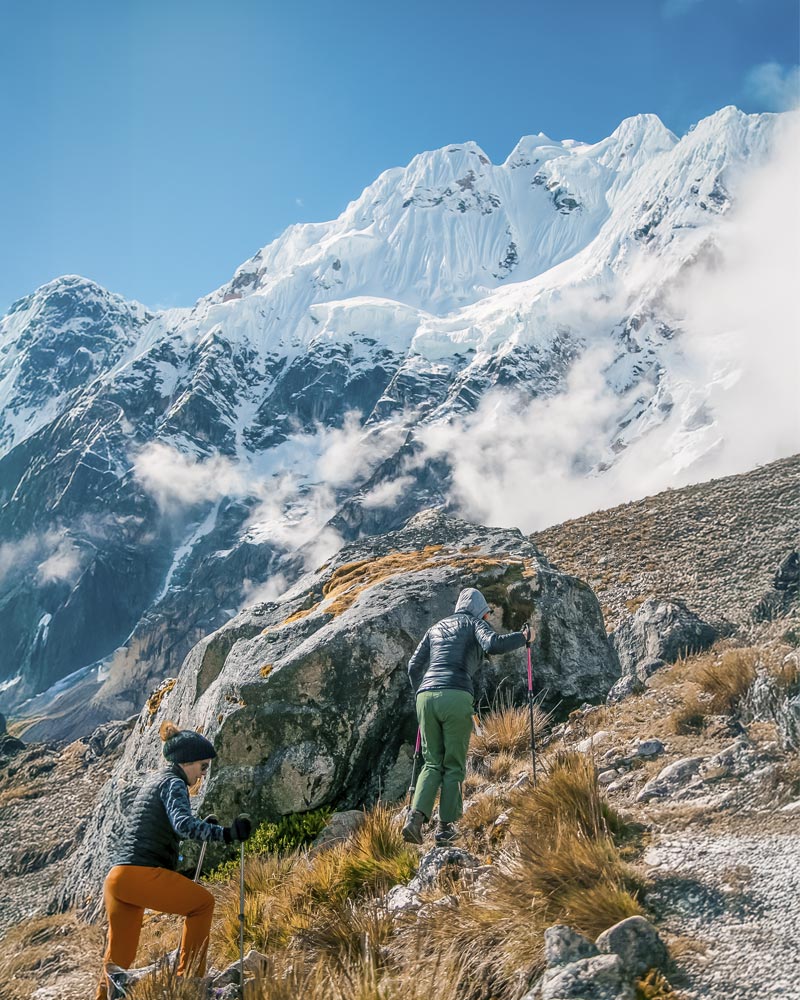
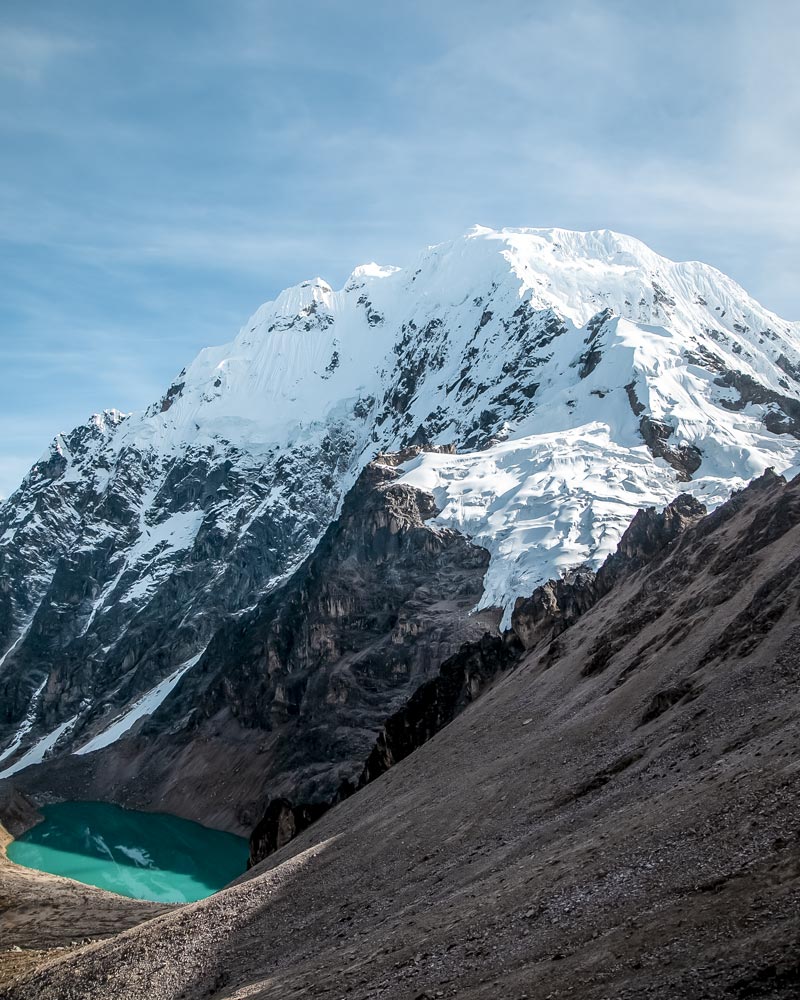
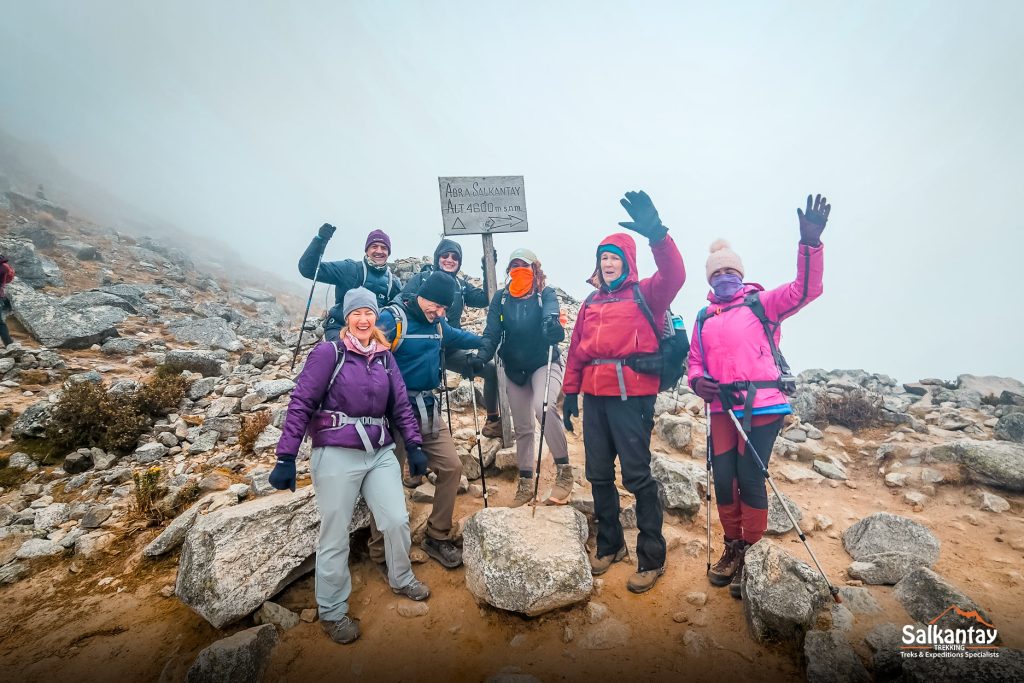
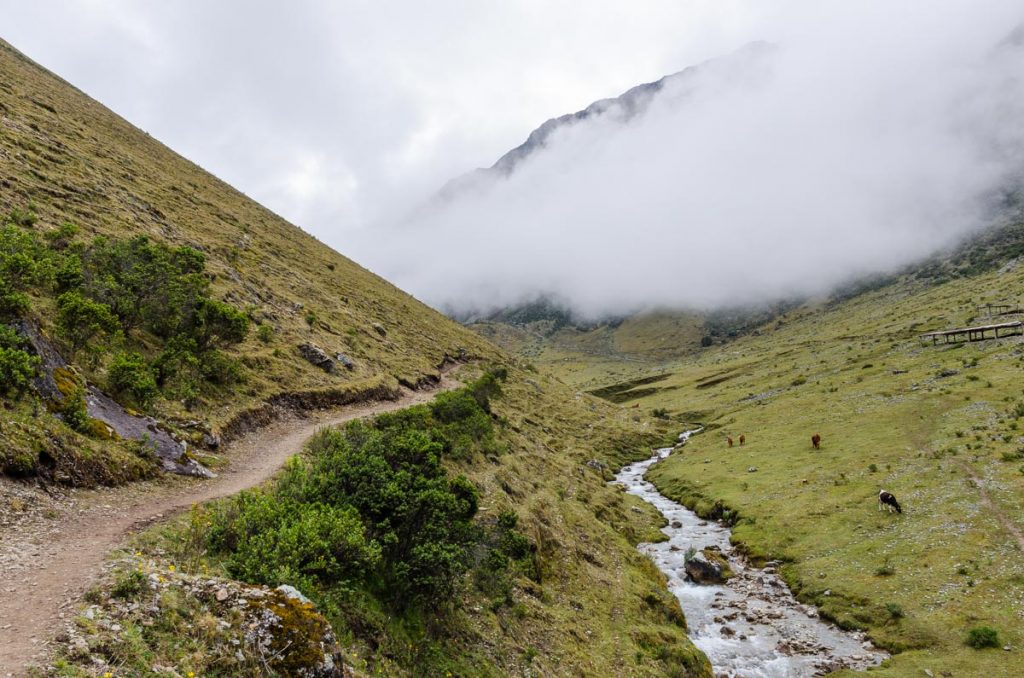
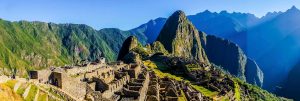
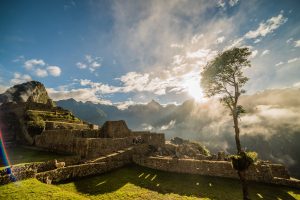
The Salkantay Trek is widely considered one of the best treks in South America, and it’s not hard to see why. It’s a route that refuses to stick to one landscape. You start surrounded by towering, snow-covered peaks, cross a high mountain pass beneath Salkantay itself, then descend into warm jungle valleys before finishing at Machu Picchu (UNESCO World Heritage Site and Modern Wonder of the World).
What really sets it apart is the variety. Instead of feeling like a single-environment trek, it feels like multiple adventures stitched together into one journey. It’s also less crowded than the Inca Trail, which makes the experience feel more remote and immersive.
Logistically, it strikes a good balance too. It’s challenging enough to feel like an achievement, but still accessible for hikers with a solid level of fitness.
- Distance: 45.5 miles / 73.3 km
- Max altitude: 15,190 ft / 4,630 m
- Difficulty: Moderate to challenging
Inca Trail to Machu Picchu
This is the headline act. The Inca Trail is the most famous trek in South America, and for many, it’s the reason they start looking into trekking in South America in the first place.
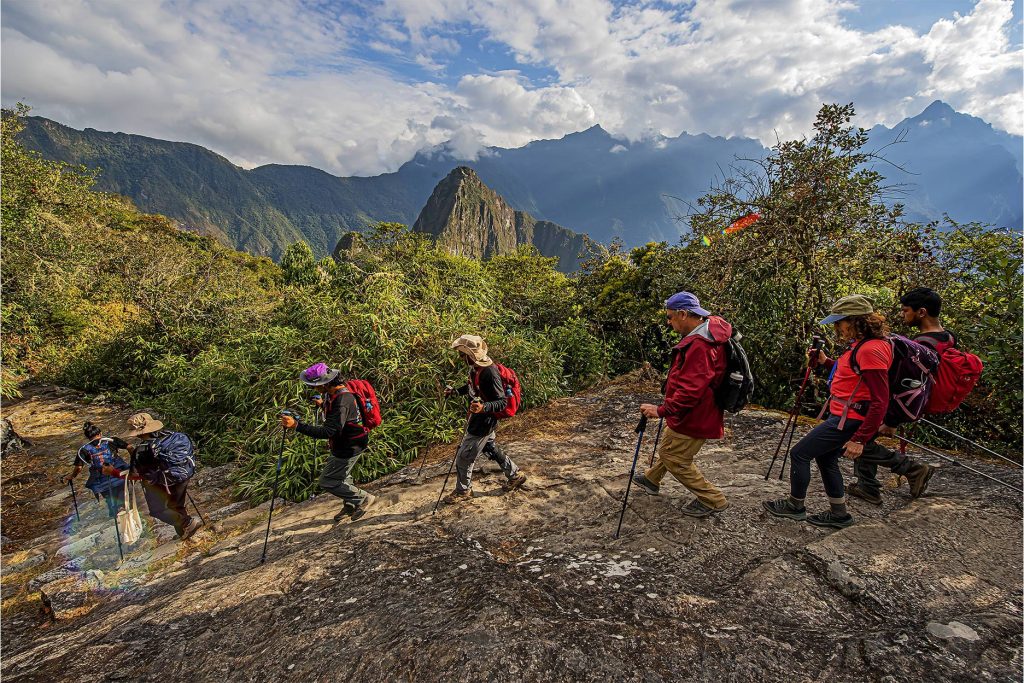
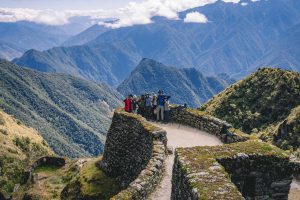
What makes it special isn’t just the destination, but the journey itself. You’re walking along original Inca pathways, passing archaeological sites that most visitors never see, and gradually building toward that iconic entrance to Machu Picchu through the Sun Gate.
It’s shorter than Salkantay, but don’t underestimate it. The stone steps can be relentless, and the altitude still plays a role. It’s also one of the most regulated treks in the region by the Peruvian government, meaning permits are limited and need to be booked well in advance with a fully licensed tour guide. The trail closes in February for maintenance.
- Distance: 27.3 miles / 44 km
- Max altitude: 13,829 ft / 4,215 m
- Difficulty: Moderate to challenging
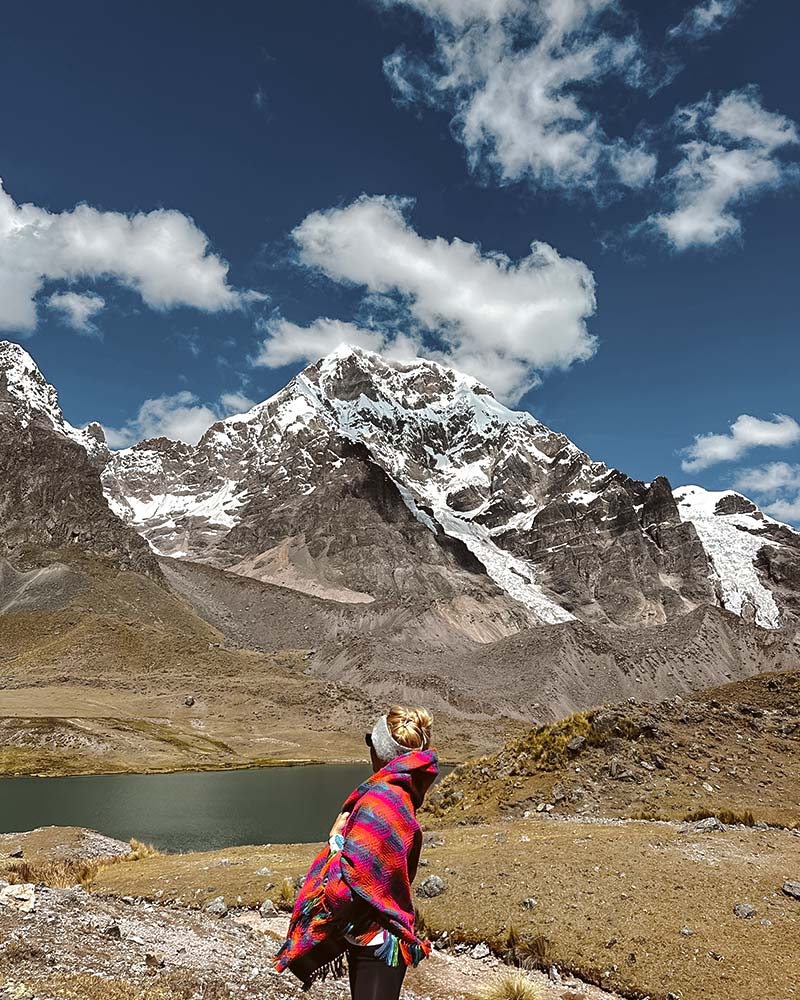
Ausangate Trek
If you’re looking for something more remote and physically demanding, the Ausangate Trek is one of the most rewarding South American hiking options.
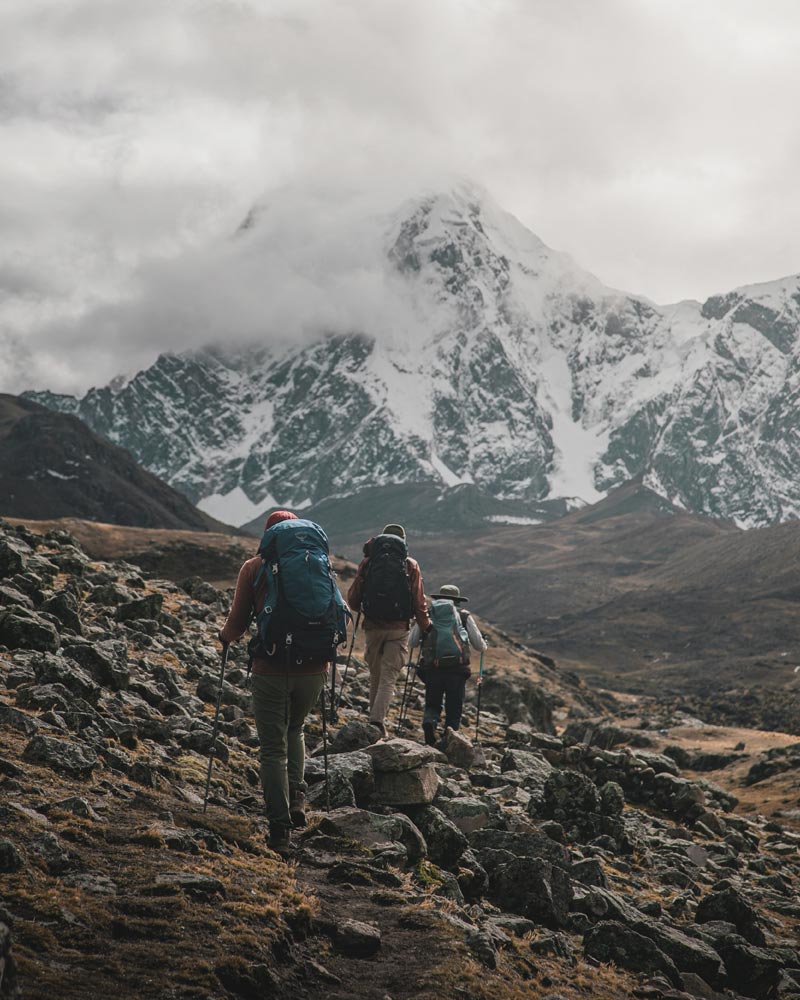
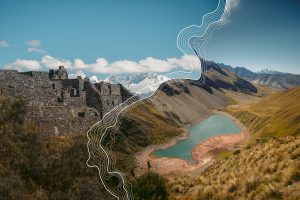
This trek circles the Ausangate mountain, one of the most sacred peaks in the Andes, and takes you deep into high-altitude terrain where the landscapes feel vast and untouched. You’ll pass glacial lakes, herds of alpacas, and sections of the famous Rainbow Mountain region, but without the day-trip crowds.
The challenge here is altitude. You’ll spend multiple days above 14,000 ft / 4,267 m, which adds a serious layer of difficulty even if the distances themselves are manageable. It’s best suited to experienced trekkers or those who have already acclimatized properly.
- Distance: 34.5 miles / 55.5 km
- Max altitude: 17,060 ft / 5,200 m
- Difficulty: Moderate to challenging
Lares Trek
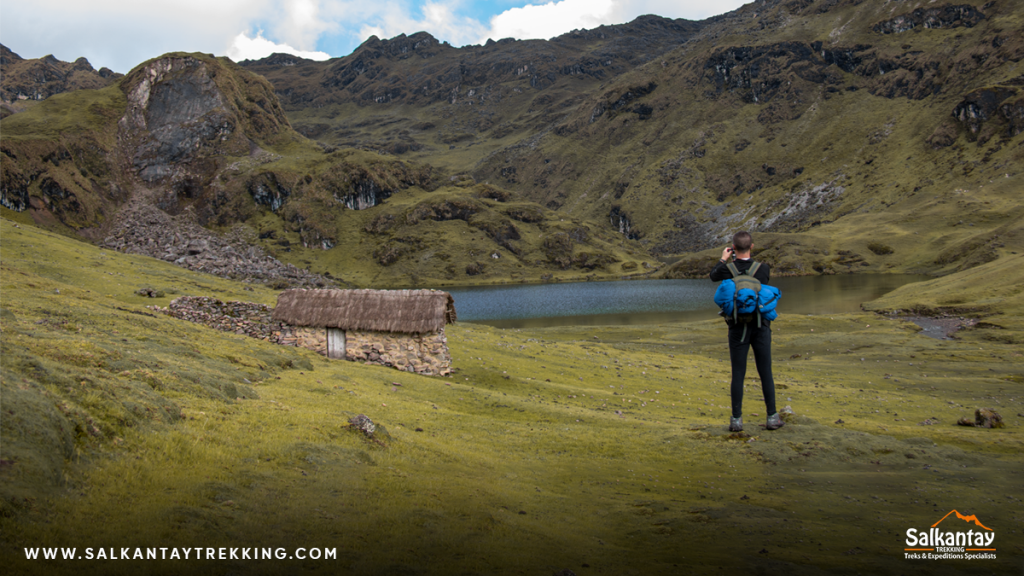
The Lares Trek offers a completely different experience from Peru’s more famous routes. Instead of focusing on dramatic high passes or iconic landmarks, it leans into culture, community, and quieter landscapes.
This route takes you through traditional Andean villages where life still moves at a slower pace. You’re likely to pass local farmers, see alpacas grazing freely, and get a more personal glimpse into daily life in the mountains.
It’s also one of the more flexible treks in Peru. Routes and durations vary (the classic option being 4 days), which makes it easier to tailor depending on your time and fitness level. While it still involves altitude, it’s generally considered more accessible than Salkantay or Ausangate.
- Distance: 19.6 miles / 31.5 km
- Max altitude: 15,420 ft / 4,700 m
- Difficulty: Moderate to challenging
Best Treks in Patagonia (Chile & Argentina)
Patagonia feels like a different planet compared to the Andes further north. The scale is bigger, the weather is wilder, and the landscapes lean heavily into glaciers, jagged peaks, and wide-open spaces. If Peru is about culture and altitude, Patagonia is about raw nature and drama.
This is where you’ll find some of the top hiking trails in South America, but also some of the most unpredictable conditions. You don’t just hike here, you adapt.
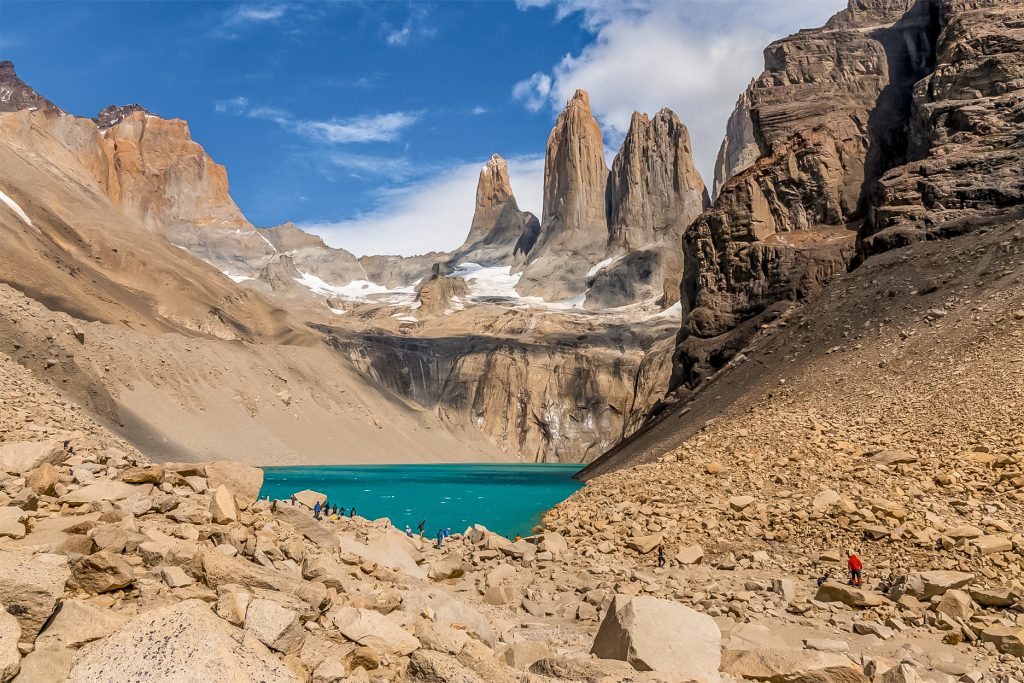
W Trek, Torres del Paine
The W Trek is Patagonia’s most famous route, and for good reason. It manages to pack the region’s highlights into a relatively short timeframe, making it one of the most accessible ways to experience this part of the world.
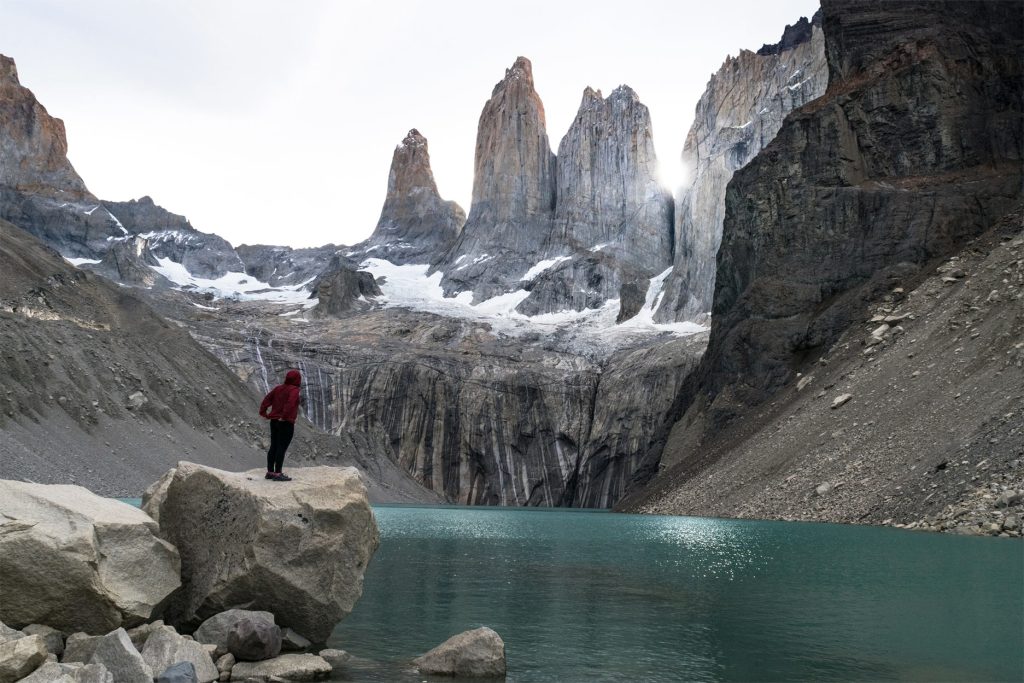
You’ll hike through valleys carved by glaciers, walk alongside ice-blue lakes, and finish with views of the iconic Torres towers. The trail is well-marked and supported by refugios, which makes logistics easier than many other multi-day treks in South America.
That said, “moderate” here comes with a caveat. The distances are manageable, but the weather can flip quickly. Seriously. Strong winds and sudden rain are part of the experience.
- Distance: 46–50 miles / 74–80 km
- Max altitude: 3,000 ft / 915 m
- Difficulty: Moderate
O Circuit, Torres del Paine
If the W Trek feels a bit too polished, the O Circuit is the full immersion version. It loops around the entire Torres del Paine massif, taking you into quieter, more remote areas that most visitors never see.
The biggest difference is the sense of isolation. Once you pass the W section, the crowds disappear and the terrain becomes more rugged. You’ll cross mountain passes, camp in more exposed locations, and deal with longer, more demanding days.
It’s not necessarily technical, but it requires stamina, preparation, and a bit of resilience when the weather inevitably turns.
- Distance: 85 miles / 136 km
- Max altitude: 3,937 ft / 1,200 m
- Difficulty: Challenging
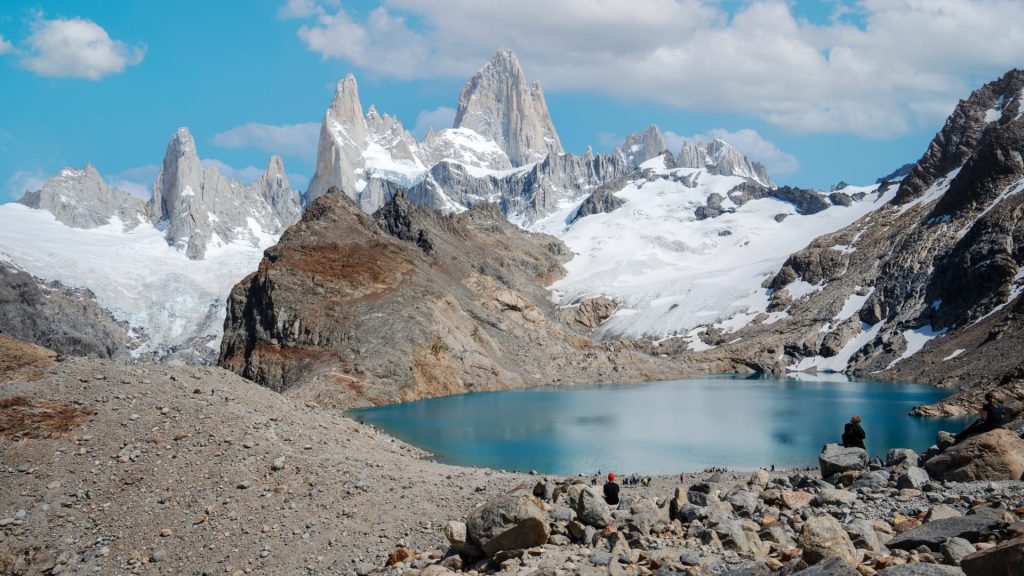
Fitz Roy & Laguna de los Tres Trek
This is one of the most recognizable routes when it comes to the best hiking in South America, and one of the most rewarding for the effort required.
Based out of El Chaltén in Argentina, this trek is shorter and more flexible than Patagonia’s multi-day routes. You can do it as a long day hike or stretch it into a multi-day trip with nearby trails.
The highlight is the final climb to Laguna de los Tres. It’s steep, relentless, and usually tackled early in the morning, but the payoff is a front-row view of Mount Fitz Roy reflected in a glacial lake.
- Distance: 13.7 miles / 22 km
- Max altitude: 3,840 ft / 1,170 m
- Difficulty: Moderate to challenging
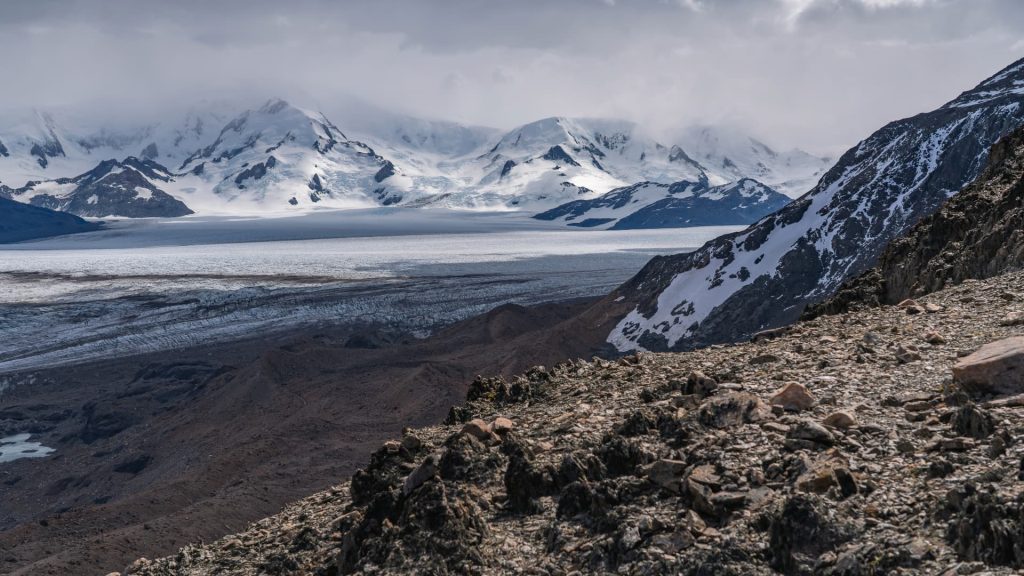
Huemul Circuit
The Huemul Circuit is where Patagonia stops being “accessible adventure” and starts feeling genuinely wild. This is one of the most demanding treks in the region, not because of altitude, but because of terrain and conditions.
Expect unmarked sections, river crossings using harness systems, strong winds, and minimal infrastructure. This isn’t a beginner-friendly hike.
But for experienced trekkers, it offers something rare, and that’s solitude. You’ll spend days surrounded by glaciers, mountain ranges, and open landscapes without the crowds found on more popular routes.
- Distance: 43 miles / 70 km
- Max altitude: 5,000 ft / 1,550 m
- Difficulty: Challenging
Best Treks in Bolivia
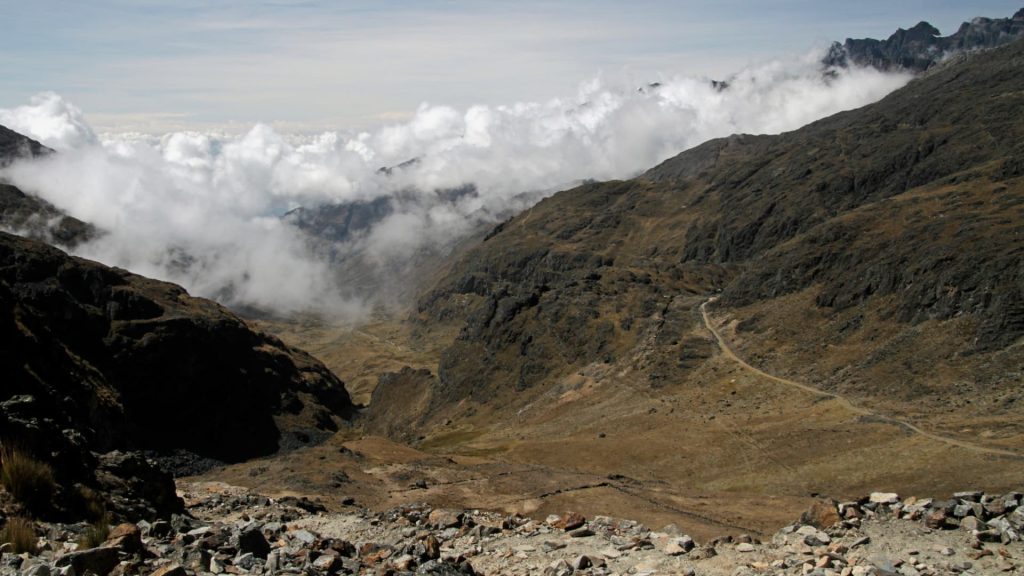
Bolivia is often overlooked when it comes to trekking in South America, but that works in your favor. The trails are quieter, the landscapes are just as dramatic, and the sense of exploration feels more genuine.
The main challenge here is altitude. Many treks sit well above 13,000 ft, which adds a serious physical element even to shorter routes.
Condoriri Trek
The Condoriri Trek is a compact but powerful introduction to Bolivian trekking. It’s relatively short, but don’t mistake that for easy, as the altitude makes every mile count.
The scenery is classic Andes. Think jagged peaks, glacial lakes, and wide valleys. The Condoriri mountain range itself is shaped like a condor in flight, which gives the trek its name.
Because it’s only a few days long, it’s often used as an acclimatization trek, but it still delivers a full experience in a short window.
- Distance: 15–20 miles / 24–32 km
- Max altitude: 17,550 ft / 5,350 m
- Difficulty: Moderate to challenging
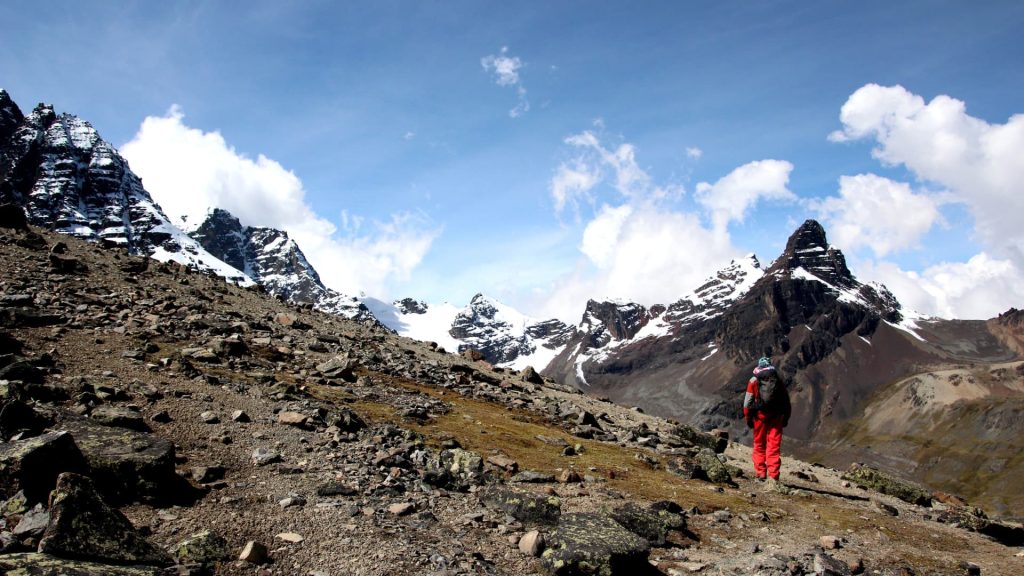
Takesi Trail
The Takesi Trail is one of the oldest routes in Bolivia, originally built by the Incas to connect the highlands with the Amazon basin. What makes it unique is the dramatic shift in environment.
You start in cold, high-altitude terrain and gradually descend into warmer, greener landscapes. The change is noticeable day by day, which gives the trek a sense of progression that many routes lack.
It’s also less physically intense than some other high-altitude treks, making it a good middle ground for those wanting a challenge without going all-in.
- Distance: 18–25 miles / 30–40 km
- Max altitude: 15,256 ft / 4,650 m
- Difficulty: Moderate to challenging
Best Treks in Ecuador
Ecuador tends to fly under the radar, but it offers some of the most accessible best hikes in South America, especially if you’re newer to multi-day trekking.
The country packs a lot into a small space, with volcanoes, highland villages, and scenic loops that don’t require weeks of planning.
Quilotoa Loop
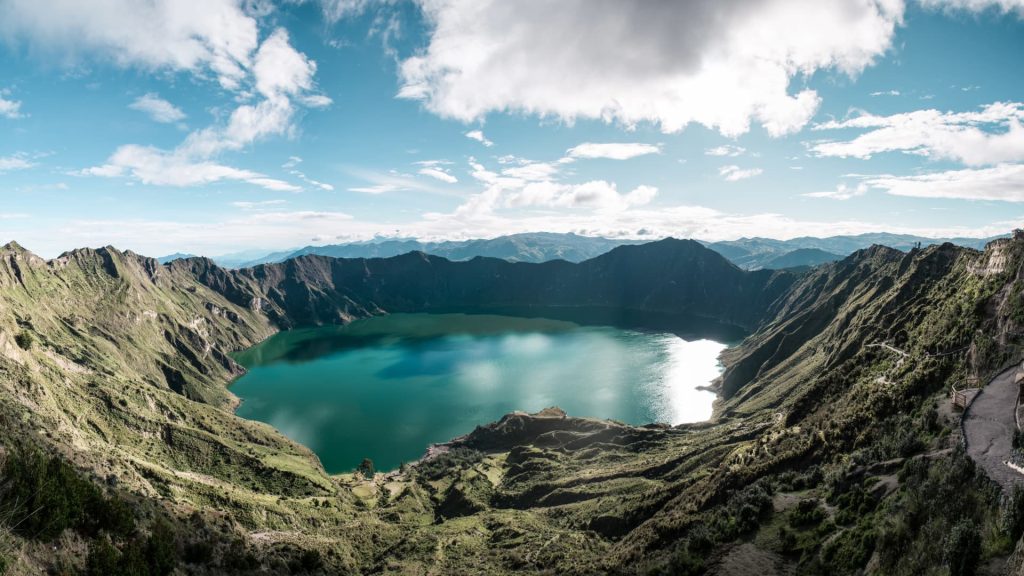
The Quilotoa Loop is often recommended as a starting point for South American hiking, and it’s easy to see why. It combines manageable distances with strong scenery and relatively straightforward logistics.
The route winds through rural Andean villages before reaching the Quilotoa crater lake, which is a bright turquoise lagoon sitting inside a volcanic crater.
It’s not technically difficult, but the elevation gain and altitude still require a reasonable level of fitness.
- Distance: 13–22 miles / 22–36 km
- Max altitude: 12,890 ft / 3,930 m
- Difficulty: Moderate to challenging
Cotopaxi Volcano Trek
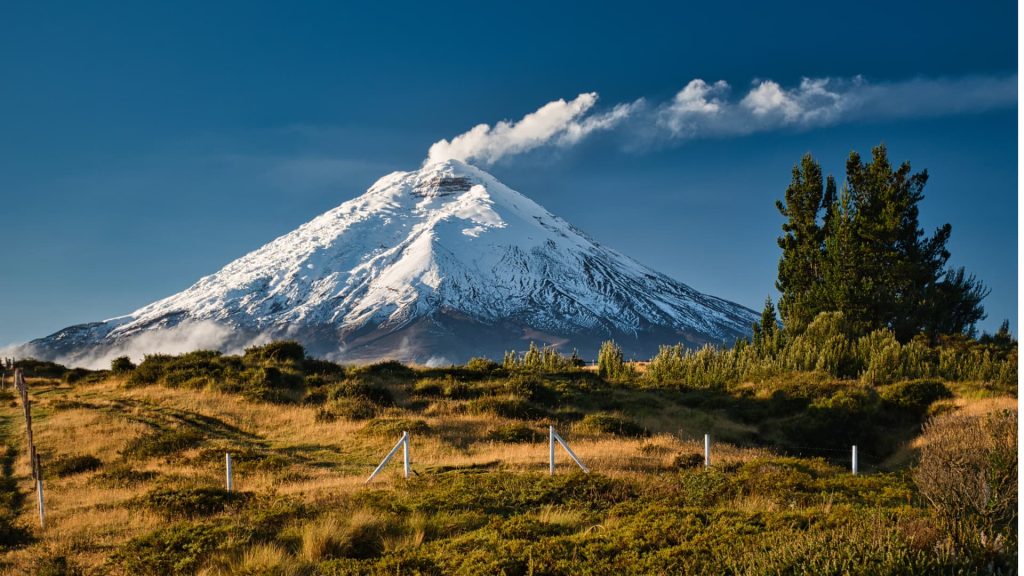
Cotopaxi is one of the highest active volcanoes in the world, and trekking here is a very different experience from a standard multi-day hike.
This is more of a mountaineering challenge than a traditional trek. Summit attempts typically start at night and involve steep ascents in cold, high-altitude conditions.
It’s not for beginners, but for those looking to push themselves, it’s one of the most memorable South American peaks you can attempt.
- Distance: 6–10 miles / 10–16 km
- Max altitude: 19,347 ft / 5,897 m
- Difficulty: Challenging
Best Treks in Colombia
Colombia adds something completely different to the mix. Jungle trekking. This isn’t about altitude but about humidity, heat, and endurance.
Lost City Trek (Ciudad Perdida)
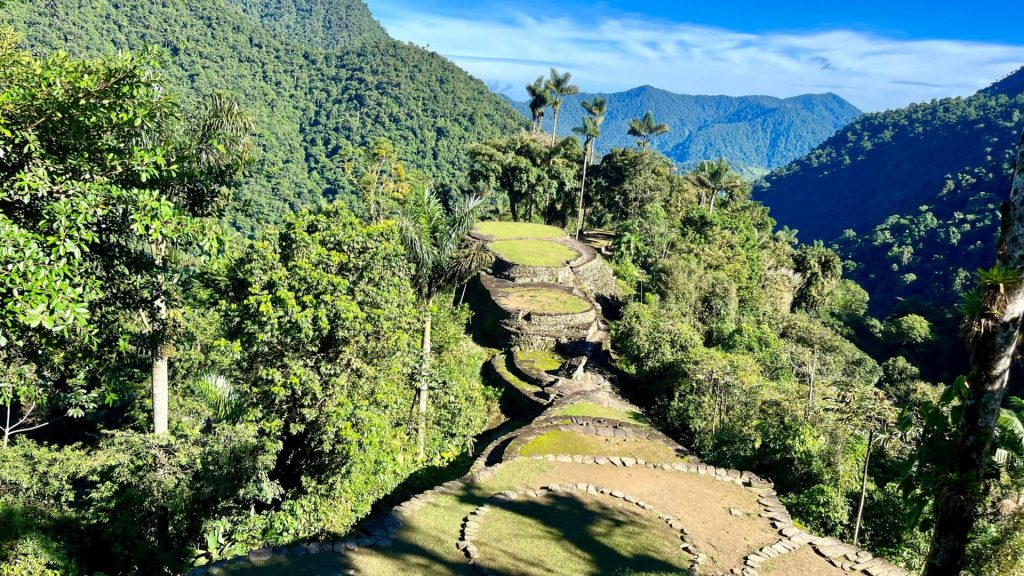
The Lost City Trek is one of the most unique routes when looking at the best trekking in South America. Instead of mountain passes and glaciers, you’re navigating dense jungle, river crossings, and muddy trails.
The trek leads to Ciudad Perdida, an ancient city that predates Machu Picchu. The journey is as much about the environment as the destination.
Conditions can be tough, and you should expect humidity, insects, and long days, but that’s part of what makes it memorable.
The trek typically closes in September for restoration (subject to local authority schedules).
- Distance: 27–30 miles / 44–48 km
- Max altitude: 3,937 ft / 1,200 m
- Difficulty: Challenging
Best Treks in Brazil
Brazil doesn’t often come up in conversations about South America’s best hikes, but it offers a completely different kind of trekking experience.
Chapada Diamantina Trek
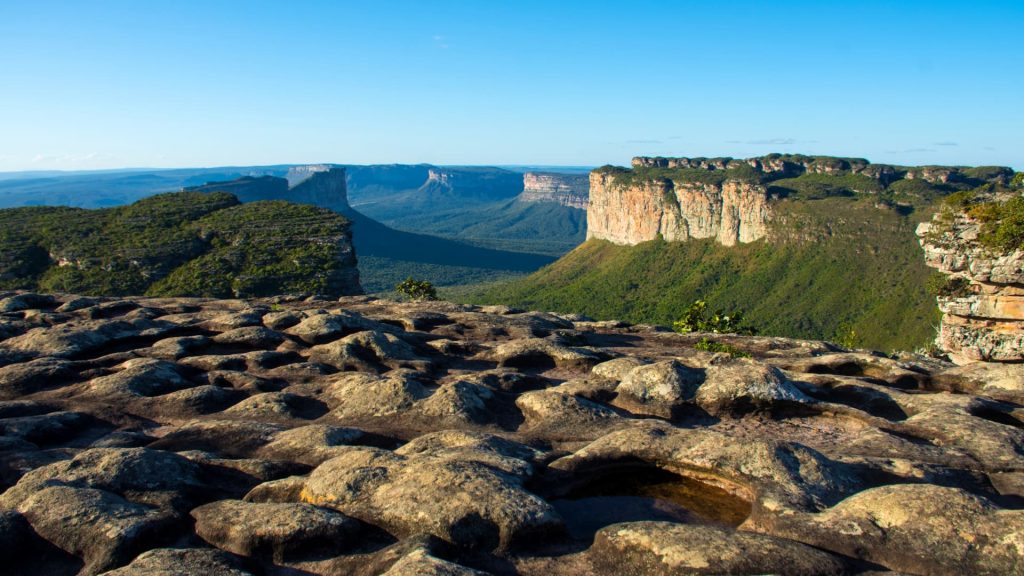
Chapada Diamantina is all about variety. Instead of one dominant landscape, you’ll move through plateaus, valleys, waterfalls, and cave systems.
It’s less about altitude and more about exploration. The terrain is varied, the climate is warmer, and the experience feels less intense than high-altitude trekking.
That makes it a great option if you want something different from the Andes-heavy routes elsewhere.
- Distance: 31–43 miles / 50–70 km
- Max altitude: 4,921 ft / 1,500 m
- Difficulty: Moderate to challenging
How to Choose the Best Trek in South America
With so many options, choosing the right trek comes down to understanding what you actually want, and not just what looks good in photos. Let’s break it down.
By Difficulty (Beginner, Moderate, Advanced)
Difficulty ratings in trekking South America can be misleading. A “moderate” trek at sea level is very different from a “moderate” trek at high altitude.
- Beginner: Shorter distances, lower altitude (Quilotoa, Lares)
- Moderate: Longer days, some altitude (Salkantay, W Trek)
- Advanced: High altitude, remote, physically demanding (Ausangate, Huemul)
The key is matching the trek to your actual fitness, not your optimistic version of it.
By Altitude
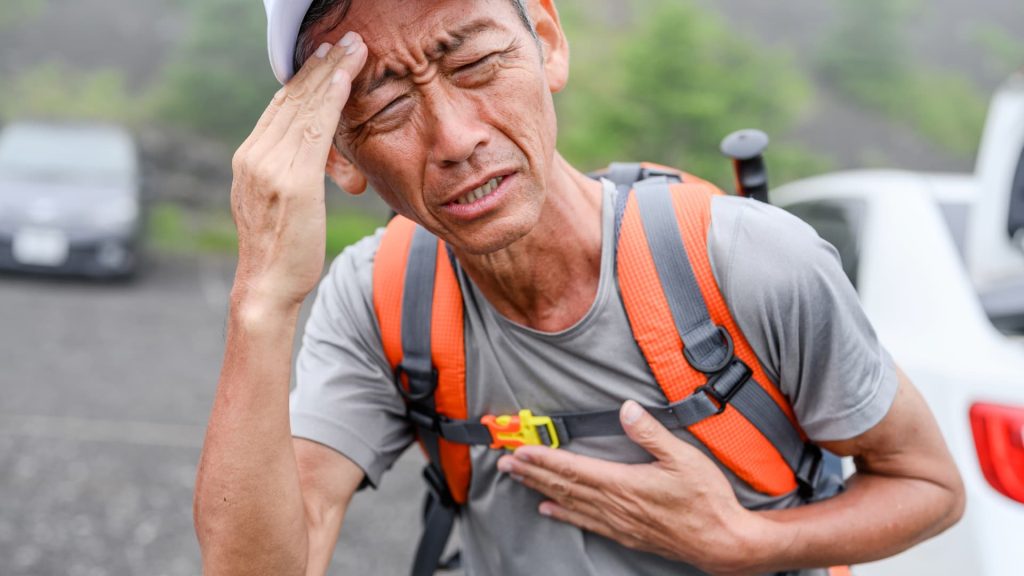
Altitude is the biggest deciding factor for many treks. Routes in Peru and Bolivia regularly exceed 14,000 ft / 4,267 m, which can affect anyone regardless of fitness.
If you’re heading into high-altitude regions, it’s essential to prevent altitude sickness.
Acclimatization days aren’t optional. They’re part of the trek. Pair that with staying hydrated, eating lighter foods, and avoiding alcohol, and you should be good to go.
By Scenery (Mountains, Jungle, Glaciers)
Different regions deliver completely different experiences:
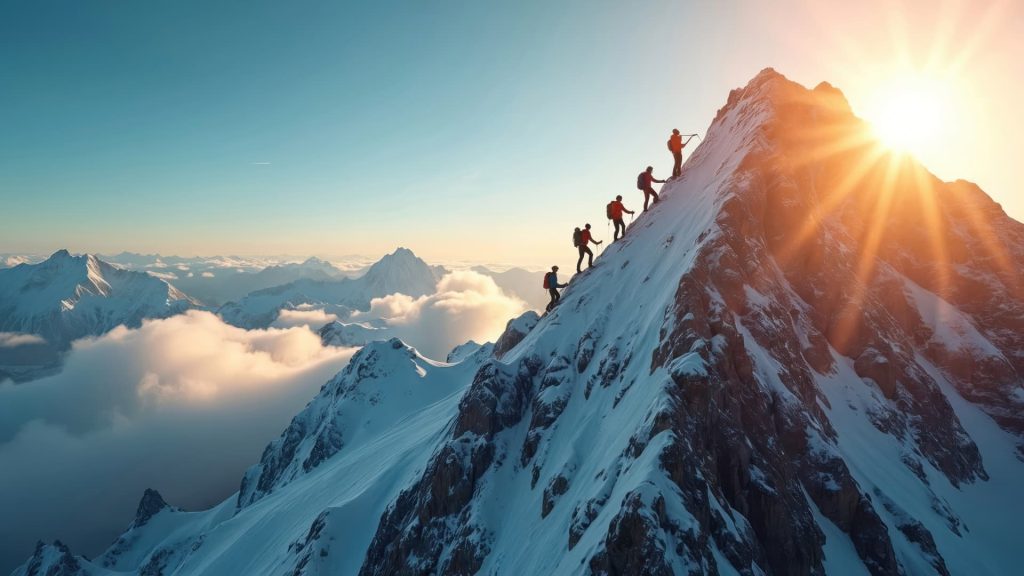
- Mountains & high peaks: Peru, Bolivia
- Glaciers & dramatic landscapes: Patagonia
- Jungle & humidity: Colombia
- Mixed environments: Salkantay stands out here
Choosing based on scenery often makes the decision easier than overthinking the difficulty.
By Duration
Time is often the limiting factor.
- Short (1–3 days): Condoriri, Cotopaxi
- Medium (4–5 days): Salkantay, W Trek, Lost City
- Long (6+ days): O Circuit, Ausangate longer options
Longer doesn’t always mean better. It just means more commitment.
By Traveler Type
Breaking it down this way can simplify things quickly:
- First-time trekkers: Quilotoa Loop, Lares Trek
- Scenery-focused: Salkantay, Patagonia routes
- Challenge seekers: Ausangate, Huemul
- Culture-focused: Inca Trail, Lost City
This is often the easiest way to narrow down your options.
Best Time to Trek in South America
Timing your trek isn’t just a detail. It can completely change your experience. The same trail can feel like a dream in one season and a bit of a slog in another. Weather affects everything: trail conditions, visibility, crowd levels, and even how difficult a trek feels.
South America is huge, so there’s no one-size-fits-all answer, but there are clear patterns worth understanding.
Dry vs Wet Seasons by Region
Most of South America follows two main seasons: dry season and wet (rainy) season, but the timing changes depending on where you are.
- Andes (Peru, Bolivia, Ecuador):
- Dry season: May to September → best for trekking (clear skies, stable trails)
- Wet season: November to March → muddy trails, more rain, fewer views
- Shoulder seasons: October & April (quieter but more unpredictable)
- Patagonia (Chile & Argentina):
- Best season: November to March (summer)
- Shoulder seasons: October & April (again quieter but weather unstable)
- Winter: Harsh conditions, many trails closed
- Colombia (jungle regions):
- Drier months: December to March
- Rainier months: April to November (expect humidity and muddy trails year-round)
Dry season usually means better hiking conditions, but also more people. Shoulder seasons can be a sweet spot if you don’t mind a bit of unpredictability.
Peru Trekking Seasons
Peru is one of the most popular destinations for trekking in South America, and timing matters here more than in most places. Here’s the best time to visit Machu Picchu and go on a trek:
- Best time: May to September (dry season)
- Shoulder months: April & October (good balance of weather and fewer crowds)
- Wet season: November to March (lush landscapes, but muddier trails and cloudier views)
For a full breakdown of conditions across the country, take a look at this article on “Peru Weather”.
Patagonia Weather Realities
Patagonia plays by its own rules. Even in peak season, you can experience sun, rain, and strong winds in a single day.
- Summer (Nov–Mar): Best conditions, but still windy
- Shoulder seasons: Fewer crowds, more volatile weather
- Winter: Snow, closures, and limited access
The key here isn’t just picking the right season but being prepared for anything.
Trekking Difficulty Explained
Understanding difficulty ratings helps avoid unpleasant surprises.
What “Moderate” vs “Challenging” Actually Means
- Moderate: Manageable distances, some elevation gain, requires basic fitness
- Challenging: Long days, sustained climbs, possible altitude exposure
In South America, difficulty often comes from a combination of terrain, weather, and altitude, not just distance.
Altitude Impact
Altitude reduces oxygen levels, which affects endurance, recovery, and overall performance.
Even experienced hikers need time to adjust. Ignoring this is one of the most common mistakes in South American hiking.
Guided vs Independent Trekking in South America
Choosing whether to go guided or independent isn’t just a logistical decision.
It shapes your entire trekking experience. Some routes make the decision for you, but for others, it comes down to how you like to travel.
When You Need a Guide
Certain treks, like the Inca Trail, require a licensed guide. Others, like Salkantay, are technically possible to do independently but are far easier (and often more enjoyable) with a guide due to logistics, navigation, and local knowledge.
Pros and Cons
| Guided Trekking | Independent Trekking |
| Pros: | Pros: |
| Logistics handled (permits, transport, food) | Full flexibility with itinerary |
| Local guides add cultural and historical insight | More freedom to move at your own pace |
| Safer in remote or high-altitude areas | Lower overall cost |
| Less planning required before the trip | More sense of independence/adventure |
| Cons: | Cons: |
| Higher cost | Requires detailed planning |
| Less flexibility in schedule | Navigation and logistics are your responsibility |
| Group pace may not match yours | Higher risk in remote areas |
| Can feel less “independent” | Limited support if something goes wrong |
What to Pack for Treks in South America
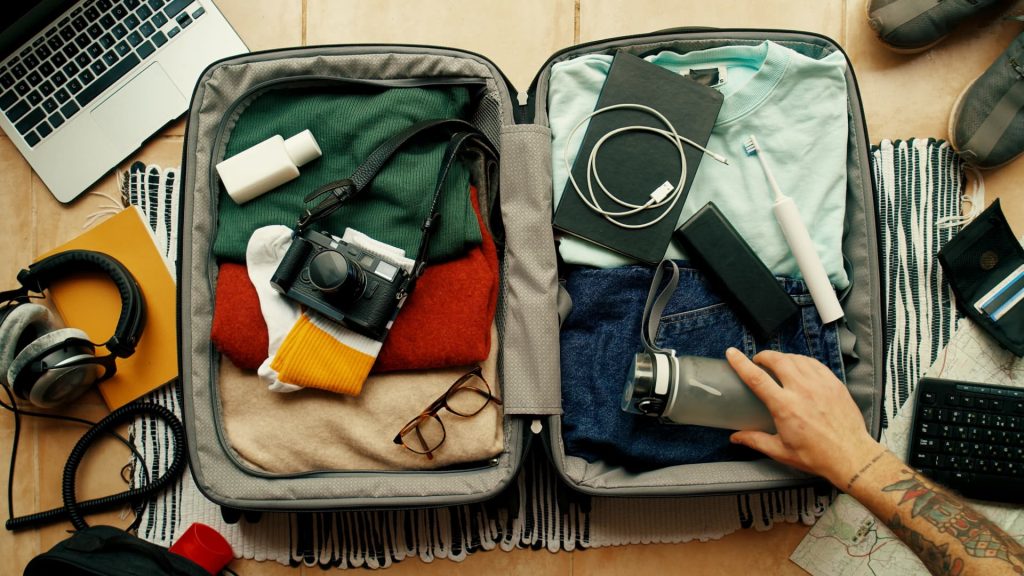
Packing well is one of those things you only truly appreciate once you’re halfway up a mountain in the wrong gear. Conditions in South America vary massively, with heat, cold, rain, and altitude sometimes all in the same trek.
The goal is simple. Stay comfortable, stay dry, and don’t carry more than you need.
Essentials
A solid packing list covers all conditions without overloading your bag. The following are must-haves:
- Clothing (layered system):
- Moisture-wicking base layers
- Insulating mid-layer (fleece or down jacket)
- Waterproof outer shell (jacket + pants)
- Trekking pants/shorts
- Gloves, hat, and buff (especially for high altitude)
- Footwear:
- Broken-in hiking boots (non-negotiable)
- Comfortable camp shoes or sandals
- Quality hiking socks (bring extras)
- Gear:
- Daypack (20–25L)
- Larger duffel/backpack (usually carried for you on a guided tour)
- Trekking poles (hugely helpful on descents)
- Headlamp (early starts are common)
- Reusable water bottles or hydration system
- Extras:
- Sunscreen (strong UV at altitude)
- Sunglasses
- Basic first aid kit
- Snacks you actually want to eat
Altitude Considerations
Packing for altitude is slightly different. It’s not just about comfort, it’s about managing how your body reacts.
Here’s what’s worth bringing when trekking higher:
- Electrolyte tablets or powders help with hydration at altitude
- High-energy snacks, as your appetite can drop, but you still need fuel
- Lip balm + moisturizer because the air gets dry fast at higher elevations
- Stronger sunscreen (SPF 50+) because UV exposure increases with altitude
- Warm layers (even if days are hot), as temperatures drop quickly at night
- Altitude medication (if prescribed), but always check with a doctor first
Altitude doesn’t just make things harder. It also amplifies small issues. Being prepared makes a noticeable difference.
FAQs About Trekking in South America
If you’ve made it this far, you’re probably close to choosing a trek, but a few key questions tend to come up again and again. Here are the answers that help most people make a final decision.
The Inca Trail is still the most famous route, thanks to its history and direct connection to Machu Picchu. That said, alternatives like Salkantay are becoming just as popular for those wanting fewer crowds and more varied scenery.
Yes, absolutely. While the classic Inca Trail has some challenges, there are routes like the Lares Trek or shorter Salkantay options that are more accessible for beginners with a reasonable level of fitness.
Treks like Ausangate (Peru) and the Huemul Circuit (Patagonia) are among the toughest. The difficulty comes from a mix of high altitude, long distances, and remote conditions rather than technical climbing.
Yes, especially for treks in Peru and Bolivia. Altitude affects everyone differently, and taking time to adjust before starting your trek can make a huge difference to how you feel on the trail.
Which Trek Should You Choose?
The right trek depends on your goals, fitness, and the type of experience you’re looking for.
If you want a balance of scenery, challenge, and variety, the Salkantay Trek stands out as one of the most complete options when looking at the best treks in South America.

Leave A Reply