
Have you decided to come to Cusco, but you still don’t know which trekking route to choose? Below, we’ll compare two top trails so that you can decide depending on your tastes and preferences: the famous Inca Trail and the tour to the sacred mountain Ausangate. Both offer unforgettable experiences, but each in its own way.
So, let’s get started with the differences between the classic Inca Trail and the tour to the imposing Ausangate so that you can choose the best trekking option for you.
Table of contents
Inca Trail vs Ausangate Trek: Quick Comparison
If you’re stuck between these two incredible hikes but don’t have much time, here’s the short version:
| Feature | Inca Trail | Ausangate Trek |
|---|---|---|
| Duration | 4 days / 3 nights | 5 days / 4 nights |
| Distance | Approx 44 km (27.3 miles) | Approx 55.5 km (34.5 miles) |
| Final Destination | Machu Picchu | Circular mountain route |
| Maximum Altitude | 4,215 m (13,829 ft) | 5,200 m (17,060 ft) |
| Difficulty | Moderate to challenging | Moderate to challenging |
| Scenery Highlights | Inca ruins, cloud forest, Sun Gate, Machu Picchu | Glaciers, turquoise lakes, alpacas, colorful mountains |
| Archaeological Sites | Yes | No |
| Crowds | High | Low |
| Permit Required | Yes | No |
| Guide Required | Yes | No (but recommended) |
| Accommodation | Campsites along the trail | Remote mountain campsites |
| Meals | 4 breakfasts, 3 lunches, 3 dinners, tea time in the afternoon, and daily snacks | 5 breakfasts, 5 lunches, 4 dinners, tea time in the afternoon, and daily snacks |
| Wildlife | Spectacled bears, orchids, and hummingbirds | Alpacas, vicuñas, and condors |
| Best For | History and Machu Picchu lovers | Serious mountain scenery seekers |
| Booking Notice | Often 4–8 months in advance | Can usually be booked much closer to departure |
Inca Trail
The Classic Inca Trail is one of the most famous trekking routes in the world and forms part of the Qhapaq Ñan, a UNESCO World Heritage Site. The network of trails runs through 6 countries: Colombia, Ecuador, Peru, Bolivia, Argentina, and Chile.
Flora, Fauna, and Landscapes on the Inca Trail
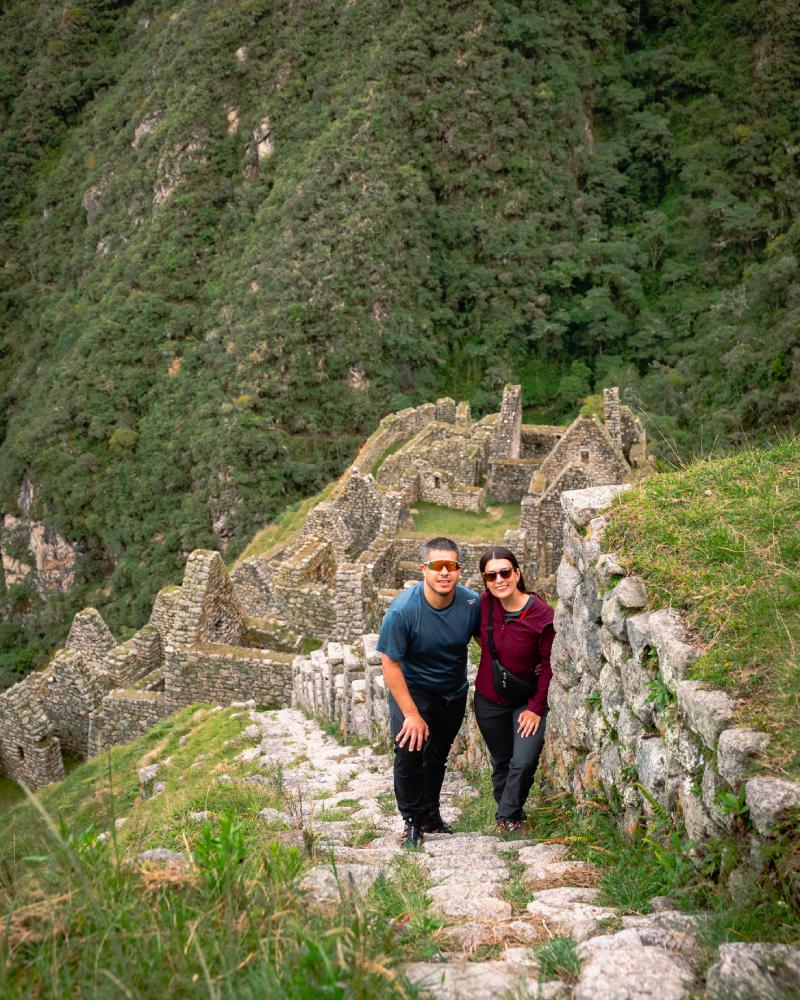
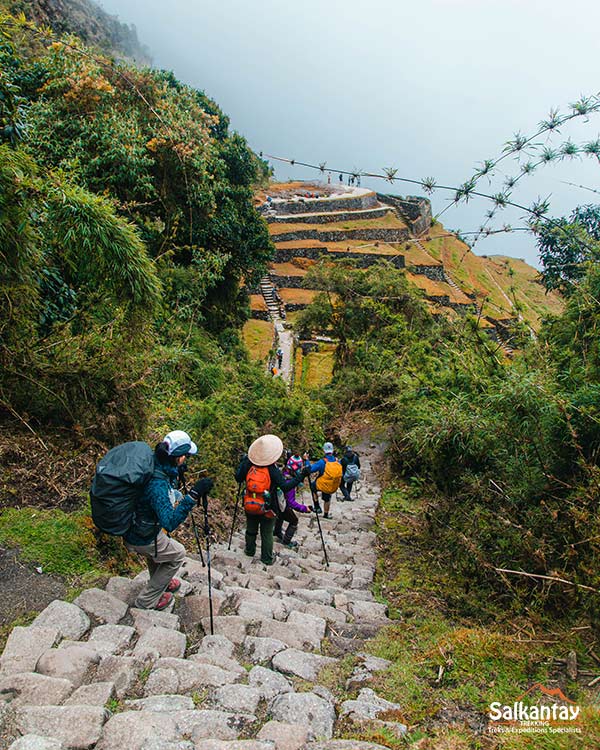
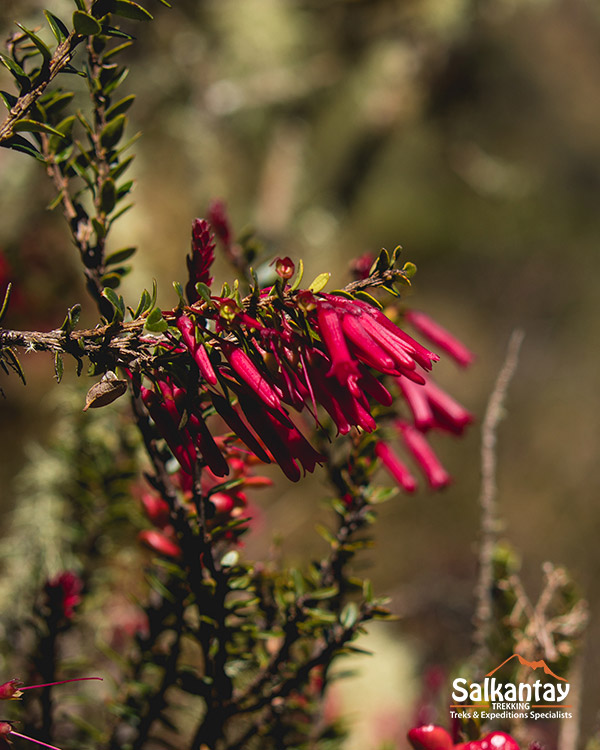
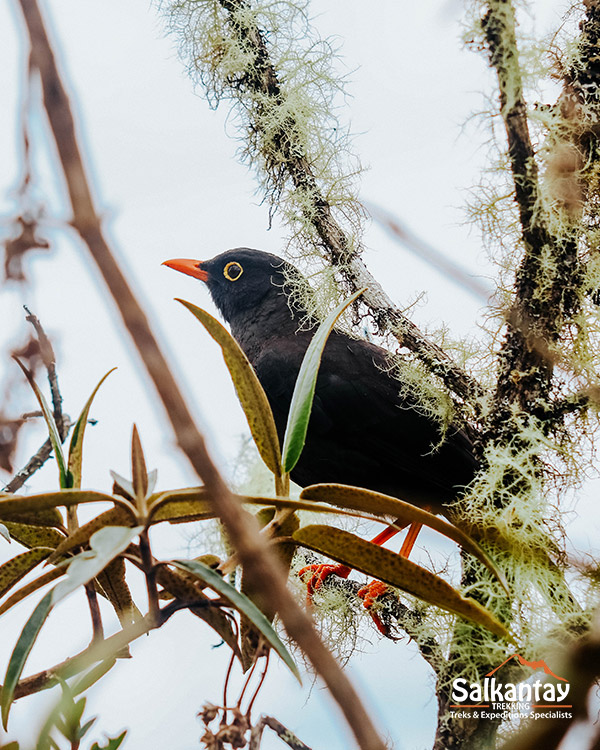
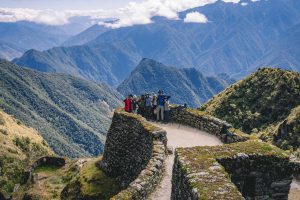
On the Inca Trail, you’ll travel along ancient stone paths where the Incas once walked and witness diverse flora, including orchids, eucalyptus forests, and tropical plants. You’ll also find beautiful mountains, different types of birds, and cloud forests. The region that the Inca Trail runs through is also home to the spectacled bear.
Along the way, you’ll explore several archaeological sites:
- Llactapata
- Wayllabamba
- Runkurakay
- Phuyupatamarca
- Wiñay Wayna
- Inti Punku
As one of the favorite routes for many travelers, the Inca Trail attracts crowds of tourists year-round. The best months to hike the Inca Trail are during the dry season, from May to October. Every February, the route is closed for maintenance. The great variety of landscapes and the sensation of being in the midst of the flora and fauna of this place are among the best experiences you can enjoy in Peru.
What Are the Characteristics of the Inca Trail?
- The Inca Trail takes you directly to Machu Picchu along an ancestral path built by ancient peoples.
- There are 500 permits available each day, of which only 200 are available to visitors. During peak season, booking 6–8 months in advance is strongly recommended, as permits often sell out quickly.
- You’ll discover incredible landscapes on the trail, from imposing ice-covered mountains to dense cloud forests in the jungle.
- The Inca Trail is characterized by several archaeological sites distributed along the way.
- The entrance is stricter and more controlled because thousands of tourists choose this route.
- The maximum altitude is at the Dead Woman’s Pass (4,215 m / 13,829 ft).
- The nights are cold, and the sun is intense during the day, so we suggest you bring a hat, sunglasses, and insect repellent.
- You can only hike the Inca Trail with a certified and authorized travel agency.
Ausangate Trek
While the Inca Trail is the best-known trek in the area, several trekking alternatives don’t require permits. Among them is the Ausangate Trek, a perfect tour for those who want to explore the beauty of Peru’s mountains. It’s definitely an unforgettable tour for mountain trekking lovers.
Flora, Fauna, and Scenery on the Ausangate Trek
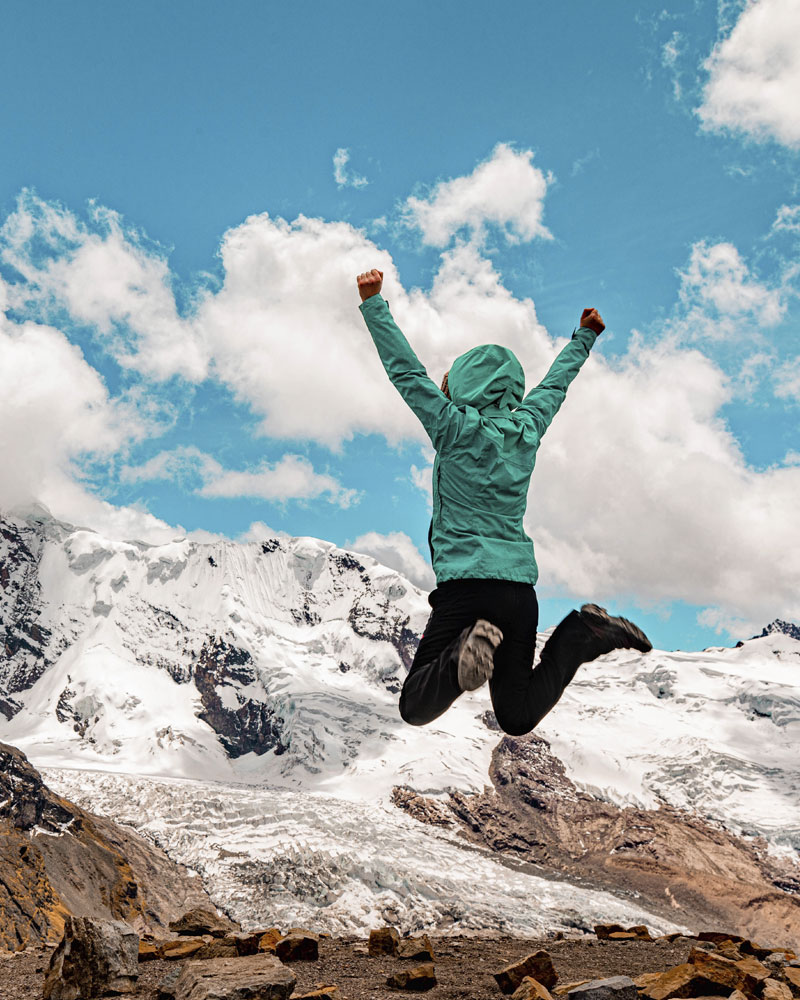
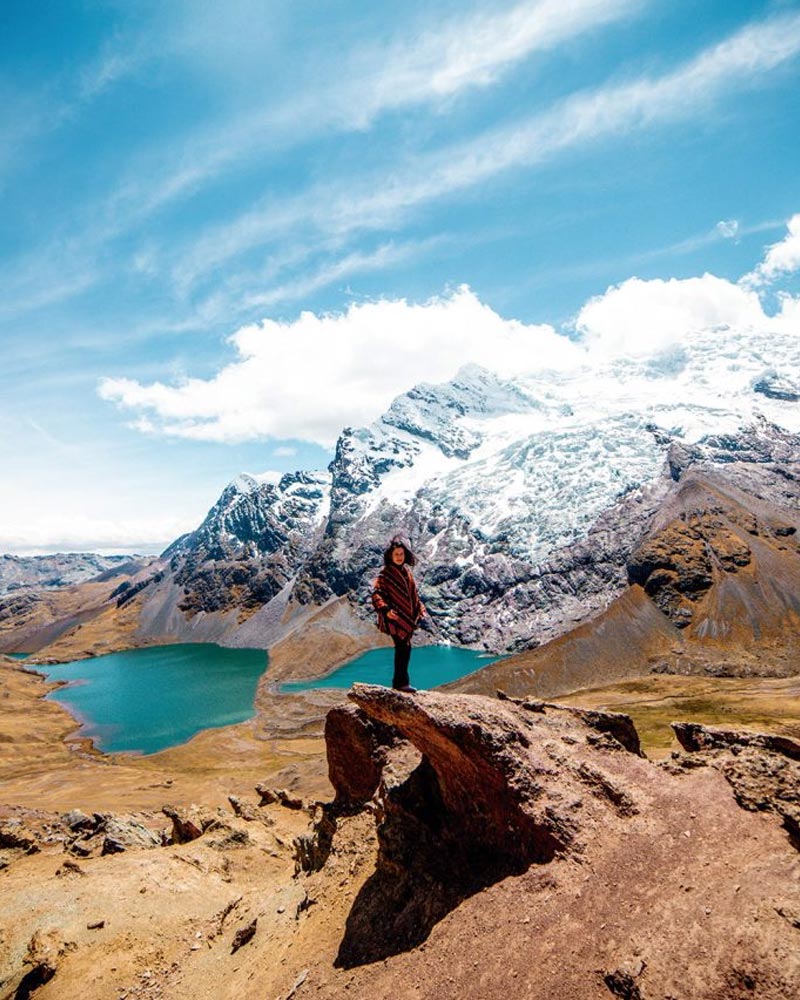
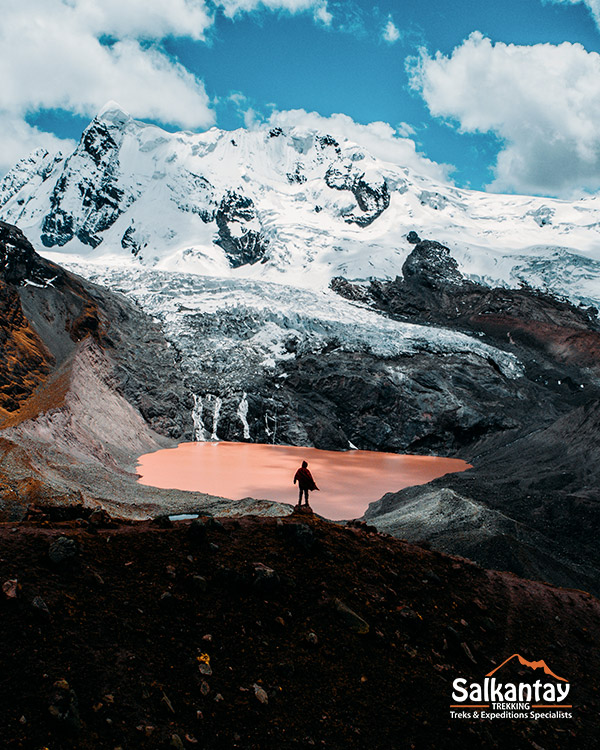
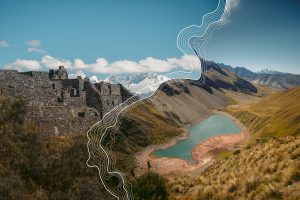
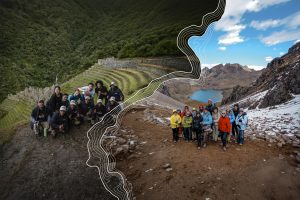
Ausangate means “the one that gives life” and is considered a place to recharge with good energy, surrounded by extensive, beautiful turquoise lagoons such as Huayna Ausangate Lake, Yanacocha, Hatun Pucacocha, and Ausangatecocha. You’ll get incredible views of peaks, snow-capped mountains, diverse flora, and the area’s fauna.
Ausangate is a towering mountain of great importance in the Andean cosmovision and the most important Apu (sacred mountain spirit) of the Cusco region for its energy and magic. This trek is famous for the pilgrimage of the Lord of Qoyllur Rit’i, which takes place every year in June to honor the harvest season and indigenous heritage.
What Are the Characteristics of the Ausangate Trek?
- Ausangate is the highest mountain in the Cusco Region and one of the highest peaks in Peru.
- It’s one of Peru’s most beautiful and sacred treks, but not very crowded.
- It has an altitude of 6,372 meters (20,905 feet) and lies in the Vilcanota mountain range.
- On the way, you’ll appreciate incredible views of the Andean landscapes.
- You can do the Ausangate trek with a travel agency or on your own.
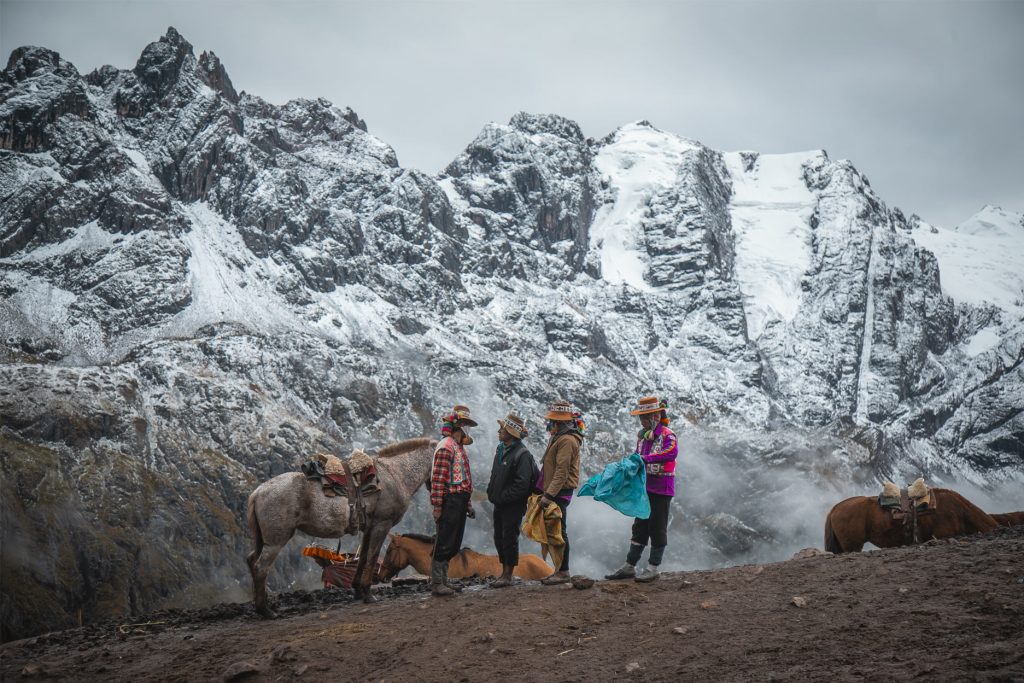
- Along the way, you’ll find horses to help you get around if you need them.
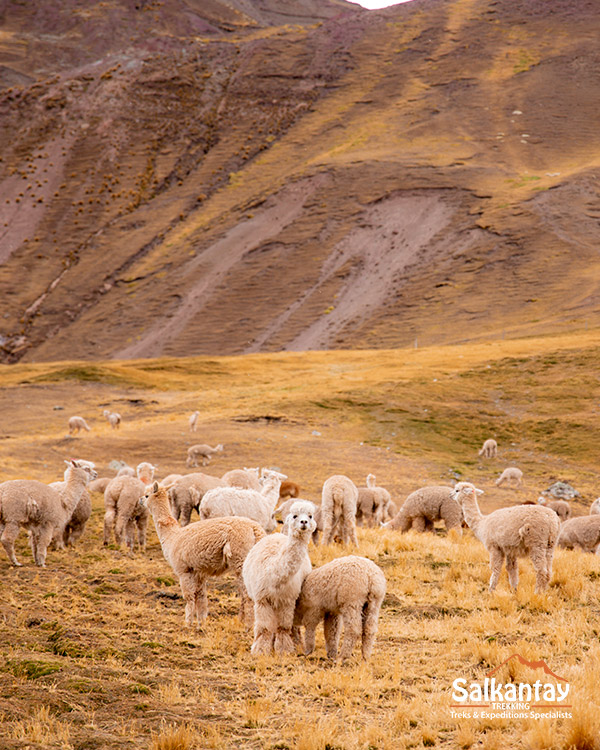
- You’ll witness diverse fauna, like condors, chinchillas, llamas, alpacas, and vicuñas.
- The tour is considered a spiritual route, ideal for making offerings and thanking the Apus for everything they’ve given you.
- You’ll observe magical turquoise blue lagoons in the surroundings.
- You can do the hike year-round, but the dry season (May to October) generally offers the best weather and mountain views.
Which Trek Is More Difficult?
There’s no getting around it: the Ausangate Trek is the tougher hike.
The highest point on the Inca Trail is Dead Woman’s Pass at 4,215 m (13,829 ft), which is challenging enough for most trekkers. However, Ausangate takes you much higher, with several mountain passes sitting above 5,000 m (16,404 ft). At those elevations, even simple tasks can leave you a little breathless.
That doesn’t mean the Inca Trail is easy. There are still lots of tough sections involved, which include climbing steep stone steps, covering long distances, and dealing with high-altitude conditions. But if you’re new to multi-day trekking, the Inca Trail is usually the more approachable option.
If you’ve already completed high-altitude hikes and you’re looking for something wilder, more demanding, and remote. Ausangate may be exactly what you’re after.
Which Trek Has Better Scenery?
This is where things get interesting because there isn’t really a wrong answer.
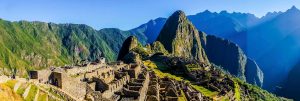
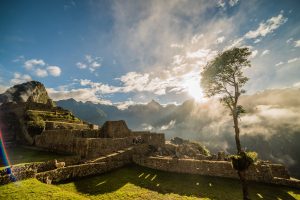
The landscape along the Inca Trail is constantly changing. One moment, you’re walking through cloud forest surrounded by orchids and hummingbirds, the next, you’re standing in the middle of centuries-old Inca ruins. Then there’s the grand finale: arriving at Machu Picchu through the Sun Gate.
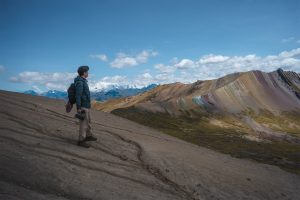
Ausangate takes a different approach. Instead of archaeological sites, it’s all about raw Andean scenery. Think towering glaciers, snow-capped peaks, herds of alpacas grazing beside turquoise lakes, and some of the most dramatic mountain landscapes in Peru.
If you’re dreaming of ancient history and Machu Picchu, choose the Inca Trail. If your camera roll is mostly mountains, lakes, and landscapes, Ausangate will probably steal your heart.
Which Trek Is Better For Machu Picchu?
This one is easy.
If visiting Machu Picchu is the main reason you’re coming to Peru, the Inca Trail wins every time.
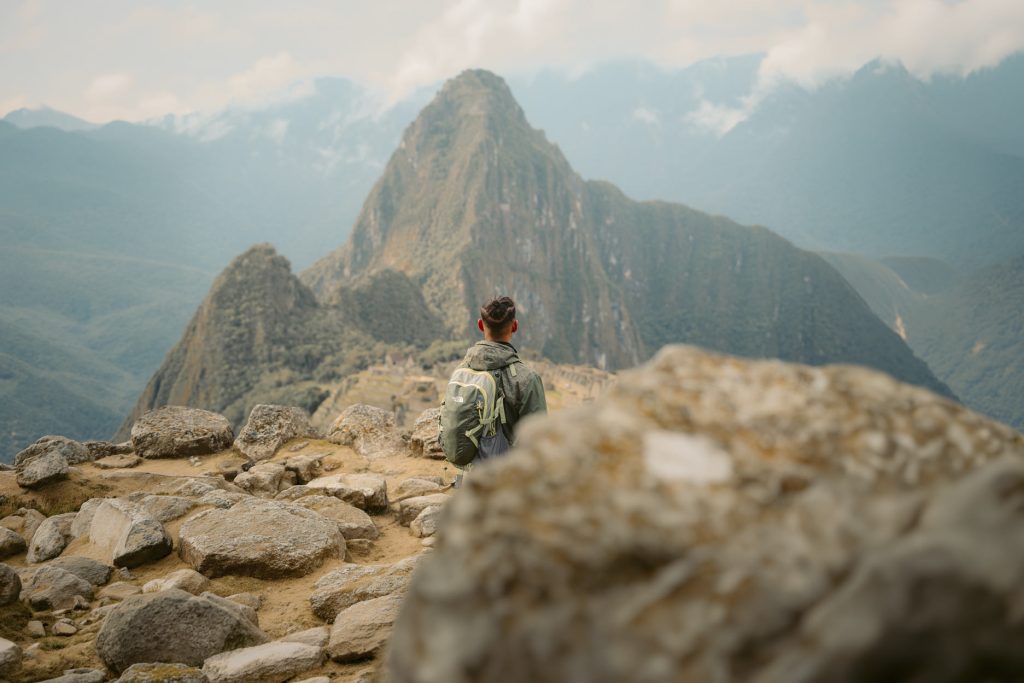
It’s the only trek in the region that lets hikers enter Machu Picchu through Inti Punku, also known as the Sun Gate. Reaching the ancient city on foot after days of hiking is an experience that many travelers would say is the highlight of their entire trip.
The Ausangate Trek doesn’t visit Machu Picchu. At all. However, many travelers choose to combine it with a separate visit afterward. If you’d like to experience the best of both worlds, the 2-Day Machu Picchu Tour is a great way to add the Lost City of the Incas to your itinerary before or after your trek.
Altitude and Acclimatization
Whichever trek you go for, never underestimate the altitude.
Cusco sits at 3,399 m (11,152 ft) above sea level, which is already higher than many mountain summits around the world. Going on a trek as soon as you arrive, without acclimatizing, can quickly turn what should be an exciting adventure into a miserable experience.
Both treks reach high altitudes, but Ausangate goes quite a bit higher, which means proper acclimatization is even more important if you’re planning to hike the Ausangate route.
A good rule of thumb is to spend at least two or three days acclimating in Cusco before starting either trek. Go on short hikes, stay hydrated, and avoid overdoing it during your first few days. Even these small efforts make a huge difference.
Frequently Asked Questions
Still finding it hard to decide? We don’t blame you. Below, we’ve answered some of the most frequently asked questions to help you out.
Definitely. The mix of Inca ruins, mountain scenery, and arriving at Machu Picchu through the Sun Gate makes it one of the world’s most iconic hikes, and for good reason.
Yes. The higher altitude, remote terrain, and demanding mountain passes make the Ausangate trek more challenging overall.
It depends on your fitness level and hiking experience. It isn’t a technical climb in any way, but the high altitude can make the trek much more difficult than many people expect.
Ausangate by a long way. The Inca Trail is one of Peru’s most popular attractions, while Ausangate still feels wonderfully remote in many sections.
No. Unlike the Inca Trail, the Ausangate Trek doesn’t require a government-issued permit, making it a great option for travelers planning a trip on short notice.
Which Trek Should You Choose?
When you make your final decision, you need to consider what kind of experience you want.
If you value your alone time, go for the Ausangate trek. This route is perfect for people who love nature and want to get away from the big crowds to explore more pristine places in the Andes. While you won’t see archaeological sites along this trail, you’ll connect more deeply with the environment.
On the other hand, the Inca Trail is for those who want to explore archaeological sites and learn about Inca history. It can be difficult to find tickets for this trek, but it’s worth it if you can get them. During this trek, you’ll feel like you’re traveling back in time to walk along ancient paths until you reach the wonder of the world that is Machu Picchu.
Whichever hike you choose, we’re sure you’ll have an unforgettable experience in the imperial city of Cusco.

Leave A Reply