
Some people collect stamps. Others count up their cities visited. Then there are the ones who voluntarily walk uphill for days at a time and call it a vacation.
This is for that second group.
The best hiking trails in the world aren’t just about scenery (though yes, there’s plenty of that). They’re about the full experience. We’re talking about the slow build, the questionable life choices halfway through, and the moment you arrive somewhere that actually feels earned.
From high-altitude treks in Peru to glacier-lined routes in New Zealand, this guide breaks down the most beautiful hiking trails in the world, and more importantly, helps you figure out which one is actually right for you.
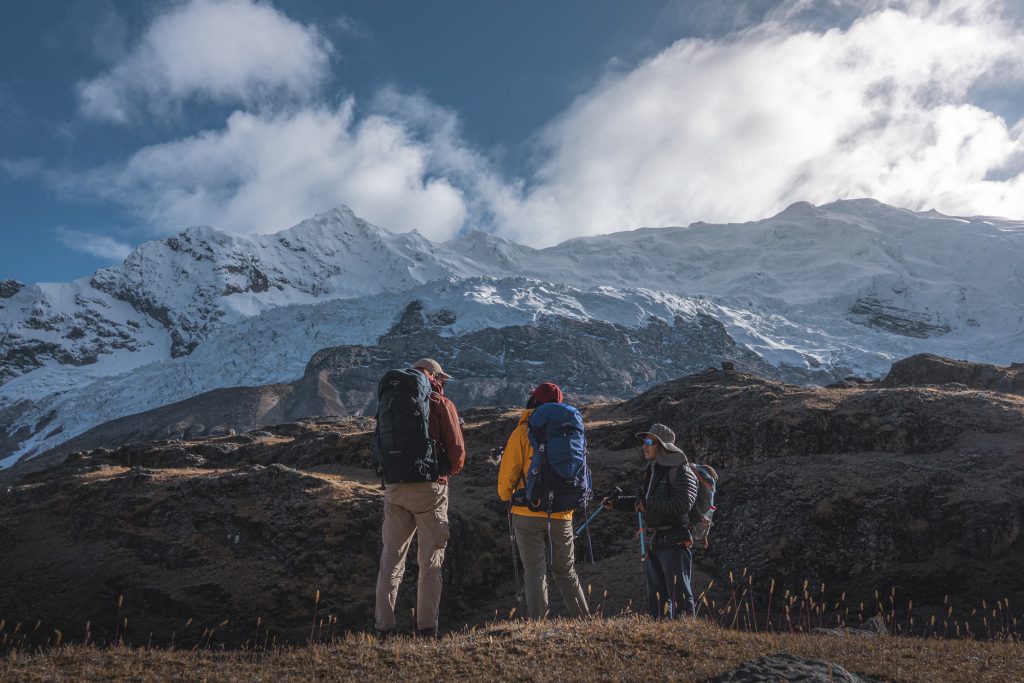
Table of contents
- How To Choose The Right Hiking Trail For You
- Quick Comparison Of The Best Hiking Trails In The World
- The Best Multi-Day Hiking Trails In The World
- The Best Day Hikes In The World
- The Most Beautiful National Parks For Hiking In The World
- Best Hiking Trails In The World For Beginners
- Famous Hiking Trails Everyone Should Do Once
- Which Trek Is Right For You?
- FAQs About The Best Hiking Trails In The World
- Choosing Your Perfect Hiking Adventure
How To Choose The Right Hiking Trail For You
Before you start mentally booking flights, it’s worth asking a simple question: what kind of challenge (and level of suffering) are you comfortable with?
Because not all hikes are created equal.
Multi-Day Vs Day Hikes
Day hikes are straightforward. Whether it’s a hike around the Lake District in England or the trail up to Rainbow Mountain in Peru, you walk, you sweat a bit, and you’re back in time for dinner.
Multi-day hikes are a different story. You’re committing to:
- Carrying gear (or relying on support)
- Sleeping in basic conditions (sometimes)
- Waking up sore and doing it again
Is it worth it? Usually. But it’s a different level of commitment.
How Fit Do You Actually Need To Be?
Here’s the honest answer: you don’t need to be an elite athlete, but you do need to be prepared.
Altitude, distance, and back-to-back hiking days matter more than raw fitness.
You can be gym-fit and still get humbled by a mountain. Figure out which hike you want to do and then come up with a training plan to match.
Altitude, Distance, And Difficulty Explained
Quick rule of thumb:
- Distance = how long it takes
- Altitude = how high it is above sea level, affecting how hard it feels
- Difficulty = the combination of both
For most people, anything above 4,000 meters (13,123 feet) starts to feel noticeably tougher. Above 5,000 meters (16,404 feet)? You’ll feel it.
Guided Vs Independent Treks
Some trails are easy to do solo. Others… less so.
Guided treks usually mean you get:
- Logistics handled
- Food sorted
- Someone who knows what they’re doing
Independent hikes give you freedom, but also come with a lot of responsibility.
If you’re dealing with altitude or remote terrain, a guided option often just makes life easier.
Quick Comparison Of The Best Hiking Trails In The World
Before we dive into the best hiking trails in the world, here’s a quick overview to cover the basics. And yes, we know a few don’t appear on here, but that’s because some of the most beautiful places in the world are made up of national parks with many different hikes.
| Hiking Trail | Distance | Duration | Difficulty | Best Time To Go | Permit Required |
|---|---|---|---|---|---|
| Salkantay Trek | 73.3 km / 45.5 miles | 5 days | Moderate to Challenging | May–Oct | No |
| Inca Trail | 44 km / 27.3 miles | 4 days | Moderate to Challenging | May–Oct | Yes |
| Everest Base Camp | 130 km / 80 miles | 12–16 days | Challenging | Mar–May, Oct–Nov | Yes |
| Tour du Mont Blanc | 166–170 km / 103–106 miles | 10–12 days | Moderate to Challenging | June–Sept | No |
| Torres del Paine W | 75–80 km / 46–50 miles | 4–5 days | Moderate to Challenging | Oct–Apr | Yes |
| Laugavegur Trail | 55 km / 34 miles | 3–4 days | Moderate to Challenging | June–Aug | No |
| Milford Track | 53.5 km / 33.5 miles | 4 days | Moderate | Nov–Apr | Yes |
| Mount Kilimanjaro | 37–90 km / 23–56 miles | 5–9 days | Challenging | Jan–Mar, June–Oct | Yes |
| Dolomites Alta Via 1 | 120–130 km / 75–80 miles | 8–10 days | Moderate to Challenging | Jul–Sept | No |
| Pacific Crest Trail | 4,265 km / 2,650 miles | Months | Challenging to Extreme | Apr–Sept | Yes |
| Angels Landing | 8 km / 5 miles | 1 day | Challenging | Mar–Oct | Yes |
| Tongariro Alpine Crossing | 19.4 km / 12 miles | 1 day | Moderate to Challenging | Nov–Apr | No |
| Half Dome | 22.5–25.7 km / 14–16 miles | 1 day | Challenging to Extreme | May–Oct | Yes |
| Preikestolen | 8–8.8 km / 5.4–6.2 miles | 1 day | Moderate | May–Sept | No |
| Table Mountain | 5–7 km / 3–4.5 miles | 1 day | Moderate to Challenging | Year-round | No |
| Rainbow Mountain | 7 km / 4.35 miles | 1 Day | Moderate to Challenging | May–Sept | Yes |
| Cinque Terre Trail | 11–12 km / 7–7.5 miles | 1 day | Moderate | Apr–Oct | No |
| Lake Louise Trail | 4– 4.7 km / 2.5–2.9 miles | 1 day | Easy | June–Sept | No |
| Plitvice Lakes Trail | 3–18 km / 1.8–11.2 miles | 1 day | Easy | Apr–Oct | Yes |
| Arthur’s Seat | 4.8 km / 3 miles | 1 day | Easy to Moderate | Year-round | No |
| Appalachian Trail | 3,540 km / 2,200 miles | 5–7 months | Extreme | Apr–Oct | No |
| Camino de Santiago | 780 km / 485 miles | 4–6 weeks | Moderate | Apr–Oct | No |
| Great Wall of China | Varies | 1–5 days | Moderate to Challenging | Mar–May, Sep–Nov | Yes |
The Best Multi-Day Hiking Trails In The World
To help you figure out exactly which sort of trek you’re after, we’ve broken our list down into a few different sections. Let’s begin with the best multi-day hiking trails in the world.
1. Salkantay Trek, Peru
- Max Altitude: 4,630 m / 15,190 ft
- Distance: 73.3 km / 45.5 miles
- Difficulty: Moderate to Challenging
If you’re trying to figure out the best hiking trails in the world, this is one that seriously outperforms expectations.
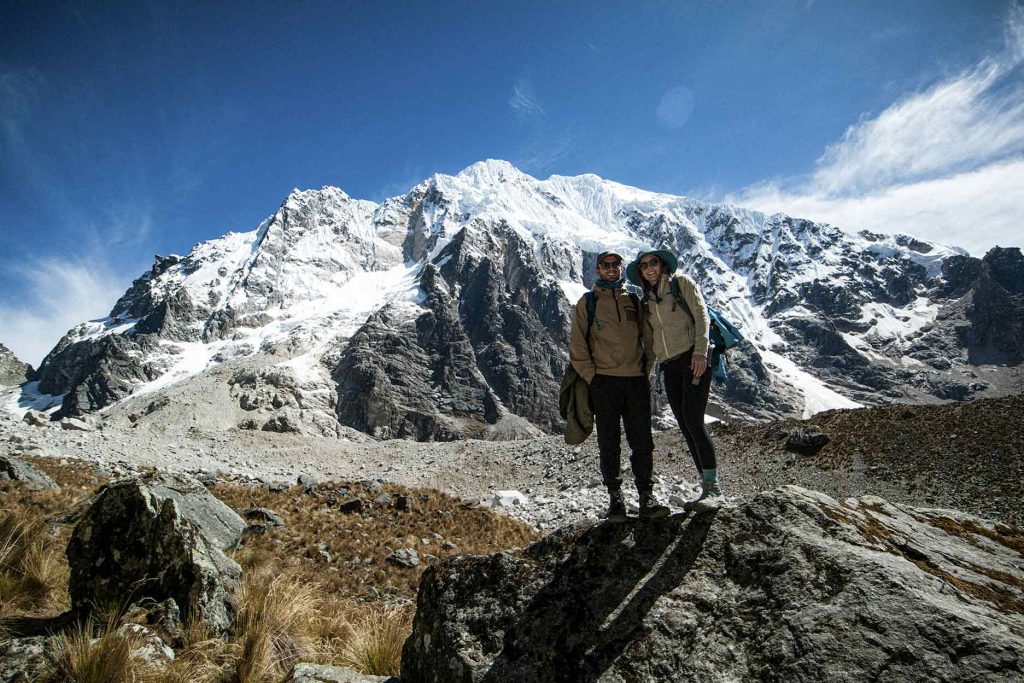
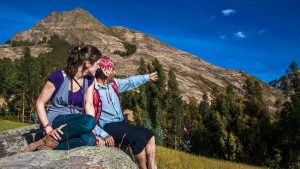
The Salkantay Trek doesn’t rely on a single headline moment. Instead, it builds. You start surrounded by towering snow-capped peaks, cross a high mountain pass that actually makes you stop and take it in (partly for the view, partly because breathing is suddenly optional), and then descend into a warm cloud forest that feels like a completely different country.
That variety is what makes it stand out. Most hikes give you one type of scenery and stretch it out. This one changes daily, and just when you think you’ve seen the highlight, it switches things up again.
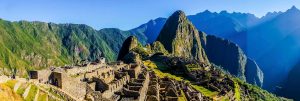
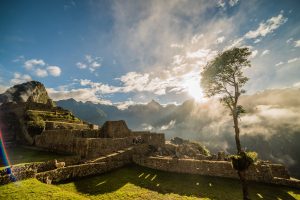
It also avoids a lot of the possible negatives that come with more famous routes. There’s no strict government permit system, like the Inca Trail, although access to Machu Picchu still requires advance tickets. You also get to enjoy fewer crowds and a bit more breathing room, literally and figuratively. And yes, it still ends by Machu Picchu, so you’re not missing out in the slightest.
If you want something that feels big, scenic, and just the right amount of challenging without turning into a logistical headache, this is hard to beat.
2. Inca Trail, Peru
- Max Altitude: 4,215 m / 13,829 ft
- Distance: 44 km / 27.3 miles
- Difficulty: Moderate to Challenging
This is the one everyone’s heard of, and for good reason.
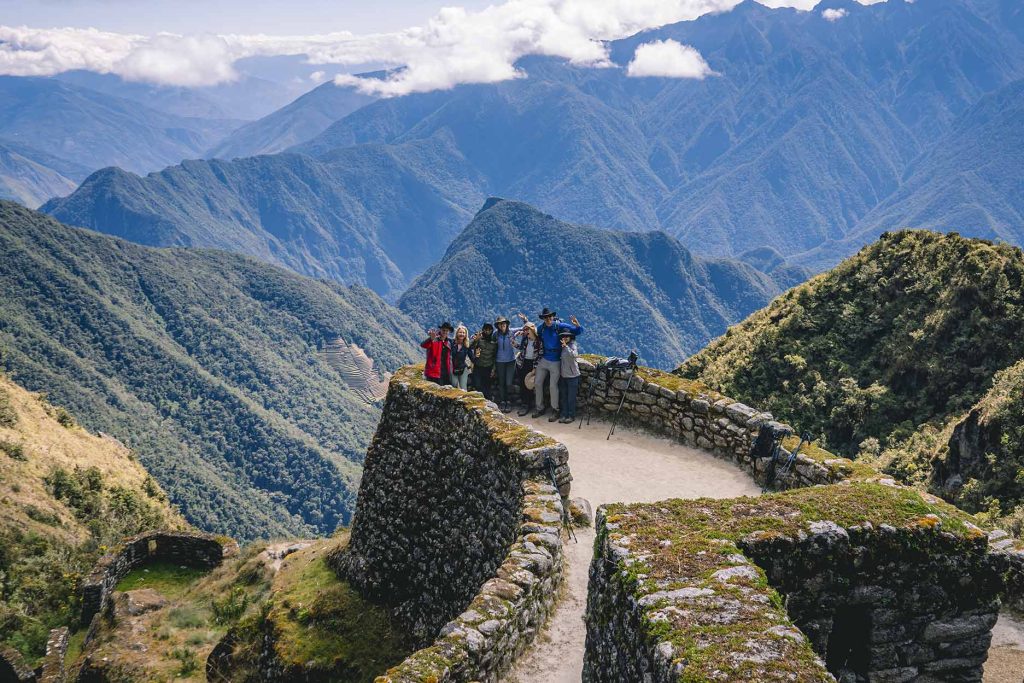
The Inca Trail isn’t just a hike. It’s a route through history. You’re walking along original Inca pathways, passing ruins along the way, and finishing at Machu Picchu through the Sun Gate, which is about as dramatic an entrance as it gets.
It’s shorter than most multi-day treks, but it packs a lot in. The days are punchy, the climbs (especially Dead Woman’s Pass) are memorable, and the sense of progression feels very deliberate.
That said, it comes with structure. Permits are limited (the trail closes in February), bookings need to happen months in advance, and you won’t have much flexibility once you’re on it.
Still, if you want something iconic, well-organized, and tied directly into Peru’s history, this is one of the most famous hiking trails in the world for a reason.
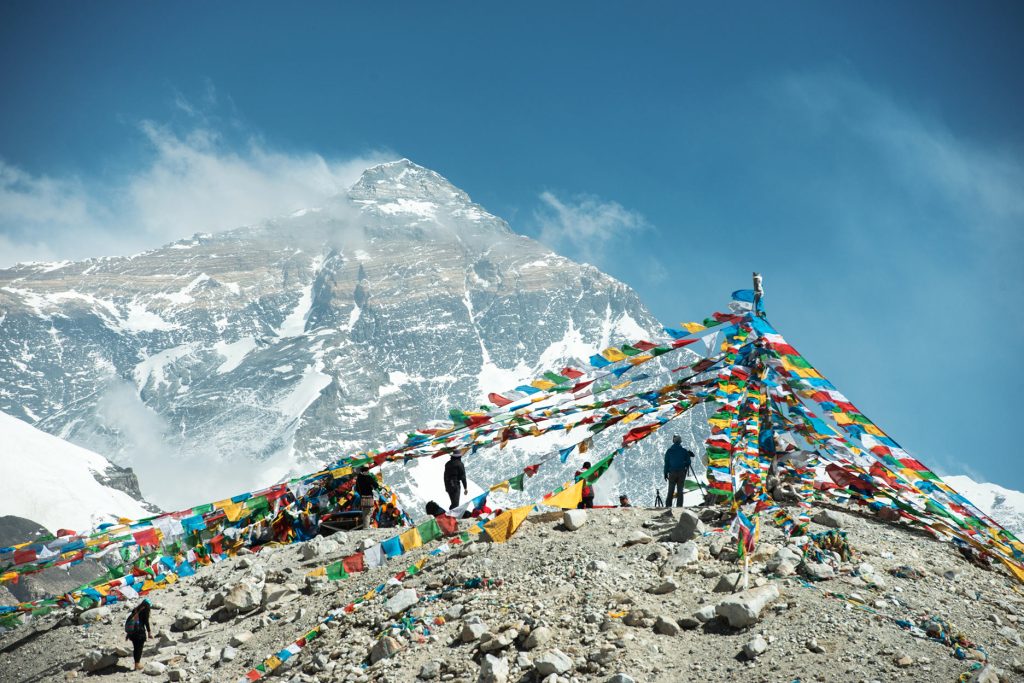
3. Everest Base Camp Trek, Nepal
- Max Altitude: 5,364 m / 17,598 ft
- Distance: 130 km / 80 miles
- Difficulty: Challenging
This is less about the trail itself and more about what it represents.
You’re walking toward the base of the highest mountain on Earth. Every step feels like it’s building toward something bigger, and the entire route leans into that.
The landscapes are raw and high-altitude from the start. Think suspension bridges, alpine villages, and long steady climbs, and then the altitude really starts to make itself known. This is where pacing matters, acclimatization matters, and your ego needs to take a back seat. There are no rewards for speeding up the trail, and you’ll only feel awful for it.
It’s not the most varied hike in terms of scenery, but it doesn’t need to be. The scale of the Himalayas does most of the work.
If you’re after a proper challenge with global bragging rights attached, this one delivers.
4. Tour du Mont Blanc, Europe
- Max Altitude: 2,584 m / 8,477 ft
- Distance: 166–170 km / 103–106 miles
- Difficulty: Moderate to Challenging
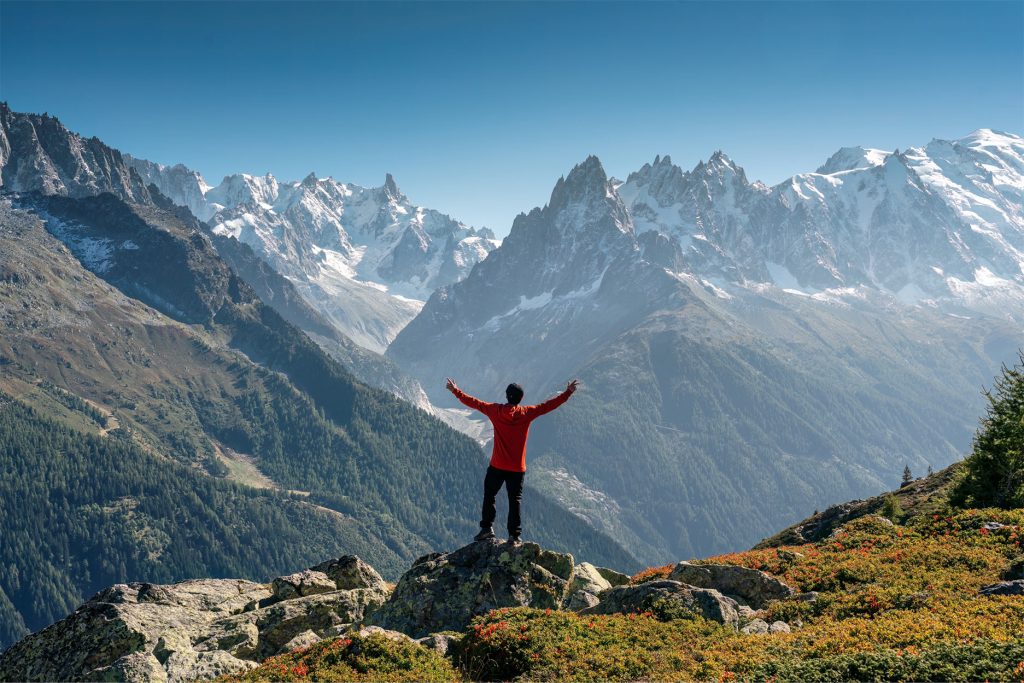
This is what happens when you combine serious mountain scenery with European efficiency.
The Tour du Mont Blanc loops through France, Italy, and Switzerland, which means you’re not just hiking, you’re essentially making your way across borders with a side of alpine views.
The trail itself is long but manageable. You’re dealing with consistent elevation gain and loss rather than extreme altitude, which makes it more accessible than something like Everest or Kilimanjaro.
What really sets it apart is the balance. You’ll enjoy big landscapes, well-marked trails, comfortable mountain huts, and the option to make it as rugged or as cushy as you like.
If you want one of the most beautiful hiking trails in the world without pushing into extreme territory, this is a very strong contender.
5. Torres del Paine W Trek, Chile
- Max Altitude: 1200 m / 3,937 ft
- Distance: 75–80 km / 46–50 miles
- Difficulty: Moderate to Challenging
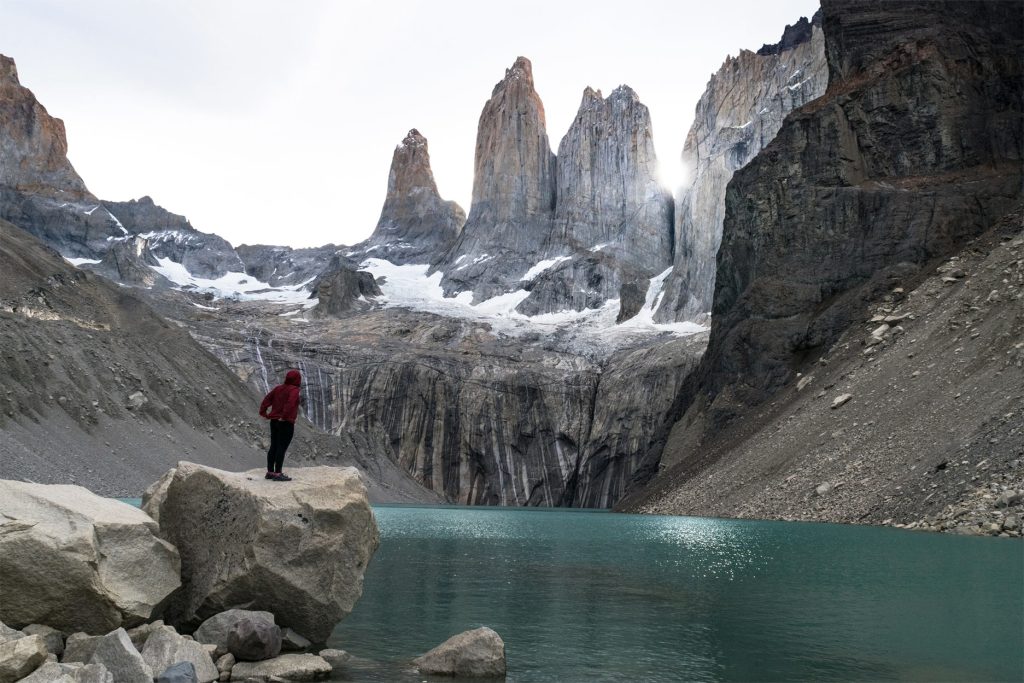
Patagonia doesn’t do subtle.
The W Trek throws everything at you, including jagged peaks, bright blue lakes, glaciers that look like they’ve been dropped in from somewhere else entirely, and wind that will absolutely test your patience.
It’s not high altitude, which makes it more accessible, but don’t confuse that with easy. The weather is unpredictable, and the conditions can shift quickly.
The effort is well worth it, though, and you’re constantly reminded of that. You’re not waiting days for a big moment. The scenery hits early and just keeps going.
If you want dramatic landscapes without dealing with altitude, this is one of the best hiking trails in the world to consider.
6. Laugavegur Trail, Iceland
- Max Altitude: 1,060 m / 3,474 ft
- Distance: 55 km / 34 miles
- Difficulty: Moderate to Challenging
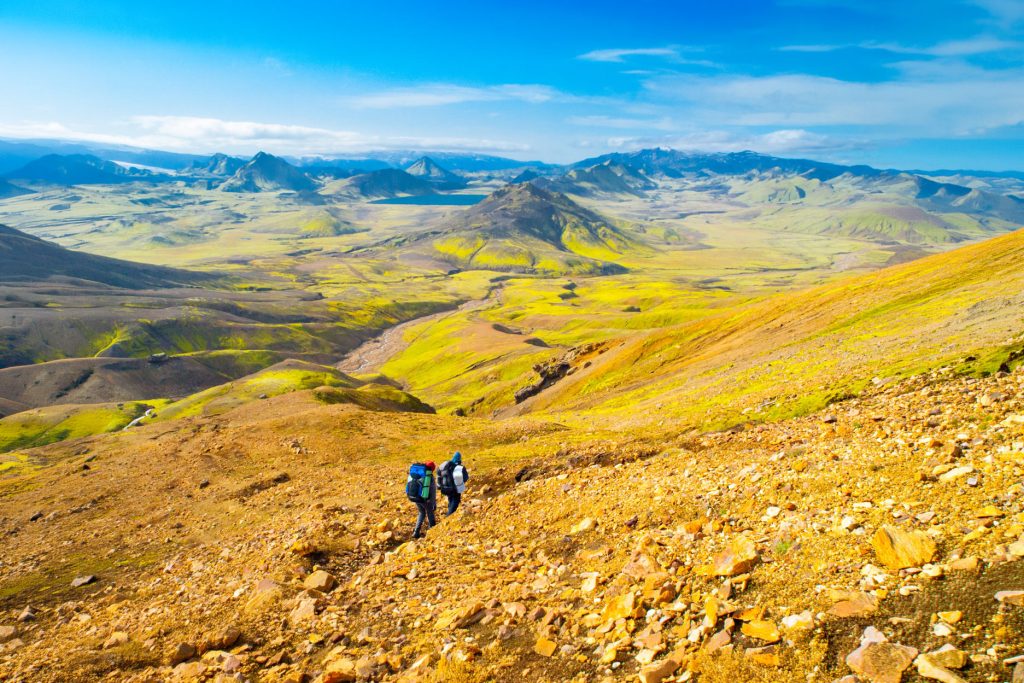
This one feels like hiking across a science experiment.
You’ll pass volcanic landscapes, steaming vents, black sand deserts, neon green moss, and rivers you have to cross on foot. It changes constantly, and it all kind of feels like you’re on another planet.
It’s relatively short compared to others on this list, which makes it a good option if you want something different without committing weeks.
Weather can be unpredictable (it’s Iceland, after all), but that’s part of the experience.
If variety is what you’re after, this might be the most unique trail here.
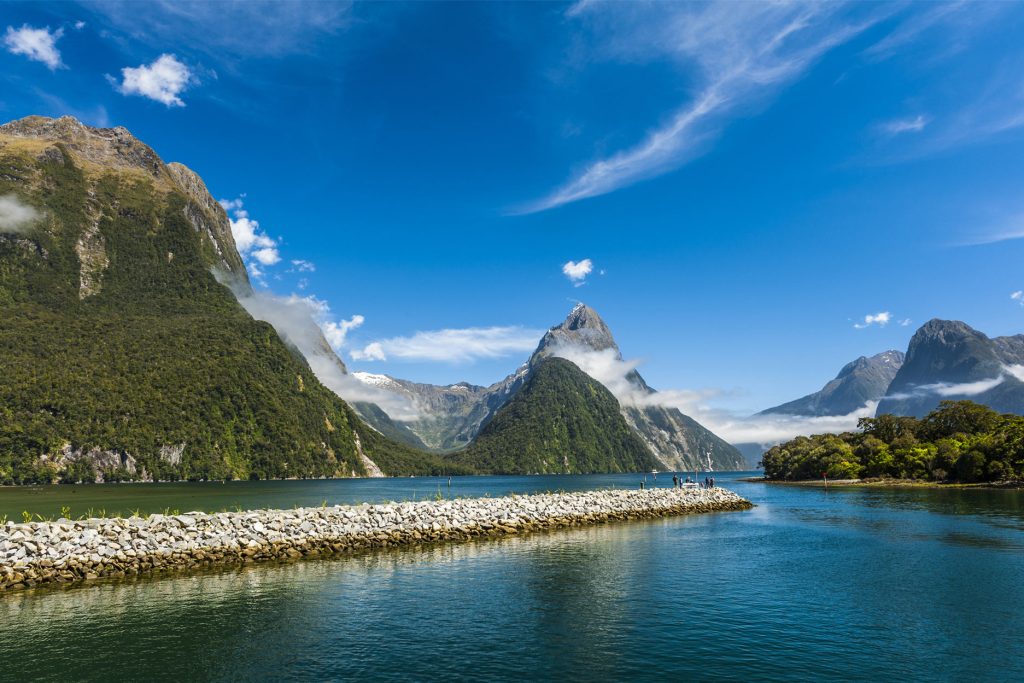
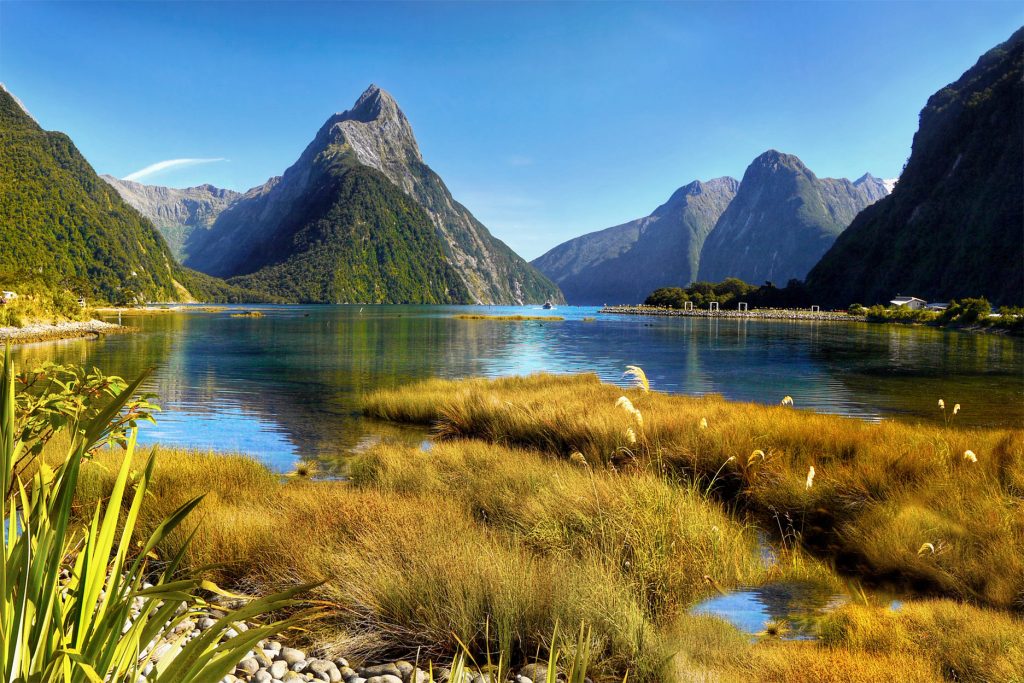
7. Milford Track, New Zealand
- Max Altitude: 1,154 m / 3,786 ft
- Distance: 53.5 km / 33.5 miles
- Difficulty: Moderate
This one is often described as “the finest walk in the world,” which is a bold claim, but not entirely undeserved.
The Milford Track is all about atmosphere. Think waterfalls, dense rainforest, and valleys that feel almost too perfectly put together.
It’s well-managed, structured, and requires booking in advance, so you’re trading a bit of spontaneity for a smoother experience.
It’s not the toughest hike on this list, but it doesn’t need to be. It leans into beauty and accessibility instead.
8. Mount Kilimanjaro, Tanzania
- Max Altitude: 5,895 m / 19,341 ft
- Distance: 37–90 km / 23–56 miles
- Difficulty: Challenging
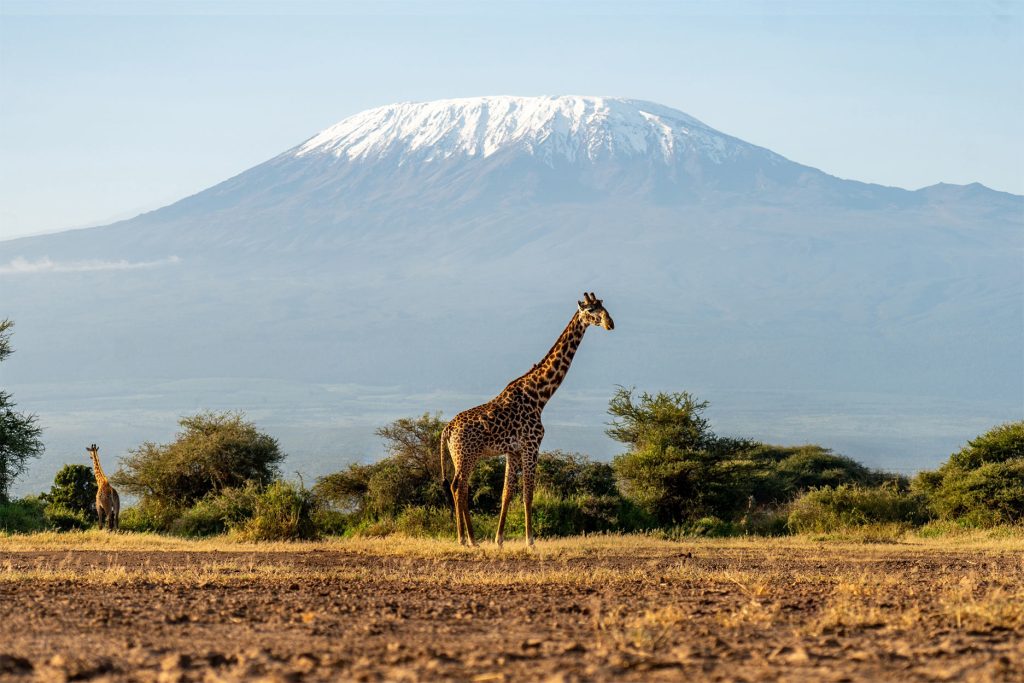
Kilimanjaro is a different kind of challenge.
There’s no technical climbing, which makes it accessible on paper, but the altitude is what gets people. You’re going from rainforest to alpine desert to summit conditions in a matter of days.
Summit night is the real test. It’s long, cold, and slow, but reaching the top is one of those moments that sticks with you for a lifetime.
If you want a high-altitude experience without needing mountaineering skills, this is one of the most achievable big peaks in the world. But it’s important to note that this trek requires you to go with a licensed guide by law, so don’t plan to go it alone.
9. Dolomites Alta Via 1, Italy
- Max Altitude: 2,752 m / 9,029 ft
- Distance: 120–130 km / 75–80 miles
- Difficulty: Moderate to Challenging
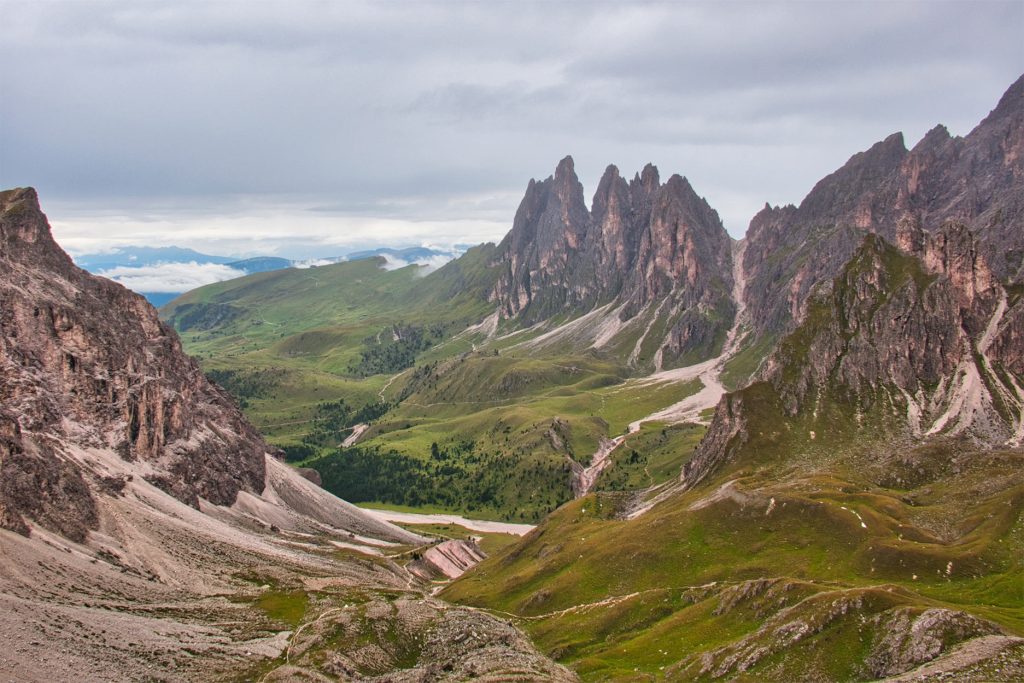
This is where hiking meets comfort.
The Dolomites are sharp, dramatic, and arguably some of the most beautiful mountains in Europe. But unlike other remote treks, you’re never too far from a rifugio, which means proper meals and a bed at the end of the day.
It’s challenging enough to feel like an adventure, but not overwhelming.
If you want scenery without suffering too much for it, this is a very good place to start.
10. Pacific Crest Trail, USA
- Max Altitude: 4,009 m / 13,153 ft
- Distance: 4,265 km / 2,650 miles
- Difficulty: Challenging to Extreme
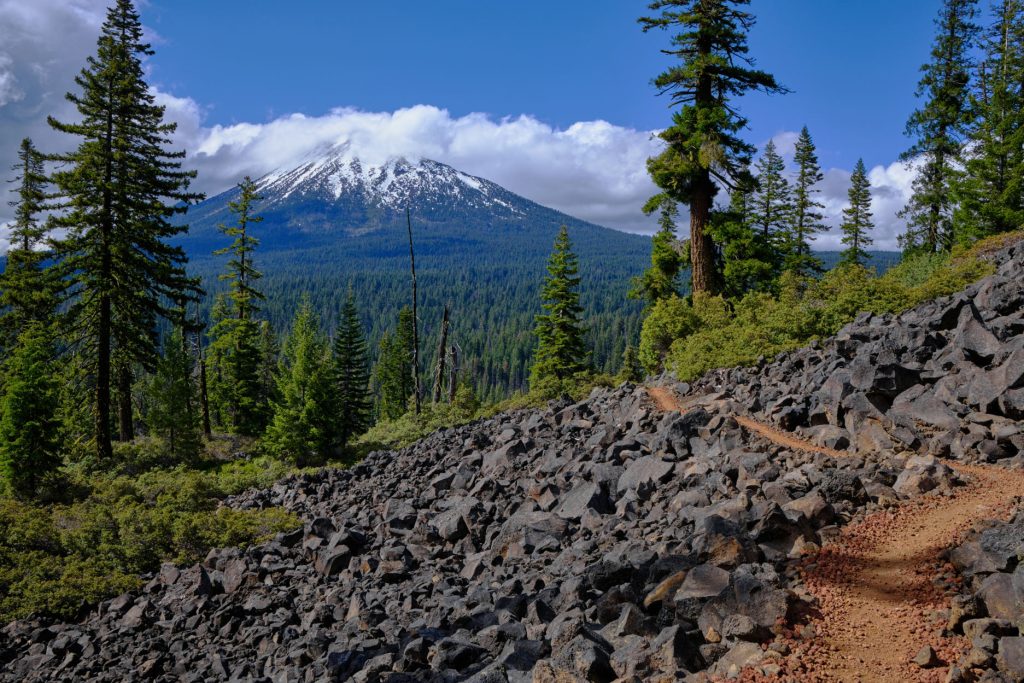
This isn’t a trek you casually add to an itinerary.
The Pacific Crest Trail is months of commitment, crossing deserts, mountains, and everything in between. It’s physically demanding, mentally draining, and logistically complex.
But for the people who do it, it becomes more than just a hike.
It’s less about the views (though there are plenty) and more about the experience of doing something that big from start to finish.
The Best Day Hikes In The World
Short on time? Here are some of our favorite one day hikes in the world. There’s something for every type of walker, hiker, and trekker, whichever you might class yourself as.
11. Angels Landing, USA
- Max Altitude: 1,765 m / 5,790 ft
- Distance: 8 km / 5 miles
- Difficulty: Challenging
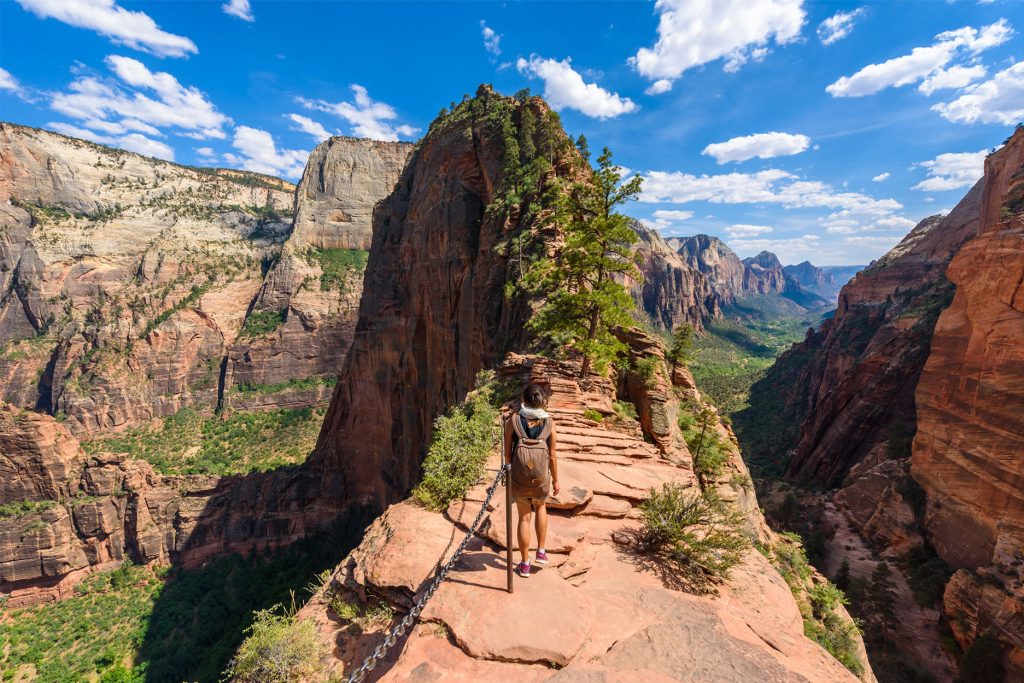
Angels Landing has a bit of a reputation, and not all of it is subtle.
The first half lulls you into thinking this is a straightforward climb, with steady switchbacks, big canyon views, nothing too dramatic. Then you hit the final ridge, and suddenly you’re gripping chains bolted into rock, with steep drop-offs on both sides and just enough space to question your decision-making.
That’s exactly why it’s one of the most famous day hikes in the world. It’s not just about the view at the top (which is excellent, to be fair), it’s about the experience of getting there.
You don’t need technical skills, but you do need a head for heights and a bit of patience. It’s busy, controlled by permits, and not the place to rush. Take your time, lean into the adrenaline slightly, and it becomes one of those hikes you talk about long after.
12. Tongariro Alpine Crossing, New Zealand
- Max Altitude: 1,886 m / 6,188 ft
- Distance: 19.4 km / 12 miles
- Difficulty: Moderate to Challenging
This is the overachiever of day hikes.
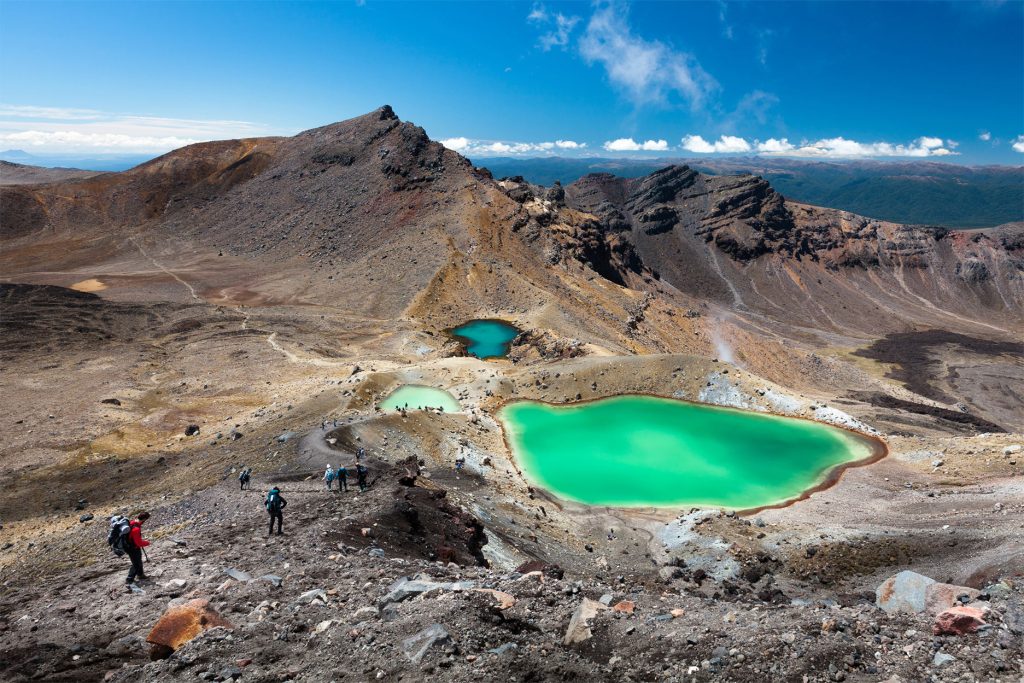
At nearly 20 km, it already pushes the definition of “day hike,” but what makes it stand out is the sheer variety packed into a single route. You’re walking across an active volcanic landscape of black lava fields, steaming vents, and bright emerald lakes that look artificially colored. Sounds surreal? It is.
It doesn’t feel like a linear hike. It feels like moving through different environments pieced together into one long crossing.
The challenge comes from exposure. There’s very little shelter, and weather conditions can change very quickly, so preparation matters more than raw fitness. But if you get a clear day, this easily earns its place among the most beautiful hiking trails in the world, and you’re back by evening, which feels slightly impossible given what you’ve just seen.
13. Half Dome, USA
- Max Altitude: 2,696 m / 8,846 ft
- Distance: 22.5–25.7 km / 14–16 miles
- Difficulty: Challenging to Extreme
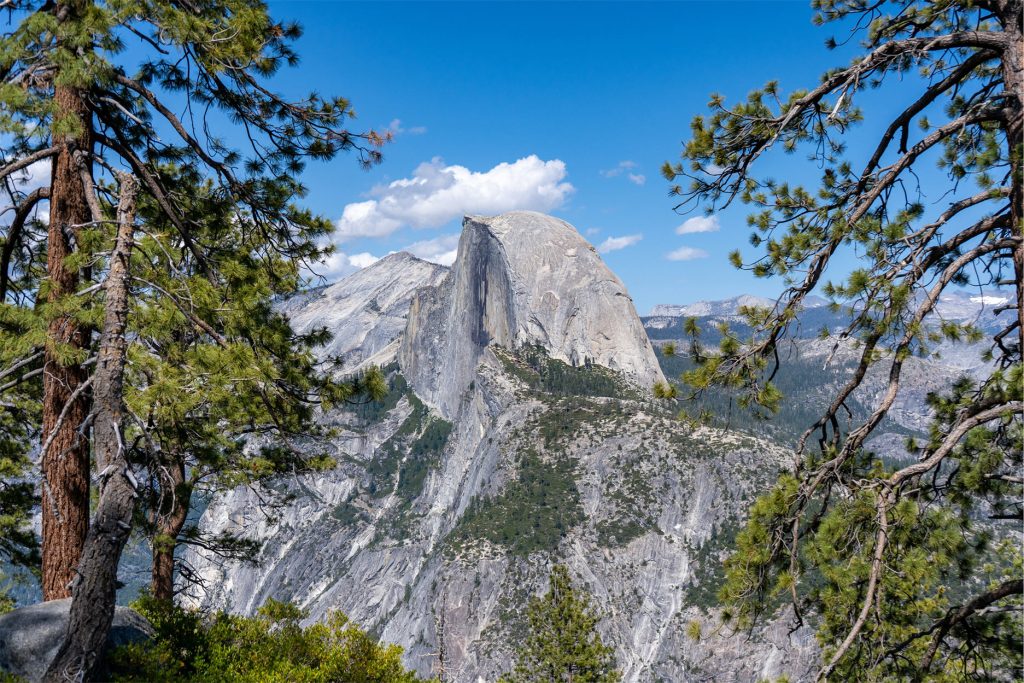
Half Dome isn’t casually impressive. It’s a full-day commitment that builds slowly and then finishes with something genuinely memorable.
The approach is long with waterfalls, forest, and steady elevation gain. It’s the kind of hike where you need to settle into a rhythm early. But everything leads to the final section: the cables.
You’re essentially hauling yourself up a steep granite slope using steel cables, with a drop behind you that you try not to think about too much. It’s controlled, it’s safe, but it definitely gets your attention.
What makes it one of the best hiking trails in the world isn’t just the summit view, though. It’s the contrast between a long, steady build-up and a finish that demands focus. You earn it, properly. Step by step.
14. Preikestolen, Norway
- Max Altitude: 604 m / 1,982 ft
- Distance: 8–8.8 km / 5.4–6.2 miles
- Difficulty: Moderate
Preikestolen is almost annoyingly efficient.
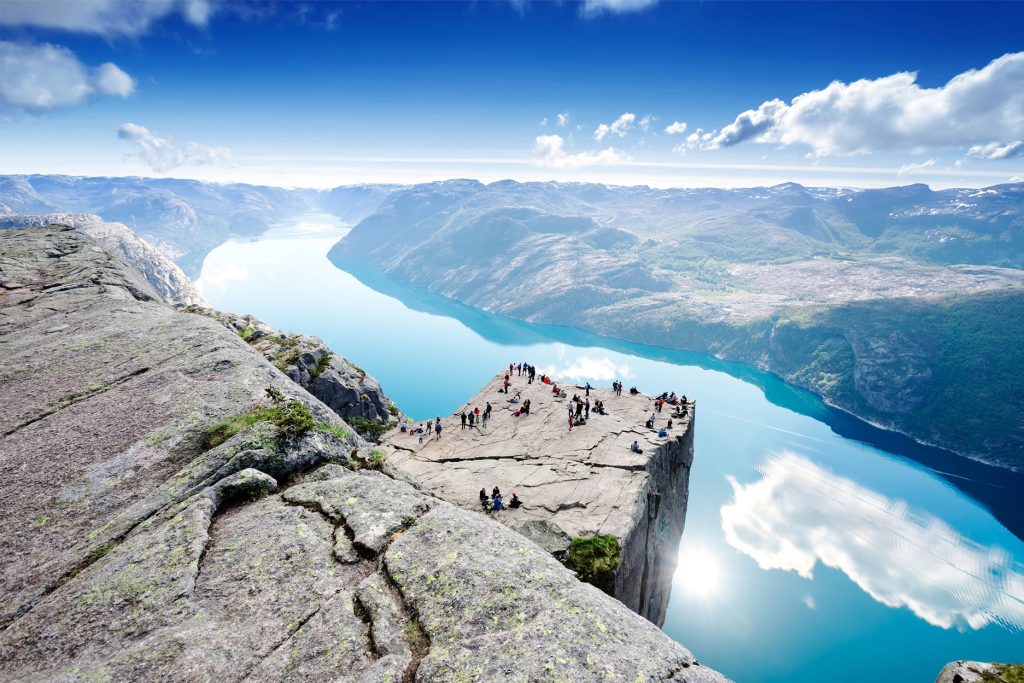
You put in a few hours of hiking (nothing extreme, just steady elevation and well-maintained paths) and suddenly you’re standing on a flat rock platform suspended above a fjord like someone forgot to add railings.
There’s no gradual reveal. One moment you’re hiking, the next you’re looking straight down 600 meters.
It’s popular, yes. You won’t have it to yourself. But there’s a reason it consistently shows up on lists of the most beautiful hiking trails in the world. The payoff is immediate and slightly surreal.
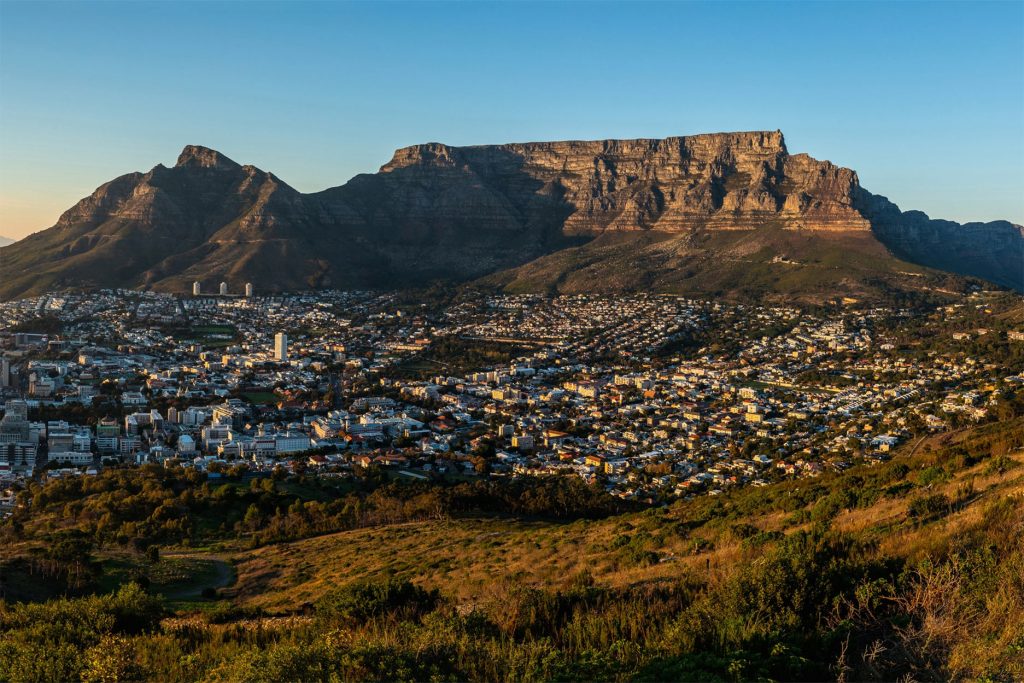
15. Table Mountain, South Africa
- Max Altitude: 1,086 m / 3,563 ft
- Distance: 5–7 km / 3–4.5 miles
- Difficulty: Moderate to Challenging
Table Mountain feels like a city hike until it very much doesn’t.
From below, it looks manageable. A flat-topped mountain right above Cape Town. What can be so hard about that? But once you’re on the trail, it quickly becomes clear that you’re earning the view. Routes like Platteklip Gorge are direct, steep, and don’t offer much in the way of breaks.
The reward is perspective. You get the full sweep of the city, coastline, and surrounding peaks, all in one view.
And if the climb up feels like enough for one day, there’s always the option to take the cable car down, which we think feels like a fair compromise.
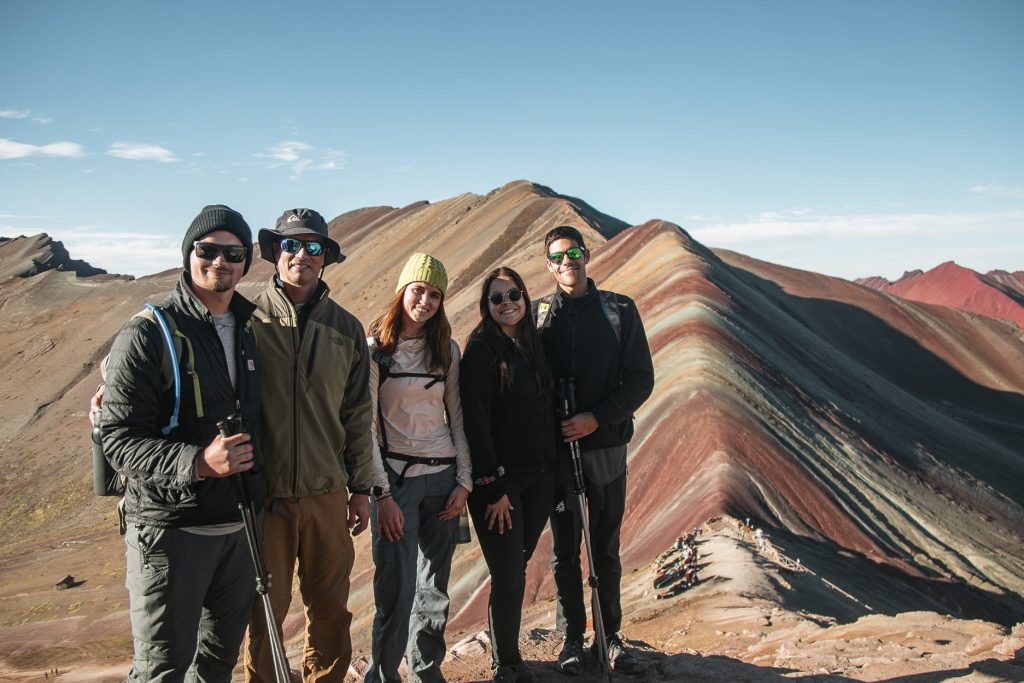
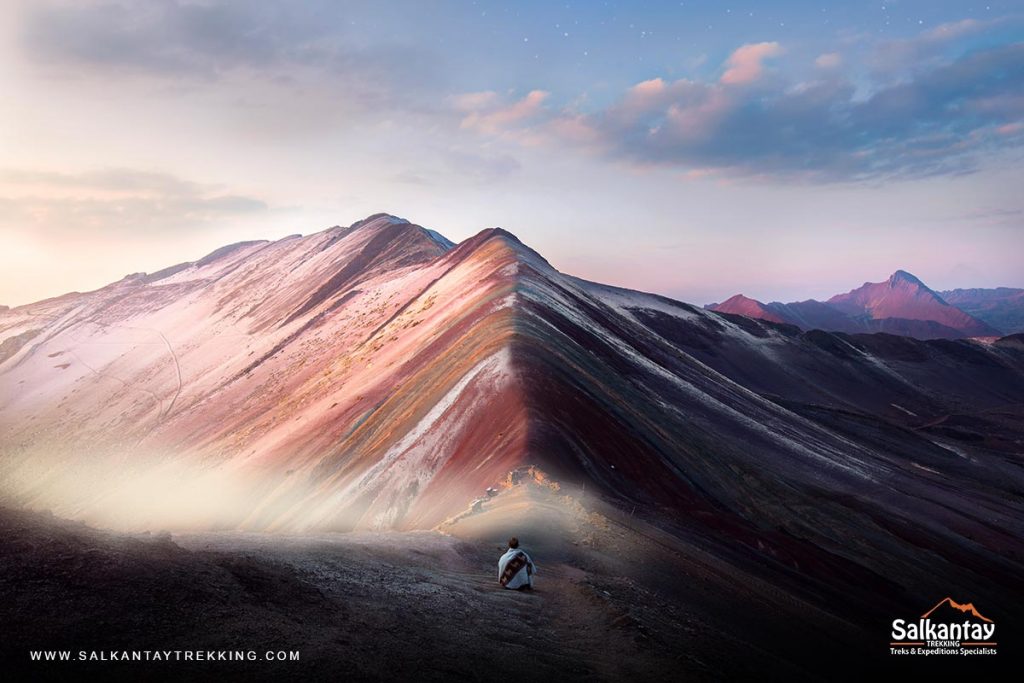
16. Rainbow Mountain, Peru
- Max Altitude: 5,100 m / 15,190 feet
- Distance: 7 km / 4.35 miles
- Difficulty: Moderate to Challenging
This is easily one of the most unusual landscapes you can reach in a single day.
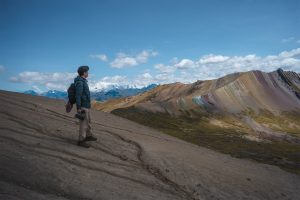
Rainbow Mountain doesn’t build gradually. You arrive, hike for a few hours, and suddenly you’re standing in front of layered red, yellow, purple, and green ridges that look slightly unreal. It’s shorter than other hikes on this list, but the altitude changes everything.
At such dizzy heights, even a steady incline feels like work. You’ll notice it quickly, especially if you haven’t spent a few days acclimatizing beforehand.
What makes it one of the best day hikes in the world isn’t just the colors but the contrast. High-altitude Andes, remote surroundings, and a landscape that feels completely different from anything else in Peru, or the world in fact. It’s intense, a little unpredictable, but absolutely worth every step.
The Most Beautiful National Parks For Hiking In The World
Some of the most beautiful hiking trails in the world are found inside national parks. These are places where landscapes are protected, trails are well-maintained, and the scenery tends to be on another level.
You’ll notice that we haven’t included how far you walk or any of the other information, like in the other categories. Why? These are expansive areas with a ton of hiking options inside each one.
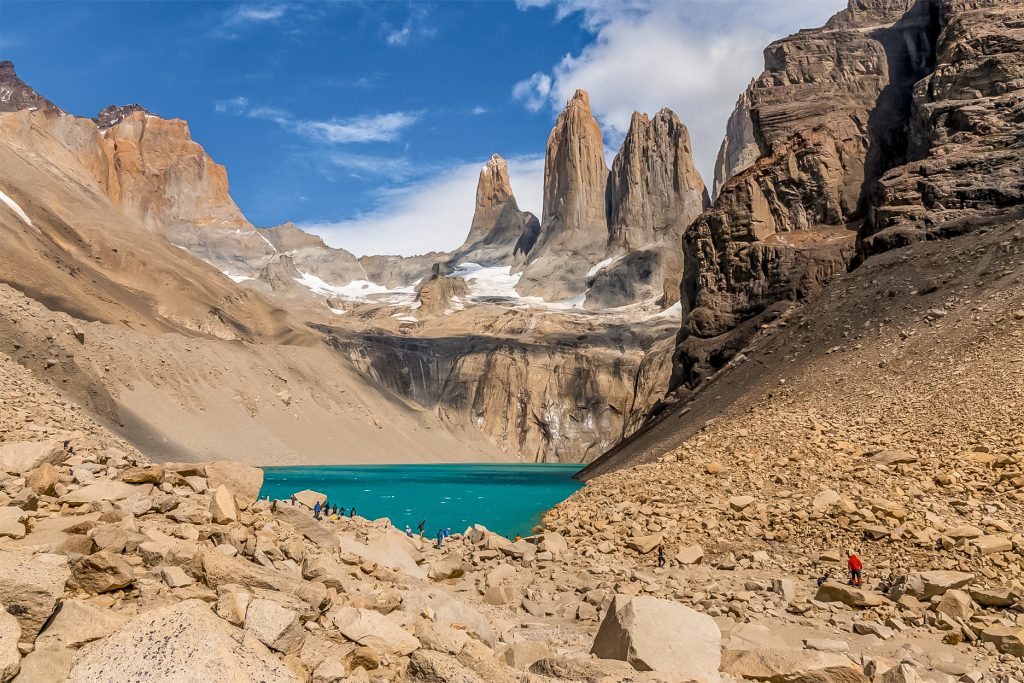
17. Torres del Paine National Park, Chile
Some places rely on one standout view. Well, Torres del Paine doesn’t bother with that approach. It just delivers constantly.
The landscapes here feel exaggerated, but in a good way. Towers of granite rise straight out of the ground, lakes look artificially colored, and glaciers shift and crack in the distance. It’s the kind of scenery that doesn’t need explanation. You simply show up and take it all in.
What makes it one of the most beautiful hiking trails in the world isn’t just the visuals, though. It’s the atmosphere. The wind, the scale, the sense that you really are such a tiny dot on this huge and brilliant planet.
You don’t just walk through it, you experience it.
18. The Dolomites, Italy
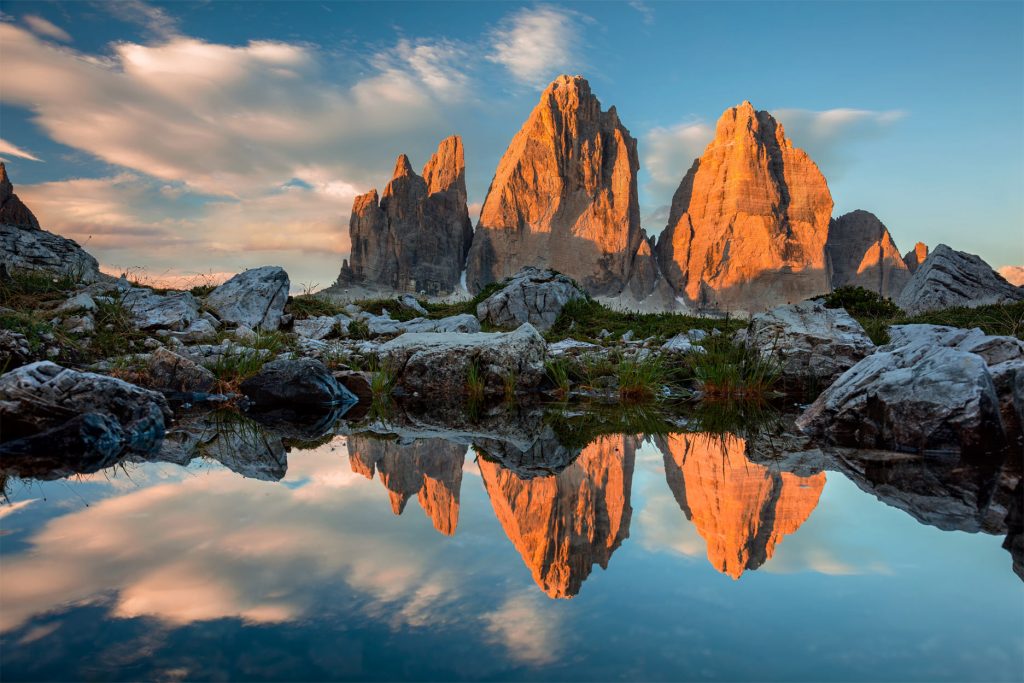
The Dolomites have a slightly unfair advantage in that they look good from every angle.
Picture sharp limestone peaks, soft rolling valleys, and trails that seem designed to constantly reveal something exciting around the next bend. It’s dramatic without being overwhelming, which is a rare balance.
But what really sets it apart is how accessible it all is. You can hike serious mountain terrain during the day and end up in a cozy spot eating a proper meal by evening.
It’s one of the most beautiful hiking destinations in the world, but also one of the most enjoyable to actually experience.
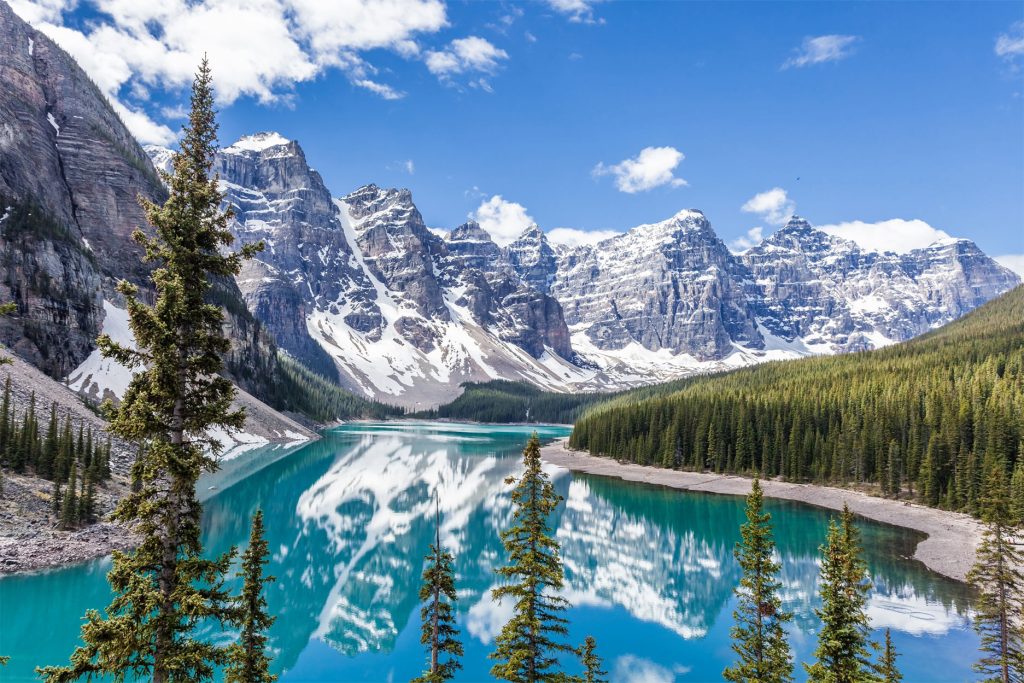
19. Banff National Park, Canada
Banff feels almost too polished at times. Yes, it really does look as beautiful as it does in the photos.
Think turquoise lakes, pine forests, and snow-capped peaks. It’s the kind of place where even a short walk looks like it belongs on a postcard. But once you get beyond the busiest viewpoints, the scale seriously opens up.
There are hikes here that take you deep into the mountains, away from the crowds, where the scenery feels less like it’s putting on a show for visitors and more expansive.
That mix of accessibility and depth is what keeps it firmly on the list of the most beautiful hiking trails in the world.
20. Fiordland National Park, New Zealand
Fiordland doesn’t need to try to impress you. It just exists, and that’s enough.
It’s wetter, wilder, and more remote than most places people visit. Waterfalls appear after rain like someone’s switched them on, valleys stretch endlessly, and the whole place feels slightly untouched.
Hiking here is less about ticking off a route and more about being in the environment.
It’s not always comfortable, and things can feel quite eerie at times because you feel so small and vulnerable. But that’s kind of the point and it’s always memorable.
Best Hiking Trails In The World For Beginners
New to hiking? Don’t worry, there’s plenty for you to enjoy while you understand what’s right for you. Here are some of our favorites.
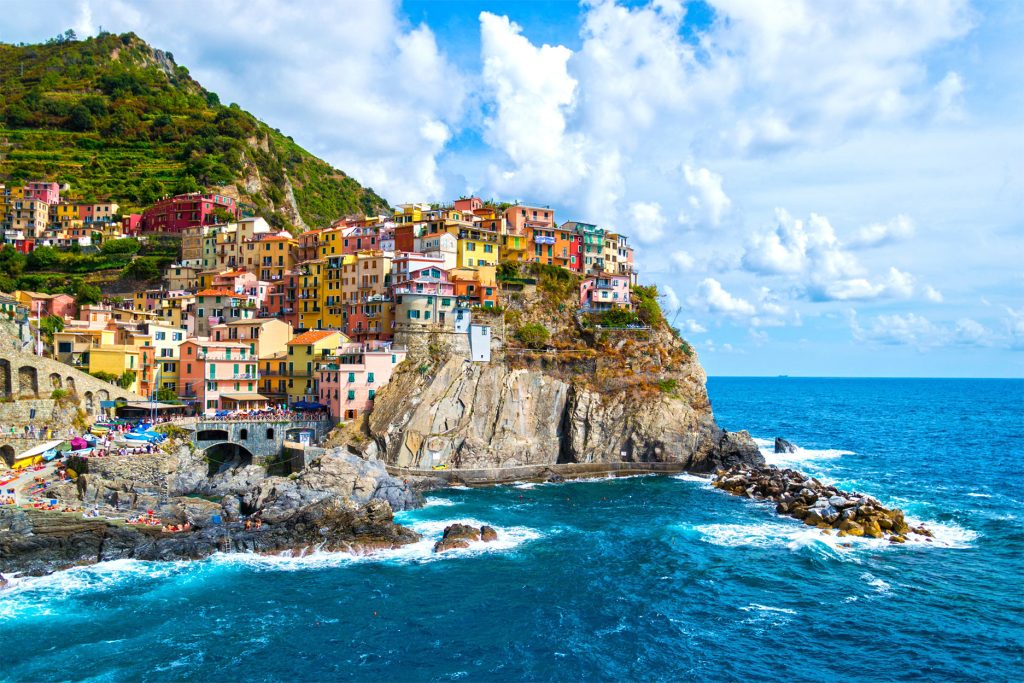
21. Cinque Terre Coastal Trail, Italy
- Max Altitude: 250 m / 800 ft
- Distance: 11–12 km / 7–7.5 miles
- Difficulty: Moderate
If the idea of “the best hiking trails in the world” sounds appealing but you’re not quite ready to suffer for it, this is a very good place to start.
The Cinque Terre trail links five coastal villages along the Italian Riviera, which means you’re never too far from a decent coffee, a proper meal, or the option to stop early and call it a success. The path itself rolls up and down along the coastline, offering constant sea views without ever becoming overly difficult.
It’s not a wilderness experience, and it’s not trying to be. This is hiking that leans into enjoyment. It’s scenic, manageable, and just challenging enough to feel like you’ve done something.
For beginners, it delivers everything you want without the intimidation factor.
22. Lake Louise Lakeshore Trail, Canada
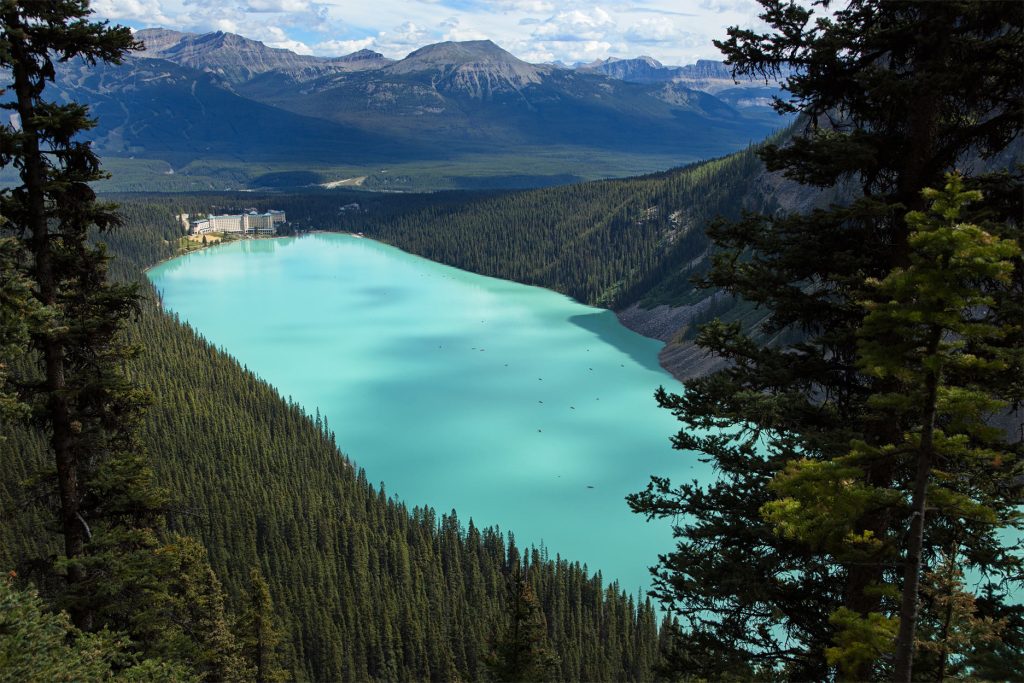
- Max Altitude: 1,731 m / 5,680 ft
- Distance: 4– 4.7 km / 2.5–2.9 miles
- Difficulty: Easy
This is the kind of trail that proves you don’t need distance or difficulty to feel like you’re somewhere special.
The route follows the edge of Lake Louise, with its unreal turquoise water and surrounding mountain backdrop doing most of the heavy lifting. It’s flat, short, and accessible. It’s the kind of hike where you can take your time, stop often, and not worry about pacing.
It’s also a good reminder that not every “best hike” needs to push you physically. Sometimes it’s simply about where you are, not how hard it is to get there.
23. Plitvice Lakes National Park Trails, Croatia
- Max Altitude: 1,279 m / 4,196 ft
- Distance: 3–18 km / 1.8–11.2 miles
- Difficulty: Easy
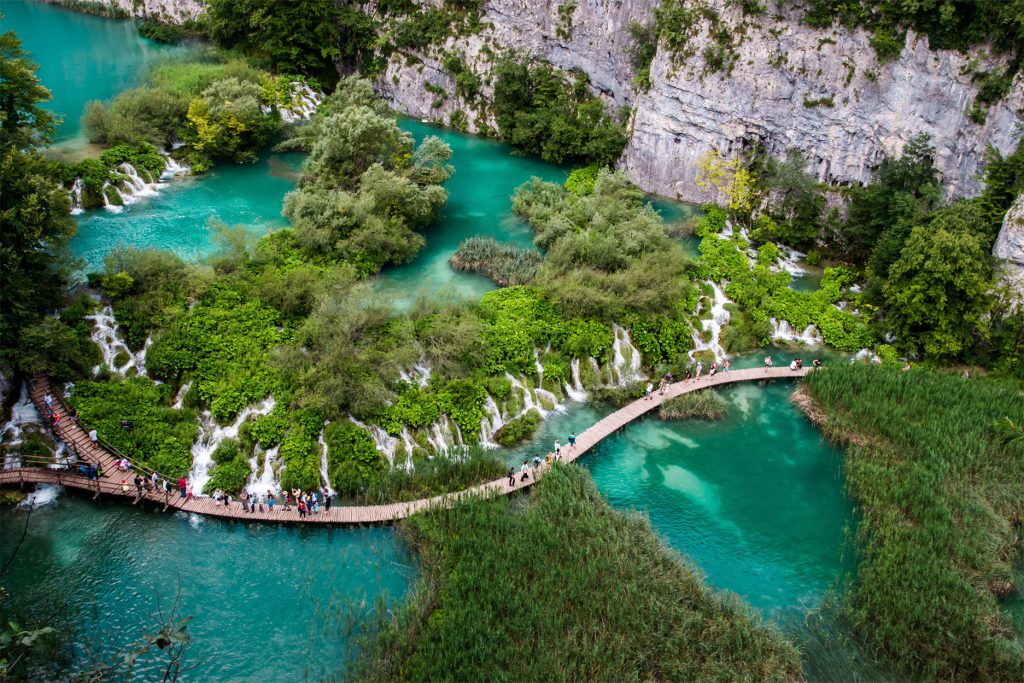
Plitvice feels like it was designed to ease people into hiking.
Wooden boardwalks wind through a network of lakes and waterfalls, with routes that can be adjusted depending on how far you want to go. There’s no need to navigate difficult terrain or deal with steep climbs. You just move through a landscape that keeps giving you reasons to stop.
It’s structured, accessible, and visually impressive without requiring much effort.
For anyone new to hiking, this is one of the easiest ways to experience something that feels genuinely memorable.
24. Arthur’s Seat, Scotland
- Max Altitude: 251 m / 823 ft
- Distance: 4.8 km / 3 miles
- Difficulty: Easy to Moderate
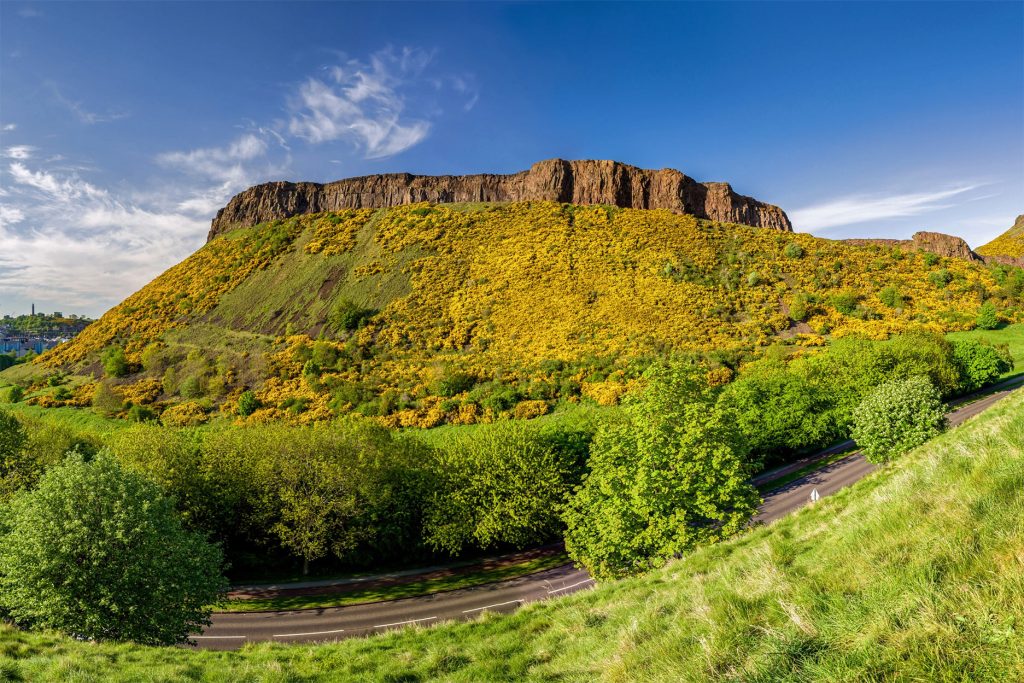
This is what happens when an impressive viewpoint sits right next to a city.
Arthur’s Seat is short, direct, and packs a real punch when you reach the top. You start at ground level, and within a relatively short climb, you’re looking out over all of Edinburgh.
It’s not a long hike, and it’s not technically demanding, but it gives you that sense of elevation and perspective that makes hiking appealing in the first place.
If you’re testing the waters, this is an easy win.
Famous Hiking Trails Everyone Should Do Once
Now we reach the final group. Those bucket-list hikes that should be on everyone’s lifetime agenda. If you get the chance, we really recommend giving them a go once.
25. Appalachian Trail, USA
- Max Altitude: 2,025 m / 6,643 ft
- Distance: 3,540 km / 2,200 miles
- Difficulty: Extreme
This isn’t just one of the most famous hiking trails in the world. It’s one of the longest continuous hiking experiences you can commit to.
Stretching across the eastern United States, the Appalachian Trail is less about standout moments and more about endurance. You’re walking through forests, mountains, changing weather, and long stretches of routine.
People don’t take this on for the views alone. They do it for the experience of sticking with something that takes months to complete. It’s a slow burn, and for the right person, that’s exactly the point.
26. Camino de Santiago, Spain
- Max Altitude: 1,517 m / 5,036 ft
- Distance: 780 km / 485 miles
- Difficulty: Moderate
The Camino is often described as a hike, but it’s probably not what you automatically think of when you hear the word.
You’re not deep in the wilderness. You’re walking between towns, through the countryside, past cafes and small villages, and sharing the route with people from all over the world.
What makes it one of the best hiking trails in the world is the rhythm. You wake up, walk, eat, rest, and repeat, and somewhere along the way, it becomes less about the destination and more about the routine itself.
It’s accessible, social, and surprisingly addictive. What seems like a lot of ground to cover in the beginning actually becomes rather easy once you get into the swing of things.
27. Great Wall of China, China
- Max Altitude: ~1,500 m
- Distance: Varies
- Difficulty: Moderate to Challenging
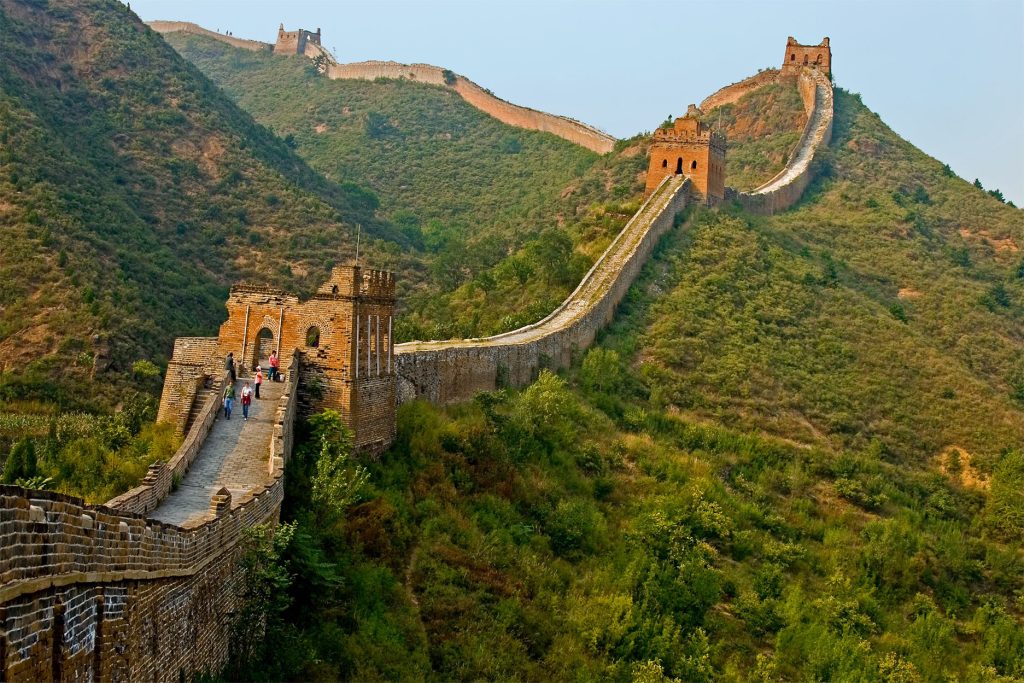
Hiking the Great Wall is not one continuous experience. Instead, it’s a series of sections, each with its own character.
Some parts are restored and relatively easy to walk. Others are steep, uneven, and feel far more rugged. Steps vary wildly in height, the gradient is constantly changing, and it can be more physically demanding than you first expected.
But the appeal isn’t just the challenge. It’s the history within the walls and everything around them.
You’re walking along something that’s existed for centuries, stretching across mountains in a way that still feels slightly unreal. That alone puts it firmly on the list of hikes worth doing at least once. Oh, and the fact that it’s one of the Modern Seven Wonders of the World, like Machu Picchu in Peru.
Which Trek Is Right For You?
This is where most people get stuck, and not because there aren’t enough options, but because there are too many. They all look incredible on paper, and that’s because they are. But the “right” trek isn’t about what ranks highest on a list. It’s about what actually fits you.
This guide is here to help you narrow that down.
Start by thinking about what kind of experience you want, not just what looks impressive.
Here are some examples.
| Looking For… | Suggested Treks |
|---|---|
| Varied, scenic, and less crowded | Salkantay Trek |
| Iconic and structured | Inca Trail |
| High-altitude and physically demanding | Everest Base Camp Trek or Mount Kilimanjaro |
| Comfortable but still impressive | Dolomites Alta Via 1 |
| Short but dramatic | Torres del Paine W Trek or Laugavegur Trail |
The point is, this list of the most beautiful hiking trails in the world isn’t just about inspiration. It’s a starting point. Use it to compare distances, difficulty levels, altitude, and overall experience so you can choose something that matches your ability and what you actually want out of the trip.
Because the best hiking trail in the world isn’t the one that sounds the most extreme. It’s the one you’ll enjoy from start to finish.
FAQs About The Best Hiking Trails In The World
Choosing which treks you want to do is a big decision, so we’re sure you’ve got plenty of questions. To help, we’ve answered some of the most frequently asked questions below.
Some of the best hiking trails in the world include the Salkantay Trek, Everest Base Camp Trek, and Tour du Mont Blanc. The “best” option depends on your experience level, fitness, and how much challenge you’re looking for.
The most beautiful hiking trails in the world are often found in places like Torres del Paine National Park, The Dolomites, and Fiordland National Park, where dramatic landscapes and constantly changing scenery do most of the work.
Trails like the Pacific Crest Trail and Appalachian Trail are among the toughest due to their extreme distance and long duration. High-altitude treks like Mount Kilimanjaro also rank high because of how physically demanding they are.
Beginner-friendly options include the Cinque Terre Coastal Trail and Lake Louise Lakeshore Trail. These offer great scenery without the need for advanced fitness or technical experience.
Not always, but for more remote or high-altitude treks like the Salkantay Trek or Everest Base Camp Trek, a guide can make the experience safer, smoother, and much more enjoyable. You won’t need to worry about logistics, and your guide will share plenty of local knowledge with you that you likely wouldn’t get if you went by yourself.
Choosing Your Perfect Hiking Adventure
The best hiking trails in the world all promise something slightly different, but they tend to leave you with the same thing: the sense that you’ve done something that required a bit more than just showing up for a trip.
Some are tough. Some are more relaxed. Some are famous for a reason, and others seriously outperform expectations.
The key is choosing a trail that matches your experience level and what you actually want from it, not just what looks impressive on a list.
Because the best hikes aren’t the ones that sound the most extreme. They’re the ones you enjoy enough to keep going, one step at a time, all the way to the end.


Leave A Reply