
If you’re planning to travel to Cusco in June, Inti Raymi Peru is one of the most impressive cultural experiences you can have. Known as the Festival of the Sun, this ancestral celebration blends history, tradition, and spectacle into a unique event that attracts thousands of travelers every year.
More than just a tourist activity, Inti Raymi offers a direct connection to the legacy of the Inca Empire. Through rituals, music, and traditional dances, it recreates one of the most important ceremonies of Andean civilization, bringing history to life in a truly unforgettable way.
Table of contents
What Is Inti Raymi?
Inti Raymi is an ancient Inca ceremony held in honor of Inti, the Sun God, and takes place every June 24th in Cusco. Today, it is a historical reenactment that revives the rituals, dances, and traditions of the Inca Empire in front of thousands of visitors from around the world.
History of Inti Raymi in the Inca Empire
During the time of the Inca Empire, known as the Tahuantinsuyo, Inti Raymi was the most sacred and important celebration in the Inca calendar. It was established by the Inca emperor Pachacutec in the 15th century.
This ritual was held in honor of Inti, the Sun God, whom the Incas considered the source of life, energy, and balance in the universe. It also marked the beginning of a new agricultural cycle. The ceremony took place in sacred spaces such as Qorikancha and brought together the entire social structure of the empire.
The Festival of the Sun could last for several days and included a series of rituals, offerings, dances, and sacrifices. Its primary purpose was to ensure the prosperity and well-being of the empire. Beyond its deep spiritual significance, Inti Raymi also played a crucial political and social role, reinforcing the power of the Inca and strengthening the connection between the State, nature, and the people.
Inti Raymi therefore combined elements of religion, politics, and culture. Within the complex structure of the ritual, different social groups performed key and specific roles throughout the celebration.


Key Characters of Inti Raymi
Sapa Inca: The “Son of the Sun”
The Sapa Inca (from Quechua sapa inka, meaning “the only Inca” or “absolute ruler”) was the highest political, religious, and symbolic authority of the Tahuantinsuyo. Considered a direct descendant of Inti (the Sun God), he presided over all Inti Raymi ceremonies.
During the ritual, the Sapa Inca led the offerings, directed invocations to the Sun, and performed symbolic acts such as greeting the sunrise and conducting the ceremonial chicha ritual. His role represented the direct connection between the earthly and divine worlds, ensuring cosmic order and the continuity of the agricultural cycle.
Qolla: The Queen and Sacred Feminine Figure
The Qolla (from Quechua qoya, meaning “queen” or “principal wife”) was the wife of the Sapa Inca and the highest-ranking woman in the empire.
Her participation in Inti Raymi symbolized Andean duality (male–female) and the balance of the universe. She accompanied the Sapa Inca in key ceremonies and took part in rituals related to fertility, abundance, and the protection of the people.
Willac Umu: The High Priest
The Willac Umu (“the one who communicates or announces”) was the highest religious authority in the empire.
He was responsible for interpreting the will of the gods, directing sacrifices, and overseeing sacred rituals. During Inti Raymi, he played a central role by leading the main ceremonies and ensuring that every act was carried out according to ancestral traditions.
Acllas: The “Virgins of the Sun”
The Acllas (from Quechua aklla, meaning “chosen women”) were selected from a young age for their beauty, skills, or lineage to serve the State and religion.
They lived in the Acllahuasi (“House of the Chosen Women”), where they dedicated themselves to weaving fine textiles (cumbi), preparing ritual foods, and maintaining the sacred fire.
During Inti Raymi, their participation was essential in offerings, especially in the preparation of ceremonial chicha, a key element in rituals of renewal, fertility, and gratitude to the Sun.
Ayllus: The Foundation of Social Organization
The Ayllu (from Quechua ayllu, meaning “family community or lineage”) was the basic unit of Inca society, organized around kinship, territory, and collective identity.
During Inti Raymi, each ayllu sent representatives with dances, agricultural products, and offerings, reaffirming their relationship with the State and with Inti. This act reflected social cohesion and the Andean principle of reciprocity (ayni).
Representatives of the Four Suyos
The Tahuantinsuyo (“the four united regions”) was divided into:
- Chinchaysuyo (north)
- Collasuyo (south)
- Antisuyo (east, jungle region)
- Contisuyo (west)
Each region sent delegations with traditional clothing and tributes such as textiles, metals, and food. This representation reaffirmed the cultural diversity of the empire and its political integration under the authority of the Sapa Inca.
Imperial Army: Symbol of Power and Expansion
The army of the Tahuantinsuyo represented the strength, discipline, and territorial expansion of the empire.
During Inti Raymi, warriors participated wearing ceremonial attire and carrying symbolic weapons, highlighting the close relationship between military power, political authority, and religion. Their presence reinforced the idea of divine protection and imperial order.
Other Ceremonial Participants
In addition to the main figures, other important participants included:
- Amautas (from Quechua amawta, meaning “wise man”): philosophers and teachers responsible for transmitting knowledge
- Haravicus (poets): responsible for ceremonial chants and storytelling
- Yanaconas: servants of the State who supported the logistics of the ceremony
A Representation of the Andean World Order
Inti Raymi was not only a religious ceremony but a complete representation of the political, social, and spiritual order of the Inca Empire.
Each participant fulfilled a specific role that reflected the Andean worldview, based on balance, reciprocity, and the deep connection between human beings, nature, and the divine.

The Beginning of the Inti Raymi Ritual
The ceremony began with the triumphant entrance of the Sapa Inca into present-day Cusco, either at the Plaza de Armas (formerly known as Huacaypata) or at Sacsayhuamán.
The Inca was accompanied by:
- Acllas, women who scattered flowers as a symbol of purity
- Pichaq, men responsible for spiritually cleansing the space
- The Kumillo, who carried the Achiwa, a ceremonial feathered parasol
This grand entrance marked the beginning of one of the most imposing and symbolic ceremonies in the Andean world.
Meaning of Inti Raymi: Sun Worship
In the Andean worldview, the Sun (Inti) was the supreme deity and the origin of all life. Its worship represented not only vital energy but also the order of the universe and the continuity of time.
During Inti Raymi, the Incas performed ceremonies of gratitude and renewal, seeking to ensure good harvests, natural balance, and divine protection. This sacred connection with the Sun remains the symbolic heart of the festival to this day.

Inti Raymi Then vs. Now
The Modern Reconstruction of Inti Raymi
Following the arrival of the Spanish, Inti Raymi was prohibited as part of the process of religious imposition. However, its memory survived through historical chronicles, particularly the writings of Inca Garcilaso de la Vega.
In 1943, Peruvian intellectual Humberto Vidal Unda proposed reviving this tradition. One year later, in 1944, the first modern reenactment took place, officially establishing June 24 as the Day of Cusco.
Writer Faustino Espinoza Navarro became the first actor to portray the Inca, marking a milestone in the preservation of Andean culture.
Important Fact: In 2001, the Peruvian government declared Inti Raymi a National Cultural Heritage, recognizing its historical, cultural, and symbolic value for Peru.

Inti Raymi Today
Inti Raymi has transcended centuries, adapting to modern times without losing its cultural and symbolic essence. Today, this celebration combines ancestral tradition with a carefully staged performance, making it one of the most important festivals in Cusco.
Key Differences Between the Original and Modern Inti Raymi
Before exploring the full details, here are the main differences:
- Before: A real religious ceremony
- Today: A cultural and touristic reenactment
- Before: Lasted several days
- Today: A one-day main event (June 24)
- Before: Included real ritual sacrifices
- Today: Symbolic recreations
Complete Comparison of Inti Raymi: Then vs. Now
| Aspect | Inti Raymi in the Inca Empire (1430–1532) | Modern Inti Raymi (1944–Present) |
| Activity | A religious ceremony featuring rituals, sacrifices, and offerings to the Sun God. | A theatrical reenactment designed for cultural and tourism purposes. |
| Duration | Up to 15 days leading up to the winter solstice. | A one-day main event (June 24, officially recognized as Cusco Day). Includes preliminary events such as Qhapaq Inti (sun greeting) at dawn. |
| Attendance | An estimated over 50,000 participants, including inhabitants of the Tahuantinsuyo, nobles, priests, and warriors. | More than 60,000 spectators (international and local tourists) plus over 1,000 performers (dancers, musicians, and actors). Broadcast live on TV and social media. |
| Purpose | Sun worship, agricultural renewal, and legitimization of the Inca’s power. | Cultural preservation, tourism promotion, and economic impact. |
| Setting | Qorikancha (Temple of the Sun), Huacaypata (now Plaza de Armas), and Sacsayhuamán. | 1. Qorikancha (ceremonial opening)2. Plaza de Armas (intermediate scene: “encounter between two worlds,” including the Mayor of Cusco reporting to the Inca)3. Sacsayhuamán (main ceremony with grandstands for spectators). |
| Rituals | Real sacrifices, use of sacred fire, and offerings of coca leaves and chicha. | Choreographed performances, speeches in Quechua, and symbolic rituals:– Sun greeting– Coca leaf reading– Simulated llama sacrifice– Lighting of the sacred fire– Toast with chicha de jora. |
| Clothing | Fine alpaca textiles, gold ornaments, and feathers from exotic birds. Exclusive designs for the nobility. | Handcrafted historical replicas:– Unku (Inca tunic)– Mascaipacha (imperial fringe)– Traditional silver jewelry |
| Language | Ancient Quechua (official language of the empire). | Quechua and Spanish (with translation for tourists). Script supervised by the Quechua Language Academy. |
| Funding | State resources from the Inca Empire (tributes from the four regions). | Sponsored by private companies and regional government. Ticket sales support the event. |
| Global Impact | Known only within the Tahuantinsuyo. | International event:– Featured by global media such as National Geographic and BBC– Attracts influencers and documentary creators from around the world. |

Why Is Inti Raymi Still Important Today?
Today, Inti Raymi is not just a historical reenactment—it is a living expression of Andean cultural identity. Through music, dance, and ritual, it allows thousands of people to connect with the legacy of the Inca Empire in a meaningful and immersive way.
In addition, it has become a key driver of tourism in Cusco, attracting visitors from around the world who seek an authentic cultural experience rooted in Andean history and worldview.
Pro Tip: If you want to better understand the cultural context of Inti Raymi, we recommend exploring our blog on Cusco festivities. There, you’ll discover other Andean celebrations that enrich the experience of the city’s jubilee month and complement your visit during this special time of year.


Complete Guide to Inti Raymi Peru 2026
On June 24, 2026, Cusco will once again host Inti Raymi Peru, one of the most important cultural celebrations in South America. This festival, which honors Inti, the Sun God, brings together history, ritual, and spectacle across three sacred locations that recreate the grandeur of the Inca Empire.
If you’re planning your trip, here you’ll find the full Inti Raymi 2026 schedule, key locations, and exactly what to expect at each stage of the ceremony.
Inti Raymi 2026 Schedule
| Stage | Location | Time | Duration | Main Activity |
| First Part | Qorikancha (Temple of the Sun) | 9:00 a.m. | 45 minutes | “Greeting to the Sun” with Acllas, musicians, and dancers. Entrance of the Inca. |
| The Inca and his entourage enter through Intikijllu (present-day Loreto Street) heading toward the Plaza de Armas. | ||||
| Second Part | Plaza de Armas (Huaqaypata) | 10:30 a.m. (approx.) | 1 hour | “Encounter of the Times” and the Coca Ceremony. |
| The Inca and his entourage continue along Saphy Street toward Sacsayhuamán. | ||||
| Third Part | Sacsayhuamán (Main Esplanade) | 1:00 p.m. (approx.) | 2 hours | Main Ceremony: Offerings, ritual sacrifice, and dances in honor of Inti. |
| End time: Approximately 3:30 p.m. (may extend depending on the performance). | ||||
Inti Raymi Route
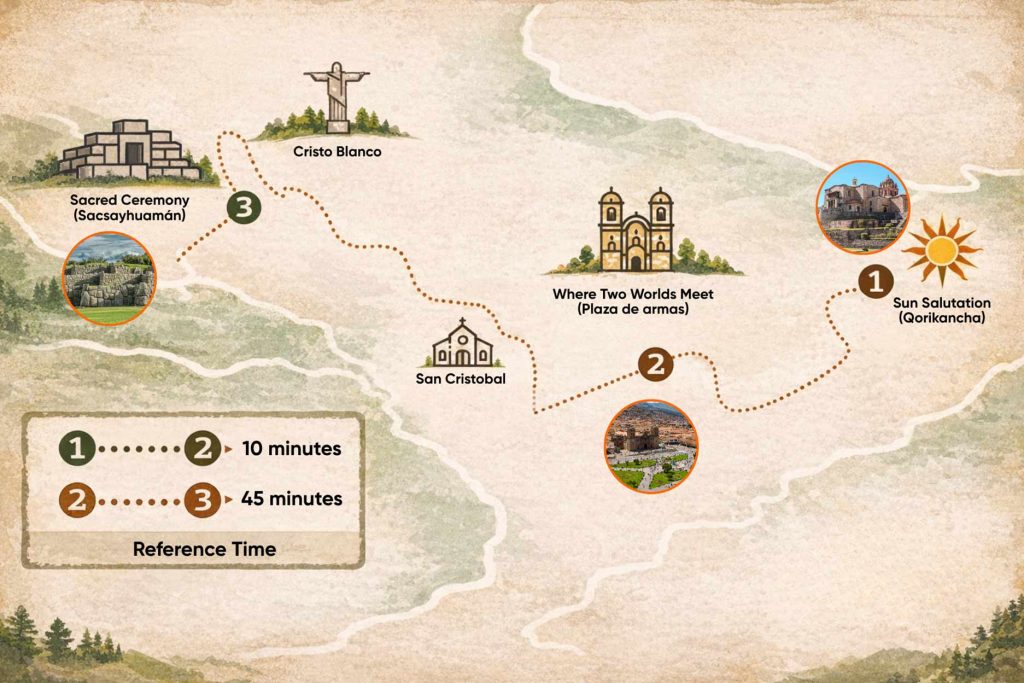
What Happens at Each Inti Raymi Location?
Inti Raymi unfolds across three historic sites that represent the spiritual and political heart of the Inca world. Each location plays a unique role in the ceremony.
1. Qorikancha (Temple of the Sun)
The celebration begins with a spectacular ceremonial act at Qorikancha, the ancient Temple of the Sun of the Inca Empire. As the morning sun illuminates its once-golden walls, the Inca makes his first public appearance, delivering an emotional invocation to Inti, giving thanks for life, sustenance, and the power of nature.
Surrounded by priests and Andean dancers dressed in traditional attire, this moment marks the beginning of the new solar cycle with a powerful spiritual energy that draws thousands of visitors each year.

2. Plaza de Armas (Huaqaypata)
In the heart of Cusco, the historic Plaza de Armas—formerly known as Huacaypata—transforms into a symbolic stage where the Inca receives representatives from the four regions of the Tahuantinsuyo: Chinchaysuyo, Antisuyo, Collasuyo, and Contisuyo.
Here, the proclamation of the new solar year is reenacted through ancestral rituals, the reading of omens by wise amautas, and a powerful collective dance representing unity among the peoples.
At this stage, the Inca also meets with the Mayor of Cusco, who symbolically reports on the state of the city—an element that has been incorporated in recent years.

3. Sacsayhuamán (Main Ceremony)
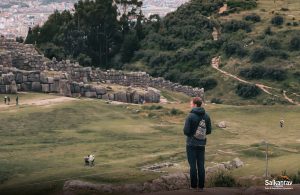
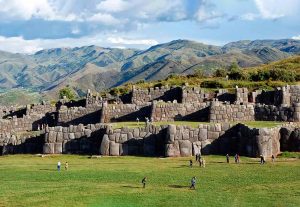
The esplanade of Sacsayhuamán, with its imposing megalithic architecture, hosts the central act of Inti Raymi—considered one of the largest cultural performances in Latin America.
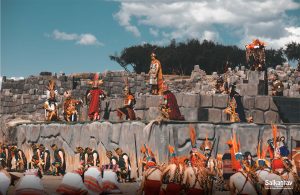
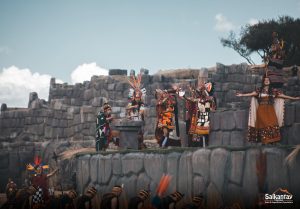
Here, the main ritual of the Inca Empire is reenacted, including symbolic offerings to Pachamama (Mother Earth), sacred dances, the ceremonial sharing of chicha, and the traditional symbolic sacrifice of a llama. This ritual interpretation is believed to predict the outcome of the new solar cycle.
The ceremony brings together more than 700 actors on stage, blending art, tradition, and spirituality within a breathtaking natural setting.

Inti Raymi 2026 Tickets
Official tickets for Inti Raymi 2026 are exclusively managed by the Municipal Company of Festivities of Cusco (EMUFEC), the entity responsible for organizing the event since its modern reenactment.
Tickets can be purchased through the authorized Teleticket platform, as well as through licensed travel agencies that operate with official allocations.
Important: Only purchase your tickets through official channels to avoid scams, resales, or inflated prices.
Entradas para Qorikancha
La tribuna del Qorikancha está ubicada estratégicamente sobre la Av. El Sol, ofreciendo una vista directa del inicio ceremonial, incluyendo el saludo al Sol y la primera aparición del Inca.
¿Dónde comprar entradas para el Inti Raymi en el Qorikancha?
Para el tramo inicial del Inti Raymi en el Qorikancha, es importante entender cómo funciona realmente el acceso:
- Tribunas oficiales (pagadas):
Las entradas para el Qorikancha corresponden a una tribuna instalada en la Av. El Sol, frente al templo.
Estas entradas no se venden dentro del Qorikancha, ya que el acceso al recinto durante la ceremonia está restringido a los actores y organización. - Canales de compra:
- Plataforma oficial Teleticket
- Agencias autorizadas (con paquetes o entradas individuales)
- Alternativa gratuita:
Es posible ver la ceremonia desde los alrededores del Qorikancha (veredas y zonas públicas), pero:- No incluye asiento
- La visibilidad es limitada
- Se requiere llegar con varias horas de anticipación
Dato clave: La tribuna del Qorikancha es una de las opciones más accesibles para ver el inicio del Inti Raymi sin desplazarse hasta Sacsayhuamán.
Qorikancha Single Stand
Capacity: 350 seats
| Ticket Prices | Peruvian Soles (PEN) | US Dollars (USD) |
|---|---|---|
| General Admission | S/. 235.00 | 69.00 USD |
| Children | S/. 120.00 | 35.00 USD |
| Tour guides | S/. 120.00 | 35.00 USD |
| Peruvian Nationals | S/. 150.00 | 44.00 USD |

Tickets for Sacsayhuamán
The main ceremony takes place at Sacsayhuamán, where there are three official grandstands.
Where to buy Inti Raymi tickets for Sacsayhuamán?
It’s important to understand how access really works:
- Official grandstands (paid):
Tickets for Sacsayhuamán correspond to the official grandstands (Green, Red, and Orange) located on the main esplanade, where the central Inti Raymi ceremony is held.
These grandstands offer seating and a direct view of the performance. Access to the ceremonial area is restricted exclusively to ticket holders.
- Purchase channels:
- Official Teleticket platform
- Authorized agencies (packages or individual tickets)
- Free alternative:
It is possible to watch the ceremony from higher areas and surrounding spots, but:- No seating is provided
- Visibility is limited or distant
- You must arrive early (before 8:00–9:00 a.m.)
Key tip: The best Inti Raymi experience at Sacsayhuamán is from the official grandstands. Each grandstand offers a different viewing angle and level of proximity to the main stage. The main difference lies in perspective and distance from the central performance.
Green grandstand
- Illapa Category
- Seating capacity: 810 seats
| Ticket Prices | Peruvian Soles (PEN) | US Dollars (USD) |
|---|---|---|
| General Admission | S/. 490.00 | 143.00 USD |
| Children | S/. 250.00 | 73.00 USD |
| Tour guides | S/. 250.00 | 73.00 USD |
| Peruvian Nationals | S/. 250.00 | 73.00 USD |
Red grandstand
- Chaska Category
- Seating capacity: 1,188 seats
| Ticket Prices | Peruvian soles (PEN) | US Dollars (USD) |
|---|---|---|
| General Admission | S/. 680.00 | 198.00 USD |
| Children | S/. 340.00 | 99.00 USD |
| Tour guides | S/. 340.00 | 99.00 USD |
Orange grandstand
- Killa VIP Category
- Seating capacity: 448 seats
| Tickets Prices | Peruvian soles (PEN) | US Dollars (USD) |
|---|---|---|
| General Admission | S/. 730.00 | 213.00 USD |
| Niños | S/. 365.00 | 107.00 USD |
| Tour guides | S/. 365.00 | 107.00 USD |
Orange grandstand VIP
- Inti Super VIP Section
- Capacity: 1,320 seats
| Tickets Prices | Peruvian soles (PEN) | US Dollars (USD) |
|---|---|---|
| General Admission | S/. 850.00 | 248.00 USD |
| Niños | S/. 430.00 | 126.00 USD |
| Tour guides | S/. 430.00 | 126.00 USD |
Includes: optimal viewing angle, gift box, comfort.

Key Recommendation to Secure Your Tickets
Inti Raymi tickets typically go on sale between April and June, and demand is extremely high—especially for Sacsayhuamán.
Important Warnings:
- Tickets can sell out within a few days
- The best seats are sold first
- Prices listed are reference prices based on the previous year
Recommendation: Book as early as possible, especially if you are traveling during peak season or as part of a group.
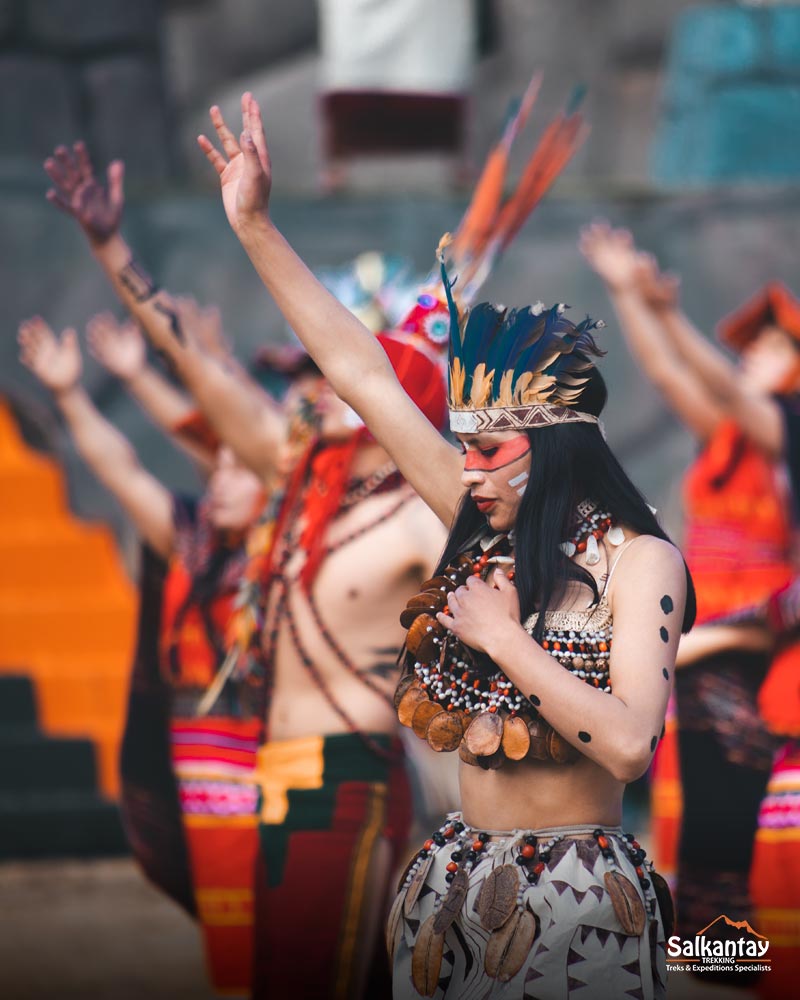
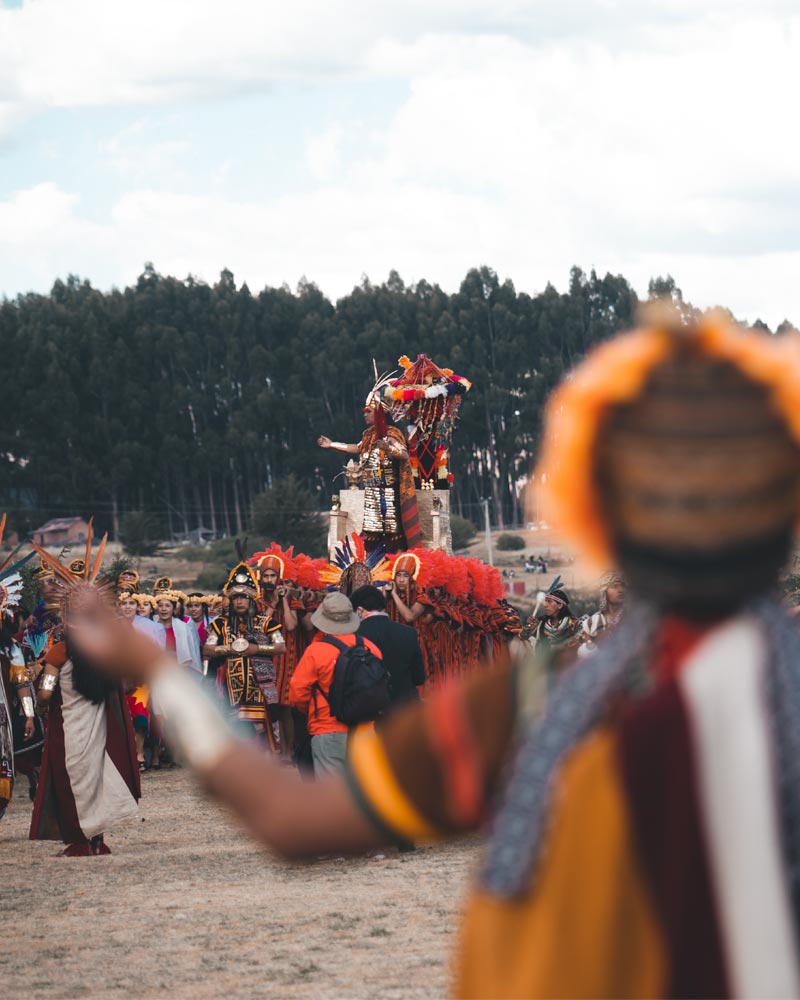
Essential Tips to Enjoy Inti Raymi 2026
To make the most of Inti Raymi in Cusco, keep these practical tips in mind:
- Planning
- Book your tickets in advance
- Arrive early (at least 2–3 hours before the ceremony begins)
- Language
- The ceremony is conducted in Quechua
- You can hire guides who provide live translation
- Transportation
- Traffic restrictions are in place throughout the event
- Consider joining an organized tour or walking between locations
- Safety and Comfort
- Bring water and snacks
- Avoid carrying visible valuables
- Use a lightweight backpack
- Money
- Carry cash
- Nearby ATMs are often crowded
- Altitude
- Cusco sits at 3,400 meters (11,155 feet) above sea level
- Stay hydrated and avoid excessive physical exertion
- Experience
- Bring an extra battery for your phone or camera
- Respect the ceremony (avoid interrupting performances or blocking views)
- Alternative Option
- If you are unable to secure tickets, you can watch live broadcasts online

What to Wear for Inti Raymi
The weather in Cusco can change quickly: cold mornings, sunny midday, and cool afternoons. For this reason, dressing in layers is the best strategy to stay comfortable throughout the day.
1. Layered Clothing (Essential in the Andes)
- Base layer: breathable long-sleeve shirt or thermal top
- Mid layer: wool sweater, fleece, or insulated jacket
- Outer layer: windbreaker, waterproof jacket, or poncho
- Bottoms: trekking pants, jeans, or lightweight pants (avoid heavy clothing)
2. Comfortable and Durable Footwear
- Hiking boots or sneakers with good grip
- Ideal for uneven terrain such as Sacsayhuamán
- Avoid sandals or unsupported footwear
3. Essential Accessories
- Hat, cap, or traditional Andean chullo
- Scarf or shawl
- Sunglasses
- Sunscreen (SPF 50+). The high-altitude sun can be intense even during winter
4. What Not to Bring
- Overly heavy clothing (can become uncomfortable at midday)
- Uncomfortable shoes
- Large suitcases (a light backpack is recommended)
Key Tip: While mornings can be cold, the midday sun in Cusco can be strong. Dressing in layers allows you to easily adapt throughout the day.
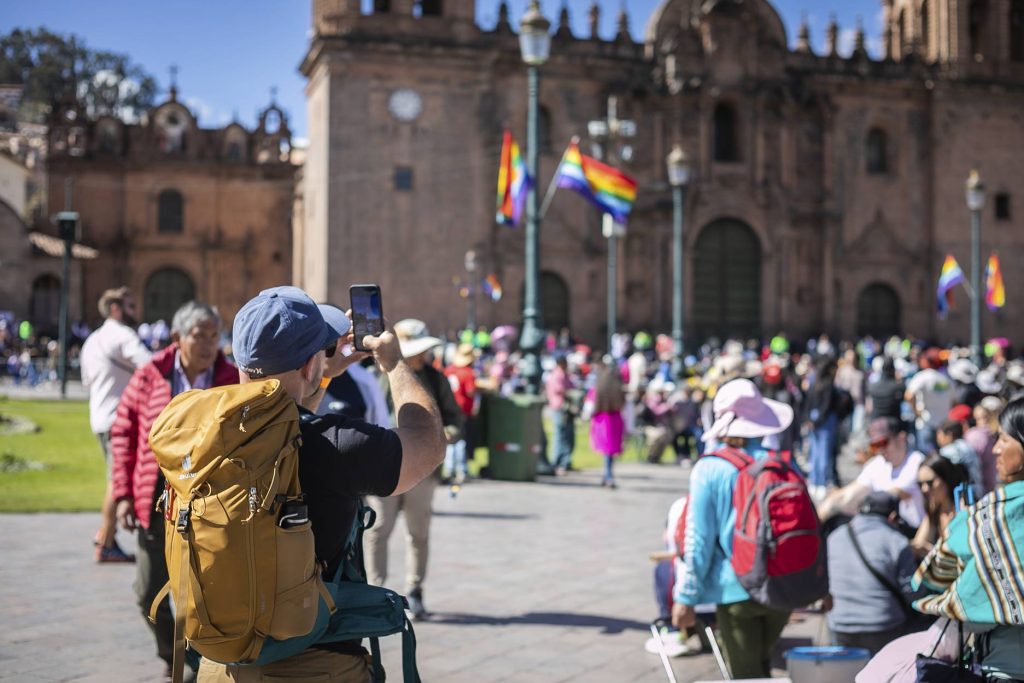
Where to Watch Inti Raymi
One of the most common questions travelers ask is: Where is the best place to watch Inti Raymi? Here are the best options depending on each stage of the route.
Restaurants and Cafés with a View
Route: Qorikancha → Plaza de Armas
- Prohibido Craft Food & Drinks
- Varayoc Chicken & Grill
Plaza de Armas Area
- Casa Cusqueña
- Paddy’s Irish Pub
- LIMO Peruano Nikkei
- Morena Peruvian Kitchen
- Inka Grill
- Tunupa Plaza de Armas
- Calle del Medio Restaurante
- Micaela Restaurant
- Plaza Café
Many of these venues offer balconies with privileged views (some may require reservations or a minimum spend).
Route: Calle Plateros → Calle Saphy
- Sagrado Restaurant
- Il Olivo Trattoria
- La República del Pisco
Best Free Viewing Spots
Qorikancha: You can stand on the steps in front of Qorikancha or in nearby public areas. Arrive very early (from 5:00 a.m.) to secure a good spot.
Plaza de Armas: The square fills up quickly. Alternative: balconies in nearby restaurants or hotels.
Sacsayhuamán: Official grandstands (paid – best experience), nearby hillsides and slopes (free viewing). Arrive before 9:00 a.m. to find space.
Best Hotels to Watch Inti Raymi
If you’re looking for a more comfortable and exclusive experience, consider staying at hotels with direct views of the Inti Raymi route:
- Palacio del Inka, a Luxury Collection Hotel
- Abittare Hotel
- Hotel Unaytambo Cusco
- Loreto Hotel Boutique
- Hotel Plaza de Armas Cusco
Benefits:
- Direct views of the Inti Raymi procession
- Prime location along the route
- Avoid large crowds
- A more comfortable and exclusive experience
Final Travel Tips for Inti Raymi
- Explore Cusco’s Top Attractions: Make the most of your trip by discovering iconic destinations such as Machu Picchu, the Sacred Valley of the Incas, and Cusco’s historic center, a UNESCO World Heritage Site.
- Experience Cusco’s Gastronomy: Enjoy authentic Andean cuisine, including traditional dishes such as papa a la huancaína, lomo saltado, and roasted cuy—a truly unique culinary experience.

Frequently Asked Questions About Inti Raymi
Inti Raymi is celebrated on June 24 because it coincides with the winter solstice in the Southern Hemisphere, the shortest day of the year. For the Incas, this moment symbolized the rebirth of the Sun and the beginning of a new agricultural cycle.
During the 16th century, Spanish conquistadors prohibited Inti Raymi as part of the imposition of Catholicism. However, the tradition survived through collective memory and was revived in 1944 as a cultural reenactment in Cusco.
Inti Raymi is primarily celebrated in Cusco, the former capital of the Inca Empire. The ceremony takes place across three main locations: Qorikancha, Plaza de Armas, and Sacsayhuamán.
In Inca times, a llama was sacrificed as an offering to the Sun God to ensure good harvests and natural balance. Today, this ritual is symbolic and forms part of the cultural reenactment.
“Inti Raymi” is a Quechua expression that means “Festival of the Sun.” Inti translates to “sun,” and Raymi means “celebration” or “festival.” It was one of the most important ceremonies of the Inca Empire.
Yes, photography is allowed during Inti Raymi. However, it is recommended to be respectful, avoiding interruptions to the ceremony or blocking the view of other attendees.
No special requirements are needed to attend Inti Raymi. You only need to purchase tickets in advance (if you want a seat in the grandstands) and follow event guidelines to ensure a safe and authentic experience.
The four main celebrations, or raymis, of the Andean calendar are: Pawkar Raymi, which takes place between February and March to celebrate the year’s first corn harvest; Inti Raymi, held in June to pay homage to the sun god; Kulla Raymi, celebrated in September to mark the beginning of spring; and Kapak Raymi, which takes place in December and marks the beginning of the Andean summer.
Experience Inti Raymi: The Festival of the Sun in Cusco
Every June 24, the city of Cusco becomes the epicenter of an extraordinary celebration: Inti Raymi. This is not just a performance—it is a full immersion into the history and culture of the Inca Empire, where every ritual, dance, and costume brings its legacy vividly to life.
If you’re looking for a truly authentic and unforgettable cultural adventure, Inti Raymi Peru 2026 is exactly what you’ve been searching for. Secure your spot and become part of one of the most powerful Andean experiences. Cusco is waiting for you to relive the magic of the Inca world.

You May Also Be Interested In:





Leave A Reply