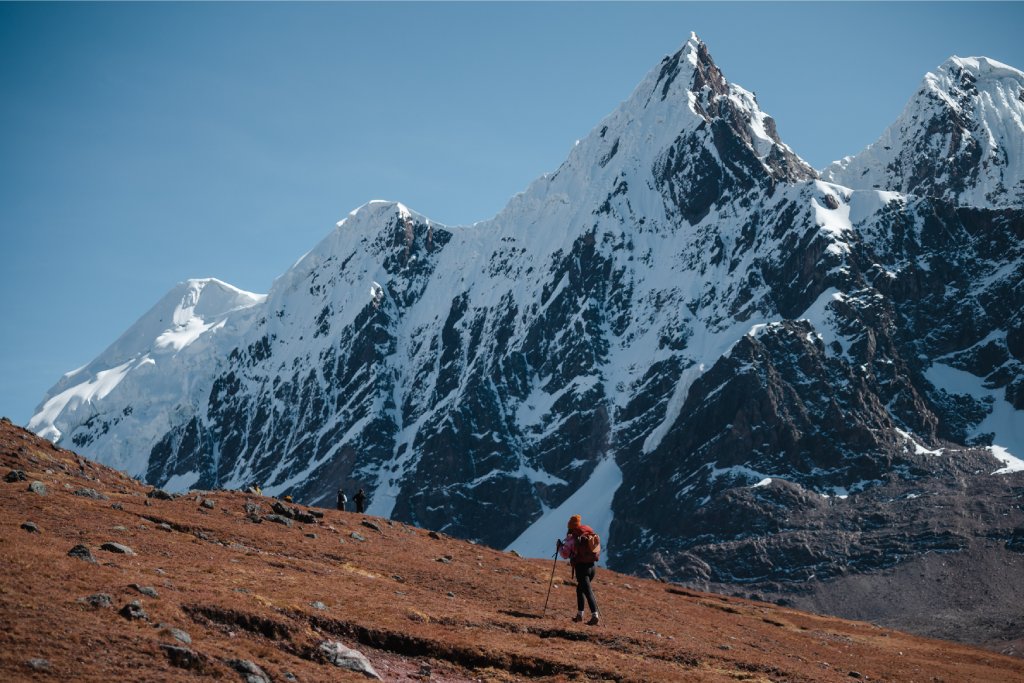
Imagine this: you’re surrounded by towering mountains, the air is crisp, the trail winds upward, and the landscape looks like something out of another world. You’re in Cusco, on one of those trails that make you feel small in the face of such vastness and lucky to be there.
That’s part of the magic of trekking. But suddenly, something happens: it could be the altitude, a sudden change in weather, or any unforeseen event along the way. This is where many travelers realize something important: not all guides are truly prepared.
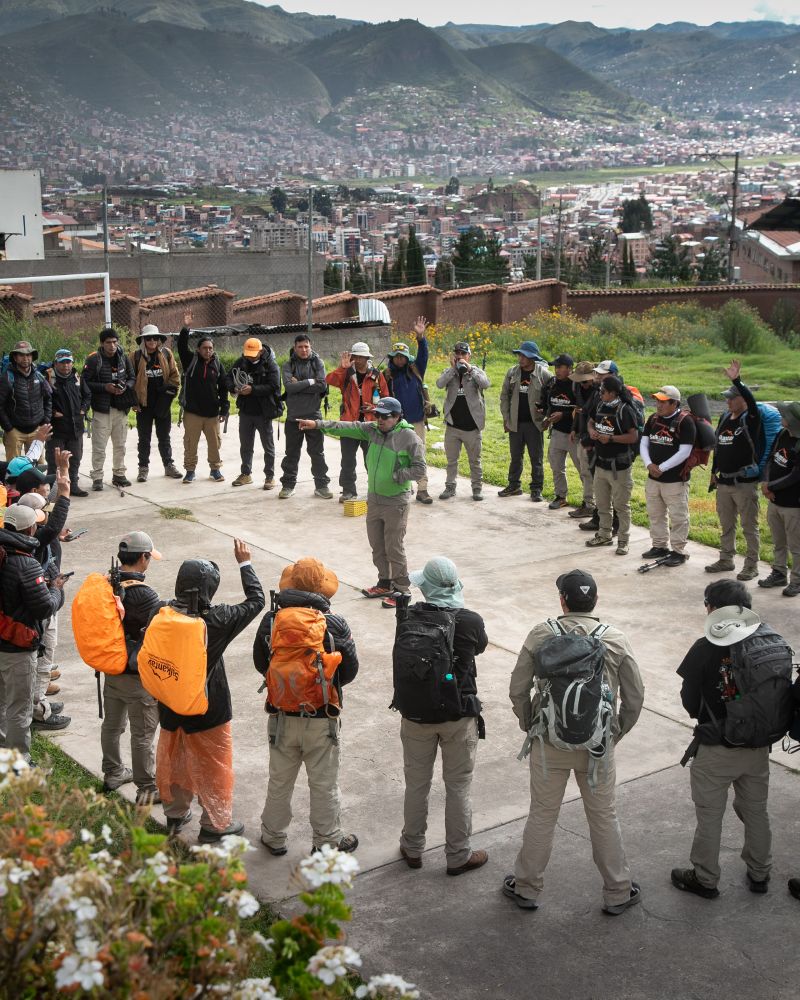
That’s why, at Salkantay Trekking, safety isn’t left to chance. In February 2026, more than 250 of our guides completed and passed the Wilderness Advanced First Aid (WAFA) certification, after five days dedicated entirely to training, practice, and evaluation. It was a clear decision: to pause our treks to focus on something that, for us, isn’t optional, it’s essential.
Table of contents
- Why do you need trained guides for trekking in Peru?
- The Reality of Hiking in Remote Areas
- The Training of Our Guides
- How does this training help in the event of emergencies on the trail?
- Why is this important for your trip to Machu Picchu?
- More than just guides, your safety team in Cusco
- You may also be interested in:
Why do you need trained guides for trekking in Peru?
Trekking in Cusco isn’t just about walking. It’s about entering vast landscapes, crossing mountains, feeling the altitude, dealing with sudden weather changes, and navigating trails that, while beautiful, can also be demanding.
That’s part of its magic.
Places like Salkantay, Ausangate, or the Inca Trail captivate travelers because they take you through unique landscapes, many of which are far from cities, major roads, or medical facilities. That sense of adventure and disconnection is exactly what so many travelers seek. But it also means that, in the mountains, the preparation of the team really matters.
That’s where aqualified guide makes all the difference.
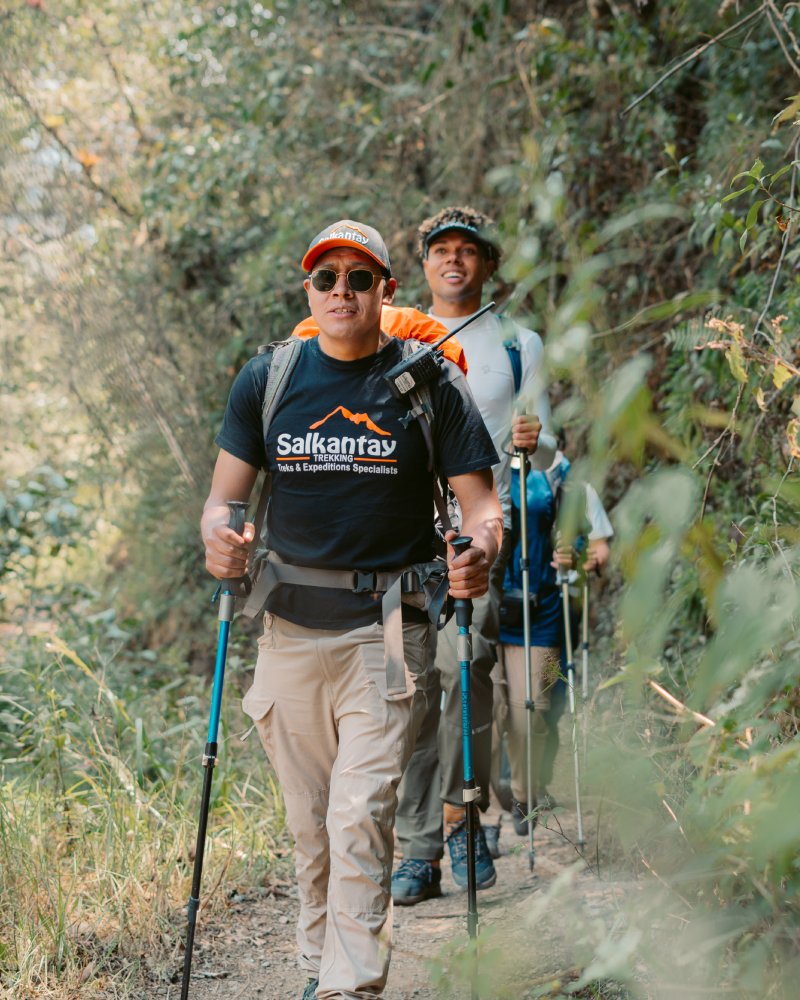
A great guide doesn’t just know the trail. They also understand the group’s pace, read the environment, recognize signs of fatigue or discomfort, and know how to act if something changes suddenly. They can help you enjoy the scenery more, explain the history behind each route, and, at the same time, take care of what matters most: your safety.
Because, no, not all guides are the same.
Many have valuable mountain experience, but when a company decides to invest in ongoing training, international certifications, and real-world training for remote environments, the level changes. And you can feel that on the trail: in how they accompany you, in how they prevent problems, and in how they react when every minute counts.
Without a trained guide, a demanding trek can turn into a stressful experience. With a highly trained guide, that same route becomes what it should be: a safe, well-accompanied, and truly memorable adventure.
What Makes a Truly Qualified Guide?
A truly qualified guide isn’t distinguished by a single trait, but by the combination of several.
Training and Certifications
A professional guide must undergo continuous training. Certifications in remote emergency response enhance their ability to respond and allow them to act with greater judgment in situations where help isn’t immediately available.
Real-world experience on the trail
Studying isn’t enough. A good guide has spent time in the mountains many times. They know the terrain, the weather changes, the demands of each section, and the best way to support people with different paces.
Knowledge of mountain first aid
On high-altitude routes, exhaustion, dehydration, falls, altitude sickness, or respiratory problems can occur. A trained guide knows how to assess the situation, provide initial care, and decide what to do next.
Clear and calm communication
In the mountains, conveying a sense of security is crucial. A good guide explains things clearly, gives simple instructions, listens, observes, and makes the traveler feel supported at all times.
The Reality of Hiking in Remote Areas
Cusco is an extraordinary paradise for many types of travel. It is filled with glaciers, open mountains, cloud forests, rainforests, turquoise lakes, rivers, and farmlands. Add to that a deep cultural richness and archaeological sites that make every trail a much more complete experience. All of this creates a sense of freedom hard to find elsewhere in the world. It’s no surprise that, in recent years, Cusco has established itself as a dream destination for explorers, hikers, and mountain lovers.
But that same beauty also comes with its own challenges. In many cases, the weather changes without warning, and the environment can become demanding even for experienced travelers. And while that natural beauty is part of what makes Cusco so special, it also requires being well-prepared.
On many of Cusco’s trekking routes, especially in high mountains, the altitude places greater demands on the body. The cold can sap a person’s energy. The heat of the day, accumulated exertion, and fatigue also play a role. Furthermore, the terrain does not always allow for a quick evacuation. And if something happens, the first response does not depend on a nearby ambulance, but on the team that is with you at that moment.
That is precisely what sets first aid in remote locations apart from care in urban settings: assistance may be delayed, available equipment may be limited, and the rescuer must make decisions with greater autonomy.
Furthermore, the human body needs few things to function properly, but it truly needs them: oxygen, water, food, and warmth. When one of these fails in a demanding environment, the problem can escalate quickly. That’s why, in the mountains, preparation is not a luxury. It is an essential part of any serious and responsible operation.
The Training of Our Guides
At Salkantay Trekking, we believe that safety cannot be improvised. It is built. It is studied. It is practiced. And it is improved upon every year.
That is why we strive to train our guides according to international standards designed for responding in remote environments. In February 2026, our team achieved Wilderness Advanced First Aid (WAFA) certification, a training program in advanced first aid for remote environments. It prepares guides to respond to emergencies when medical help is not nearby.
The training was conducted in Peru by the Kausay Rescue School, a partner of AIDER, and culminated in the assessments required to obtain WAFA certification, which is part of the Wilderness Emergency Care (WEC) program. This program is designed for those who work or lead activities in areas far from the medical emergency system.
And what does this mean?
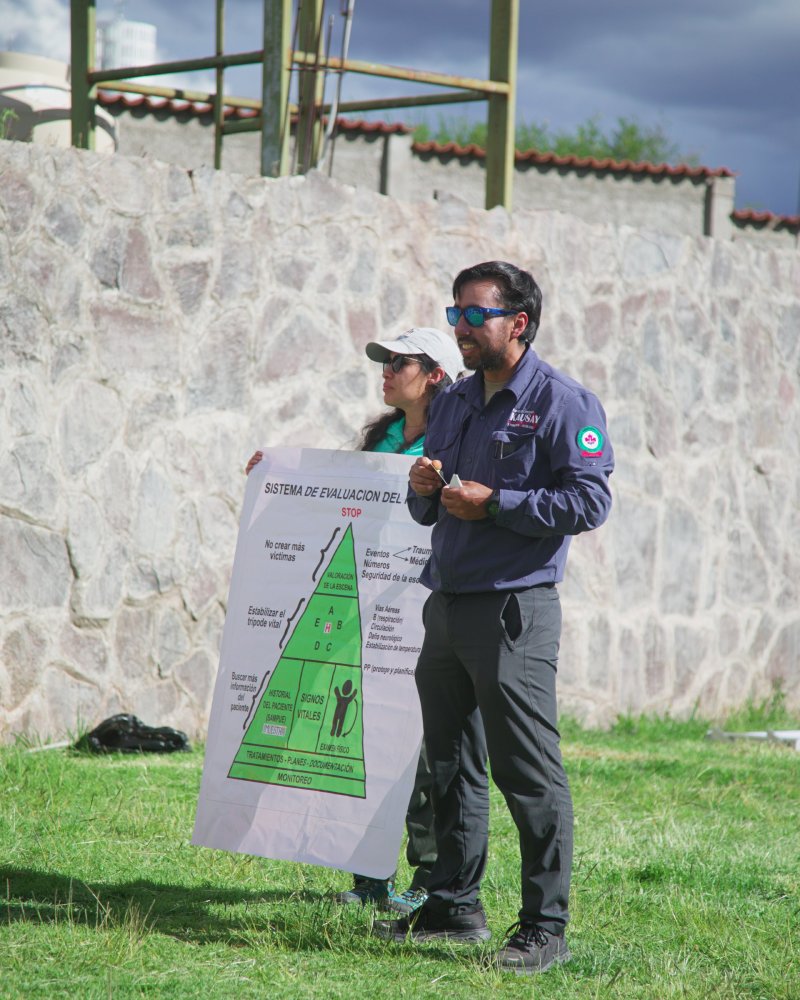
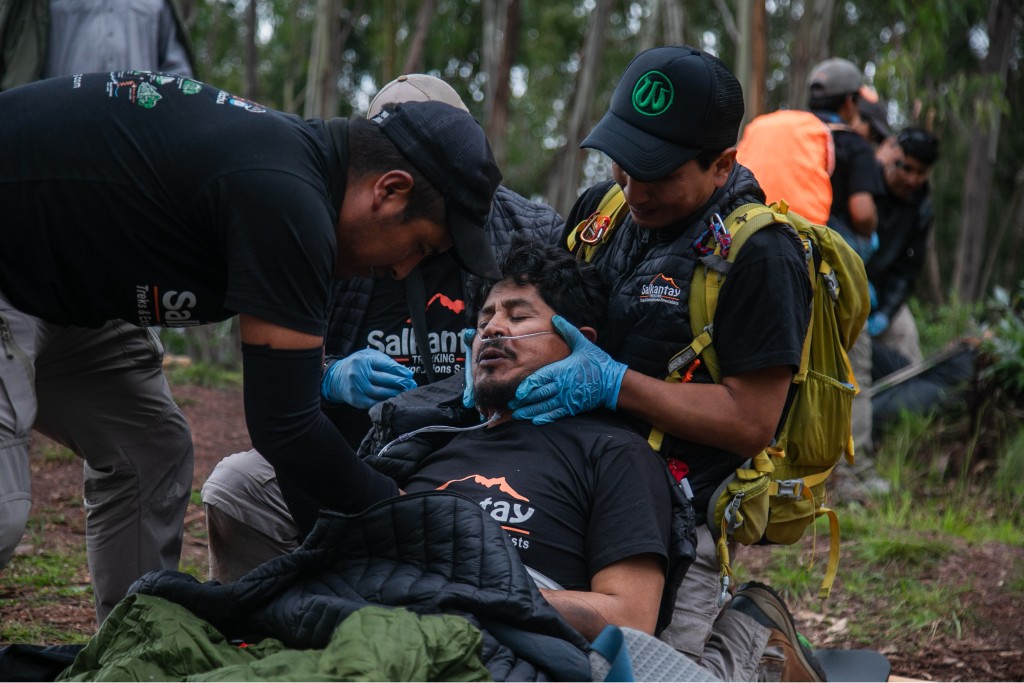
It means that our guides don’t just know how to lead a hike. They are also prepared to recognize an emergency, assess a person, act quickly, stabilize them, and make sound decisions until help arrives or, if necessary, initiate a safe evacuation. In accordance with this training, the curriculum includes victim assessment, traumatic injuries, sudden illnesses, environmental emergencies, and improvisation techniques in the field.
Behind this training lies a solid foundation in how the human body works. To properly care for a victim, in this case, the first responder our guides must understand the body’s structure, its functions, and how its systems respond to injuries, oxygen deprivation, dehydration, or physical stress in people of different ages and physical conditions.
This process was neither quick nor superficial. For five full days, our guides took a break from their trail trips to focus entirely on this training, participating in theoretical sessions, practical exercises, and the assessments required to obtain their certification. That preparation time reflects the true value we place on safety and the professional standards of our team.
As a company, this certification elevates our level of preparedness for remote routes. And, more importantly, it reflects something we aim to sustain over time: continuous improvement.
Today, more than 250 guides who are part of this family not only participated in this training, they completed it and passed the assessments required to obtain their certification. That sets a real standard on every route.
How does this training help in the event of emergencies on the trail?
In the mountains, the difference isn’t always visible in a photo. Sometimes it’s in a small detail: a guide who notices before anyone else that a hiker is losing energy, getting too cold, or that their breathing no longer sounds normal.
WAFA training prepares you precisely for that: to observe better, assess faster, and act with greater judgment. The manual teaches you to analyze the scene, detect risks, check breathing, circulation, and neurological status, and decide whether a person can continue, needs monitoring, or must be evacuated.
That makes a huge difference on an actual route.
A well-trained guide can recognize the signs of exhaustion, dehydration, shock, respiratory problems, or acute mountain sickness earlier. They also know how to control bleeding, immobilize injuries, treat burns, respond to allergic reactions, and handle environmental emergencies such as hypothermia or exposure to the cold.
But it’s not just about reacting after something has already happened. It’s about prevention. The training makes it clear that many situations are predictable and avoidable, and that education and planning are fundamental to mountain work.
That’s why this training has a real impact on how we operate our tours:
- We assess travelers more effectively along the way
- We strengthen team communication
- We carry a first-aid kit and oxygen during the trek
- We improve our response and coordination systems
- We support and monitor the group along the way
- We continue to refine tools like long-range radios and satellite phones for field communication.
Why is this important for your trip to Machu Picchu?
Most travelers don’t book a trek with an emergency in mind. And that’s okay. It’s normal to think about the thrill of the journey, the scenery, the personal challenge, and arriving at Machu Picchu.
But that’s precisely why it’s so important to choose your companions wisely.
When you travel with a well-prepared team, you not only have support if something unexpected happens. You also have someone who knows how to anticipate problems, manage the pace, maintain the group’s energy, and help you before a rough patch turns into a serious issue.
That means hiking with greater confidence.
It means knowing that, even if you’re in one of the most beautiful and remote corners of Peru, you’re not alone. It means that someone is paying attention to how you’re feeling, how you’re breathing, how much effort you’re putting in, and when you need support. It means you can focus on enjoying the experience, because there’s a team behind the scenes that’s already taken care of everything important for you.
And on a trek to Machu Picchu, that makes a huge difference to the experience.
What should a traveler check before booking a trek in Cusco?
Before choosing a route, it’s not enough to just look at pretty pictures or compare prices. On a trek through remote areas, there are details that can make a big difference in your experience and your safety. Here are some key points worth checking before booking:
Team Training
Make sure the guides have proper training to handle situations in the mountains, especially on remote and demanding routes where medical help isn’t always nearby.
First-aid kit and oxygen on the trail
It’s important to know if the agency or tour operator carries equipment to respond quickly to any incident along the way, such as a first-aid kit and oxygen.
Evacuation protocol
Not all operators have the same level of organization. It’s worth asking how they handle situations where a traveler needs assistance, immediate medical attention, or evacuation.
On-site communication
In remote areas, communication can make all the difference. Having radios or other coordination systems makes a huge difference in the event of any unforeseen circumstances.
Meals During the Trek
It’s also a good idea to ask about the meals provided during the trek. Hot, varied, and well-planned meals help maintain your energy levels and promote better recovery. On the other hand, basic, cold, or inadequate meals can affect your performance and even cause discomfort. Additionally, it’s important to know if the tour operator can accommodate special dietary needs, such as vegan options or allergy restrictions.
Equipment and Comfort
Rest is key to recovering well and walking better the next day. On high-altitude routes, nights are usually colder, so it’s worth checking the accommodations, tents, and equipment provided. Comfort is also part of a good experience.
Group Size
It may seem like a minor detail, but it isn’t. Smaller groups usually allow for more personalized attention and better control during the hike. When the group is too large, it’s harder for a single guide to attend to everyone with the same level of care.
Responsible Practices and Sustainability
Sometimes, certain tours seem much cheaper than the rest. But when you dig a little deeper, you discover that those low prices may hide poor working conditions, excessive working hours, or irresponsible environmental management. A good operator takes care of its team, respects the mountain, and properly manages its waste.
Permits and Legality
This is crucial, because you’ve been dreaming about your trip, you arrive, and the experience could turn out to be a nightmare because the agency didn’t secure your tickets, they tell you about extra charges, you end up spending more to fix mistakes in your trip arrangements, and if you’re really unlucky, you arrive and the company doesn’t even exist
Important note: To hike the Inca Trail, only formally registered and authorized companies are permitted to operate on this route.
Reviews on platforms
Checking real reviews from travelers who have already trekked with that company can be very helpful. There, you can see how they were treated, whether the service lived up to expectations, and how the company handled real-life situations.
Choosing wisely doesn’t mean traveling with fear. It means traveling with greater confidence, knowing that behind the experience lies a responsible operation and a well-prepared team.
More than just guides, your safety team in Cusco
In the mountains, the value of an experience goes far beyond the price.
There are things you don’t always see on a list or in a photo, but which can make all the difference: the team’s preparation, the actual experience on the trail, attention to detail, and genuine care for every member of the group.
That’s what we want to offer.
We don’t just want to sell a hike. We want to share an authentic, safe, and well-guided experience in a place we call home.
We’re a team from Cusco. We know these mountains; we grew up looking at them and hiking them, and we have a deep respect for them. That’s why, for us, showing this destination isn’t just a job, it’s a responsibility and a source of pride.
Behind every route lies constant preparation. We educate ourselves, train, and strive to improve every year. Because we believe that the experience isn’t measured solely by the landscape, but also by how you feel along the entire journey.
We want you to hike with peace of mind. To trust us. To know that there’s an attentive, prepared, and committed team with you every step of the way.
More than just guides, we are people who love what we do and who want you to discover the mountains in a safe, intimate, and authentic way.
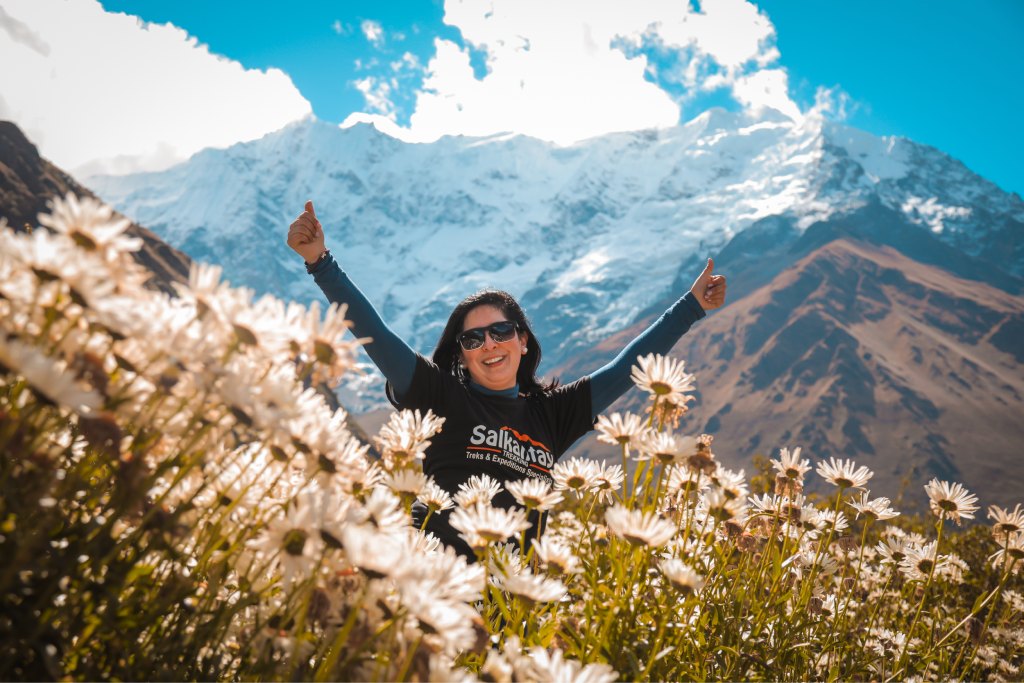
You may also be interested in:
- More than 250 team members strengthen their skills at Salkantay Trekking’s 2026 training program
- 13th anniversary of Salkantay Trekking, building experiences
- Inside the ‘Salkantay, I Want You Clean Cleanup Campaign
- Salkantay Trekking: World Travel Awards
Written by: Hillary Quispe




Leave A Reply