
The Inca Trail is one of the best trekking routes in the world, combining spectacular landscapes, a fascinating history, and a challenging adventure.
Following in the footsteps of the Incas to the wonder of Machu Picchu is a unique experience. Every path tells a story and transports you to the heart of a lost civilization in the Peruvian Andes, making the Inca Trail one of the most sought-after routes for travelers visiting Peru.
Due to its popularity and the Peruvian government’s commitment to protecting the area, tickets for the Inca Trail to Machu Picchu are limited and sell out quickly. If you’re planning your adventure in Cusco, here we explain everything you need to know to secure your spot on this unforgettable hike.
Table of contents
- What Is the Inca Trail?
- The Classic Inca Trail
- Inca Trail Variations
- The Best Time to Buy Tickets
- What to see on the Inca Trail
- What Will I See in Machu Picchu Entering Through the Inca Trail?
- Permits for the Inca Trail, a protected route
- How to buy tickets for the Inca Trail
- How to Choose Your Travel Agency
- What Does the Inca Trail Ticket Include?
- What Are Your Options If Tickets Are Sold Out?
- Frequently Asked Questions about the Inca Trail
- You may also be interested in:
What Is the Inca Trail?
The Inca Trail is South America’s most famous hiking route and one of the top five in the world. It forms part of the Qhapaq Ñan, the ancient 60,000 km (37,000 mi) Inca road network that once connected Peru, Ecuador, Colombia, Bolivia, Chile, and Argentina. The trail combines history, culture, and adventure through stunning Andean landscapes, attracting thousands of people each year eager to experience the wonder of Machu Picchu.
The Classic Inca Trail
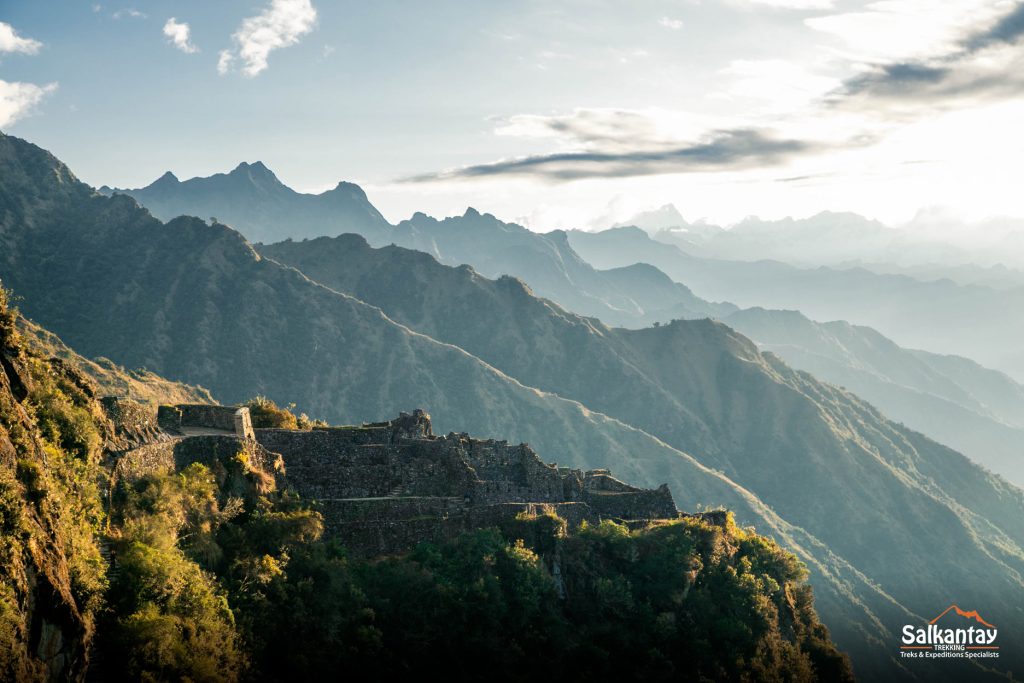
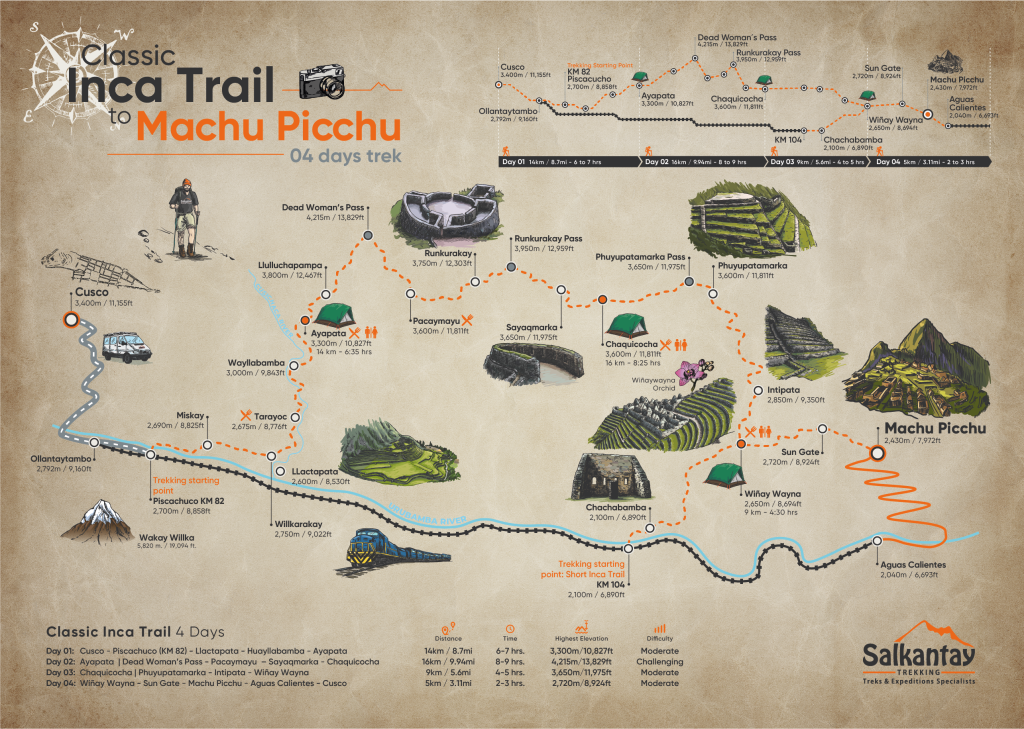
The Classic Inca Trail—4 days and 3 nights—is the best way to experience Machu Picchu for the first time. It covers 44 kilometers (27.3 miles) of the historic Qhapaq Ñan, starting at kilometer 82 and ending at the Sun Gate (Inti Punku in Quechua), the original entrance to the citadel of Machu Picchu.
It has a moderate level of difficulty. The highest point is Warmiwañusca Pass, at 4,224 m (13,858 ft), known as “Dead Woman’s Pass.” The lowest point is at the Machu Picchu citadel, at around 2,400 m (7,874 ft).
Learn more about the detailed daily itinerary and updated prices for the Classic Inca Trail to plan your trip efficiently.
Inca Trail Variations
Different versions of the Inca Trail allow you to complete the route in less time or even combine it with other treks, such as the Salkantay route. Below are the most popular Inca Trail options:
- 1-Day Inca Trail: Hike the final stretch of the original Inca Trail, entering Machu Picchu directly through the Sun Gate.
- 2-Day Short Inca Trail: Perfect for those short on time. Includes a hike through archaeological sites like Wiñay Wayna and a guided visit to Machu Picchu.
- Salkantay + Short Inca Trail (6 days): Combines the adventure of the challenging Salkantay Trek with the final section of the Inca Trail, offering diverse landscapes.
- Salkantay + Classic Inca Trail (7 days): One of the most complete and exclusive routes. It traverses from the snowcapped Salkantay mountain to the Classic Inca Trail, blending the best of both worlds before reaching Machu Picchu.
Both the 1-Day and 2-Day Inca Trail options require a permit to access the trail, though the cost is lower than the classic 4-day route.
The Best Time to Buy Tickets
You should book your Inca Trail tickets as soon as possible, as it is a high-demand route, and spots sell out quickly.
- Low season (November – April): You can book 4 to 5 months in advance since there are fewer tourists.
- High season (May – October): It is essential to book at least 6 months in advance, as demand is much higher.
The high season coincides with the dry season in Cusco—the ideal time to travel thanks to clear skies and a low chance of rain, allowing you to fully enjoy the stunning scenery of the Inca Trail. However, due to high demand, advance planning is essential to secure a spot on this unique experience, as permits sell out quickly.
Important: The Inca Trail is closed throughout February due to maintenance and conservation work.
 The Inca Trail
What to see on the Inca Trail
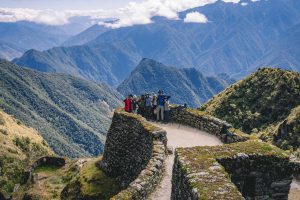
The Classic Inca Trail is a very special adventure that will take you to see unique and unparalleled places. BThe Classic Inca Trail is a very special adventure that will take you to see unique and unparalleled places. Before reaching Machu Picchu, you will pass through breathtaking archaeological sites, each with a unique history. Many are located in remote and inaccessible areas, making you feel truly privileged to explore them.
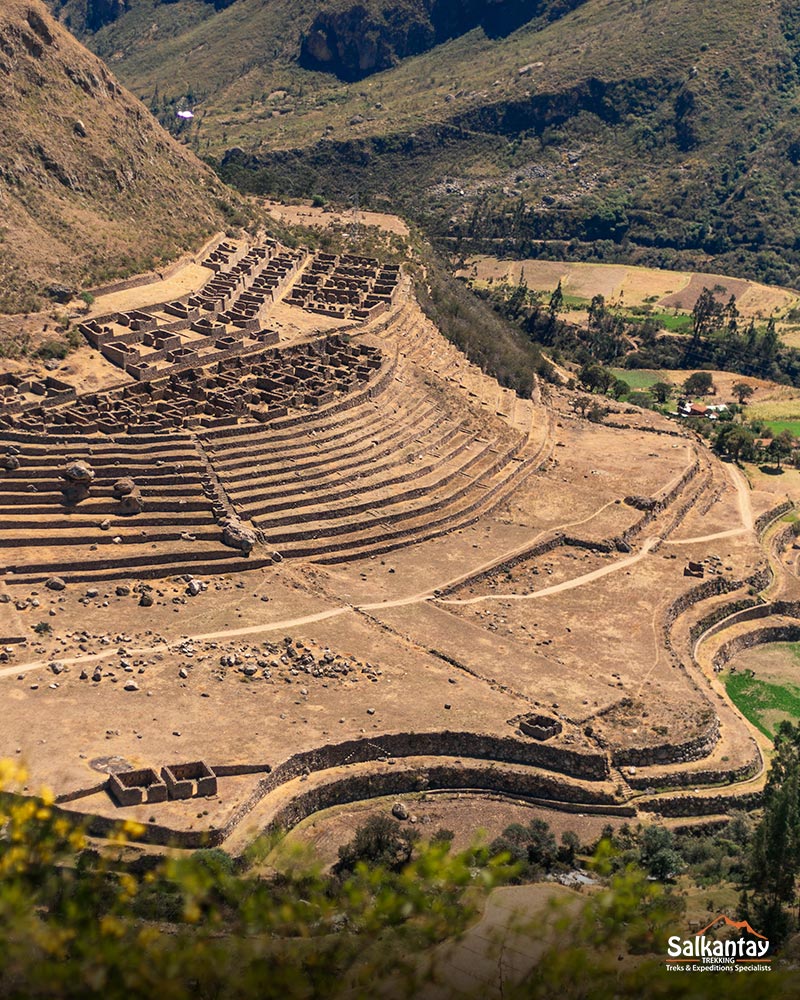
- Llactapata: An ancient Incan agricultural center with impressive terraces and panoramic views of the Sacred Valley.
- Runkurakay: A mysterious semicircular structure on top of a hill, offering stunning views of the surrounding mountains.
- Sayacmarca: Known as the “Inaccessible Town” due to its location on a ridge. Built on a cliff, it features impressive walls and unique views.
- Phuyupatamarca: Called the “City Above the Clouds,” this archaeological complex has ceremonial fountains and mist-covered terraces.
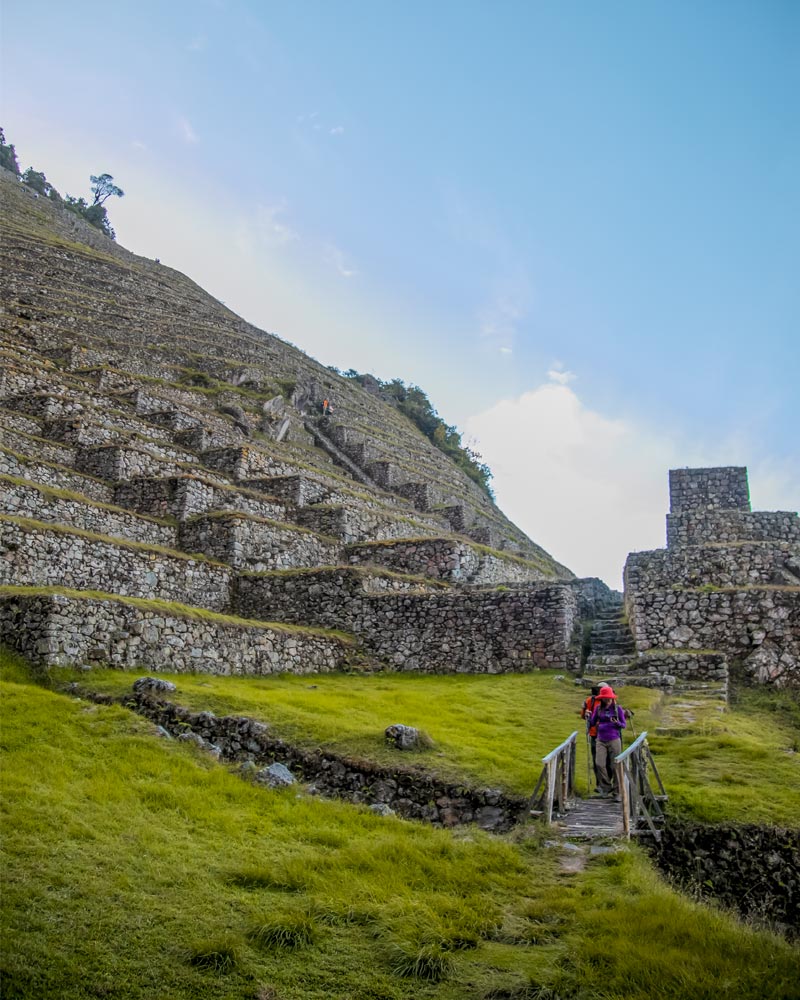
- Intipata: A series of agricultural terraces with a privileged view of the valley, showcasing the Incas’ advanced knowledge of high-altitude farming.
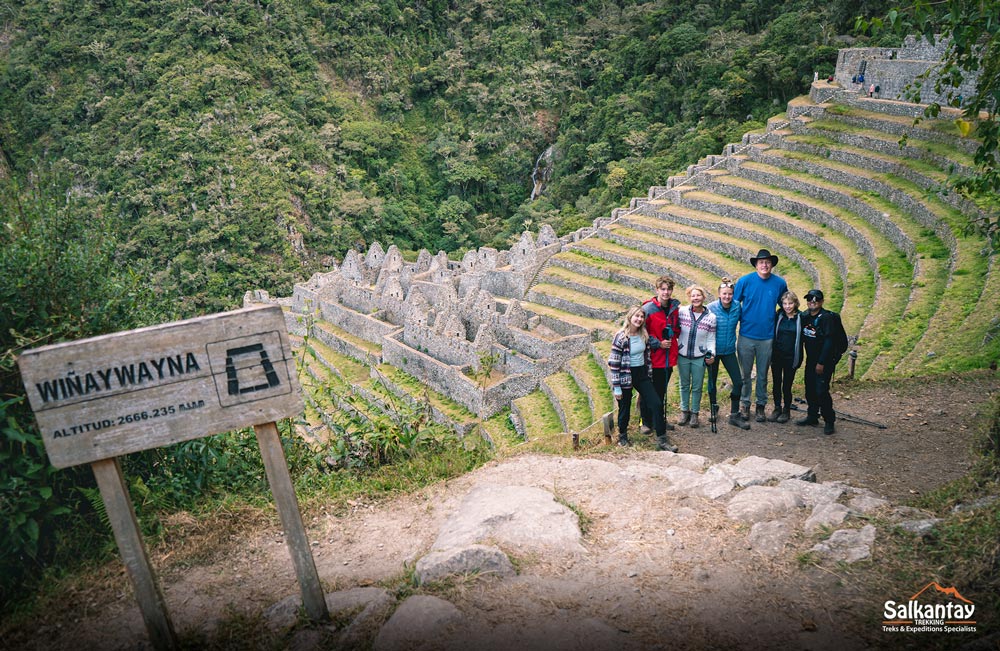
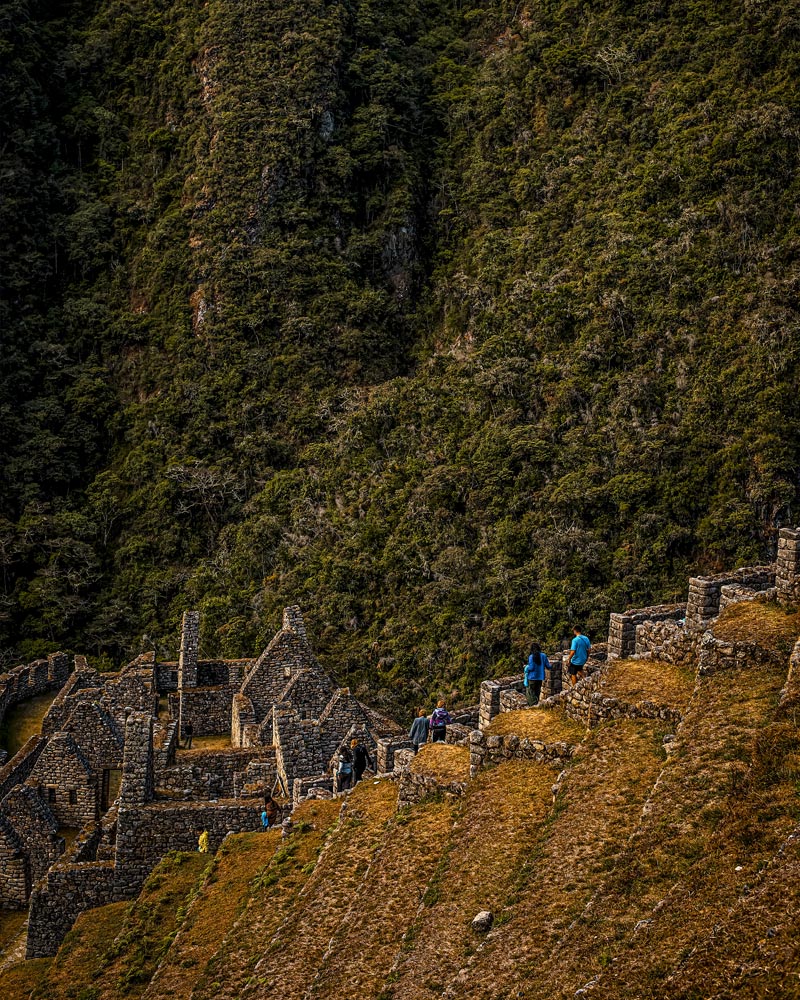
- Wiñay Wayna: An Incan site with stepped terraces and temples, known as “Forever Young” for its beauty and proximity to Machu Picchu.
- Inti Punku: The majestic Sun Gate, the final entrance to Machu Picchu from the Inca Trail, where travelers get their first breathtaking view of the citadel.
- Machu Picchu: Discover one of the wonders of the world! The jewel of the Inca Empire, an astonishing stone city hidden among mountains, holding the secrets of an ancient civilization and dazzling with its architecture and mysticism.
Each of these archaeological sites along the Inca Trail adds a special chapter to your journey before reaching Machu Picchu.
What Will I See in Machu Picchu Entering Through the Inca Trail?
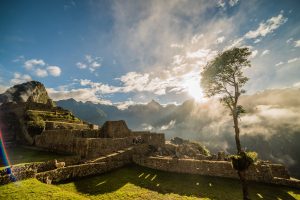
By hiking the Inca Trail, you will arrive at Machu Picchu through the same entrance the Incas once used: Inti Punku, the Sun Gate.
From this point, you will witness the sunrise and admire one of the Seven Wonders of the World for the first time. The fortress of Machu Picchu awaits you with all its magic, surrounded by the towering mountains of Huayna Picchu and Machu Picchu. This is an incomparable reward after the hike. After passing through Inti Punku, you’ll ascend to the highest platform of the citadel to take in the view.
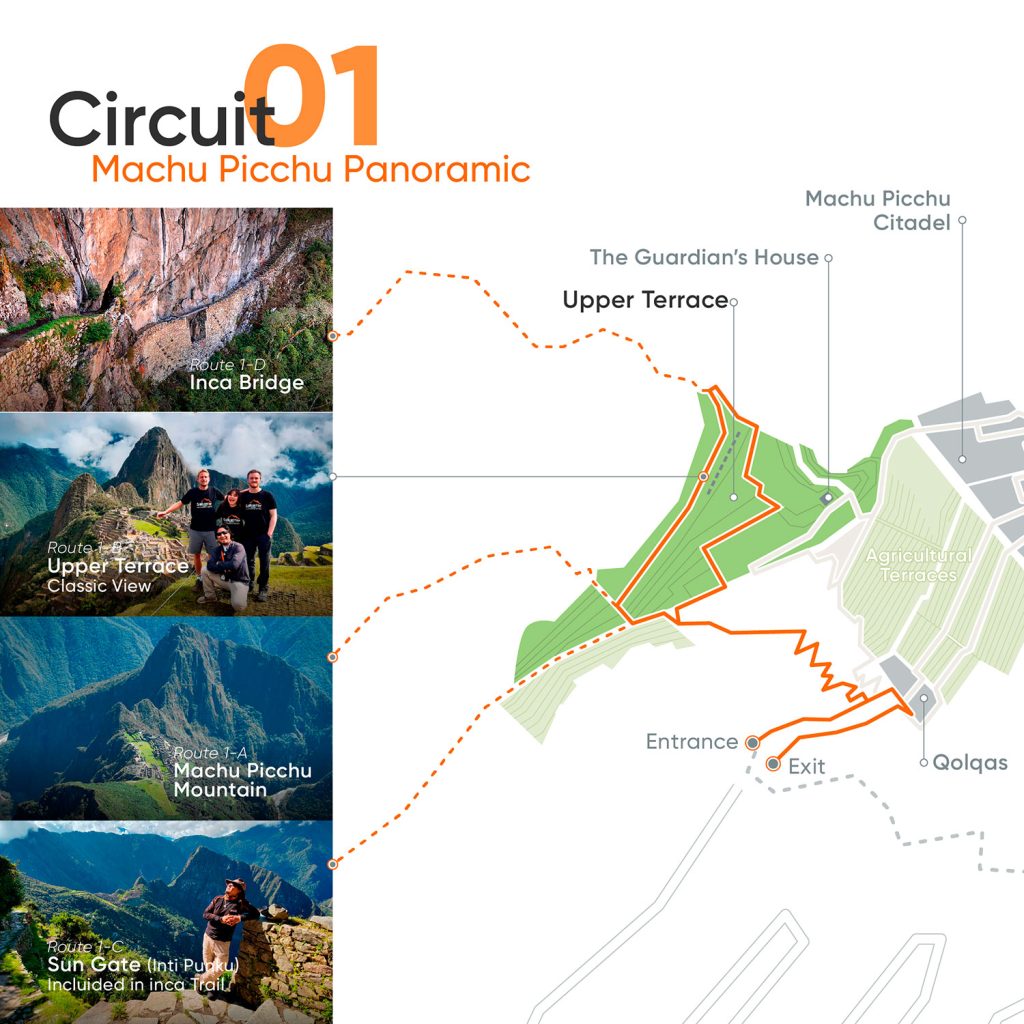
The itinerary within Machu Picchu with Salkantay Trekking includes Circuit 1 – Panoramic, a route that offers a spectacular view of the citadel with the Huayna Picchu and Huchuy Picchu mountains in the background, creating a truly impressive setting. This tour does not require great physical effort, so you can enjoy and appreciate this Wonder of the World at your own pace; however, remember that this circuit does not include access to the mountains of Machu Picchu or the internal sectors of the citadel.
If you want to explore the fortress more deeply or climb the mythical mountains of Huayna Picchu, Huchuy Picchu, or Machu Picchu Mountain, you’ll need an additional ticket. The other routes are subject to availability and come at an extra cost. Contact us for more information about this additional service well in advance to avoid missing out on your tickets.
>>>For more information, read our blog about tickets to Machu Picchu.
Permits for the Inca Trail, a protected route
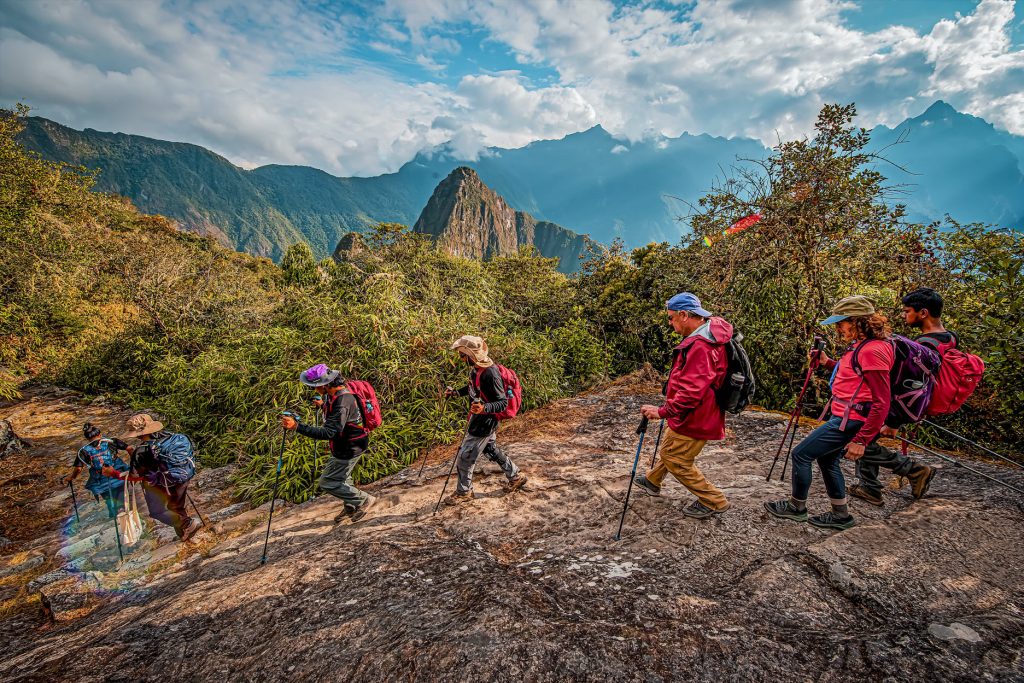
If you are planning your trip to Cusco, you should know that you cannot enter the Inca Trail on your own, as access is strictly regulated. All reservations must be made through an authorized travel agency or tour operator. This iconic route to Machu Picchu is supervised by the Ministry of Culture of Peru and SERNANP (National Service of Natural Protected Areas), which grant certified agencies the exclusive permission to sell tickets and manage entry.
Access is limited to only 500 people per day to protect this unique environment. This also includes the agency staff who accompany tourists along the trail: guides, porters, and cooks. The number of tourist spaces is reduced to approximately 200 per day, and since it’s one of the most popular routes in Peru, they sell out quickly. That’s why it’s important to book in advance.
Permits for the Inca Trail go on sale in October, before the start of the year, giving enough time to purchase them. That means that permits for the Inca Trail in 2026 will go on sale in October 2025.
IMPORTANT: Buying your Inca Trail tickets is one of the first things you should do when planning your trip to Peru. Contact a certified and reliable company like Salkantay Trekking, as we will take care of securing your permit and ensuring everything is in order for your adventure.
How to buy tickets for the Inca Trail
It’s normal to have questions about how to buy tickets for the Inca Trail. We’ll explain the process step by step so you can book your adventure without complications.
Steps to Follow
Booking your ticket for the Inca Trail may seem complicated, but with these steps, it will be incredibly easy for you:
1. Contact the travel agency
Only authorized agencies can manage permits for the Inca Trail. At Salkantay Trekking, we have extensive experience and a strong reputation, and we will be happy to help you organize the trip of your dreams.
2. Choose the Date and Check Availability
Tickets for the Inca Trail include various options (see the section on Inca Trail Variations). You can also add additional services, such as visits to the mountains of Huayna Picchu, Huchuy Picchu, and Machu Picchu.
Depending on your time in Cusco and your personal preferences, you can choose the option that best suits you. However, it is important to remember that permits are subject to availability, so booking in advance is recommended.
Tip: Check the Inca Trail availability in real time to plan your adventure to Machu Picchu.

3. Book in Advance
Inca Trail reservations open in October of the previous year, and it is recommended to book 6 months in advance, especially for high-season dates (May to October).
4. Send Your Personal Information
Provide your information exactly as it appears on your valid passport:
- Full name
- Passport number
- Nationality
- Date of birth
It is important to ensure that the information on your passport matches your reservation. If you renew your passport before the trip, you must inform the agency to avoid issues at the access checkpoint. Other than that, no changes can be made to the tickets, as they are personal and non-transferable.
Important: If your passport expires within 6 months prior to your Inca Trail hike, be sure to renew it before coming to Peru.
5. Prepare your trip
With good preparation, you will fully enjoy this adventure to Machu Picchu.
- Documentation: Make sure all your personal documents are in order before traveling.
- Acclimatization: When you arrive in Cusco, it is important to set aside at least two days to acclimate to the altitude. We recommend engaging in calm activities, staying well-hydrated, and maintaining a light diet.
- Physical condition: Prepare for the hike by doing cardio and strength exercises to improve your endurance.
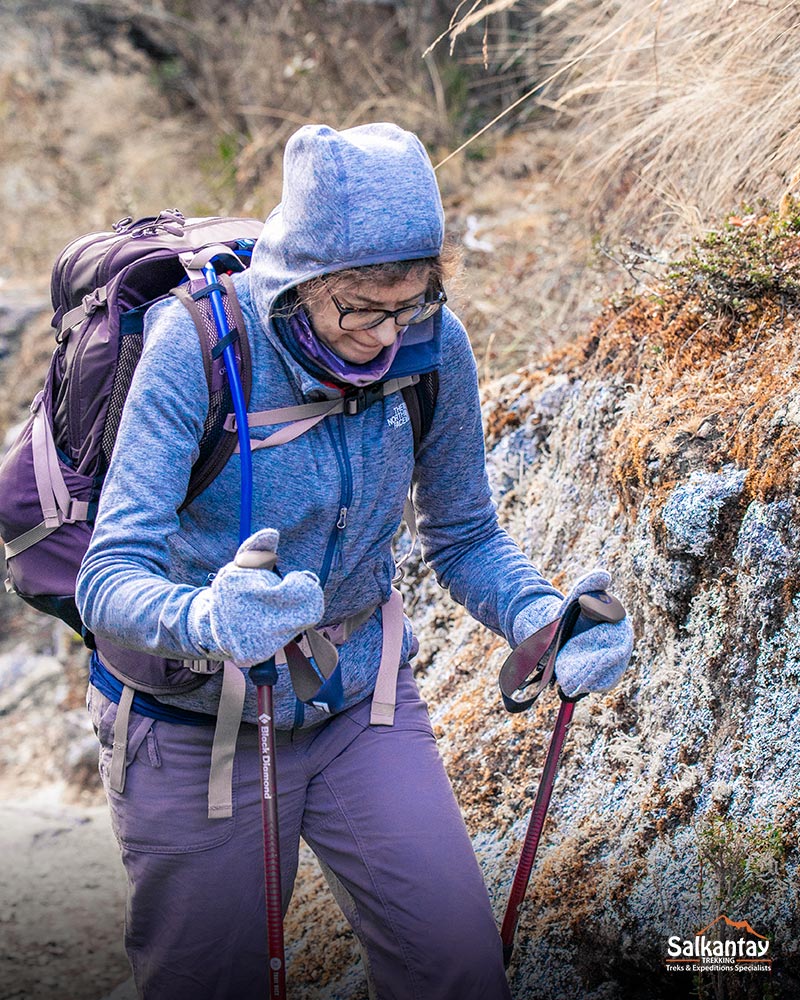
- Gear: Finally, bring proper trekking equipment – layered clothing, hiking boots, a rain poncho, sunscreen, and insect repellent.
Tip: Read our blog for more information on what to wear for the Inca Trail.
How to Choose Your Travel Agency
A good travel agency stands out for several essential factors that ensure a safe, authentic, and memorable experience:
- Reputation and reliability
- Extensive experience
- Quality services
- Highly trained staff
- Commitment to responsible tourism
- Responsibility towards its collaborators
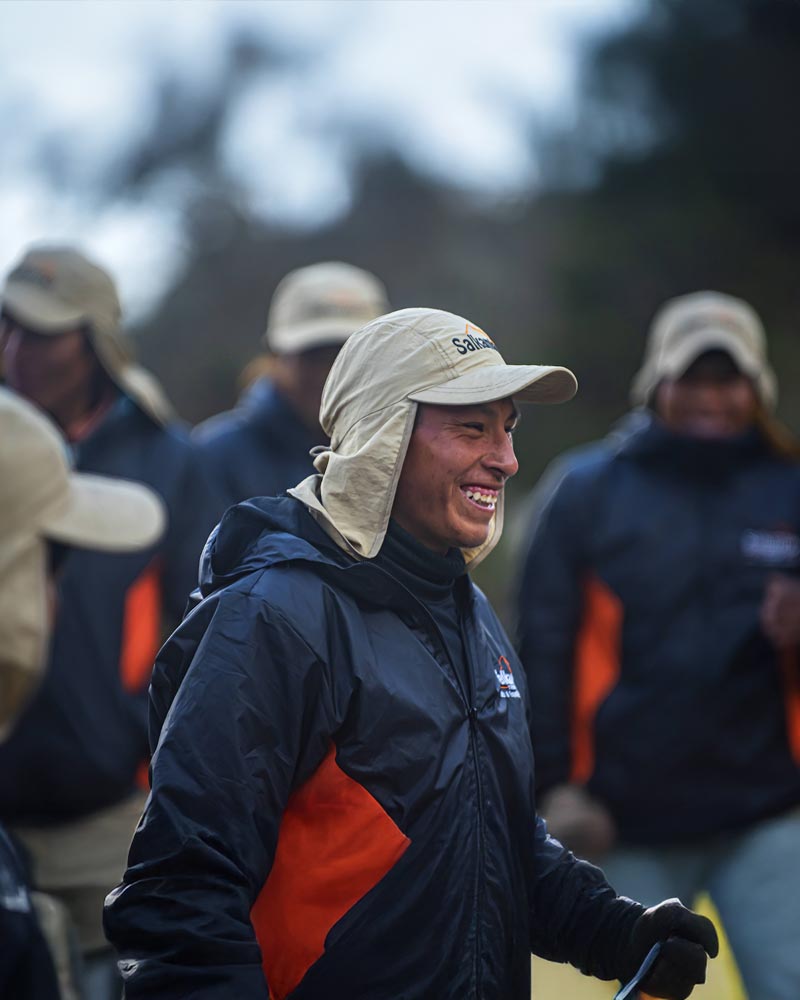
We believe that all these elements are fundamental. That’s why we make sure to apply them in every adventure. We strive to provide an unforgettable experience, offering comfort, safety, and quality to our travelers. Our team is made up of local experts from Cusco who know the routes, and we promote their continuous training for their professional development and growth. We assure you that they will provide you with excellent service before, during, and after your trip.
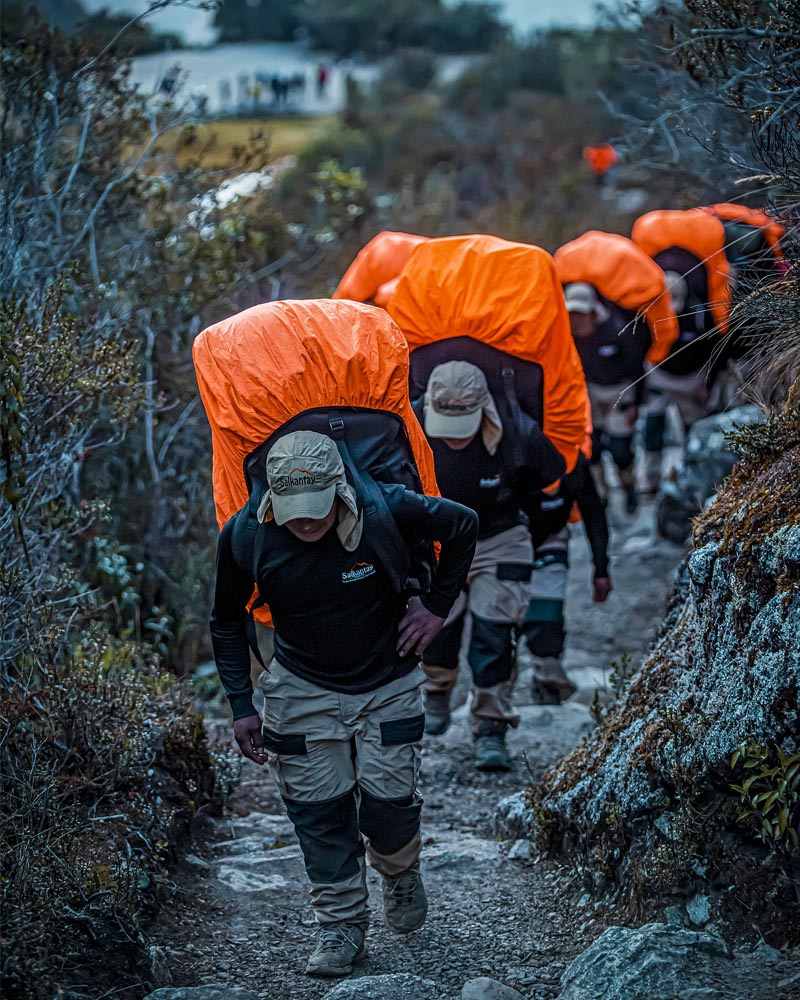
Additionally, we strictly adhere to the Porter Law, a key aspect of responsible tourism. Porters play a crucial role on the Inca Trail, carrying the tourists’ belongings and the camping equipment of the tour agencies. For this reason, we are committed to ensuring fair working conditions, respecting the maximum allowed weight (men: 44 pounds; women: 33 pounds), appropriate working hours, and their overall well-being, preventing any risk to their health.
What Does the Inca Trail Ticket Include?
When booking with an agency like Salkantay Trekking, we will be responsible for purchasing your permit. Additionally, the Inca Trail tour includes:
- Permit for the Inca Trail
- Entrance to Machu Picchu
- Private transportation from your hotel to the starting point of the hike
- Return train ticket from Machu Picchu to Ollantaytambo (in the Sacred Valley), and private transportation back to Cusco.
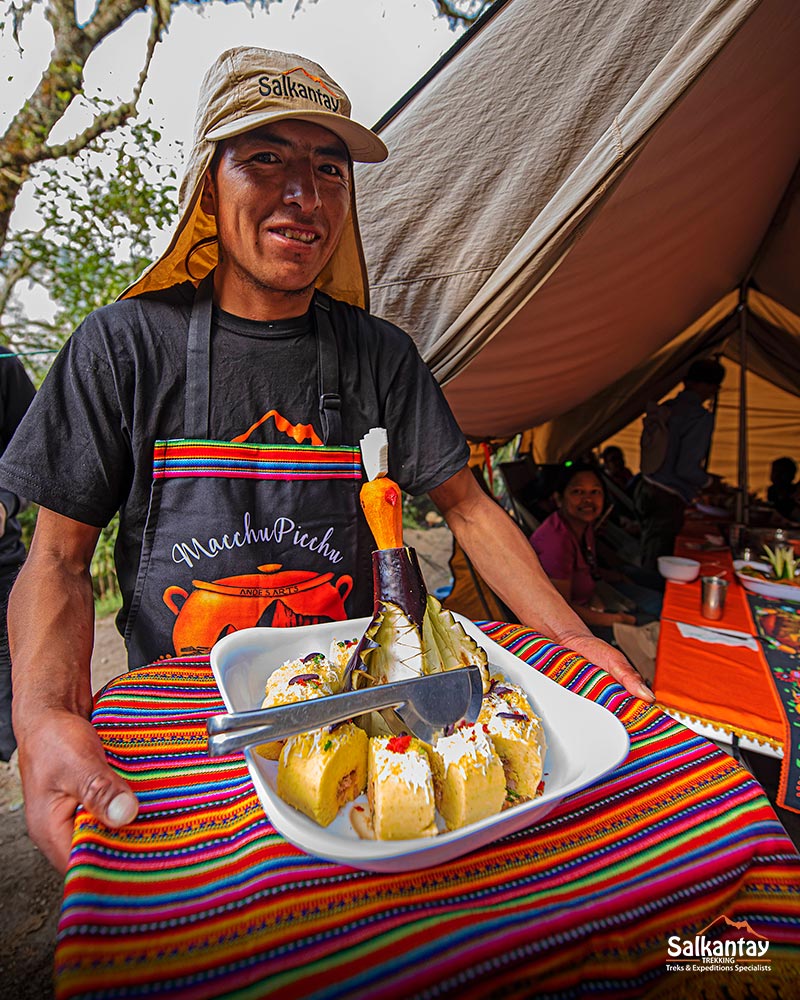
- Camping and meals (see our camping equipment).
- Cook and professional guide
- All meals during the trek, adapted to your needs or special requirements.
- Porter service
- Medical or first aid kit
These services guarantee a safe and well-organized experience on the Inca Trail 2026. Once your ticket is confirmed, you can forget about the paperwork and focus on preparing for your new adventure.
REMEMBER: The Inca Trail ticket is non-refundable and non-transferable.
Therefore, it is essential to book with a certified agency, ensuring a safe, legal, and hassle-free process. You must also be certain about your travel dates at the time of booking and ensure that your personal information is correct and matches the details on your valid passport.
What Are Your Options If Tickets Are Sold Out?
If you didn’t manage to get a permit for the Inca Trail, not all is lost. There are alternative routes to Machu Picchu, each offering stunning landscapes and unique experiences.
Alternative Routes to Machu Picchu
- Inca Jungle: Pure adventure! Ideal for adrenaline lovers. This route combines mountain biking, hiking, rafting, and zip-lining. You will visit the archaeological site of Llactapata and finish your journey at Machu Picchu.
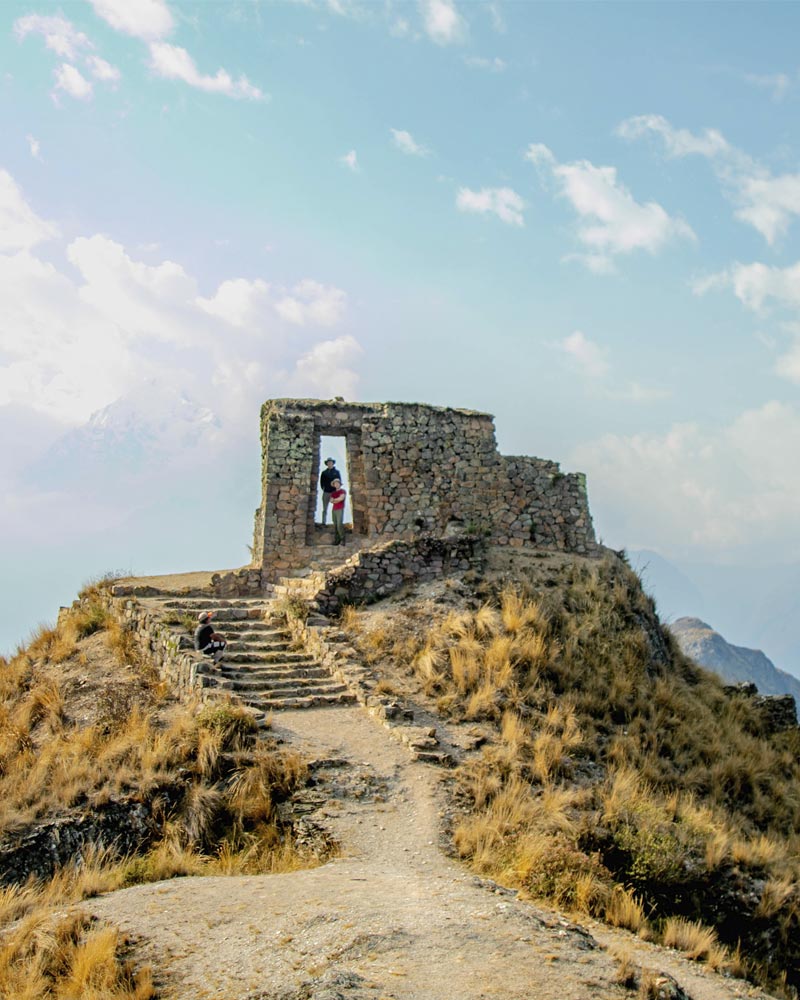
- Inca Quarry: A lesser-known route that passes through ancient Inca quarries and beautiful waterfalls. It features Inti Punku, a gateway with stunning views of Verónica Mountain. You will arrive in Aguas Calientes by train to enjoy Machu Picchu at a relaxed pace.
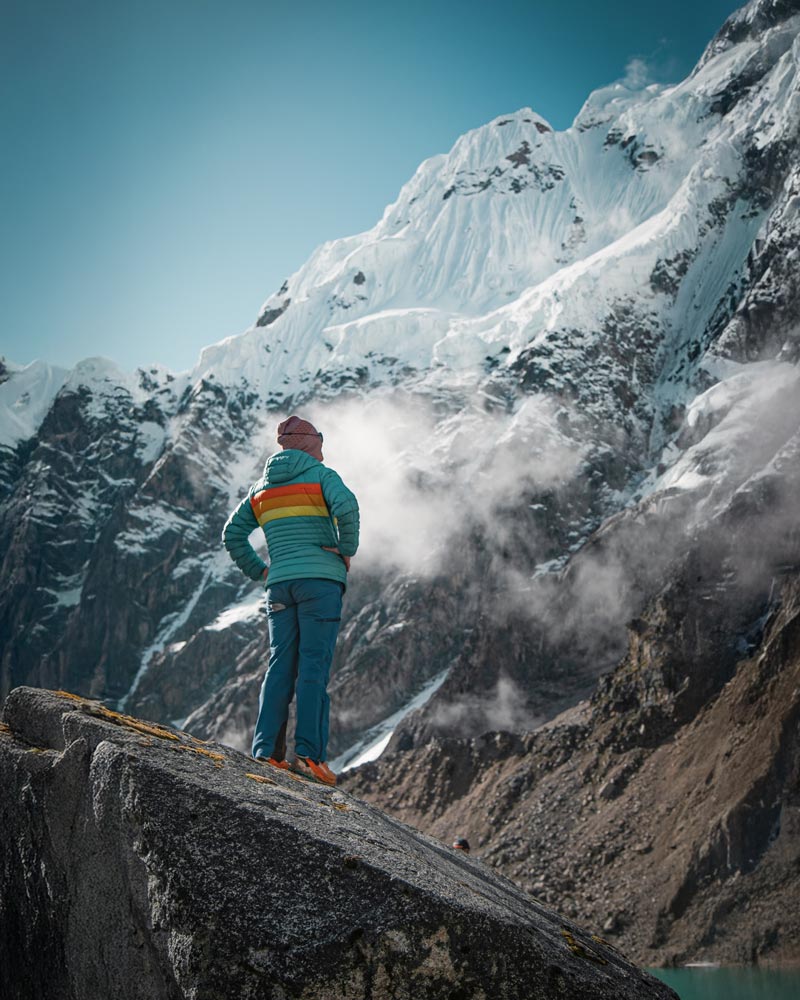
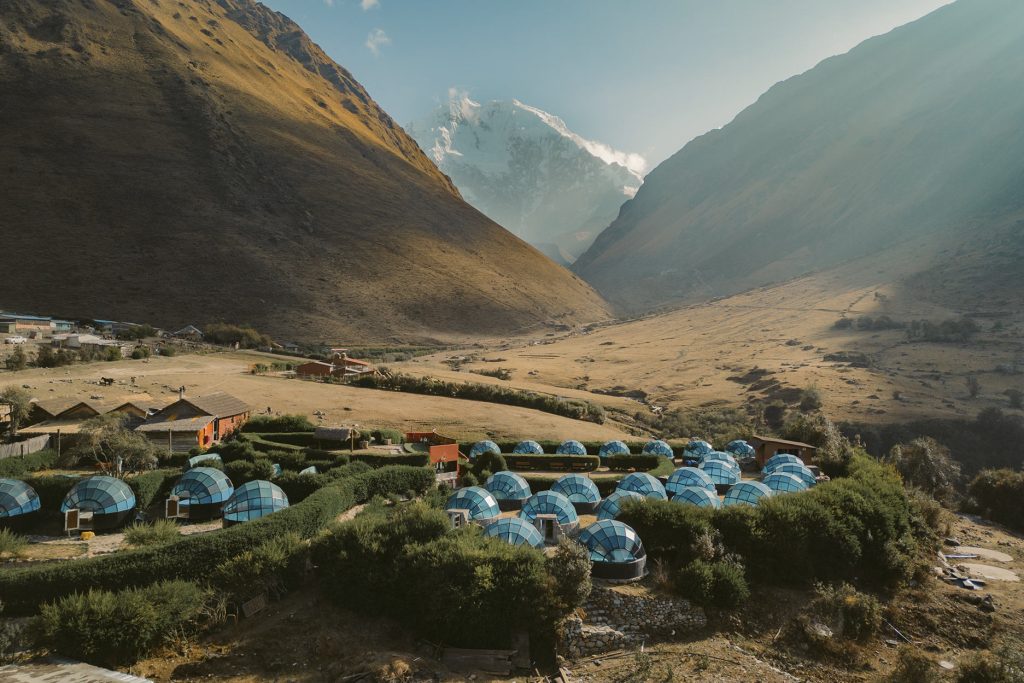
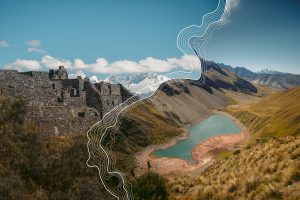
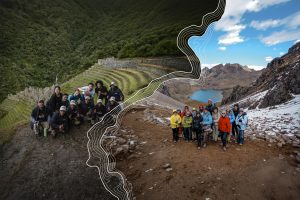
- Salkantay: Discover breathtaking landscapes of snow-capped mountains, turquoise lagoons, and high jungle. Enjoy a comfortable experience in the exclusive campsites of Salkantay Trekking. You will visit Machu Picchu on the last day of the trip, enjoying the site at a relaxed pace.
- Lares: A cultural experience that immerses you in traditional Andean communities, lets you see Andean wildlife, and explore remote trails. After visiting the Maras salt mines, you will reach Machu Picchu comfortably by train.
- Ancasocha: A challenging trek with spectacular panoramic views that takes you to Machu Picchu through paths with fewer tourists and a mix of mountain landscapes and green valleys.
- Huchuy Qosqo: A shorter and easier hike that takes you to this beautiful Inca archaeological site, offering stunning views before descending into the Sacred Valley. After visiting the small town of Lamay, you will finally head to Machu Picchu.
Remember: Although these routes don’t require a special permit, they are still subject to the availability of entrance tickets to Machu Picchu. That’s why we also recommend booking in advance.
Frequently Asked Questions about the Inca Trail
1. How many kilometers is the Inca Trail?
A total of 44 km / 27.34 miles. It takes 4 days to complete the route, and the daily distances are:
- Day 1: 14 km / 8.7 miles in 6.5 hours of hiking.
- Day 2: 16 km / 9.94 miles in 8.5 hours of hiking.
- Day 3: 9 km / 5.6 miles in 4.5 hours of hiking.
- Day 4: 5 km / 3.11 miles in 2.5 hours of hiking.
2. What is the highest point?
The highest point on the Inca Trail is at 4,215 meters / 13,829 feet at the Warmi Wañusca Pass (Dead Woman’s Pass).
3. How difficult is the Inca Trail?
The Inca Trail has a moderate to challenging difficulty due to changes in altitude, steep steps, and uneven terrain. Good physical condition and prior preparation are required to fully enjoy the experience.
4. Can a beginner hike the Inca Trail?
Yes, although training for Hiking in Cusco before your trip will be essential. If you are not used to hiking or walking long distances for several days, we recommend that you train and prepare yourself physically and mentally for the Inca Trail.
5. When is the best time to hike the Inca Trail?
The best time to hike the Inca Trail is from May to October (dry season), when there is less rain and clear skies. It is recommended to book months in advance due to high tourist traffic. Remember: the Inca Trail closes in February for maintenance.
6. Where do you sleep on the Inca Trail?
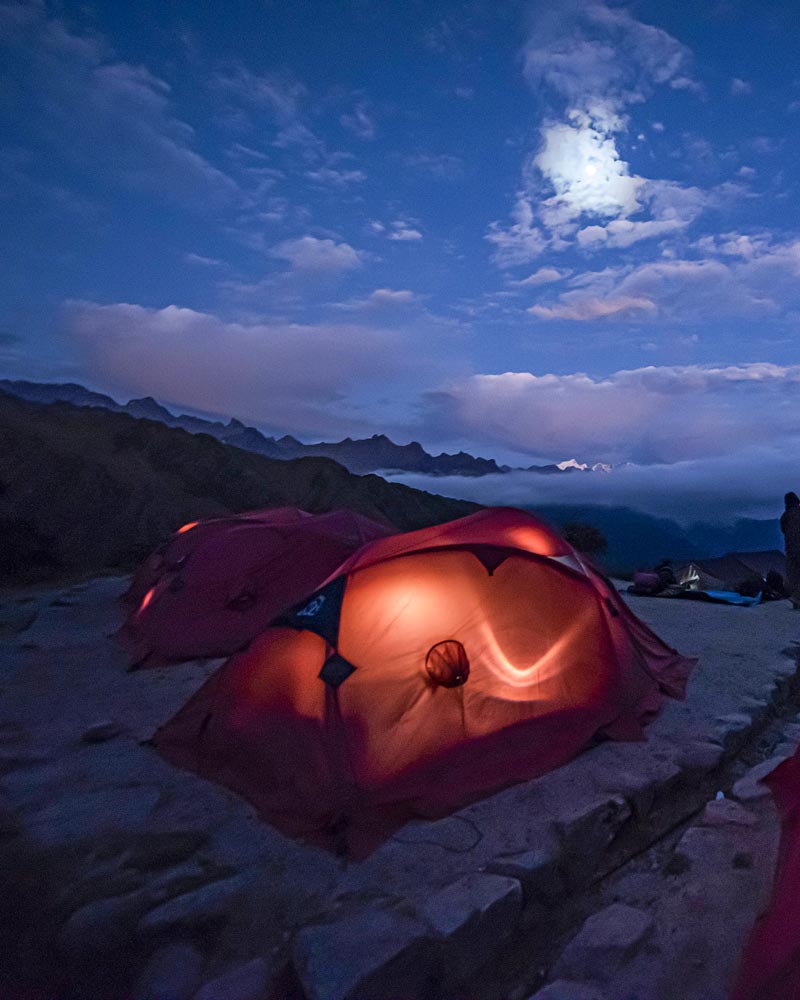
Throughout the route, you will sleep in tents at campsites evenly distributed along the trail. Don’t worry! Travel agencies provide quality camping equipment to ensure your comfort along the route.
7. Are there bathrooms on the Inca Trail?
Yes, the Inca Trail has bathrooms, although they are limited and offer only basic services. On the third day of the route, there are showers, but they are scarce and do not have hot water. For this reason, tour agencies usually provide portable toilets exclusively for the group. However, it is recommended that you bring toilet paper, wet wipes, and hand sanitizer to ensure proper hygiene during the tour.
8. What to pack for the Inca Trail?
To hike the Inca Trail, you’ll need:
- Hiking gear: Backpack, trekking shoes, water bottle, headlamp, sleeping bag, and trekking poles. If you don’t have a sleeping bag or poles, you can rent them from us.
- Hiking clothes: Breathable shirts, sweater, waterproof jacket, underwear and sports socks, cap or hat.
- Personal items: Sunscreen, insect repellent, small towel, swimsuit, toilet paper, wet wipes, personal medication.
- Electronics: Camera, phone, power banks, charger.
Read our blog on essential gear for the Inca Trail to learn more.

You may also be interested in:

Leave A Reply