Trying to decide between the Inca Trail vs Inca Jungle Trek?
You’re not making an easy choice.
Both routes end at Machu Picchu. Both take you through some spectacular scenery. Both will leave you with tired legs and far too many photos of mountains on your phone.
But the experience along the way is completely different.
The Inca Trail is Peru’s most famous trek. It’s all about history, ancient pathways, impressive ruins, and arriving at Machu Picchu through the Sun Gate (Inti Punku).
The Inca Jungle Trek takes a very different approach. Instead of spending four days focused entirely on hiking, you’ll throw mountain biking and other adventure activities into the mix and travel through everything from high Andean landscapes to jungle-like valleys.
One route feels like stepping back into the world of the Incas.
The other feels like someone looked at a normal trek and thought, “This needs more adventure.”
So which one is right for you? Let’s take a look.
Table of contents
- Inca Trail vs Inca Jungle Trek: Quick Comparison
- What Is the Inca Trail?
- What Is the Inca Jungle Trek?
- Which Trek Is More Difficult?
- Which Trek Has Better Scenery?
- Which Trek Offers More Adventure Activities?
- Which Trek Offers More Cultural and Historical Experiences?
- Which Trek Has Better Archaeological Sites?
- Which Trek Is Better for Machu Picchu?
- Crowds and Trail Atmosphere
- Permits, Availability, and Booking
- Altitude and Acclimatization
- Best Time to Hike the Inca Trail and Inca Jungle Trek
- Who Should Choose the Inca Trail?
- Who Should Choose the Inca Jungle Trek?
- Frequently Asked Questions
- Which Trek Should You Choose?
Inca Trail vs Inca Jungle Trek: Quick Comparison
If you’re standing in front of two browser tabs trying to make a decision, here’s the short version.
Inca Trail vs Inca Jungle Trek Comparison Table
| Feature | Inca Trail | Inca Jungle Trek |
|---|---|---|
| Duration | 4 Days / 3 Nights | 4 Days / 3 Nights |
| Distance | Approx. 44 km (27.3 miles) | Approx. 45 km (28 miles) |
| Final Destination | Machu Picchu | Machu Picchu |
| Maximum Altitude | 4,215 m (13,829 ft) | Approx. 4,350 m (14,272 ft) |
| Difficulty | Moderate to challenging | Moderate to challenging |
| Archaeological Sites | Many | A few |
| Adventure Activities | Hiking | Biking, hiking, and optional rafting and ziplining |
| Crowds | Higher | Lower |
| Permit Required | Yes | No |
| Guide Required | Yes | Recommended |
| Accommodation | Campsites | Lodge, private campsite, and hotel |
| Meals | 4 breakfasts, 3 lunches, 3 dinners, daily tea time, and snacks | 4 breakfasts, 3 lunches, 3 dinners, daily tea time, and snacks |
| Best For | History lovers | Adventure, biking, flexibility, and varied landscapes |
| Booking Notice | Often 4–8 months ahead | Can usually be booked much later |
What Is the Inca Trail?
If Peru had a trekking hall of fame, the Inca Trail would be front and center.
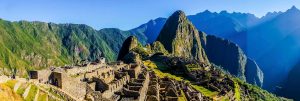
This is the route most people picture when they imagine hiking to Machu Picchu. Over four days, you’ll follow original Inca pathways through mountain passes, cloud forests, and a collection of archaeological sites before arriving at the Modern World Wonder itself.
It’s famous. It’s heavily regulated. And it’s one of the few treks in the world where the journey is arguably just as impressive as the destination.
The thing is, everybody knows it’s famous. That’s why permits disappear months in advance.
Flora, Fauna, and Landscapes on the Inca Trail
One of the best things about the Inca Trail is that the scenery is always changing.
You’ll spend one day surrounded by dramatic mountain peaks and the next walking through a cloud forest filled with orchids and hummingbirds.
It keeps changing just when you’ve got used to the environment.
That’s part of the reason people love it so much. The four days never feel repetitive.
Archaeological Sites on the Inca Trail
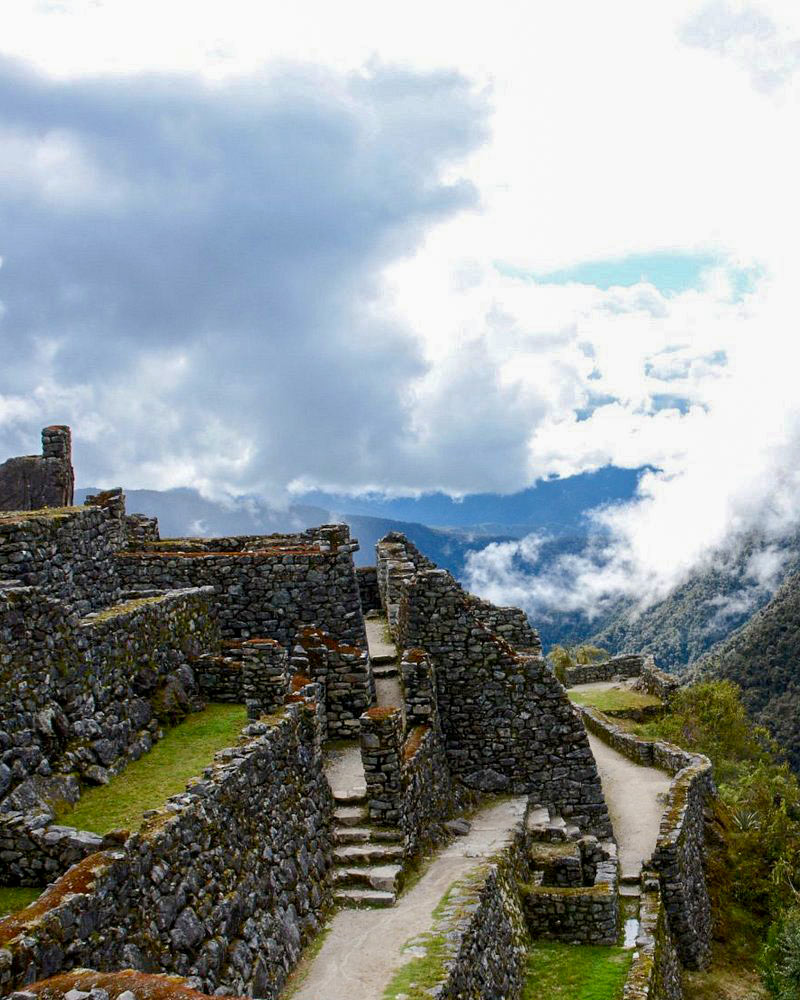
The archaeological sites are where the Inca Trail really separates itself from almost every other route to Machu Picchu.
Instead of spending four days simply walking toward the citadel, you’ll visit archaeological sites that many travelers to the country never get to see.
Highlights include:
- Patallacta
- Runkurakay
- Sayacmarca
- Phuyupatamarca
- Wiñay Wayna
- Inti Punku
By the time you reach Machu Picchu, you’ve already spent days learning all about Inca history.
When you enter the citadel, it feels more like the grand finale rather than the whole show.

What Are the Characteristics of the Inca Trail?
A few things set the Inca Trail apart from other Machu Picchu hikes, including:
- Original Inca stone pathways
- Multiple archaeological sites
- Arrival through the Sun Gate
- Diverse scenery
- Strict permit system
- Professional guides and porters
- Limited daily visitor numbers
If you’ve spent years dreaming about hiking to Machu Picchu, this is probably the route you’re hoping to take.
What Is the Inca Jungle Trek?
The Inca Jungle Trek is a little harder to describe because it doesn’t fit neatly into one category.
It’s not just a trek. It’s not just a biking tour. It’s not just an adventure trip. It’s a bit of all three.
The route starts high in the Andes before descending into warmer valleys closer to the edge of the cloud forest. Along the way, you’ll combine trekking with mountain biking and, depending on the itinerary, other adventure activities too.
Think of it as the Inca Trail’s slightly wilder cousin, with less history and more action.
Flora, Fauna, and Landscapes on the Inca Jungle Trek
The scenery changes quite dramatically throughout the route.
One morning, you’re standing among Andean peaks, feeling rather chilly. The next, you’re walking through lush green valleys filled with tropical vegetation, coffee farms, and rivers.
If variety is what you’re after, the Inca Jungle Trek doesn’t disappoint.
It feels like several different regions of Peru got squeezed into one trip.
Adventure Activities on the Inca Jungle Trek
This is where things start getting interesting.
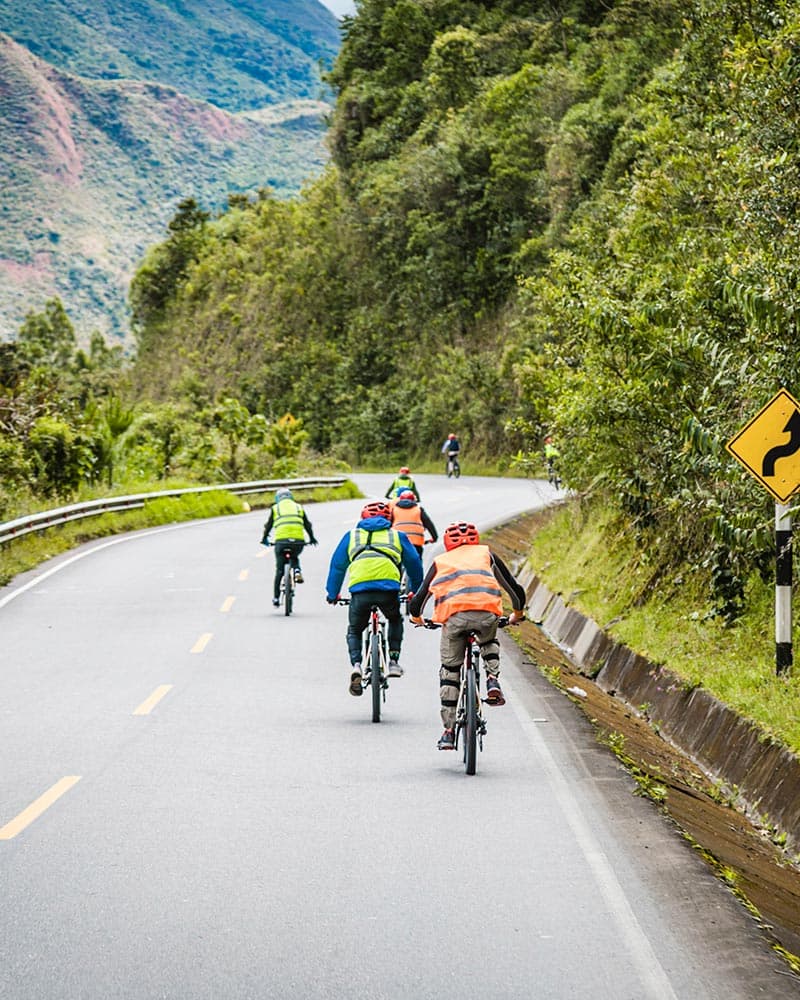
Most Inca Jungle itineraries begin with a long downhill mountain biking section through the Andes. You make your way down from a cold mountain pass and into the high jungle, with constantly changing scenery around you.
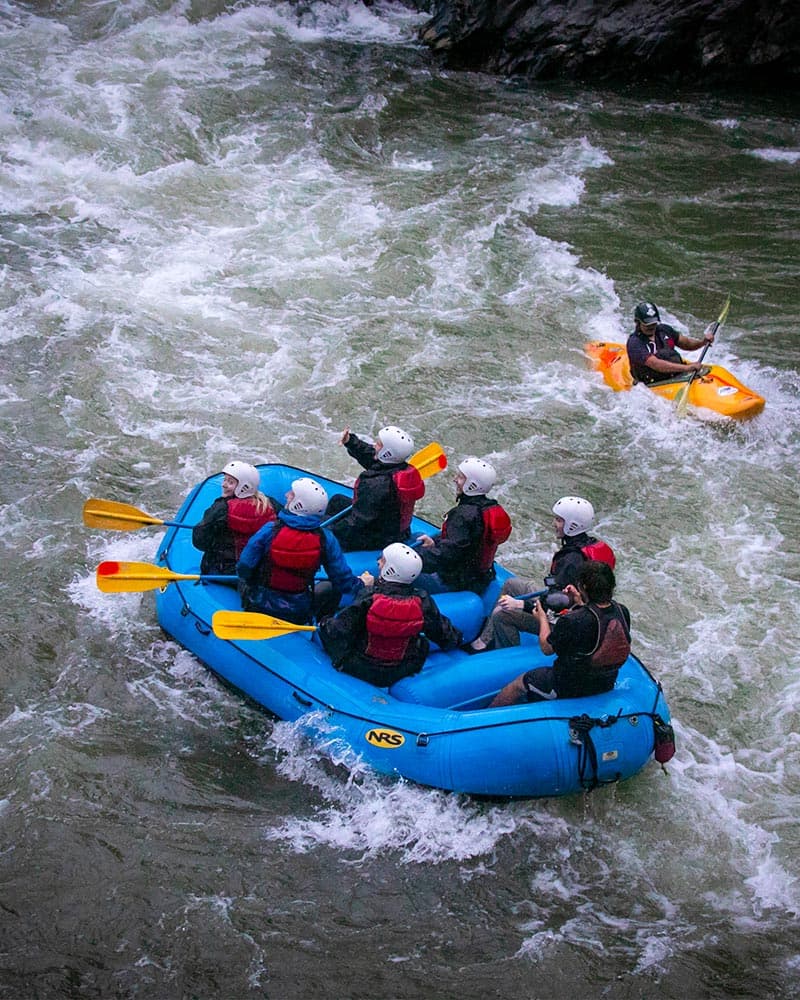
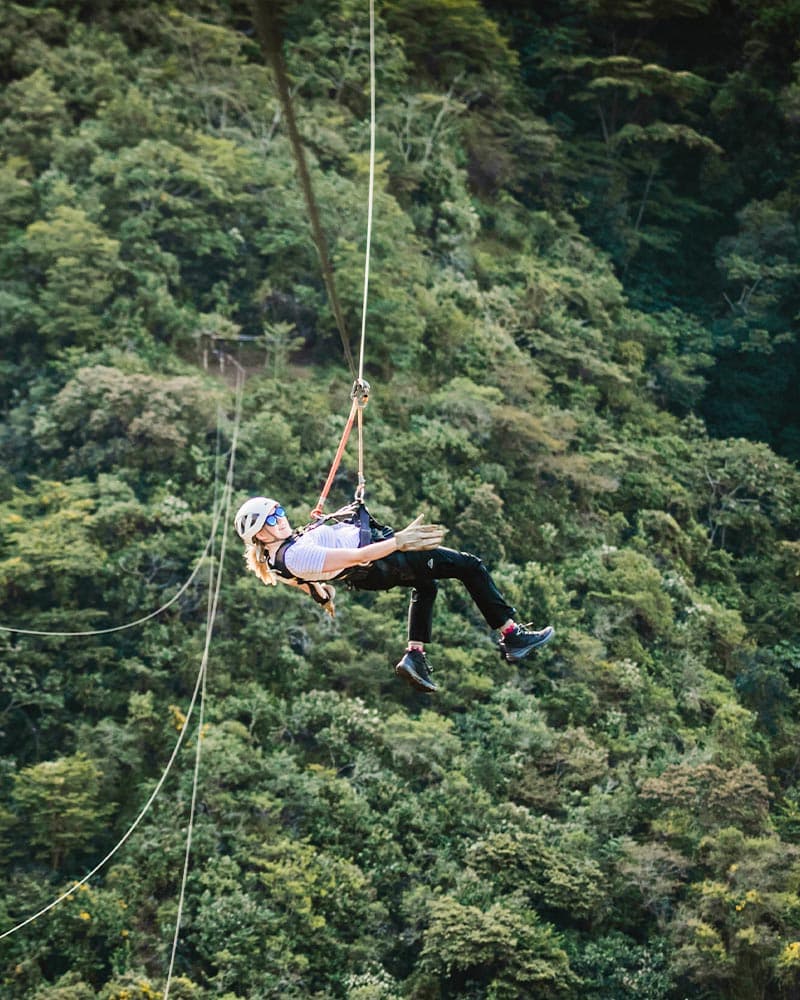
Depending on your package, you may also have the option to go rafting or ziplining along the way, plus enjoy a dip in the Cocalmayo Hot Springs.
The result is a route that feels completely different from a traditional Machu Picchu hike.
Some people love that.
Others would rather spend four days looking at ruins.
Fortunately, Peru has options for both types of travelers.

What Are the Characteristics of the Inca Jungle Trek?
Some of the things travelers love about the Inca Jungle Trek include:
- Mountain biking
- Trekking
- Rafting
- Ziplining
- Hot springs
- No permit requirements
- Easier booking availability
- Smaller crowds
- Lodges, private campsites, and hotels instead of standard camping
- Diverse landscapes
It’s one of the most fun and flexible ways to reach Machu Picchu.
Which Trek Is More Difficult?
Let’s deal with the question everyone asks.
Neither trek is easy.
If they were, they probably wouldn’t be nearly as memorable.
But the challenge varies greatly depending on which route you choose.
Inca Trail Difficulty
The Inca Trail is usually considered the tougher option.
Not because it’s longer, but because it involves a lot of climbing, a lot of descending, and what sometimes feels like an unlimited number of stone steps.
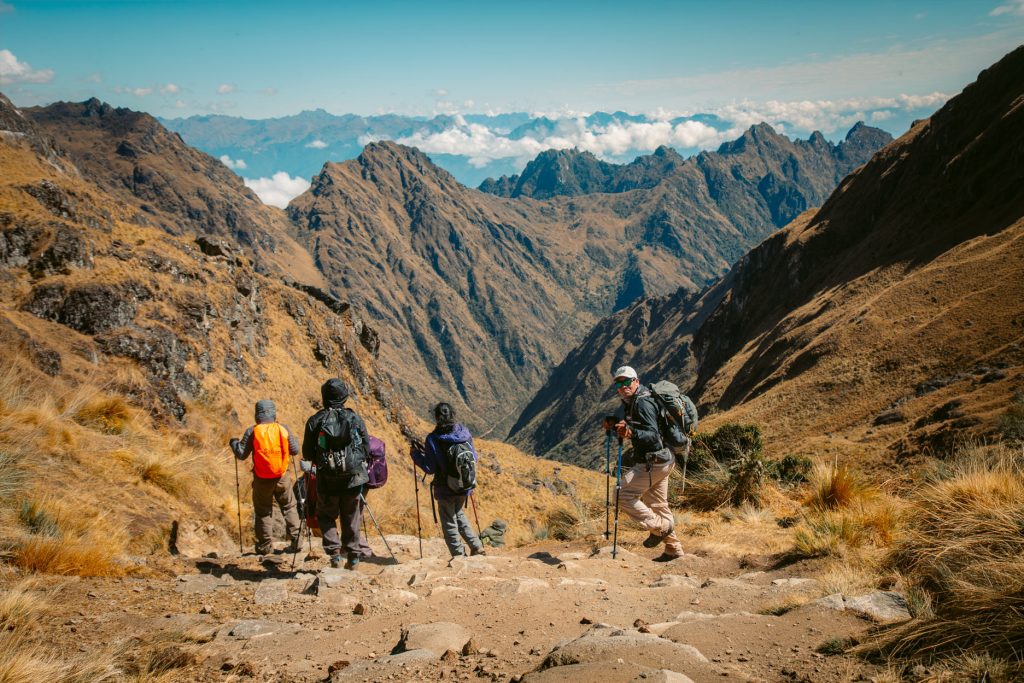
The highest point is Dead Woman’s Pass at 4,215 m (13,829 ft).
The name isn’t exactly reassuring, but most hikers who acclimatize properly complete the trek without any problems.
Inca Jungle Trek Difficulty
The Inca Jungle Trek is generally a little easier on the walking front.
The biking section covers a significant amount of ground, and the hiking itself is usually less demanding than what you’ll encounter on the Inca Trail. However, if you’re not so confident on a bike or with high speeds, river crossings, and high altitudes, it can be tough in certain parts.
Overall, you’ll still need to be reasonably fit, but most travelers find it more manageable.
Altitude Comparison
Altitude is something you’ll need to think about regardless of which route you choose.
The Inca Trail reaches 4,215 m (13,829 ft), and stays at a reasonably high altitude for a lot of the trek.
The Inca Jungle Trek starts at 4,350 m (14,272 ft) before descending into lower elevations. The downhill biking section begins at the highest point, from where you’ll reach lower altitudes quite quickly in the high jungle.
The good news is that both routes become much more enjoyable if you spend a few days acclimatizing in Cusco first.
Trust us on this one.
Your lungs will thank you later.
Which Trek Has Better Scenery?
Trying to decide which trek offers better scenery is a bit like arguing over whether mountains or beaches are better.
You’re probably going to end up choosing based on personal preference.
Both routes are beautiful. They just show you different sides of Peru.
Scenery on the Inca Trail
The Inca Trail is all about combining landscapes with history.
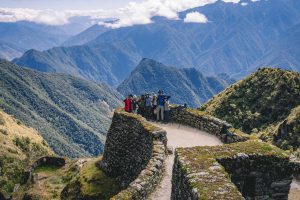
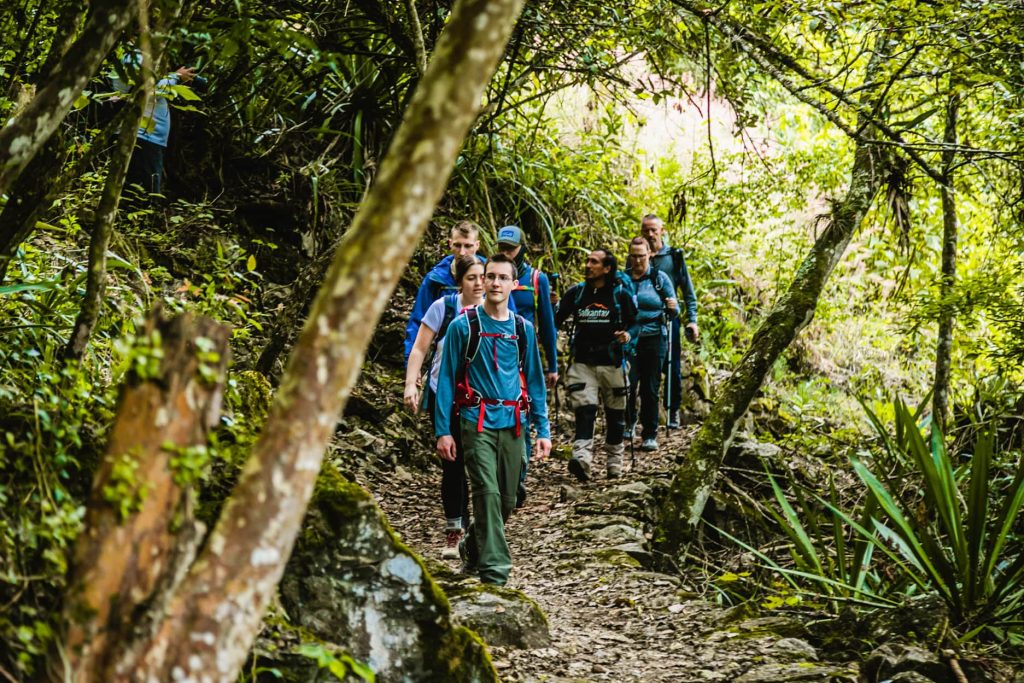
You’ll hike through mountain passes, cloud forests, and ancient ruins, often within the same day. Just when you’ve gotten used to one type of scenery, the trail throws something completely different at you.
And then there’s the ending.
Arriving at Machu Picchu through the Sun Gate is one of those travel experiences people talk about for years afterward.
There’s a reason it appears on so many bucket lists.
Scenery on the Inca Jungle Trek
The Inca Jungle Trek feels more dramatic in terms of landscape changes.
The route starts high in the chilly Andes and gradually drops into greener, warmer valleys filled with coffee plantations, rivers, waterfalls, and tropical vegetation (hence the name Inca Jungle).
It almost feels like you’re traveling between different countries rather than different parts of the same region.
If you prefer landscapes over ruins, the Inca Jungle Trek makes a pretty strong case for itself.
Which Trek Offers More Adventure Activities?
This category isn’t remotely close.
One route is built around hiking and history.
The other starts with you hurtling down a mountain on a bike.
Adventure Activities on the Inca Jungle Trek
Adventure is basically the whole point of the Inca Jungle Trek.
Mountain biking is a core part of the experience, and many itineraries also include activities like rafting or ziplining.
For travelers who aren’t that interested in walking the same trail for several days, it’s a fun way to keep things varied.
No two days feel quite the same.


Hiking and History on the Inca Trail
The Inca Trail doesn’t need extra activities. The route itself is the attraction.
You’re walking on pathways built by the Incas hundreds of years ago, passing archaeological sites that people can only get to on foot.
It has a very different feel from the Inca Jungle Trek. Think less adrenaline and more awe.
Which Trek Offers More Cultural and Historical Experiences?
Both routes teach you something about the people and culture of Peru.
They just focus on different chapters of the story.
Inca History on the Inca Trail
History is woven into almost every part of the Inca Trail.
From the stone pathways beneath your feet to the archaeological sites scattered along the route, you’re constantly reminded that people were traveling through these mountains centuries ago. It provides incredible insight into how the civilization moved around and gives Machu Picchu much more meaning by the time you arrive.
If you’re the type of traveler who slows down to read every information sign, you’ll probably love it.
Local Communities on the Inca Jungle Trek
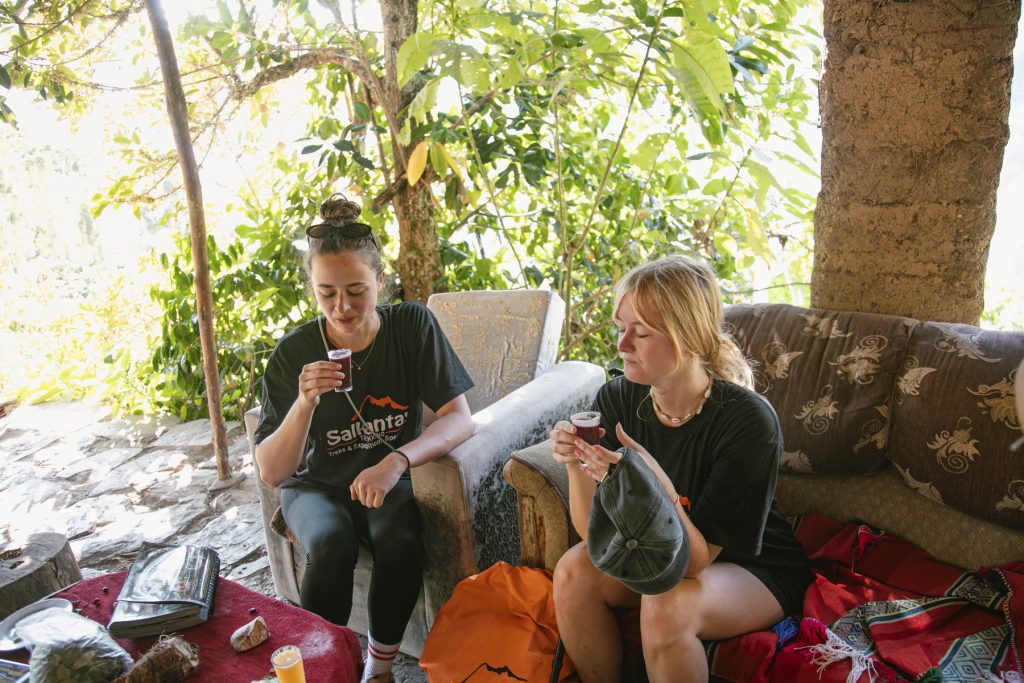
The Inca Jungle Trek offers a slightly different cultural experience.
Instead of focusing heavily on archaeology, it gives you more opportunities to see modern-day life in the region.
You’ll pass through small communities, coffee-growing areas, and rural landscapes where daily life continues much as it always has.
It’s less of a history lesson and more of a glimpse into present-day Peru.
Which Trek Has Better Archaeological Sites?
We’re sure you already know there’s a clear winner here.
Ruins Along the Inca Trail
The Inca Trail is packed with archaeological sites.
In fact, one of the best things about the route is that Machu Picchu isn’t the only major ruin you’ll see.
Sites like Wiñay Wayna, Sayacmarca, and Phuyupatamarca are highlights in their own right.
By the time you arrive at Machu Picchu, you’ve already had four days of incredible archaeology.
Archaeological Highlights on the Inca Jungle Route
The Inca Jungle Trek isn’t really designed around archaeological sites.
You’ll still get to go to Llactapata and visit Machu Picchu at the end, but the route focuses much more on scenery and adventure than ancient ruins.
If archaeology is one of your main reasons for visiting Peru, the Inca Trail wins this round pretty comfortably.
Which Trek Is Better for Machu Picchu?
Both routes get you there. The difference is how you get there.
Arriving Through the Sun Gate on the Inca Trail
For many people, this is the single biggest reason to choose the Inca Trail.
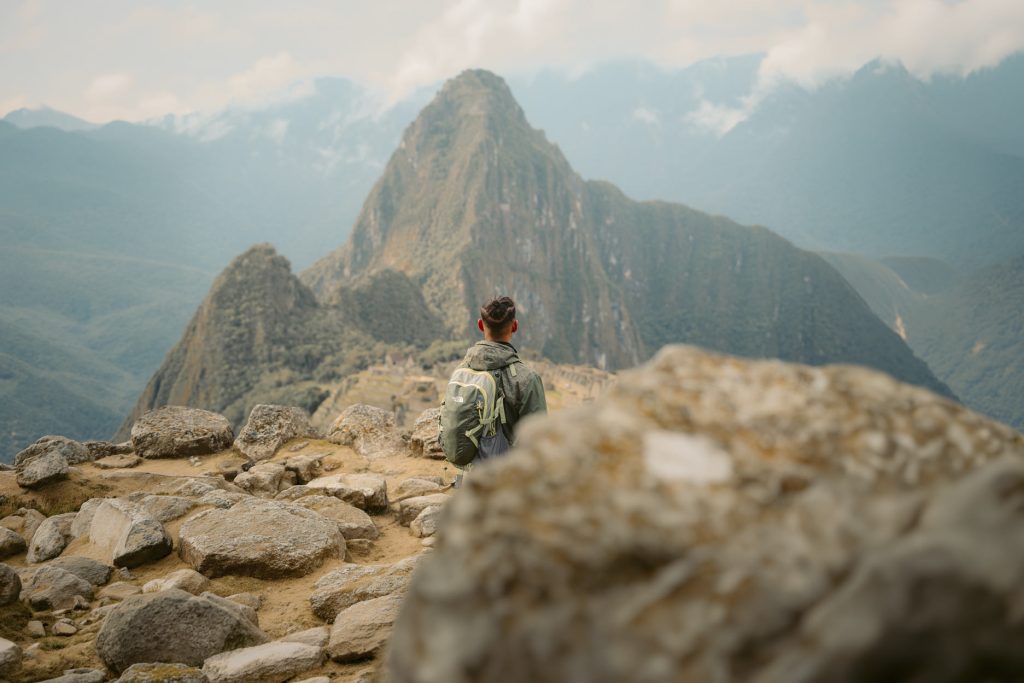
After days of hiking, you reach Inti Punku and catch your first glimpse of Machu Picchu spread out below.
It’s dramatic. It’s memorable. And yes, it really is as good as everyone says.
No other route offers the same arrival.
Arriving at Machu Picchu From the Inca Jungle Trek
The Inca Jungle Trek takes a different approach.
After completing the route, you’ll spend the night in Aguas Calientes before visiting Machu Picchu the following day.
You still get plenty of time to explore the citadel itself, but without the famous Sun Gate entrance.
Whether that matters depends entirely on you.
Crowds and Trail Atmosphere
The atmosphere on these routes is surprisingly different. One is Peru’s most famous trek. The other flies a little more under the radar and attracts a different kind of traveler.
How Busy Is the Inca Trail?
The Inca Trail is popular. Very popular.
Fortunately, permits limit the number of visitors each day, so it never feels completely overrun.
Still, you’ll spend most of the trek seeing other hiking groups along the route. For many people, that’s part of the experience. There’s something fun about sharing the journey with travelers from all over the world.
How Busy Is the Inca Jungle Trek?
The Inca Jungle Trek tends to feel quieter.
You’ll still come across other groups, especially during peak season, but the route generally feels less crowded than the Inca Trail.
If you’re looking for a little more solitude and a little less competition for photo spots, you’ll probably appreciate the atmosphere here.
Permits, Availability, and Booking
Sometimes, you don’t always have a choice when it comes to which trek to choose, as availability does that for you.
Inca Trail Permit Requirements
The Inca Trail operates under a strict permit system.
Only a limited number of permits are issued each day, and they often sell out months in advance. There are 500 in total on offer each day, but 300 go to guides and support staff, leaving just 200 for the public to book.
If hiking the Inca Trail to Machu Picchu is your dream, don’t leave your booking until the last minute.

Inca Jungle Trek Booking Requirements
One of the biggest advantages of the Inca Jungle Trek is flexibility.
There are no government permits required, and it’s not as well-known as the Inca Trail, which means availability is usually much better.
It’s a great option for travelers who are planning their trip on short notice.
How Far in Advance Should You Book?
For the Inca Trail, we recommend booking 4 to 8 months ahead.
For the Inca Jungle Trek, you can usually get away with booking much later.
That’s one reason the route has become such a popular alternative.
Altitude and Acclimatization
Nobody plans a trip to Peru thinking, “I hope altitude sickness becomes a major part of this vacation.” The thing is, sometimes it does. A little preparation goes a long way.
Altitude Sickness Symptoms
Altitude affects everyone differently.
It doesn’t care how fit you are or how old you are.
Common symptoms include:
- Headaches
- Dizziness
- Nausea
- Fatigue
- Shortness of breath
- Trouble sleeping
Most people experience only very mild symptoms and get better with a bit of rest and a few days of taking it easy. If you don’t improve or get worse, you’ll have to head down to a lower altitude.

How to Prepare for High Altitude
The best thing you can do is spend a few days in Cusco before your trek. 2–3 is usually enough.
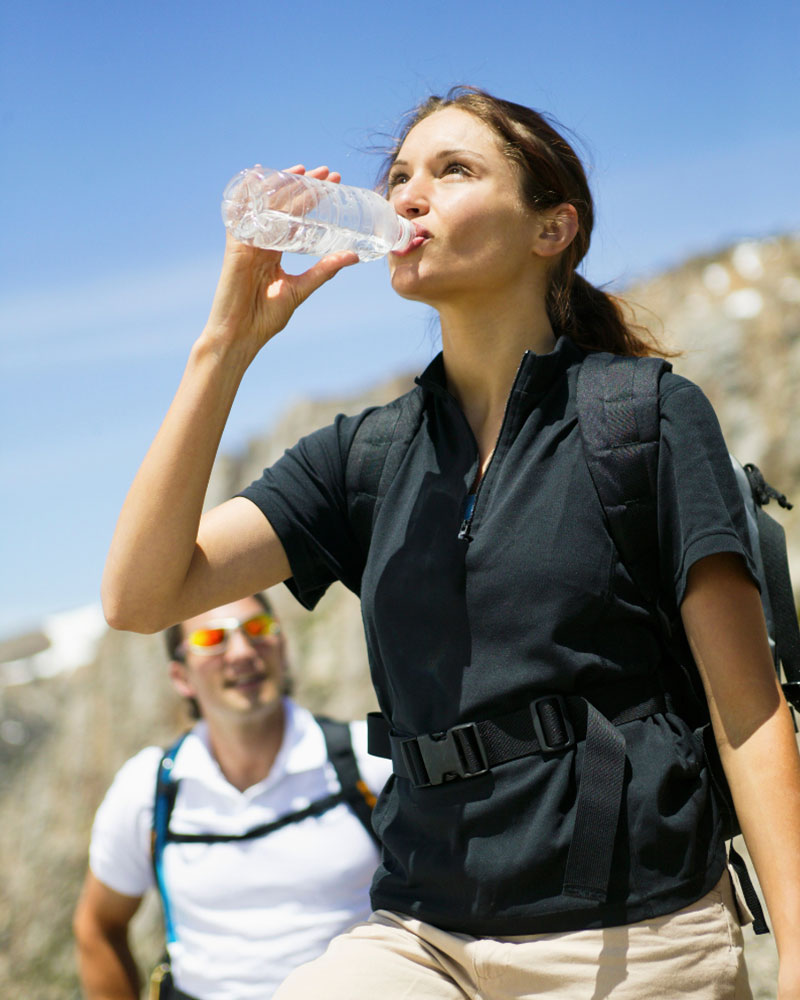
Take things slowly, drink plenty of water, avoid alcohol, and resist the temptation to sprint up every staircase you see on day one.
If you’d like to find some trips to help you ease you into the elevation, check out our guide on “The Best Acclimatization Tours in Cusco”
What to Do if You Feel Sick on the Trail
Tell your guide. The worst thing you can do is suffer in silence while convincing yourself you’re absolutely fine.
Most mild symptoms improve with rest, hydration, and a slower pace. Your guide will know exactly how to help and when extra caution is needed. They’ll take you down to a lower altitude if you’re not getting better.
Best Time to Hike the Inca Trail and Inca Jungle Trek
The good news is that both routes can be hiked for most of the year.
The less good news is that the weather in the Andes is anything but predictable.
Dry Season Conditions
The dry season runs from roughly May through October.
This is generally considered the best time to visit Machu Picchu and to go trekking, thanks to clearer skies and lower chances of rain.
The nice conditions also mean it’s the busiest time of year, so whichever trek you choose, we recommend booking well in advance.
Wet Season Conditions
From November through April, you’ll likely face more rain and muddier trails. On the plus side, the landscapes are greener, and visitor numbers are lower.
Just remember that the Inca Trail closes every February for maintenance, and many tour operators won’t run the Inca Jungle Trek due to heavy rain and increased safety risks.
Month-by-Month Considerations
Many hikers find that April, May, September, and October offer a nice balance between weather and crowds.
If your schedule is flexible, those months are often worth considering.
Who Should Choose the Inca Trail?
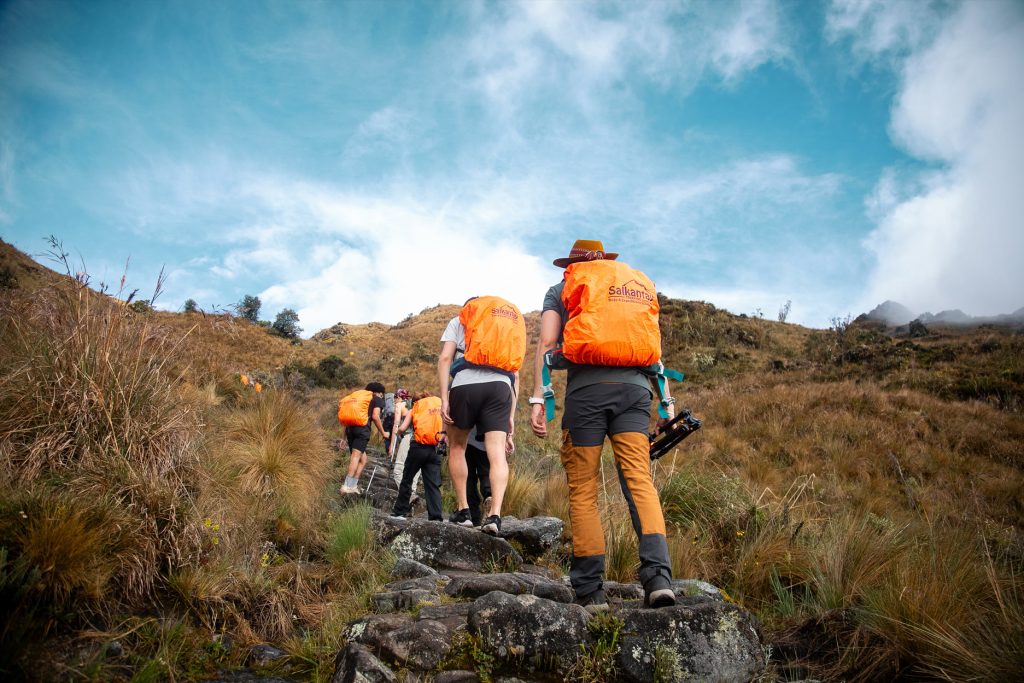
Choose the Inca Trail if:
- History fascinates you
- Archaeological sites are a priority
- You want to enter through the Sun Gate
- Walking original Inca pathways sounds incredible
- You don’t mind planning ahead
- You’ve always wanted to do the classic Machu Picchu hike
For many travelers, this is a genuine once-in-a-lifetime experience.
Who Should Choose the Inca Jungle Trek?
Choose the Inca Jungle Trek if:
- You enjoy adventure activities
- You like the idea of biking and hiking
- You prefer smaller crowds
- You want more flexibility when booking
- You’d rather stay in lodges, private campsites, and hotels
- You’re looking for something a little different
It’s a fun route that combines several adventures into one trip.


Frequently Asked Questions
Still not sure? We get it. It’s a tough choice. Check out the questions we hear most and their answers to see if they help.
We certainly think so. It may not have the worldwide fame of the Inca Trail, but it offers a unique mix of adventure, scenery, and a finish line at Machu Picchu.
That’s a pretty strong combination.
The Inca Jungle Trek is usually considered moderate to challenging.
Most reasonably active travelers complete it without any issues, especially if they’ve spent a few days acclimatizing beforehand.
Yes. You don’t need to be an experienced trekker, but a decent fitness level will make the experience much more enjoyable.
No. You can’t bike on the Inca Trail itself.
If mountain biking is high on your wishlist, the Inca Jungle Trek is the obvious choice.
Which Trek Should You Choose?
By now, you’ve probably figured out that there isn’t a wrong answer.
The Inca Trail and Inca Jungle Trek simply offer different experiences.
If you’re drawn to ancient history, archaeological sites, and the famous Sun Gate arrival, the Inca Trail is probably the better fit.
If you’d rather mix hiking with biking, enjoy a little more flexibility, and add some adventure to the journey, the Inca Jungle Trek might be exactly what you’re looking for.
Either way, you’re spending several days exploring the Peruvian Andes before arriving at one of the most famous places on Earth.
That’s a pretty good outcome, no matter which route you choose.
And if you’ve already made up your mind, Salkantay Trekking would love to help make it happen.