
Everyone talks about Huayna Picchu. But few travelers know that Huchuy Picchu might be the most practical way to wrap up a visit to Machu Picchu.
It’s not the highest or most challenging mountain in the sanctuary, and that’s precisely what makes it so appealing. Huchuy Picchu offers a short hike, close-up views of the citadel, and a more relaxed experience for those who want to add a scenic route without expending too much energy.
In this guide, you’ll find everything you need to know before climbing Huchuy Picchu: meaning, location, elevation, difficulty, tickets, hours, prices, tips, and recommendations to plan your visit without any mishaps.
- What is Huchuy Picchu?
- Where is Huchuy Picchu, and how high is it?
- How do I get to Huchuy Picchu Mountain?
- History and Cultural Significance of Huchuy Picchu
- Is Huchuy Picchu worth it?
- What is the hike to Huchuy Picchu like?
- What ticket do you need to climb Huchuy Picchu?
- How to Prepare for Huchuy Picchu?
- Frequently Asked Questions
- You might be interested in:
What is Huchuy Picchu?
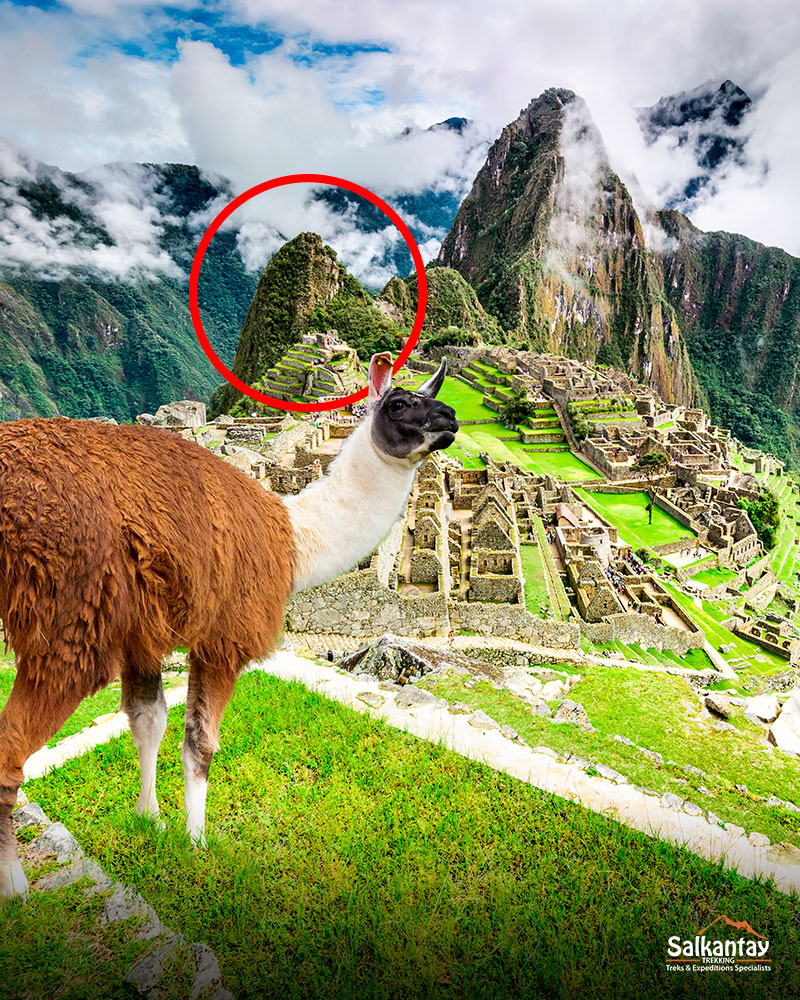
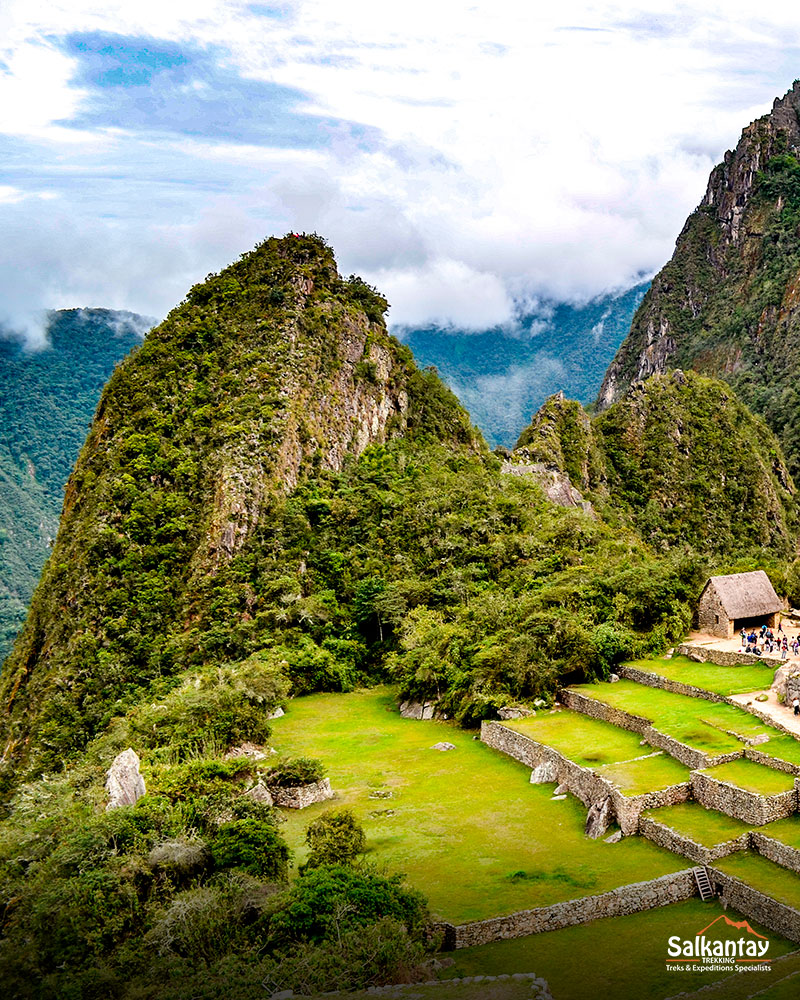
Huchuy Picchu is a small mountain located in Machu Picchu, near the famous Huayna Picchu mountain. Although it is shorter and less demanding than other mountain trails within the sanctuary, it offers a short hike with different views of Machu Picchu and the Andean landscape surrounding the citadel.
This mountain is part of the 3D sub-circuit, known as the Huchuy Picchu Trail. It’s a great option for travelers who want to add a light hike to their visit but don’t want to tackle more intense trails like Huayna Picchu or Machu Picchu Mountain.

What does Huchuy Picchu mean?
Its name comes from the Quechua words “huchuy,” meaning “small,” and “picchu,” which can be interpreted as “mountain.” Therefore, it can be understood as “small mountain,” referring to the fact that it is the smallest mountain in Machu Picchu.
Where is Huchuy Picchu, and how high is it?
Huchuy Picchu is located within the Machu Picchu archaeological complex, north of the citadel and near Huayna Picchu Mountain. Administratively, it is located in the district of Machu Picchu, province of Urubamba, Cusco region, Peru.
Its summit reaches approximately 2,497 meters above sea level, or about 8,192 feet. Although it is a lower mountain than Huayna Picchu and Machu Picchu Mountain, its location allows visitors to view the intihuatana, the famous Inca sundial, and the citadel from a different perspective and enjoy the natural surroundings of the sanctuary.
How do I get to Huchuy Picchu Mountain?
To get to Huchuy Picchu, you must first reach Machu Picchu. The most common way is to travel from Cusco to Ollantaytambo, take the train to Machu Picchu Pueblo (also known as Aguas Calientes), and then take a bus up to the entrance of Machu Picchu.
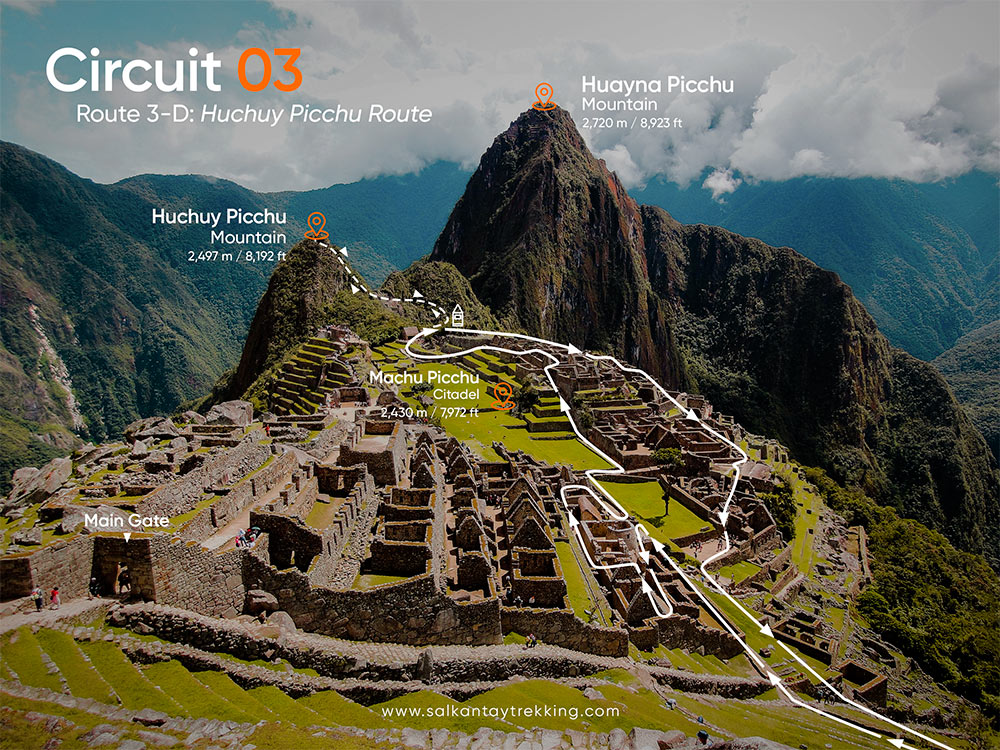
Once you enter Machu Picchu, follow Route 3-D: the Huchuy Picchu Trail. This route crosses the lower part of the citadel and leads you to the northern sector, near the Sacred Rock, where the access point to Huchuy Picchu and Huayna Picchu is located. From there, the hike up the mountain begins.
Is it better to go with a guide or a travel agency?
Yes, especially if it’s your first time at Machu Picchu or if you don’t want to worry about schedules, trains, buses, and tickets. A travel agency can help you organize everything so you don’t have to handle every detail on your own.
Plus, touring Machu Picchu with a guide makes the visit more meaningful. You won’t just walk through the citadel—you’ll understand what each site was, why it was important, and how it connected to Inca history. Then, the guide can accompany you to the entrance of Huayna Picchu and wait for you to continue the tour after the hike.
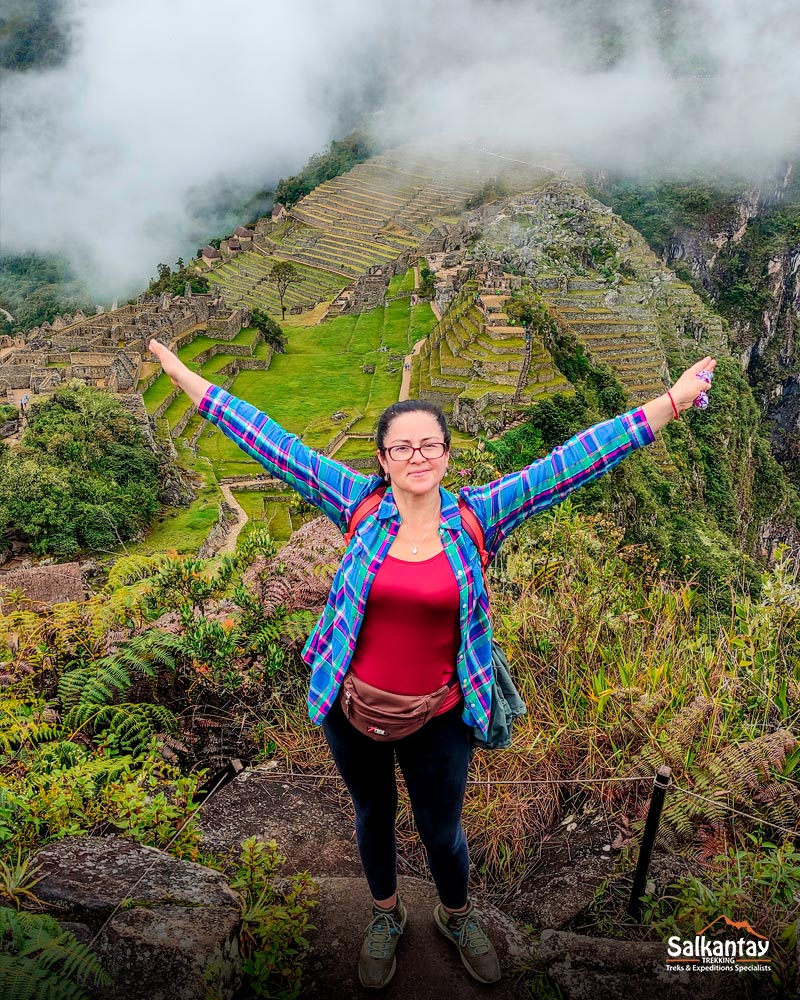
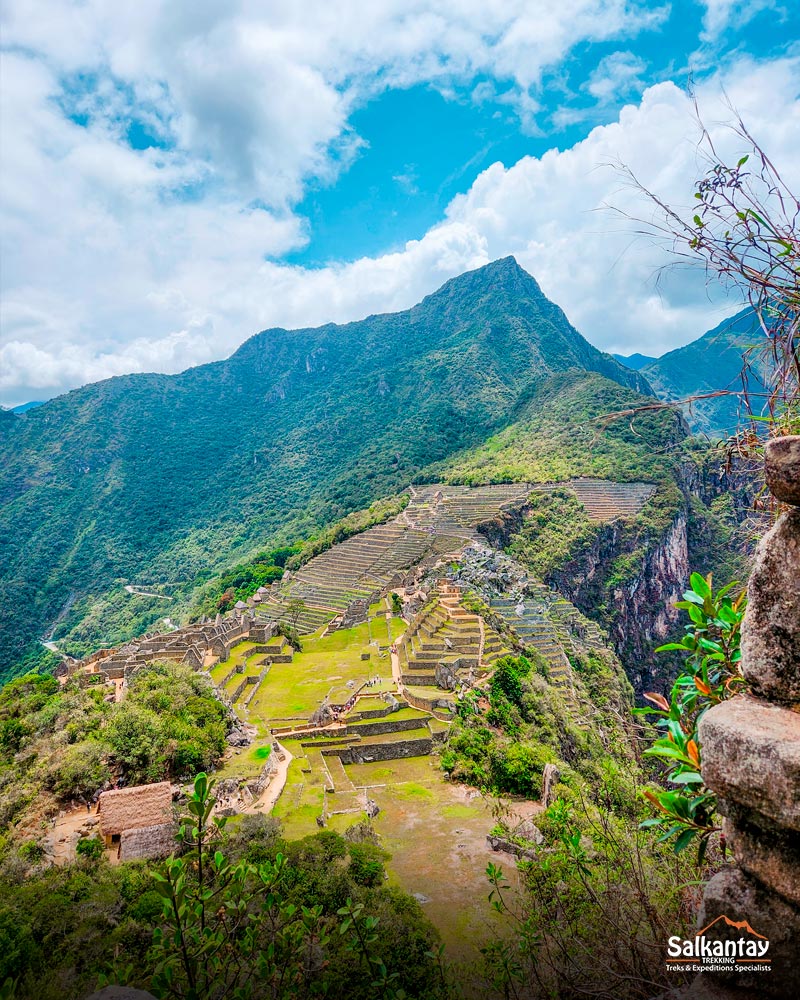
History and Cultural Significance of Huchuy Picchu
The mountains surrounding Machu Picchu held profound symbolic value within the Andean worldview. In this sacred landscape, Huchuy Picchu can be understood as a modest yet significant elevation that visually accompanies the Inca citadel and forms part of the sanctuary’s spiritual environment.
Was Huchuy Picchu a temple dedicated to the coca leaf?
One of the most intriguing theories about Huchuy Picchu suggests that this mountain may have had a ceremonial connection to the coca leaf. This is not a confirmed fact, but rather an interpretation based on the importance of this plant within the Andean world and the spiritual connection the Incas established with the mountains.
The coca leaf was considered sacred in the Andes. It was used in ceremonies, offerings, workdays, and high-altitude treks. Additionally, it helped hikers and workers better withstand fatigue, hunger, and the effects of altitude. For this reason, its presence within the Andean imagination was not only practical but also spiritual.
From this perspective, some interpret that Huchuy Picchu may have functioned as a symbolic or ceremonial space linked to coca. Its location, near Machu Picchu and within a landscape dominated by sacred mountains, allows us to imagine it as part of an environment where nature, architecture, and spirituality were deeply connected.
Even so, it’s important to view this as a theory, not as an absolute truth. What is clear, however, is that Huchuy Picchu offers not only a short hike and spectacular views, but also an opportunity to experience Machu Picchu from a more cultural and spiritual perspective.
Is Huchuy Picchu worth it?
Yes, Huchuy Picchu is worth visiting if you’re looking for a short, accessible, and unique experience within Machu Picchu. It’s not the highest mountain or the most challenging trail in the sanctuary, but that’s precisely where its value lies: it lets you enjoy a scenic hike without investing too much time or energy.
It’s a good option if you want to complement your visit to the citadel with a peaceful, low-effort route that offers a different perspective on the Andean landscape.
Who should choose Huchuy Picchu?
Huchuy Picchu is recommended for travelers looking for a short hike that’s easy to fit into their visit. It can be a good choice if:
- You’re short on time and want to add a scenic experience at the end of your tour.
- You prefer a short hike over a long or physically demanding route.
- You’re traveling with your family and looking for a more accessible option for children ages 7 and up, provided they’re used to walking.
- You’re a bit afraid of heights and want to avoid steeper or more exposed trails like Huayna Picchu.
- You weren’t able to get a ticket for Huayna Picchu, but you still want to hike a mountain within Machu Picchu.
- You feel that climbing Machu Picchu Mountain is too much of a challenge given your fitness level or the time you have available.
- You want to enjoy close-up views of the citadel without turning the hike into a major physical challenge.
Who wouldn’t love Huchuy Picchu?
Huchuy Picchu may not be the best option for travelers seeking an intense, long, or physically demanding hike. If your travel style is more athletic and you enjoy steep, demanding trails with a greater sense of adventure, this mountain might seem too short or easy for you.
It’s also not the ideal choice if your priority is to get the classic panoramic view of Machu Picchu from the top, since this route is part of Circuit 3 and offers a different perspective of the citadel.
What makes Huchuy Picchu special?
Huchuy Picchu doesn’t compete with Huayna Picchu or Machu Picchu Mountain. Its value lies in offering a short, peaceful hike that’s easy to incorporate into your tour of the citadel.
For many travelers, it may seem like a second choice when they can’t get a spot on Huayna Picchu or when they prefer to avoid a more demanding route. However, Huchuy Picchu ends up surprising visitors with its simplicity, its close-up views, and the chance to wrap up the visit with a more serene panoramic experience.
What is the hike to Huchuy Picchu like?
The hike to Huchuy Picchu begins within the Machu Picchu Circuit 3 route. Before reaching the trailhead, you’ll walk through part of the lower section of the citadel until you reach the Sacred Rock area, where the checkpoint is located. There, you’ll need to register your information before starting the hike up the mountain.
After the checkpoint, the path continues with a slight descent down stone stairs and a semi-flat stretch surrounded by vegetation. Further on, you’ll find a well-marked fork: the path to Huayna Picchu continues along a more challenging route, while the trail to Huchuy Picchu branches off upward
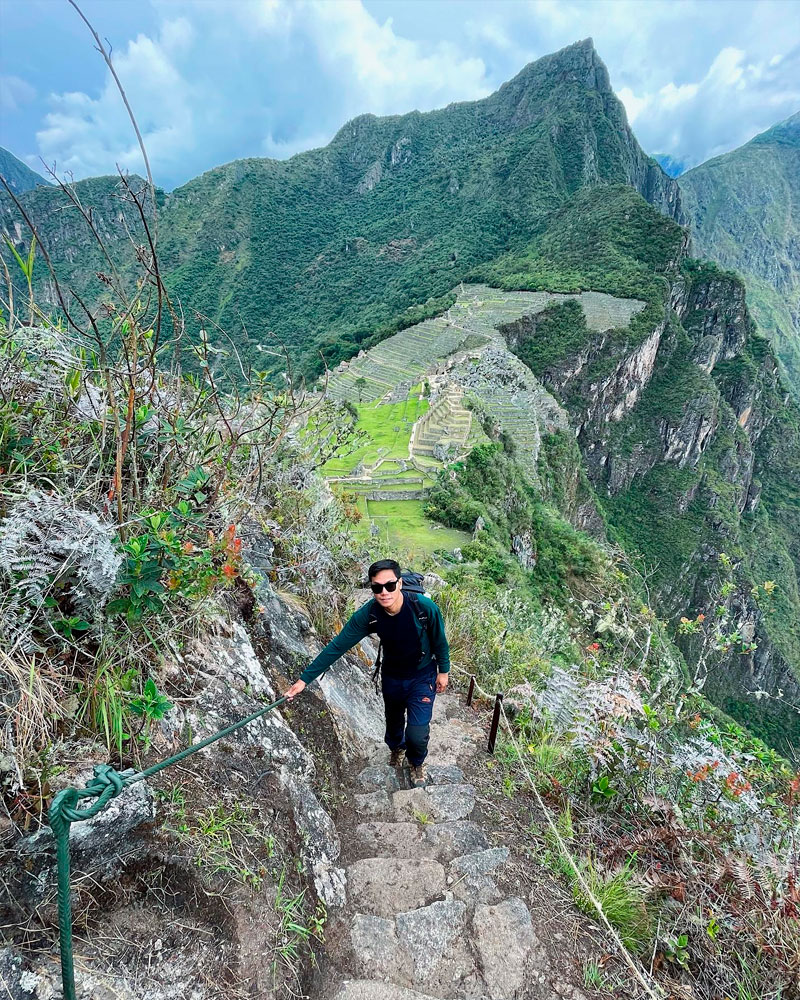
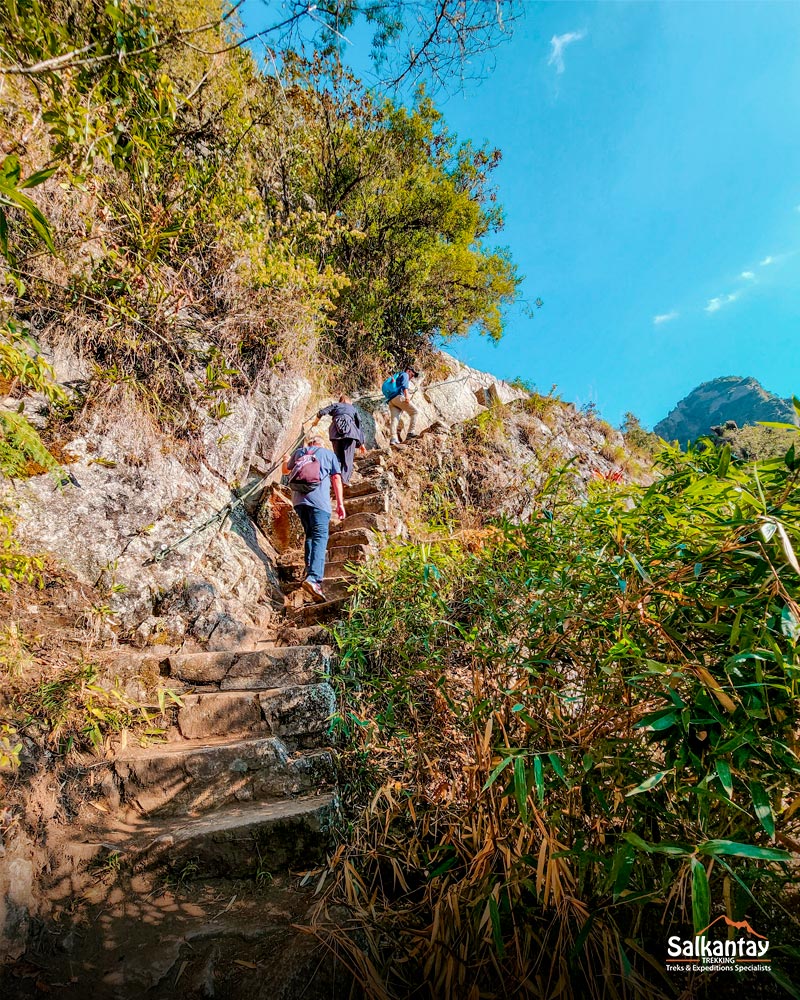
From that point, a short climb begins via stone stairs, alternating with short, flatter sections. The most challenging part of the route is a narrow passage with stairs carved into the rock and a safety cable for added security. This section may cause some vertigo, especially if you’re not used to walking near steep slopes, but it’s short and designed to allow you to proceed with caution.
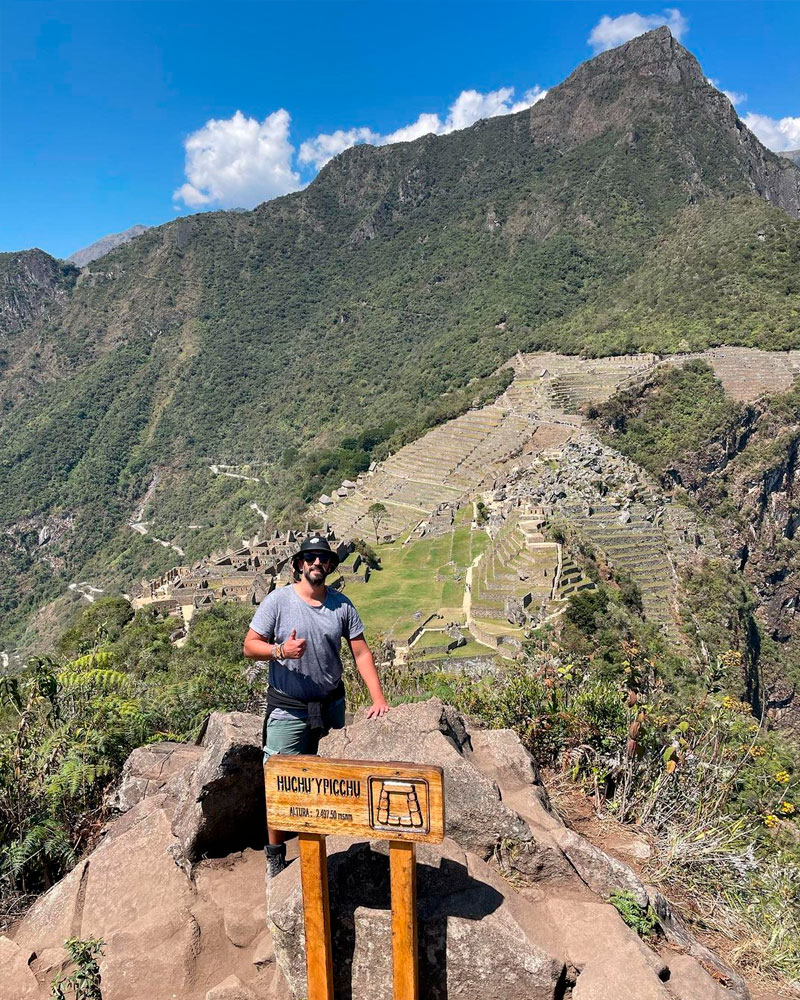
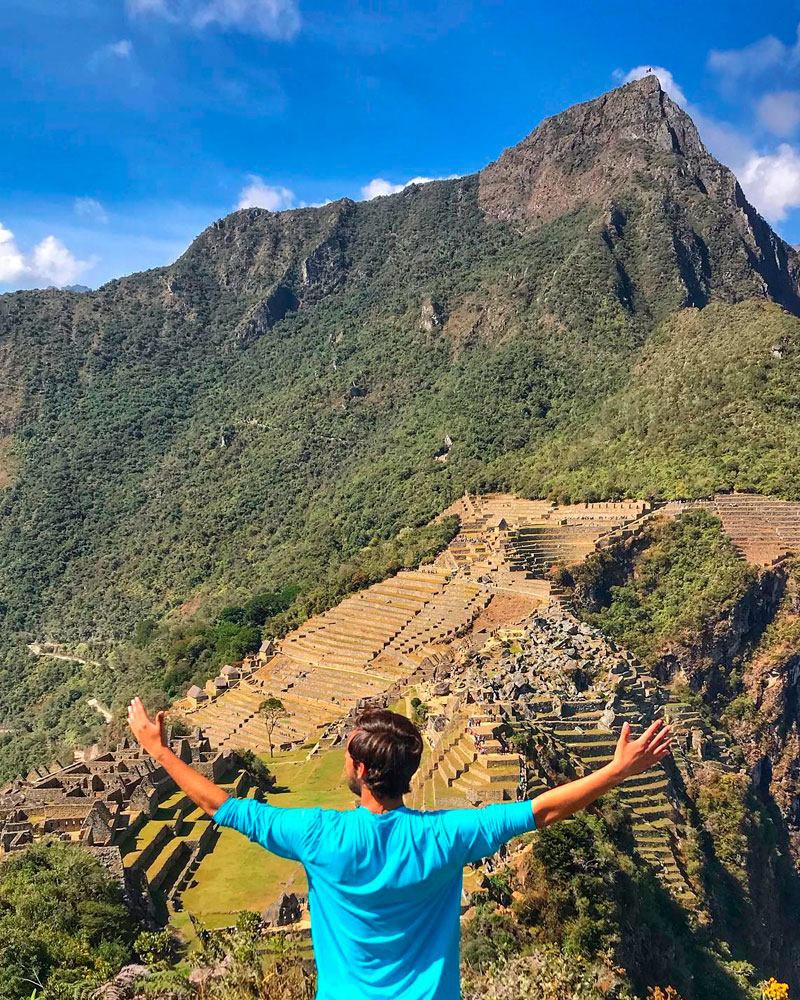
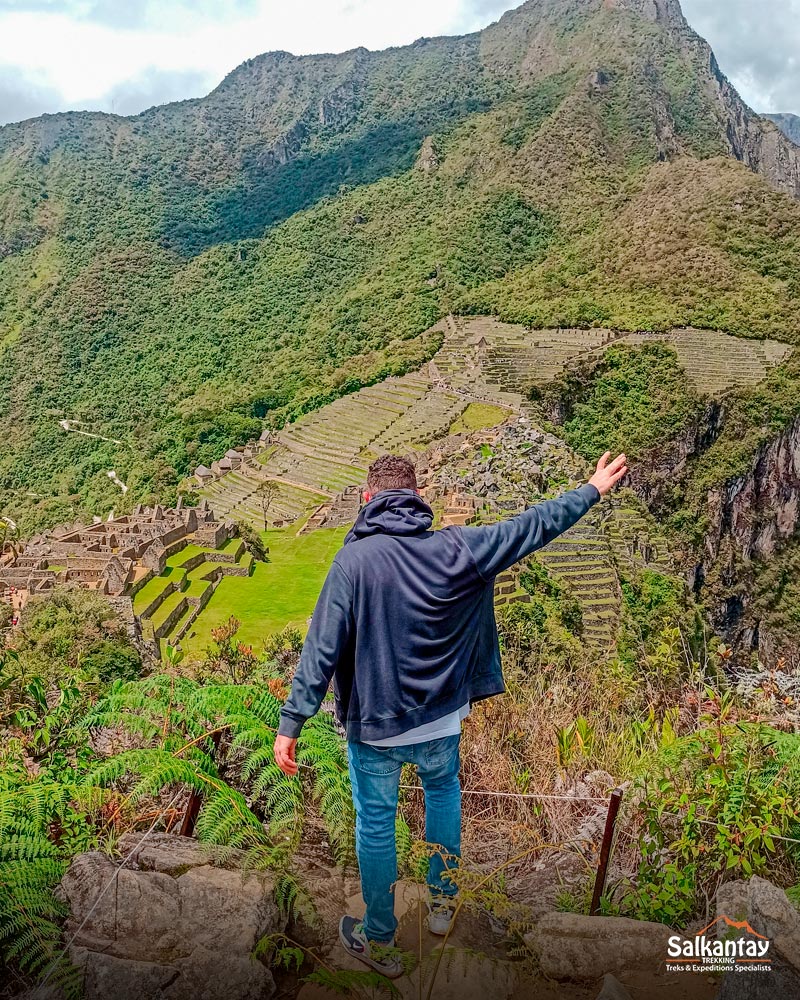
After this section, the path becomes easier until you reach the Huchuy Picchu viewpoint, located at the top of the mountain. From there, you can enjoy a different view of Machu Picchu, with the citadel appearing closer and more recognizable than from other higher mountains.
The return trip follows the same trail back to the checkpoint. From there, you can continue along Circuit 3 and visit other areas of Machu Picchu, such as the Temple of the Condor or the Reflecting Pools, depending on the designated route and visitor flow within the archaeological site.
It’s important to note that the trail is well-marked and clearly defined. In several sections, you’ll find ropes, handrails, or support cables that indicate the path to follow and help ensure safety during the hike.
Trail Length and Hiking Time
The hike to Huchuy Picchu is one of the shortest trails at Machu Picchu. The round-trip distance is approximately 1 km / 0.6 miles, and the highest point is at the summit, at 2,497 m a.s.l. / 8,192 ft.
The hike usually takes about 1 hour round trip, although the time may vary depending on your pace, rest breaks, and the time you spend taking photos at the viewpoint. If you also include the full Circuit 3 hike, the visit can take about 2 hours.
The maximum time allowed for this route is 3 hours and 30 minutes. This does not mean you will be hiking the entire time up the mountain, but rather that you will have that time frame to complete the experience within the mountain and the citadel of Machu Picchu. If you take it slower or want to enjoy the hike at your own pace, you will have plenty of time.
| Details | Information |
|---|---|
| Maximum elevation | 2,497 m a.s.l. / 8,192 ft |
| Total distance | 1 km / 0.6 miles round trip |
| Walking time | Approx. 1 hour round trip |
| Walk + circuit | Approx. 2 hours |
| Maximum time allowed | 3 hours and 30 minutes |
| Difficulty | Easy to moderate |
| Recommended age | Ages 7 and up, with adult supervision |
| Availability | High season only |
| Elevation from the citadel | 70 meters / 220 feet |
Hike difficulty
The hike to Huchuy Picchu is rated as easy to moderate. It is shorter and more accessible than Huayna Picchu or Machu Picchu Mountain, but it should not be considered a completely flat trail. The route includes stone stairs, narrow sections, gentle slopes, and a narrow passageway with a handrail.
The difficulty will depend on your physical condition, your acclimatization, and your comfort level with climbing stairs or walking in areas with some exposure. For most active travelers, it is a manageable hike. It may also be suitable for children ages 7 and up, provided they are used to walking, follow the trail markers, and are accompanied by an adult.
The section that may feel most intense is the part with stairs carved into the rock, where the path narrows and you might experience a slight sensation of vertigo. Even so, it’s a short part of the route and features a handrail to help you proceed more safely.
What will you see on the hike?
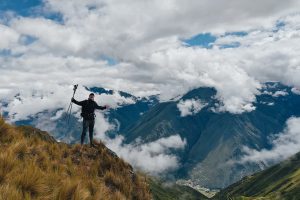
During the hike to Huchuy Picchu, you’ll experience a short but visually stunning journey. The trail combines stone stairs, relatively flat sections, mountain vegetation, and progressively stunning views of the natural landscape surrounding Machu Picchu.
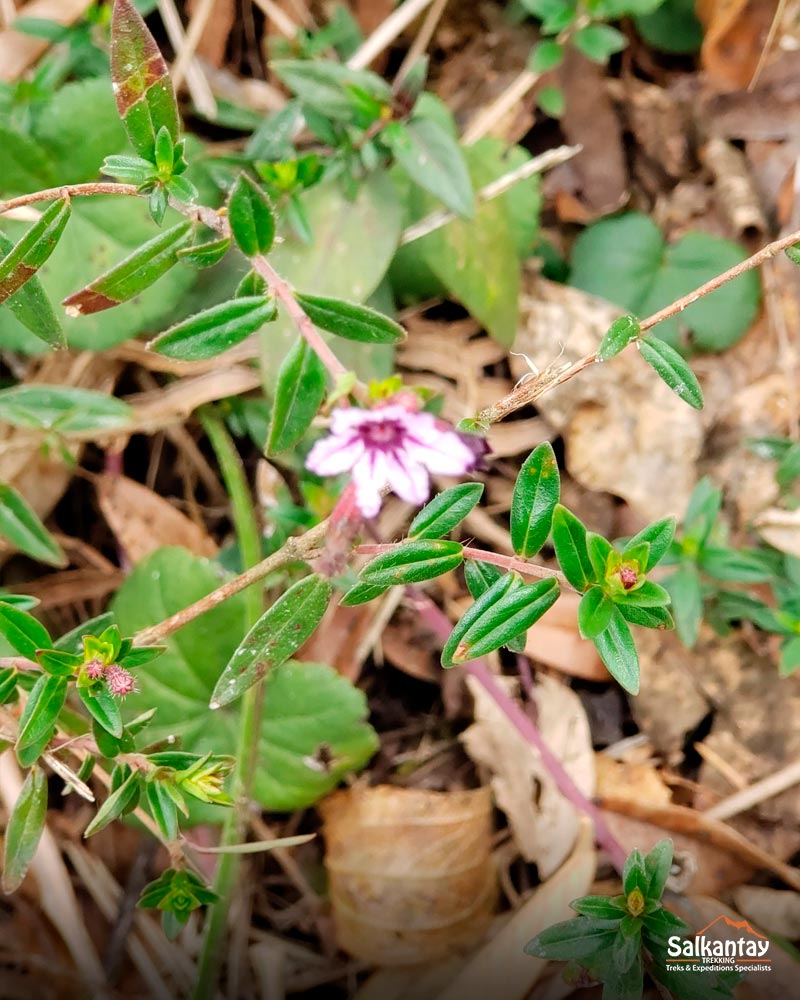
Along the way, you’ll find staircases carved into the rock, stone walls, handrails, and sections marked off with ropes to help you walk safely. You’ll also be surrounded by cloud forest vegetation, including ferns, orchids, queuñas, cedars, and other native flowers characteristic of the sanctuary.
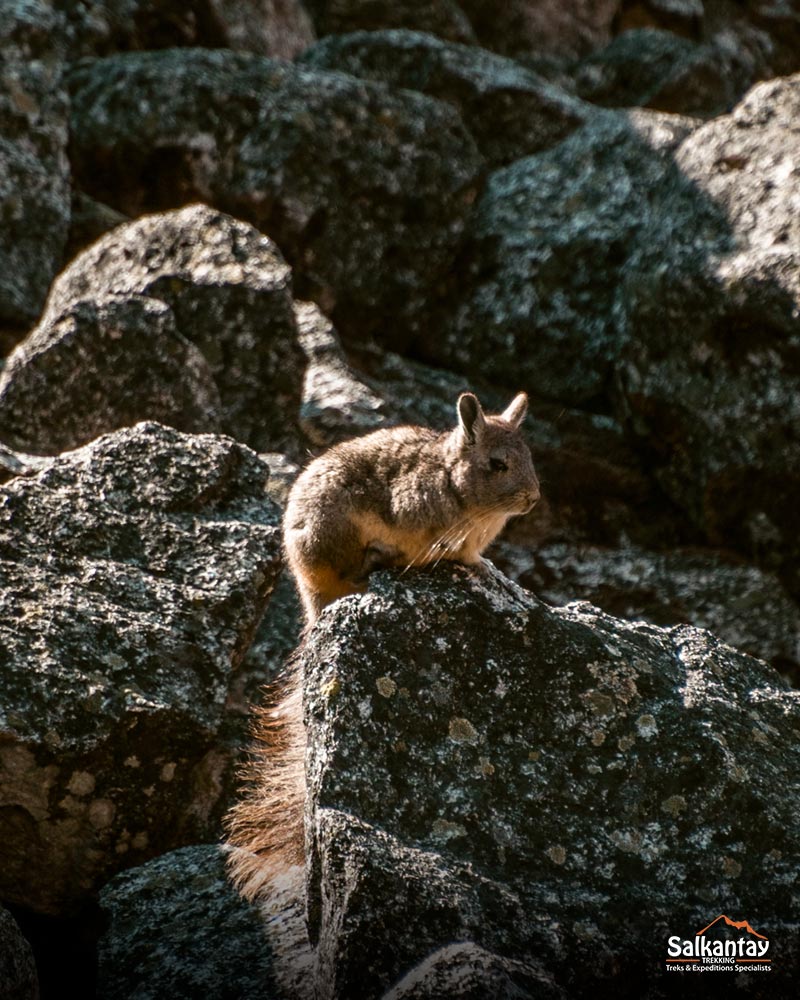
In addition to the green landscape, you’ll be able to see the mountains surrounding Machu Picchu and, at certain points, the valley through which the Urubamba River flows. It’s also possible to spot butterflies, small birds, and some reptiles, though wildlife sightings aren’t guaranteed.
One of the most beautiful sensations of the hike is that you gradually begin to rise above the citadel. You aren’t as high as on other mountains, but high enough to feel that Machu Picchu appears from a different perspective—closer and more serene.
What are the views like from Huchuy Picchu?
From Huchuy Picchu, the views are different from those of Huayna Picchu or Machu Picchu Mountain. From the higher peaks, the citadel usually looks smaller and more distant; from Huchuy Picchu, however, Machu Picchu feels closer, more recognizable, and more detailed.
The perspective is unique because you’re slightly above the citadel, but not so far away that you lose sight of the shape of its terraces, paths, and Inca structures. The view feels more comfortable and immersive, as if you were observing Machu Picchu from a natural balcony.
You’ll also be able to appreciate the mountains surrounding the sanctuary, the surrounding vegetation, and part of the Urubamba River valley. It’s not the highest or most dramatic view, but it is one of the most pleasant for those seeking a peaceful, intimate, and easy-to-enjoy panoramic experience.
What ticket do you need to climb Huchuy Picchu?
To climb Huchuy Picchu Mountain, you must purchase the Circuit 3 ticket, Route 3-D: Huchuy Picchu Route. This is the only ticket that includes access to this mountain.
This ticket not only allows you to climb the mountain, but also takes you along part of the Royal Circuit, a route that passes through important areas of the lower part of Machu Picchu. During the tour, you’ll be able to see sites related to the architecture, urban planning, and ceremonial life of the Incas.
However, there is one important thing to keep in mind: this circuit does not include the classic panoramic view of Machu Picchu from the Guardian’s House. Even so, the experience is more than worth it thanks to the view you’ll get from the Huchuy Picchu viewpoint, where you can appreciate the citadel from a closer and different perspective.
What will you see inside the citadel with this ticket?
With the Route 3-D: Huchuy Picchu ticket, you can explore different sections of Circuit 3, including:
- Sacred Rock
- Twelve Arches
- Eastern Qolqas
- Water Mirrors Complex
- Temple of the Condor
- Pisonay Plaza
- Archaeological Reserve
Want to learn more about the other tickets available? On our blog, “Machu Picchu tickets: Everything you need to know!”, you’ll find detailed information about each tour, the available routes, and recommendations for choosing the best ticket for your type of trip.
Important Details About the Huchuy Picchu Trail
If you’d like to visit Huchuy Picchu Mountain, there are a few important points to consider before booking.
Limited Availability
Visits to Huchuy Picchu are available at only two time slots per day. For online sales, 20 spots are typically made available per time slot, meaning a maximum of 40 online tickets per day for this trail.
This means availability is limited, especially during Machu Picchu’s high season. Therefore, if you want to choose a specific date and time, it’s best to book in advance.
Currently, this tour is available only during Machu Picchu’s high season, on the following dates:
- June 1 through October 15
- December 30 and 31
Note: Availability can change quickly because spots are limited. Before purchasing, check the schedules and available spots on the official platform at tuboleto.cultura.pe
Allotted time for the visit
As mentioned earlier, the hike to Huchuy Picchu and the tour of Circuit 3 typically take about 2 hours on average.
However, the maximum time allowed to complete this route is 3 hours and 30 minutes. This doesn’t mean you’ll be walking the entire time, but rather that you’ll have that window to explore the citadel, climb the mountain, enjoy the views, and proceed at your own pace.
This time is sufficient to explore some of the most interesting areas of Machu Picchu and enhance the experience with a short hike to the Huchuy Picchu viewpoint.
Circuit 3 (Machupicchu Royalty) – Route 3-D: Huchuy Picchu Route
Huchuy Picchu Entry Times
We recommend purchasing your ticket 2 to 3 months in advance, especially if you want to secure a specific date and time. Although Huchuy Picchu doesn’t always sell out as quickly as Huayna Picchu, its slots are limited and may sell out during the high season.
First time slot (9:00 a.m.)
In this time slot, you enter Machu Picchu starting at 9:00 a.m. and access Huchuy Picchu Mountain between 10:00 a.m. and 11:00 a.m.
This time slot is ideal if you want to start the hike mid-morning. The weather is usually cooler than at midday, making the ascent more comfortable. Additionally, the morning light helps you take better photos of the landscape and the citadel.
You may also find fewer visitors at the summit, which can provide a more peaceful experience.
Second time slot (11:00 a.m.)
In this time slot, you enter Machu Picchu starting at 11:00 a.m. and access Huchuy Picchu Mountain between 12:00 p.m. and 1:00 p.m.
This time slot may be a good option if you prefer to take things at a more leisurely pace or if you arrive at Machu Picchu later. The sun will be higher in the sky, but you’ll also have different lighting to appreciate the scenery and take photos from the viewpoint.
Important note: During the high season, when this route is open, entry controls to the Machu Picchu mountains are usually strict about the schedules. Therefore, you must arrive on time at the Huchuy Picchu checkpoint.
Ticket Prices
| Visitor Type | Adult | College Student | Children ages 3–17 |
|---|---|---|---|
| Foreign Visitors | S/ 152 / USD 45 | S/ 77 / USD 23 | S/ 70 / USD 21 |
| Peruvians, Cusco residents, and CAN citizens | S/ 64 / USD 20 | S/ 32 / USD 10 | S/ 32 / USD 10 |
| Foreign residents in Peru | S/ 64/ USD 20 | S/ 32 / USD 10 | S/ 32 / USD 10 |
Requirements for entry with your ticket
When entering Machu Picchu, remember to bring the necessary documents. Here are some important points:
- You must present a valid passport or a document proving your nationality or residency.
- Children under 3 years of age enter for free when accompanied by an adult.
- Cusco residents can enter for free on Sundays with a valid physical ID, subject to ticket availability.
- Peruvian war veterans enter for free.
- People with disabilities who are Peruvian nationals pay S/ 100.
Important note: The passport you present must be valid and match the information on your ticket. Additionally, the passport must be valid for at least 6 months upon entry into Peru.
Note: The ticket is valid only for the date, entry time, and route selected at the time of purchase.
How to Prepare for Huchuy Picchu?
Although Huchuy Picchu isn’t a difficult hike, some basic preparation can make the climb much more comfortable. The trail is short, but it includes stone steps, some uneven sections, and areas where you should tread carefully.
Before your visit, you can go on short walks, climb stairs, or do some light leg exercises for a few days. You don’t need to train as if for a long trek, but it’s a good idea to arrive with good mobility and some stamina to enjoy the experience without getting too tired.
Recommended exercises before the hike
To make the climb easier, you can practice:
- Light walks: 30 to 45 minutes a day help improve your stamina.
- Climbing stairs: prepares your legs for the stone steps.
- Gentle squats: strengthen your legs and knees.
- Stretching: helps prevent discomfort before and after the hike.
- Slow, steady breathing: helps you walk calmly and manage your effort.
You don’t need to be in top physical shape, but you should feel comfortable walking on slopes and stairs.

What should you wear to hike up Huchuy Picchu?
To hike up Huchuy Picchu, wear comfortable, lightweight clothing suitable for walking. The weather at Machu Picchu can change throughout the day, so it’s best to dress in layers.
We recommend wearing:
- Sneakers or hiking shoes with good traction: the trail has stone steps and some uneven sections.
- Lightweight, comfortable clothing: ideal for walking without feeling restricted.
- Waterproof jacket or rain poncho: especially if you’re visiting Machu Picchu during the rainy season.
- Cap or hat: to protect you from the sun during the hike.
- Sunglasses: useful on clear days.
- Layered clothing: to help you adapt to the morning chill, midday heat, or sudden rain.
- Small, lightweight backpack: bring only what you need to avoid carrying extra weight.
Avoid wearing sandals, flat shoes, or new footwear that might cause discomfort during the hike.
What to bring for the hike?
Although the route is short, you should bring some basic items to hike comfortably and safely. You don’t need a large backpack; it’s best to bring only the essentials.
Recommended list
- Water: bring a reusable bottle to stay hydrated.
- Light snacks: granola bars, nuts, or dried fruit.
- ID or passport: required to enter Machu Picchu.
- Machu Picchu ticket: printed or digital, as per current guidelines.
- Cell phone or camera: to take photos during the hike.
- Power bank: useful if you’ll be using your phone for photos or emergencies.
- Sunscreen: the sun can feel intense, even if the weather is cool.
- Insect repellent: recommended, especially on humid days.
- Rain poncho: especially if you’re traveling during the rainy season.
The key is to pack only what you need without overloading your backpack. The lighter your backpack, the more comfortable the hike will be. For a more complete list of useful items for your visit, check out our guide on what to bring to Machu Picchu.
The Best Time of Day to Climb Huchuy Picchu
The early morning is usually the best time to climb Huchuy Picchu. At that time, the weather is cooler and the hike is more comfortable before the sun gets too strong.
In addition, the high season for Machu Picchu largely coincides with the dry season, especially between May and October. During these months, there is usually less rain, better visibility, and better conditions for enjoying the views from the mountain.
If you visit Huchuy Picchu on December 30 or 31, keep in mind that these dates fall during the rainy season. In that case, bring a waterproof poncho and wear shoes with good traction, as the stone steps may be wet or slippery.
Safety tips before climbing
Huchuy Picchu is an accessible hike, but you should always proceed with caution. The route has steps, narrow sections, and some stretches where it’s best to walk slowly.
- Keep these tips in mind:
- Walk at a leisurely pace.
- Stay on the marked trail.
- Respect your entry time.
- Use the handrail when needed.
- Be careful if the steps are wet.
- Do not run during the ascent or on the way back.
- Follow the instructions of the staff.
- Wear shoes with good traction.
- Avoid carrying a heavy backpack.
- If you feel dizzy, proceed calmly and look at the trail.
The best way to enjoy Huayna Picchu is to walk at your own pace, follow the signs, and take your time.
Frequently Asked Questions
Yes. Although Huchuy Picchu doesn’t usually sell out as quickly as Huayna Picchu or Machu Picchu Mountain, it also has limited availability. It’s best to book at least 2 or 3 months in advance, especially if you want to secure a specific time slot and date.
Yes. Huchuy Picchu can be a good option after a trek to Machu Picchu because it’s a short, accessible hike that isn’t physically demanding. If you’re coming from treks like the Salkantay Trek, the Inca Jungle, or the Inca Trail, you can add it without feeling like you’re taking on a major extra effort.
Not necessarily. Huchuy Picchu and Huayna Picchu offer different experiences, and the best option depends on the type of traveler. If you’re looking for a short, peaceful, and accessible hike, Huchuy Picchu may be better for you. If you prefer a steeper, more famous, and challenging route, Huayna Picchu may be a better choice.
For a more comprehensive comparison, you can read our blog: The Machu Picchu Mountains 2026: Huayna Picchu, Huchuy Picchu, and Machu Picchu Mountain.
No. Huchuy Picchu is not open year-round. Currently, this trail is typically open only during the high season, approximately from June 1 to October 15, as well as on December 30 and 31.
Before planning your visit, always check the latest availability on the official website or consult a specialized travel agency.
Huchuy Picchu is a hike accessible to most travelers. Typically, children ages 7 and up can hike the trail when accompanied by their parents or a responsible adult.
However, keep in mind that the trail includes stone steps, uneven sections, and some narrow passages. Therefore, you should feel comfortable walking on mountain terrain.
It is not recommended to rely on this option. The Machu Picchu ticketing system has changed over the years, and availability for Huchuy Picchu is limited. If you purchase your ticket in person, keep in mind that, generally, the ticket can only be used the day after purchase, provided there are spots available.
It is best to buy your ticket in advance to avoid being unable to access the trail.
Yes. After a demanding trek like the Salkantay Trek, many travelers prefer to wrap up their experience with a short hike within Machu Picchu. In that case, Huchuy Picchu offers a well-balanced alternative: it provides a unique view without being too physically demanding.
Yes, Huchuy Picchu can be a more manageable option if you’re afraid of heights, as it’s a shorter and less exposed route than Huayna Picchu. That said, it does have some narrow sections, so it’s best to walk slowly and use the handrail when necessary.
Huchuy Picchu is ideal for those looking for a short, accessible hike with spectacular views within Machu Picchu. It’s not the most challenging or famous mountain, but it is one of the most practical ways to enhance your visit without requiring too much time or energy.
You might be interested in:
- Machu Picchu Mountain: The Complete Guide
- The Machu Picchu Mountains 2026: Huayna Picchu, Huchuy Picchu, and Machu Picchu Mountain
- Huayna Picchu Mountain: Everything You Need to Know
Written by: Hillary Cristina Quispe


Leave A Reply