
Did you know that Christmas in Cusco combines a 16th-century fair, carols in Quechua, and a Baby Jesus with Andean features?
That’s how fascinating it is to experience Christmas and New Year’s in Cusco, a destination that blends history, faith, art, and Andean rituals into a single celebration. Every December, the imperial city is filled with light, music, and spirituality, attracting travelers from all over the world who are looking for more than just a party: they are looking for a transformative experience.
Table of contents
- Why is Cusco the ideal destination to experience Christmas and New Year’s?
- Christmas in Cusco: Tradition, art, and Andean spirit
- What to do in Cusco during Christmas?
- Can I visit the main attractions during Christmas?
- New Year’s in Cusco
- Come and experience Christmas in the Andes!
- Practical tips for enjoying Christmas and New Year’s in Cusco
- Plan your trip and enjoy a magical experience in the Andes
- You may be interested in:
Why is Cusco the ideal destination to experience Christmas and New Year’s?
You have probably noticed that Cusco has become one of the world’s favorite destinations for celebrating Christmas and New Year’s Eve. And it is no coincidence. Cusco is a magical place thanks to its unique fusion of Andean traditions and Christian customs, a syncretism that is experienced intensely in every corner of the city.
During this time of year, Cusco lights up with lights, fairs, music, and rituals that reflect the deep cultural spirit of the Andes. The colonial streets come alive, the markets overflow with folk art, and the festive atmosphere envelops both locals and visitors, creating an atmosphere of unity, joy, and authenticity that makes Cusco a truly unforgettable destination.
Christmas in Cusco: Tradition, art, and Andean spirit
Christmas in Cusco has a special charm that sets it apart from the rest of the world. Unlike Europe, here the holidays coincide with the rainy season, with daytime temperatures ranging from 55 to 64 °F (14 to18 ºC) and nighttime temperatures between 39 and 45 °F (4 to 7ºC), which adds an emotional and nostalgic touch to the celebrations.
Many people love this climate because it reinforces the sense of calm and spirituality that characterizes this time of year. This unique atmosphere makes Cusco one of the most fascinating places to experience Peru’s Christmas, where Andean culture plays a leading role.
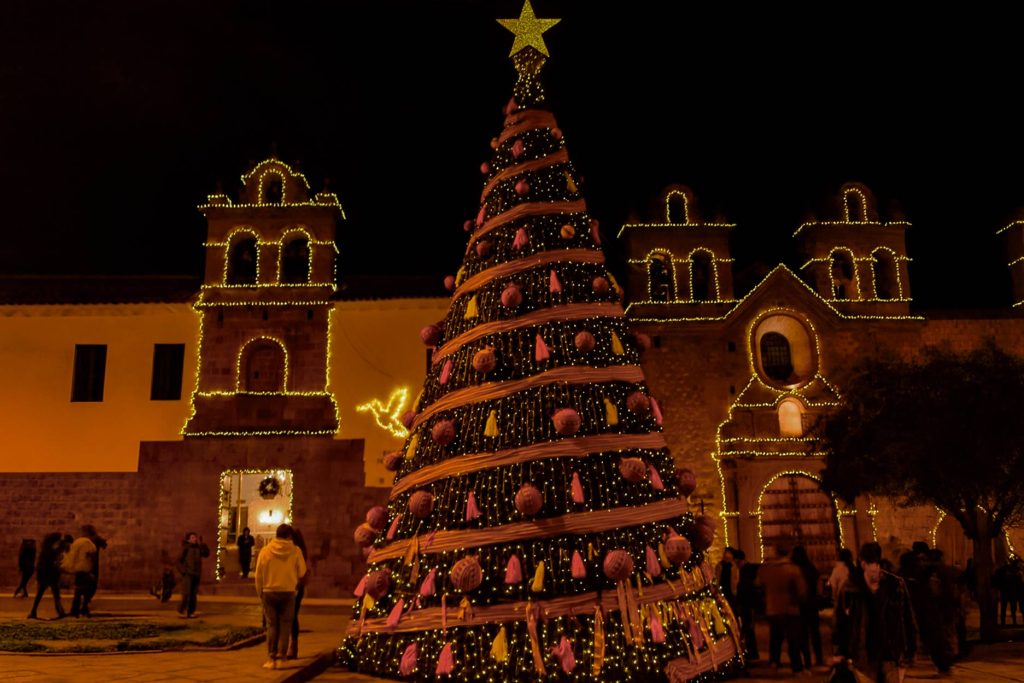
From the first days of December, the Historic Center of Cusco is filled with lights, colors, and decorations inspired by Andean identity. Spheres with traditional designs, Cusco textiles, and elements of nature adorn the colonial streets, creating a warm and unique atmosphere.
The squares compete with each other to display the most beautiful Christmas tree, reflecting the creativity of the local community. These decorations reflect the creativity behind every Peru Christmas tree, making December an especially colorful month in Cusco.
What to do in Cusco during Christmas?
If you want to immerse yourself in the living culture of Cusco, here are the essential activities to enjoy an authentic Andes Christmas experience.
The Santurantikuy Christmas Fair
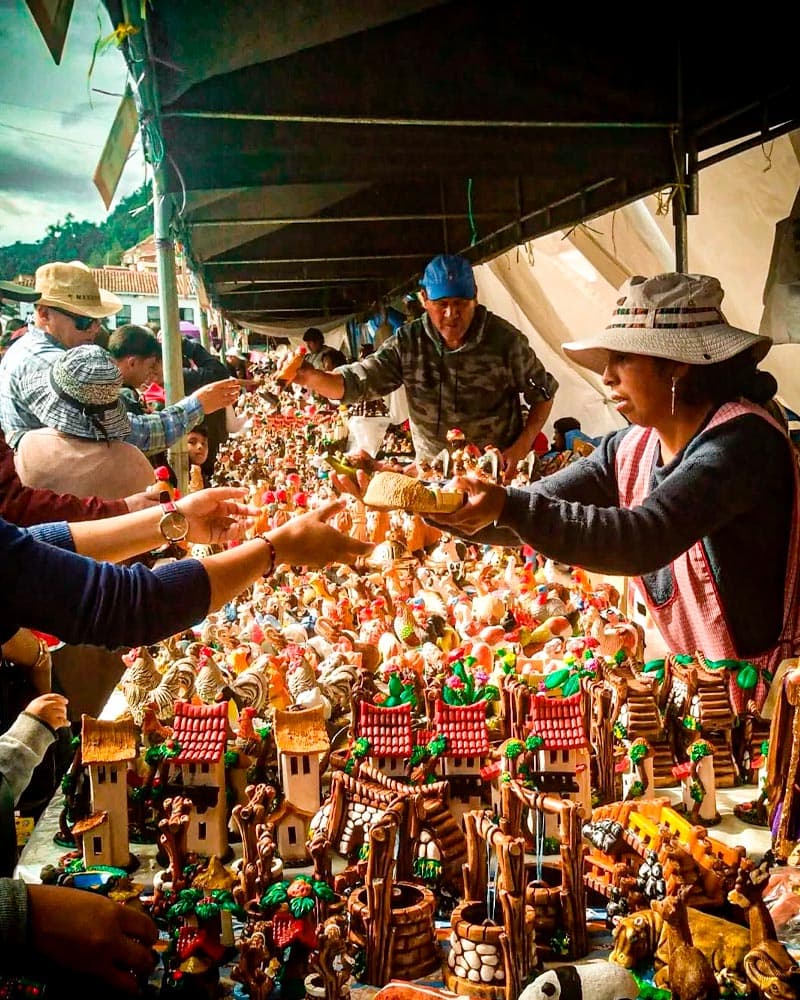
The Santurantikuy Christmas Fair is one of the most important expressions of Andean syncretism. Every year, it brings together local artisans and visitors looking for unique pieces to decorate their nativity scenes. This makes Cusco one of the most authentic places to visit Peru for Christmas, especially for travelers interested in culture and tradition.
This event, declared a National Cultural Heritage Site in 2009, is one of Cusco’s main Christmas attractions. It is held from December 22 to 24 in the Plaza de Armas, and its organization begins months in advance due to its great cultural and tourist importance.
How did this fair originate?
The Santurantikuy Fair emerged in the 16th century, when the Spanish introduced the Catholic tradition of setting up nativity scenes in churches and homes during Christmas. Faced with a shortage of figures for the nativity scenes, the inhabitants of Cusco began to make their own handmade images. Over time, these pieces gained popularity and began to be sold every December at this fair, whose name in Quechua means “sale of saints.”
What can you find at the Santurantikuy Fair?
Niño Manuelito: The star of the fair
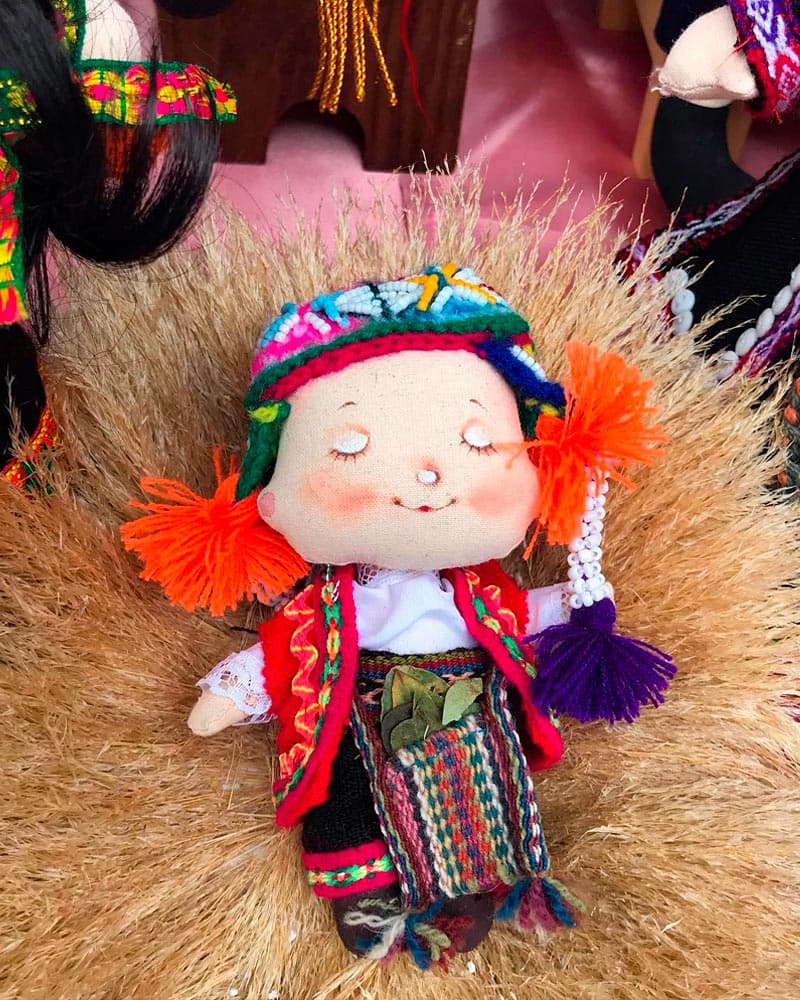
Niño Manuelito is the most emblematic figure of Christmas in Cusco. He represents the Baby Jesus with Andean features and clothing, and is considered the centerpiece of local nativity scenes. At the fair, you will find Manuelitos of all styles and materials, made by Cusco artisans renowned for their technique. Many families take advantage of the fair to restore or renovate their religious images directly with the masters gathered in the Plaza de Armas.
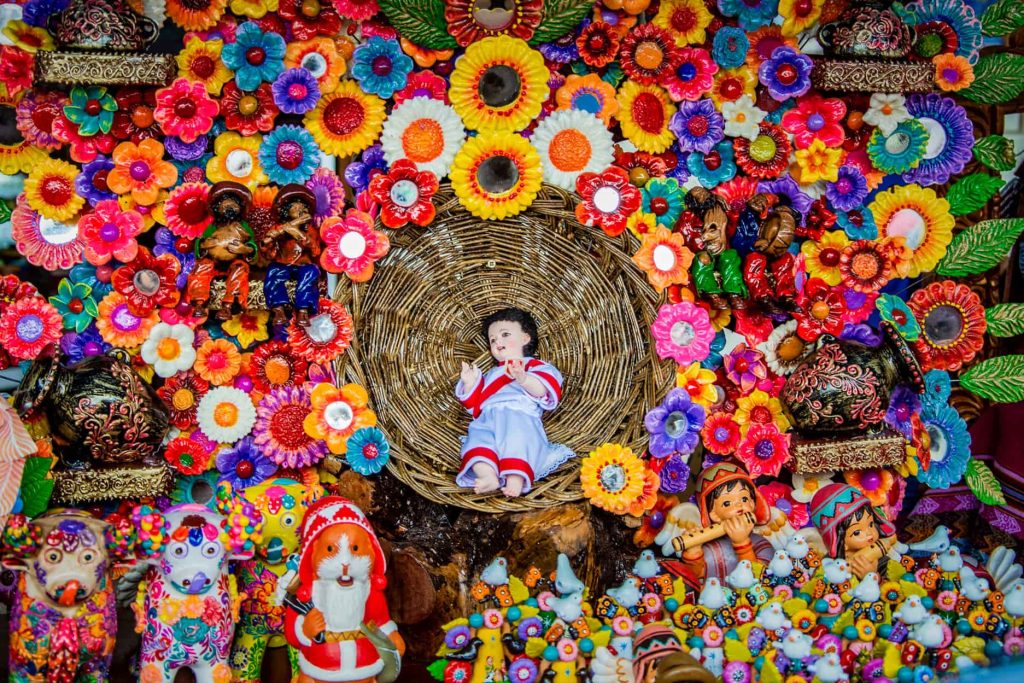
Local crafts
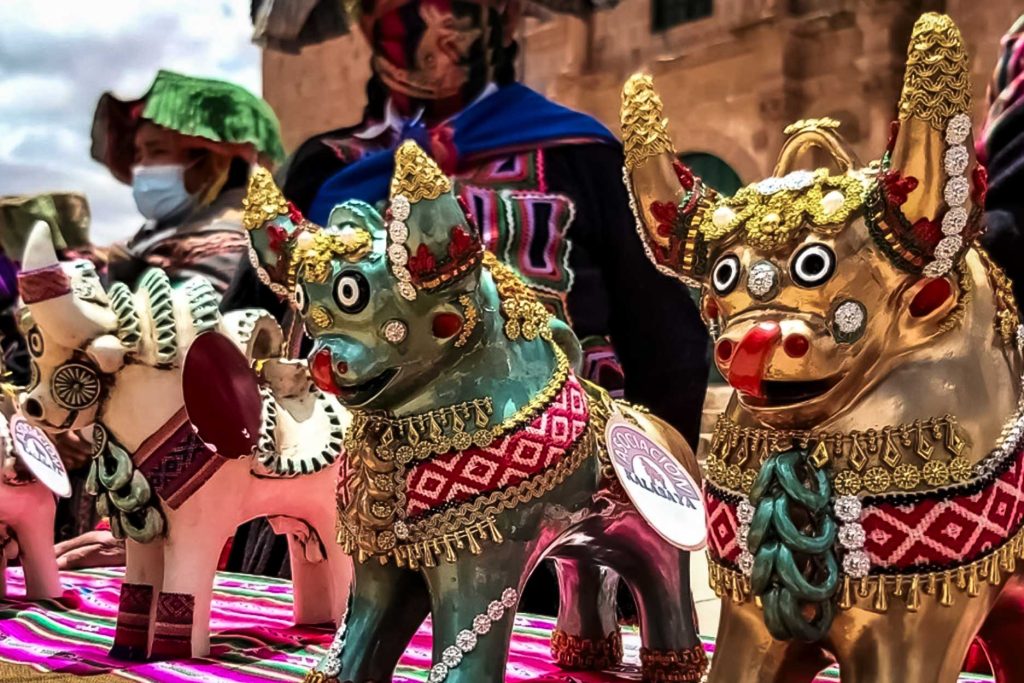
During the fair, artisans from various regions exhibit vibrant and unique works. Here you can find true gems of the Inca tradition, created with techniques passed down through generations. The crafts make excellent souvenirs to take home a piece of Andean culture or to give as Christmas gifts.
Handmade textiles are also highly sought after. Their intense colors and traditional designs reflect Cusco’s rich textile heritage. You will see ponchos, shawls, blankets, and rugs made entirely by artisans.
Christmas decorations
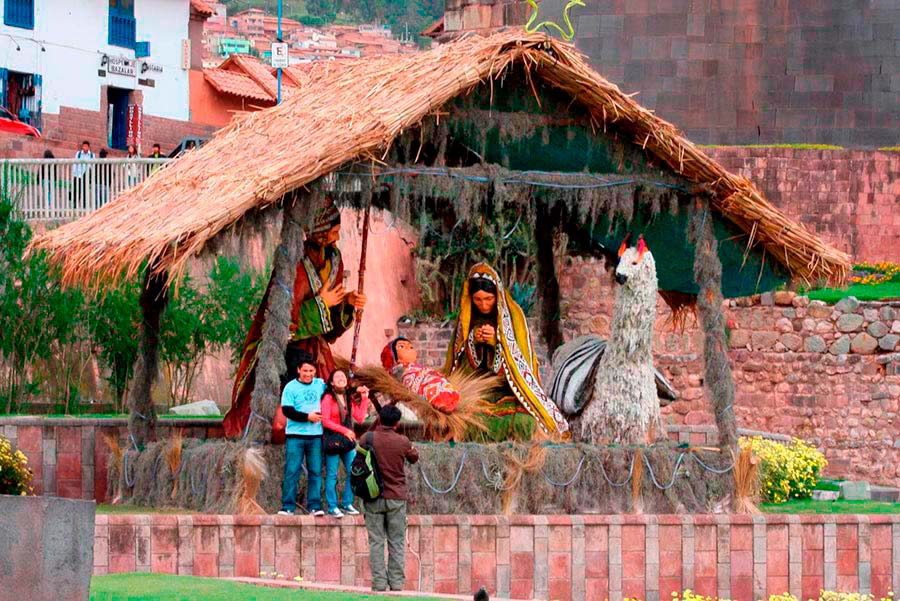
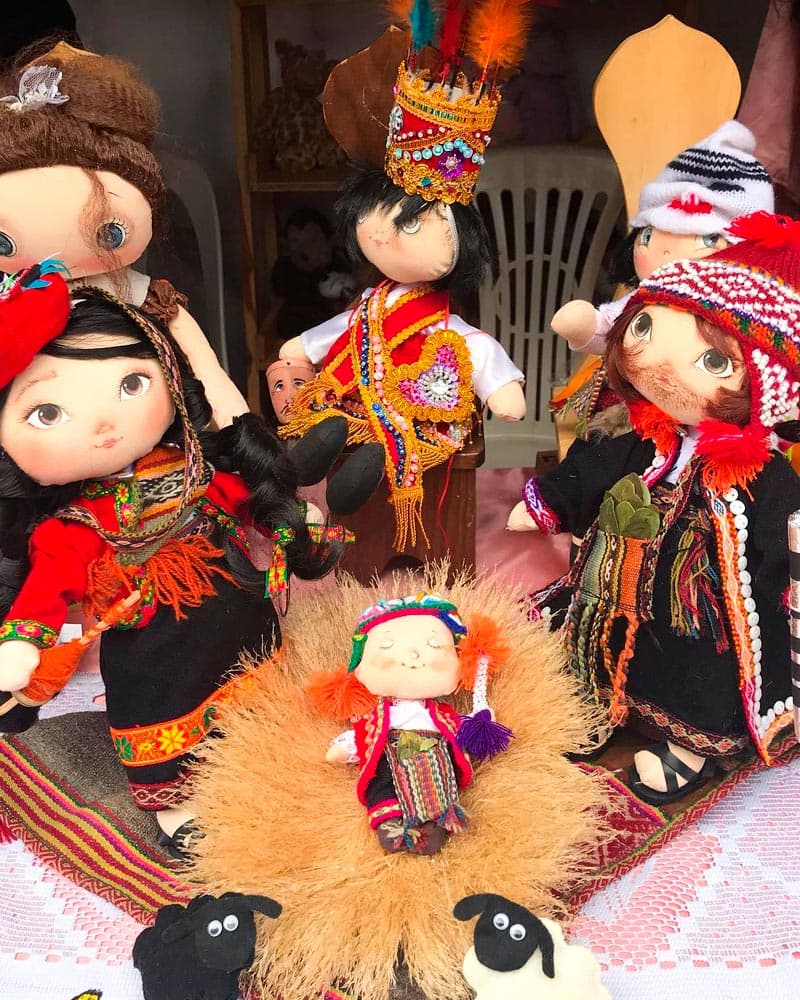
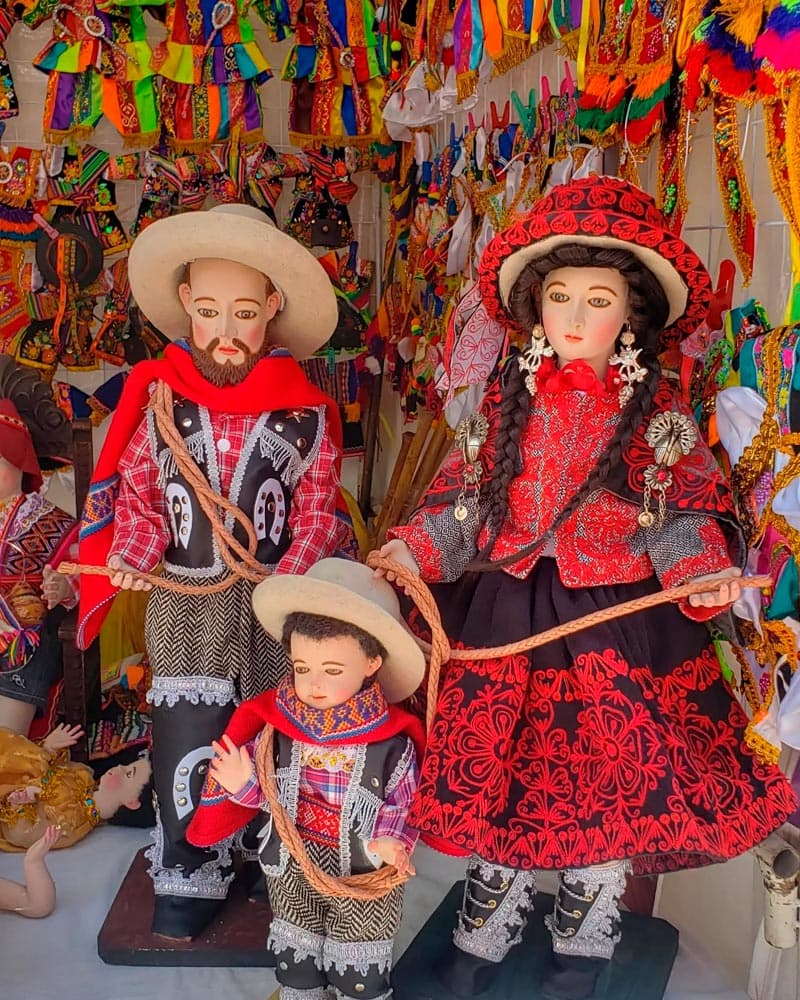
The fair offers a wide variety of figures for Peruvian nativity scenes, which go far beyond the traditional Niño Manuelito. You can find llamas, alpacas, Andean sheep, shepherds dressed in traditional costumes, as well as angels and local characters carved from wood, ceramic, or stone. These pieces add an authentic touch and reflect the blend of Christian iconography and the Andean worldview.
Embroidered clothes to dress Manuelito are also sold, as well as Christmas baubles with traditional designs, stone or wood miniatures with Inca motifs, and even figures representing local saints and characters from other Cusco festivities, such as Corpus Christi. In addition, you can find Andean altarpieces, Pucará bulls, handmade toys, and even games such as chess with pieces inspired by the Incas and Spaniards.
During the first few days, materials for setting up the nativity scene are also sold: moss, herbs, eucalyptus branches, grass, and small wild plants. Local families get up early at 5 a.m. to get them, as this decoration is essential for Peruvian Christmas.
Andean nativity scenes in churches
The churches in Cusco’s Historic Center also set up their own nativity scenes, each with a distinctly Andean aesthetic. For approximately 2 soles, you can enter and admire scenes that combine biblical elements with local landscapes. Some nativity scenes include replicas of archaeological sites, such as Moray or Sacsayhuamán, integrated into the representation.
These Andean nativity scenes showcase Cusco’s creativity and offer a unique way to experience the Christmas spirit through local tradition.
Children’s Christmas Choir Competition
Christmas in Cusco is not complete without Peruvian Christmas carols adapted to Quechua and the musical style of the highlands, melodies that you will hear in every store and market in the city. Thanks to their popularity, every year Cusco hosts the “Takiy Wawakuna” Children’s Christmas Choir Competition, where various educational institutions prepare for weeks to participate in this eagerly awaited event.
The contest takes place in several stages and culminates on December 1 at the Qorikancha, starting at 2:00 p.m., with performances by preschool and elementary school children who sing traditional carols and Andean songs adapted to Christmas.
This event creates a family atmosphere full of joy, as the children’s voices light up the Qorikancha with exciting melodies. It is an ideal activity for those who want to experience a cultural and authentic Christmas in the imperial city.
Contest and Medal for the Best Craftsman
This contest is a central part of the Santurantikuy Fair and takes place every December 24, on Christmas Eve. On that day, the Medal for Best Craftsman is awarded, a recognition that the mayor of the city personally grants to a creator who stands out for their career and the quality of their work.
During this ceremony, the talent, dedication, and cultural heritage present in each piece are celebrated. Thanks to this, at the fair you can find true works of art crafted with care, traditional techniques, and a deep love for Andean identity.
Midnight Mass
Every December 24, at 10:00 p.m., the traditional Midnight Mass is celebrated in the Cathedral Basilica of Cusco. The ceremony lasts about an hour and a half and is a special opportunity for those who wish to have a spiritual experience during their visit. Afterwards, local families return home to share Christmas dinner.
December 24 – Christmas Eve
After spending most of the day at the Santurantikuy Fair, it’s time for families to enjoy the traditional and succulent Andean Christmas dinner. Hotels and restaurants take great care in preparing the most delicious and abundant dinners to attract visitors.
The giving of gifts also takes place on the night of the 24th, along with the traditional revelation of the Baby Jesus. It is a time to surprise your family or, if you are traveling alone, to save the gifts for your return and share your travel stories.
The Revelation of the Baby Jesus
At midnight, symbolizing the birth of Jesus, a typical Cusco ritual takes place: the revelation of the “Niño Manuelito.” The small image remains covered until the clock strikes 12. In churches, homes, and squares, the figure is unveiled, representing the birth of Jesus in the Andean tradition.
Typical Foods at Christmas Dinner in Cusco
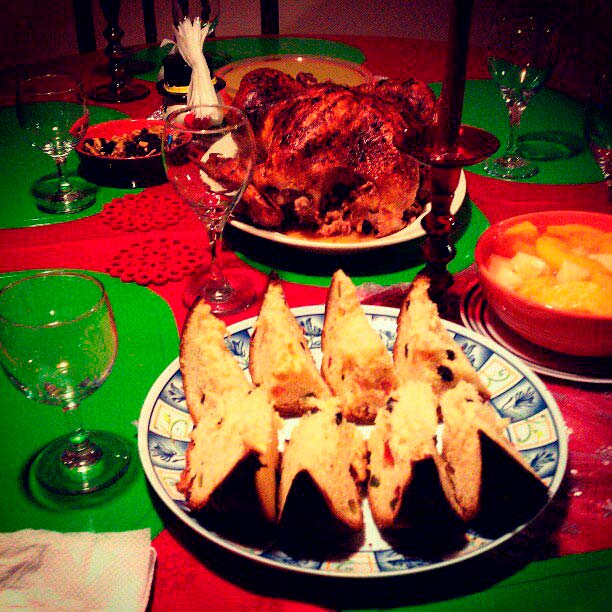
Christmas dinner in Cusco is usually varied and depends on the customs of each family, but there are some elements that are always present. The main course usually includes roast turkey, Cusco-style suckling pig, or roast chicken, accompanied by traditional side dishes such as:
- Baked or boiled potatoes
- Fresh salads
- Corn with cheese
- Stuffed potatoes
- Tamales
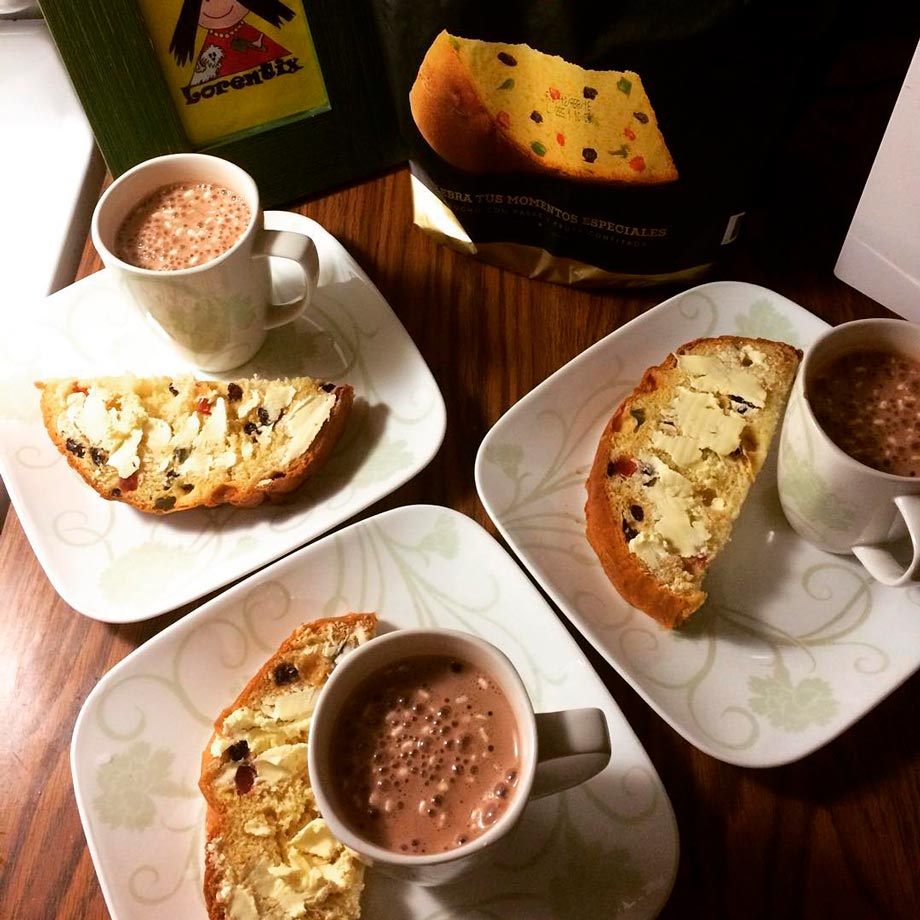
A staple of Peruvian Christmas is panettone. Although not originally from Peru, it has been widely adopted and is now a symbol of the holiday season. In Cusco, it is usually enjoyed with a cup of hot chocolate, prepared with Andean cocoa.
Some households also serve traditional soups such as chairo or quinoa soup, as well as options such as fried trout, mushroom kapchi, and zarza de patitas, completing a feast that reflects the culinary richness of the region.
Fireworks in the main square
On Christmas Eve, fireworks light up the sky over Cusco just after the countdown that marks the arrival of Christmas (the night of transition from December 24 to 25). The main meeting point is the Plaza de Armas, where locals and visitors gather to share hugs and good wishes. It is a simple but emotional moment, ideal for those who want to experience a traditional celebration during their stay in Cusco.
December 25 – Christmas Day
Christmas Day in Cusco is filled with family traditions. On December 25, people gather for a traditional lunch, visit family or friends, and share various dishes in a festive atmosphere. At midnight, it is also common to exchange a fraternal hug and say “Merry Christmas!” as the 25th arrives.
For tourists, hotels and restaurants offer special Christmas menus, with varied options and typical Andean dishes.
Book in advance! If you are planning to enjoy a buffet lunch, remember that many visitors want to try the local Christmas cuisine on these days, so it is advisable to secure a table ahead of time.
Takanakuy
Takanakuy is a unique celebration in the province of Chumbivilcas in Cusco that takes place every December 25. It represents reconciliation and renewal, and consists of ritual confrontations with clear rules, where the community resolves tensions and begins the year “in peace.”
For travelers interested in Andean culture, witnessing Takanakuy in its place of origin is an authentic and impactful experience. Although the main celebration takes place in Chumbivilcas, you will also find small representations in the city of Cusco during Christmas.
Foreign tourists can attend as spectators and even participate if they wish, always respecting the rules and guidance of the organizers.
Can I visit the main attractions during Christmas?
Of course! The main attractions in Cusco remain open before, during, and after Christmas.
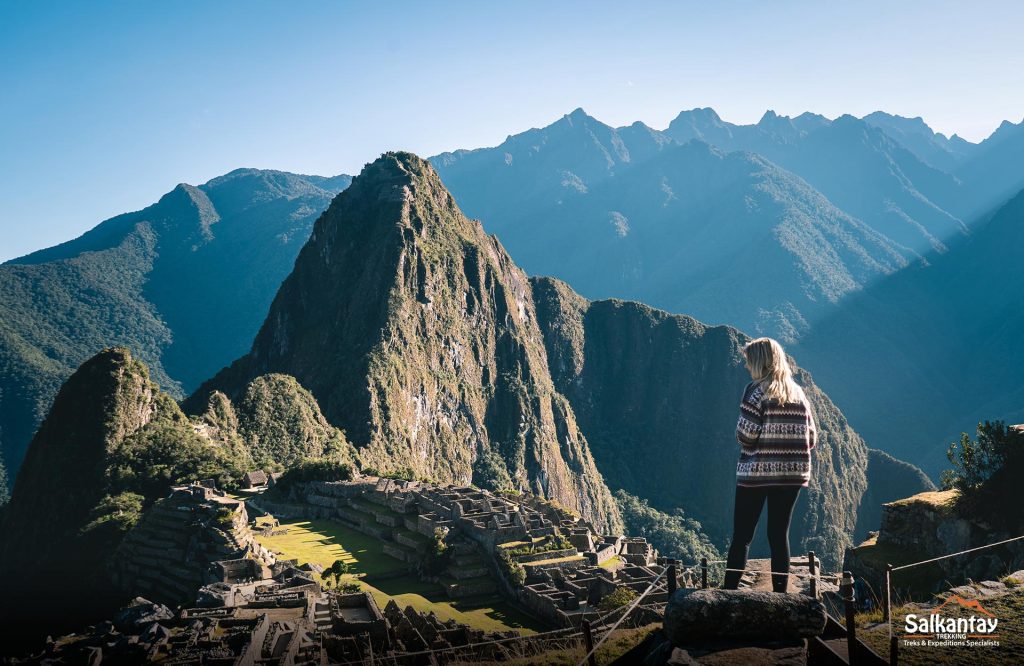
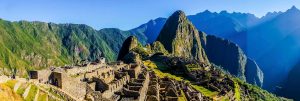
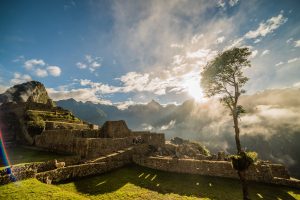
Machu Picchu is also open on December 24, 25, and 31, and January 1, allowing you to bid farewell to the old year or welcome the new one at one of the Wonders of the World. In addition, some tours that are usually only available during high season are offered again for New Year’s Eve, as it is a special date with high demand.
You can spend the night in Aguas Calientes and enjoy its varied cuisine and jungle landscape. Don’t miss out on your dream experience! Every year more people celebrate Christmas and New Year’s at Machu Picchu, and tickets sell out quickly. Traveling without planning can mean long lines, last-minute changes, and even the risk of not being able to enter the citadel.
Take advantage of special seasonal offers and secure your visit in advance. We will accompany you throughout the process so that you can enjoy an unforgettable Christmas and New Year’s Eve, stress-free and with everything organized.
Ready to experience the holidays in Cusco and Machu Picchu? Book now and guarantee your spot!
New Year’s in Cusco
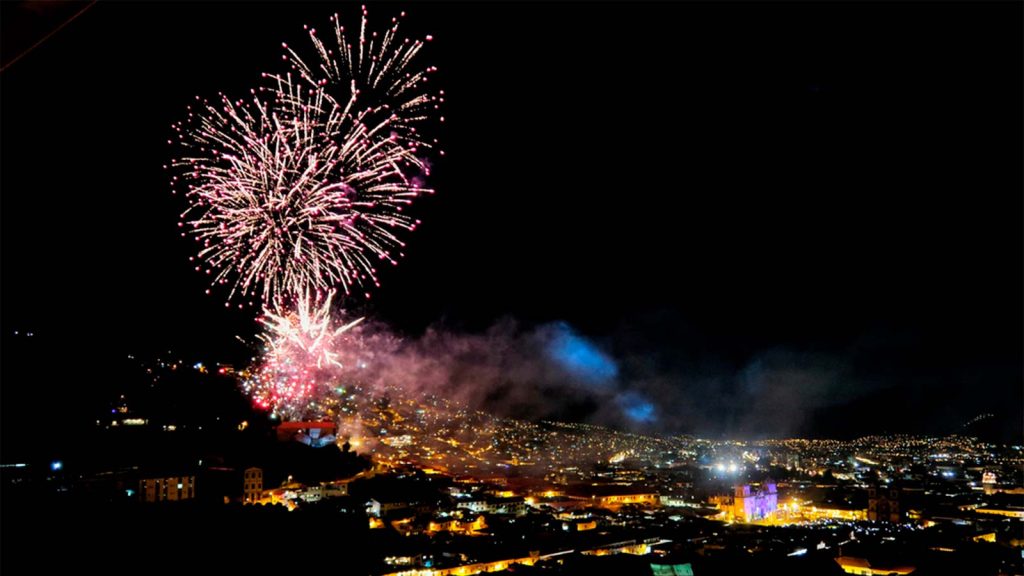
On New Year’s Cusco’s Plaza de Armas once again becomes the epicenter of the celebrations. It is an iconic place where you can watch the fireworks that welcome in the new year. The atmosphere is filled with Andean music, excitement, and joy as hundreds of people gather to say goodbye to the year that is ending and welcome the one that is beginning.
It is a multicultural gathering where travelers from all over the world celebrate alongside the people of Cusco. The Plaza de Armas is more illuminated than ever, and its brightness on this special night creates an unforgettable experience.
Traditions for a year full of good luck
In Cusco, various rituals are practiced to attract prosperity, fortune, and good energy in the new year. We encourage you to participate and experience these local customs.
Wear yellow!
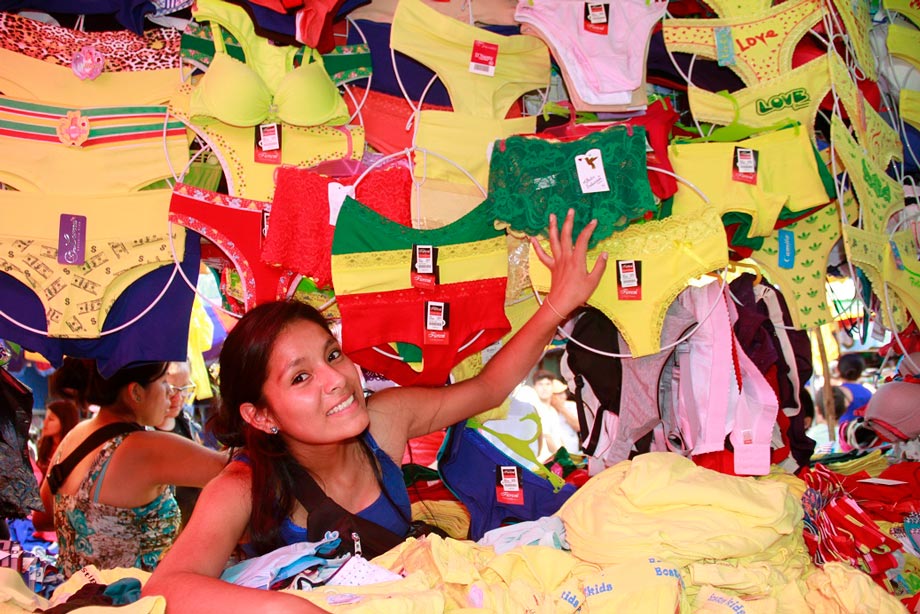
Throughout Peru, and also in Cusco, there is a belief that wearing yellow clothing on New Year’s Eve attracts prosperity, abundance, and good fortune. Many locals wear yellow underwear to welcome the new year.
Other colors also have special meanings:
- Red to attract love and passion.
- Green for hope, balance, and money.
- White for purity and harmony.
Don’t worry about finding them: in markets like San Pedro, especially near the Plaza de Armas, you’ll find underwear of all styles, from discreet options to more fun ones with humorous phrases.
Eat twelve grapes at midnight
The tradition of eating twelve grapes at midnight is one of the most popular customs in Cusco and throughout much of the Hispanic world. At New Year’s Eve dinner, you’ll see that many restaurants place a small plate of grapes on your table even if you don’t ask for them. This is not a casual gesture: it’s part of the ritual to attract good luck for the next twelve months.
Tradition dictates that you must eat the 12 grapes in the last 12 seconds of the year, making a wish for each one. Each grape represents a month of the coming year.
Be sure to eat them all!
Purchase good luck charms
Many people place lentils, coins, or bills in their wallets or pockets to attract financial abundance. Others use bay leaves, dried berries, or rue branches for protection.
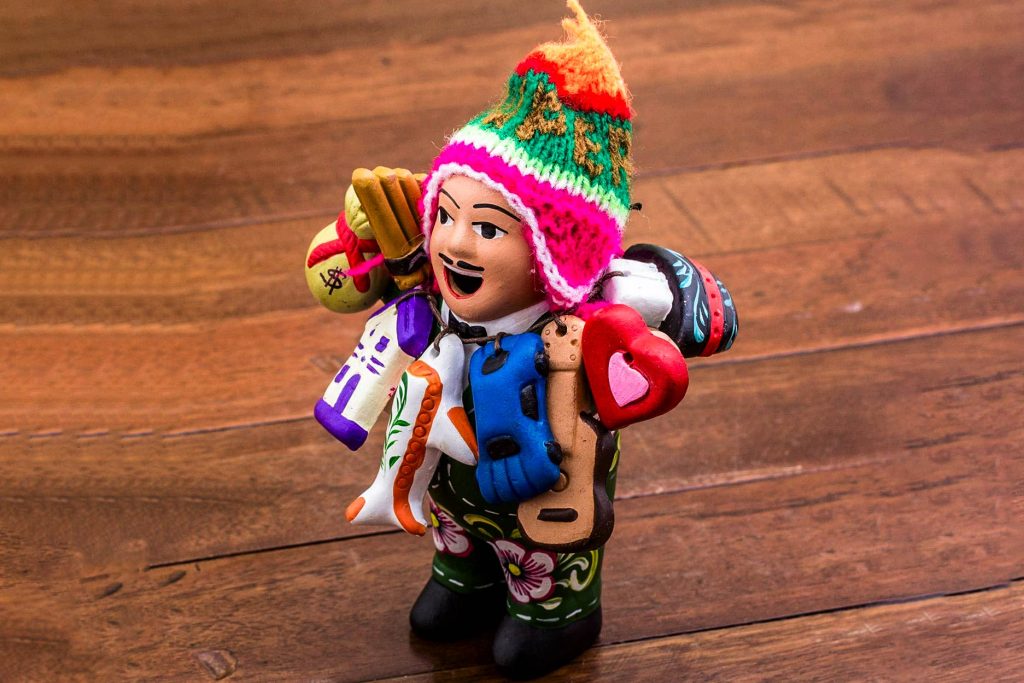
It is also common to buy alasitas houses (small Andean miniatures that symbolize wishes for prosperity, such as housing or stability) or a mini Ekeko, an Andean symbol of abundance. Placing them in your home or business ensures prosperity for the coming year, according to tradition.
Burning rag dolls
Burning rag dolls is one of the most representative New Year’s traditions in Cusco. These dolls, called “años viejos” (old years), are made from used clothing and stuffed with paper, sawdust, or straw. You will find them in markets and piñata shops during the last days of December, many with fun designs or inspired by well-known Peruvian celebrities such as soccer players and politicians.
The ritual consists of lighting them at midnight to bid farewell to the negative aspects of the year that is ending: bad experiences, heavy energies, mistakes, sadness, or anything else you want to leave behind. For many Cusco residents, this act is a form of spiritual renewal, a symbol of rebirth and the beginning of a lighter, cleaner, and more prosperous stage.
Take a walk around the Plaza de Armas
Walking around your neighborhood block with a suitcase is considered a ritual to attract travel in the coming year. In Cusco, thousands of people walk around the Plaza de Armas at midnight to attract new adventures and good energy. Join them to attract more travel in the coming year!
Take a flowering bath
Healers or shamans perform flowering baths with infusions of herbs, flowers, and sacred plants. It is not a literal bath: they sprinkle the mixture from your head to your feet while pronouncing words of protection and good omens. They also often scatter yellow petals and fumigate your body with incense or palo santo.
Additional fact: In some homes and businesses, you will see yellow confetti and a little liquor spilled in honor of Pachamama.
Participate in an offering to Pachamama
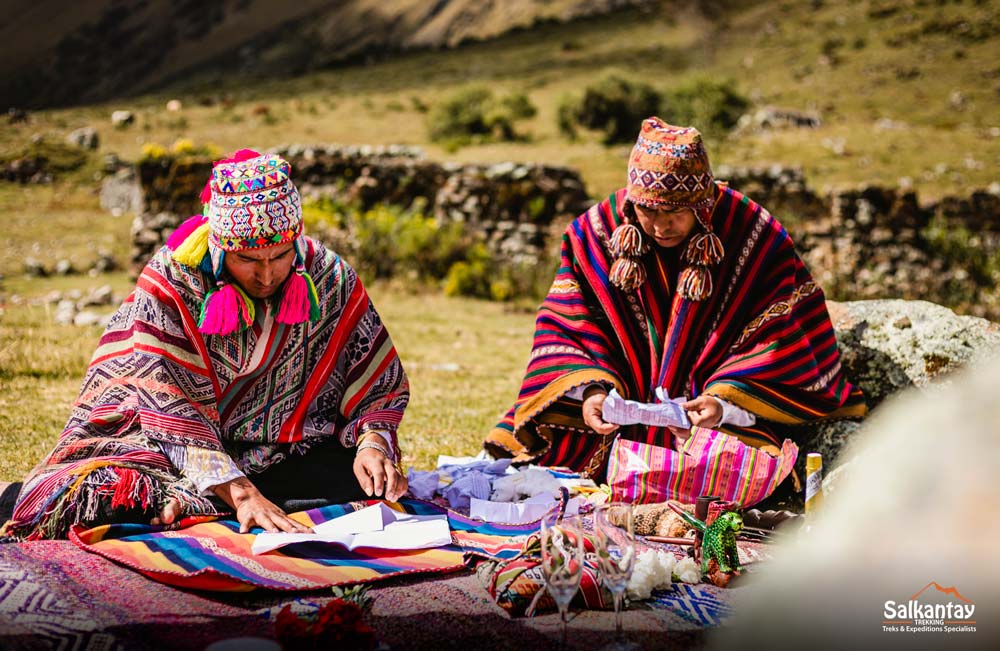
On the morning of January 1, many locals and visitors participate in offerings to Pachamama guided by a shaman or high misayoc. The offerings are prepared with traditional elements, accompanied by prayers in Quechua and Christian words that seek harmony and gratitude. At the end, the offering is burned as a symbol of gratitude. Coca leaves are always present in their chuspas.
What to do in Cusco during New Year’s?
New Year’s in the Plaza de Armas
Hours before midnight, tourists and locals gather in the Plaza de Armas to share the countdown. When the clock strikes 12, the sky lights up with fireworks announcing the start of the new year. Before the show, you can interact with people, enjoy traditional music, and experience a festive atmosphere that is very typical of Cusco.
Bars and nightclubs in the historic center
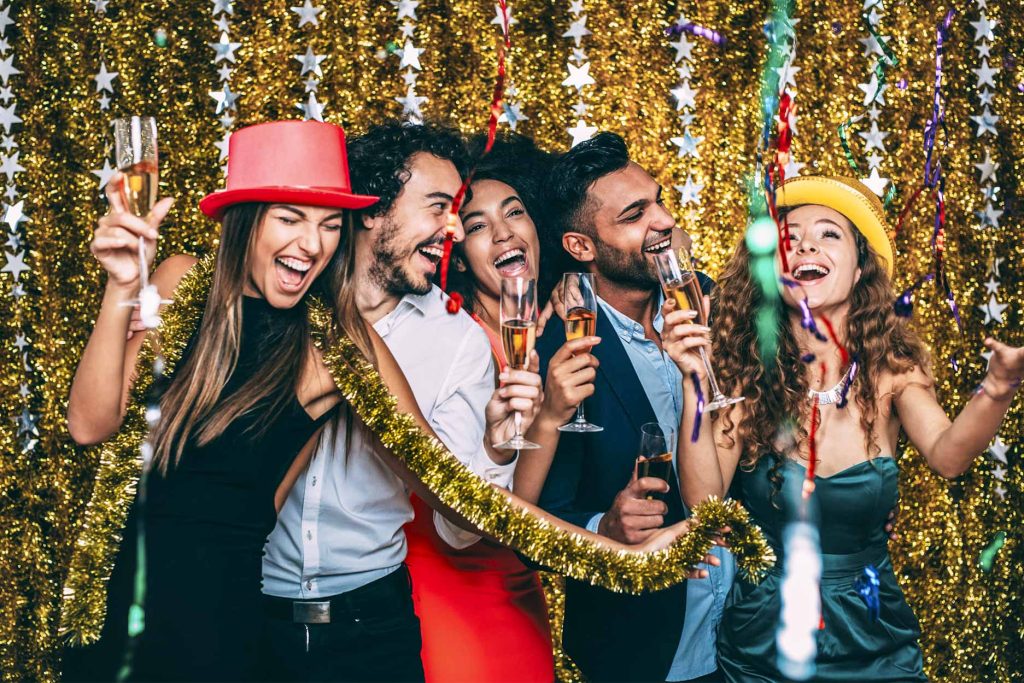
New Year’s in Cusco offers a lively nightlife. Bars, nightclubs, and major hotels organize themed parties to welcome the new year. You’ll dance to a variety of music, from electronic to Latin rhythms.
However, we suggest you exercise caution: do not accept drinks from strangers and always keep an eye on your belongings.
Watch the fireworks from panoramic viewpoints
If you want to enjoy a privileged view of the fireworks display, you can visit the city’s most popular viewpoints. Cristo Blanco, San Blas, and San Cristóbal are ideal places to watch Cusco welcome the New Year from above.
Come and experience Christmas in the Andes!
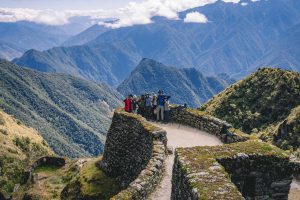
After so many celebrations, how about starting the year by exploring the famous Salkantay Trekking routes? Our treks offer green landscapes, imposing mountains, crystal-clear rivers, and nature that is completely alive in December.
These are magical experiences full of adventure, culture, and connection with the essence of the Andes.
Start the year in the best possible way!
Practical tips for enjoying Christmas and New Year’s in Cusco
- Book everything in advance, as accommodation, tours, and tickets to Machu Picchu sell out quickly during this time of year.
- Bring appropriate clothing in layers and a raincoat, as December is part of the rainy season in Cusco.
- Wear non-slip shoes, as the Historic Center has cobblestone streets that become slippery when it rains.
- Don’t forget your personal first aid kit, including altitude sickness medication if you need it.
- Always maintain a deep respect for local traditions and an open attitude to enjoy cultural events.
- At the Santurantikuy Fair, you can negotiate prices, but do so respectfully so as not to devalue the craftsmanship.
- Acclimatize before going on treks or intense tours. You can enjoy these activities while you adapt to the altitude.
- In crowded places, such as the Plaza de Armas in Santurantikuy or on New Year’s Eve, keep your belongings safe and avoid carrying valuables.
- Try Christmas buffet dinners at local restaurants and hotels; they usually bring together the best of Andean cuisine.
- If you go out partying on New Year’s Eve, use app-based taxis or authorized services to avoid risks with fake taxi drivers.
- Book tours with reliable local agencies to avoid scams and ensure a safe and organized experience.
Plan your trip and enjoy a magical experience in the Andes
Spending Christmas and New Year’s in Cusco means experiencing how the Andes light up with tradition, faith, and joy. Every street, every square, and every celebration awakens a unique energy that transforms your trip into an eternal memory. And you can be part of this magic.
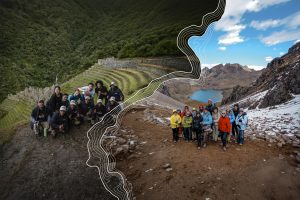
With Salkantay Trekking, your experience becomes even more special: visit Machu Picchu, marvel at the Rainbow Mountain, discover the secrets of the Sacred Valley, thrill to the Cusco City Tour, or connect with nature at Humantay Lake. Everything is carefully organized so you can enjoy every moment without stress, without lines, and without missing out on the best.
Don’t let these dates pass without treating yourself to an unforgettable adventure. Plan today, secure your spots, and celebrate in Cusco as you’ve always dreamed. The magic of the Andes awaits you!
You may be interested in:
- New Year in Machu Picchu
- What to expect and how to prepare for the Rainy Season in Cusco, Peru?
- Top Things to Do in Cusco, Peru
- Where to stay in Cusco?
- Where to eat in Cusco 2025, the best of Cusco
- Santurantikuy in Cusco: Andean Christmas, a meeting of traditions and spirituality
- Christmas in Cusco, Peru
- New Year in Cusco
- Cusco Crafts: History, Tradition, and Creativity in the Heart of the Andes
Written by: Hillary Cristina Quispe



Leave A Reply