
Do you love trekking—but not sleeping on the ground or freezing at night? Adventure travel has evolved. Today, glamping—luxury camping in the heart of nature—has become one of the most sought-after ways to explore remote destinations without giving up comfort.
From African deserts to Scandinavian forests, the best places to go glamping combine natural surroundings, privacy, and thoughtful design focused on comfort. Yet few destinations manage to bring together high mountain landscapes, ancient history, and access to one of the world’s greatest wonders in a single experience.
In the Peruvian Andes, along the route to Machu Picchu, exclusive domes sit in front of glaciers and beneath wide open skies. What makes this trail one of the best places to go glamping isn’t just the scenery—it’s the complete experience built around each exclusive camp along the way.
Table of contents
- Glamping vs. Traditional Camping: Know the Difference
- How to Choose a Good Glamping Experience
- Glamping in Peru: An Unexpected Contender Among the World’s Best
- Salkantay Trek: Where the Wild Andes Meet Exclusive Comfort
- The Best Glamping Camps Along the Salkantay Route
- Comparing Salkantay to Other Glamping Destinations Around the World
- Who Is This Glamping Experience Designed For?
- Best Time to Go Glamping on the Salkantay Trek
- Frequently Asked Questions About Glamping in Peru
- Conclusion: A Different Way to Experience Glamping
- You may also be interested in:
Glamping vs. Traditional Camping: Know the Difference
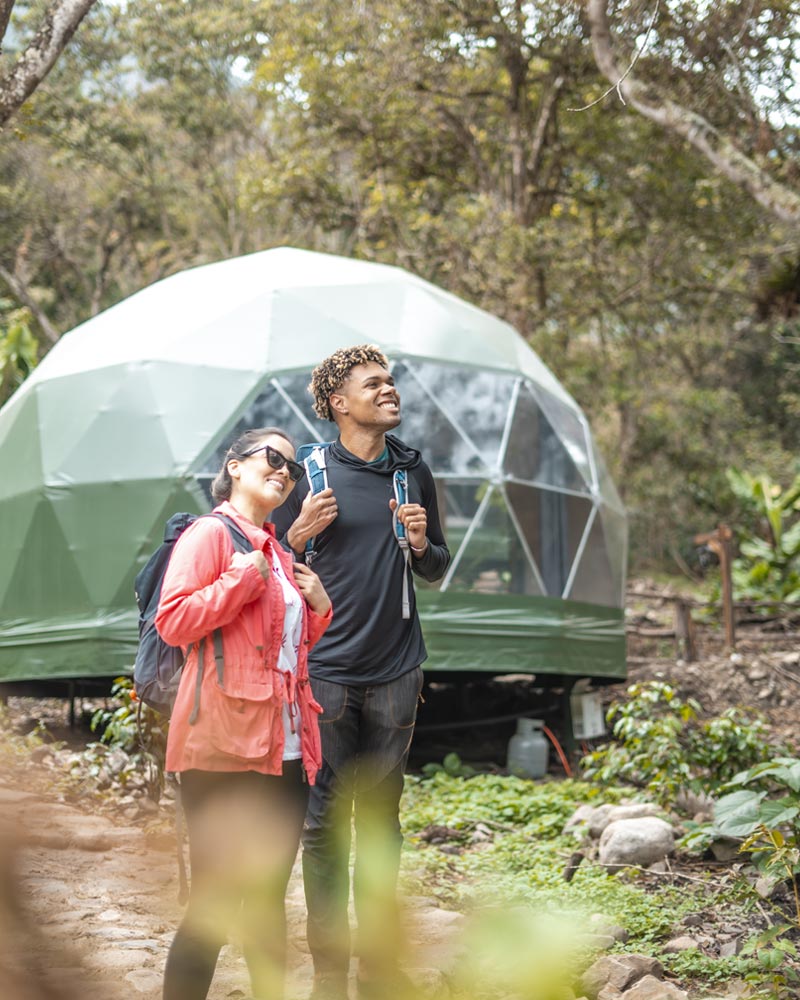
Glamping blends hotel-level comfort with immersive natural settings, allowing travelers to enjoy the landscape without sacrificing rest. Traditional camping, on the other hand, focuses on simplicity and self-reliance, often requiring more physical effort, preparation, and basic equipment.
Here are the main differences between the two travel styles:
| Traditional Camping | Glamping |
| Sleeping on the ground or basic sleeping pads with limited support. | Real beds with quality mattresses and hotel-style bedding. |
| Shared or portable bathrooms with minimal infrastructure. | Private or well-equipped bathrooms with functional showers. |
| Simple structures with little protection from cold, wind, or rain. | Designed spaces like insulated domes or safari tents that protect against weather conditions. |
| Focus on self-sufficiency and simplicity. | Designed to enjoy nature without giving up comfort, safety, and service. |
| Requires mental and physical readiness for discomfort. | Ideal for travelers who want adventure without sacrificing well-being. |

How to Choose a Good Glamping Experience
Choosing the right glamping experience goes beyond attractive photos. To make sure your stay delivers what it promises, it’s important to evaluate key factors that truly impact comfort.
1. Real Comfort Standards
Make sure the accommodation includes:
- Private bathroom or well-equipped facilities
- Heating or proper insulation
- Reliable electricity
- Real beds—not just upgraded sleeping pads
Comfort should be functional, not decorative.
2. Structural Quality
In remote or mountain environments, infrastructure matters. Look for:
- Well-insulated domes or reinforced tents
- Materials resistant to wind and humidity
- Adequate weather protection
A solid structure ensures both rest and safety.
3. Privacy and Location
Confirm the exact location and level of privacy. A good glamping site should feel secluded without exposure to traffic or noise.
4. Recent and Consistent Reviews
Read updated reviews to verify that service, cleanliness, and comfort match what you see in photos.
5. The Overall Experience
Consider what the destination offers beyond the accommodation:
- The route you’ll travel
- Access to unique landscapes
- Organized logistics
- Quality of service

Glamping in Peru: An Unexpected Contender Among the World’s Best
When you think of glamping, what destinations come to mind? Patagonia? U.S. national parks? African deserts? Peru is rarely the first image. Many travelers associate it with demanding treks, remote trails, and rugged adventure.
That perception is changing. Peru is not only home to Machu Picchu—one of the world’s modern wonders—but also to mountain routes that now combine adventure with well-designed comfort standards. Along the trail to Machu Picchu, there is a fully implemented glamping route that integrates high-altitude landscapes with infrastructure created for travelers who want more than traditional camping.
The result is a different kind of journey: exploring Andean landscapes while maintaining real comfort, privacy, and design adapted to the environment.
Why Go Glamping in Peru?
Peru brings together coastline, highlands, and jungle within one country, offering diverse scenery and cultural depth that few destinations can match. In the Andes, trekking means crossing glaciers, alpine lakes, and cloud forests before reaching Machu Picchu—blending nature and history into a single journey.
Many routes maintain controlled access and lower visitor density, reinforcing a sense of isolation. The presence of private exclusive camps allows travelers to enjoy the landscape without sacrificing rest. It’s an ideal choice for those seeking adventure with comfort—or a special trip beyond the traditional hotel stay.

Can You Go Glamping at High Altitude?
Yes, high-altitude glamping is absolutely possible and already established in mountain destinations around the world. Areas like the Smoky Mountains in the United States or Alpine regions demonstrate that elevation is not a barrier when infrastructure is properly designed for climate protection and comfort.
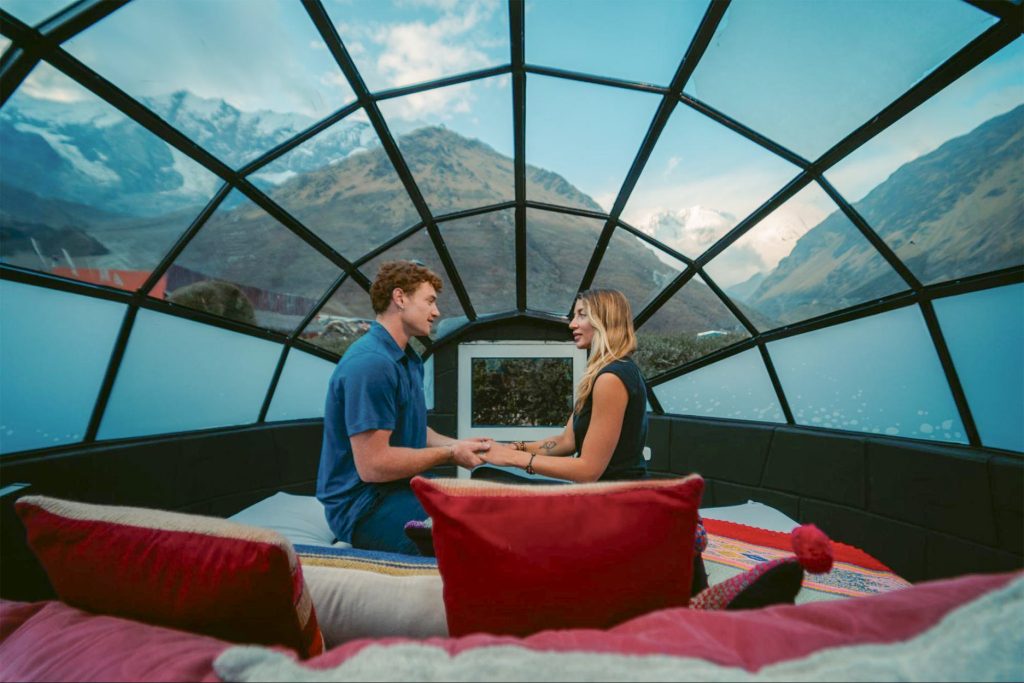
In the Peruvian Andes, especially along routes toward Machu Picchu, camps are built with materials and structures adapted to cold temperatures and wind exposure. Insulated domes allow travelers to enjoy open views and starry skies without compromising rest. Experiences like the Sky Camp strike a careful balance between dramatic mountain scenery and well-planned comfort.
Salkantay Trek: Where the Wild Andes Meet Exclusive Comfort
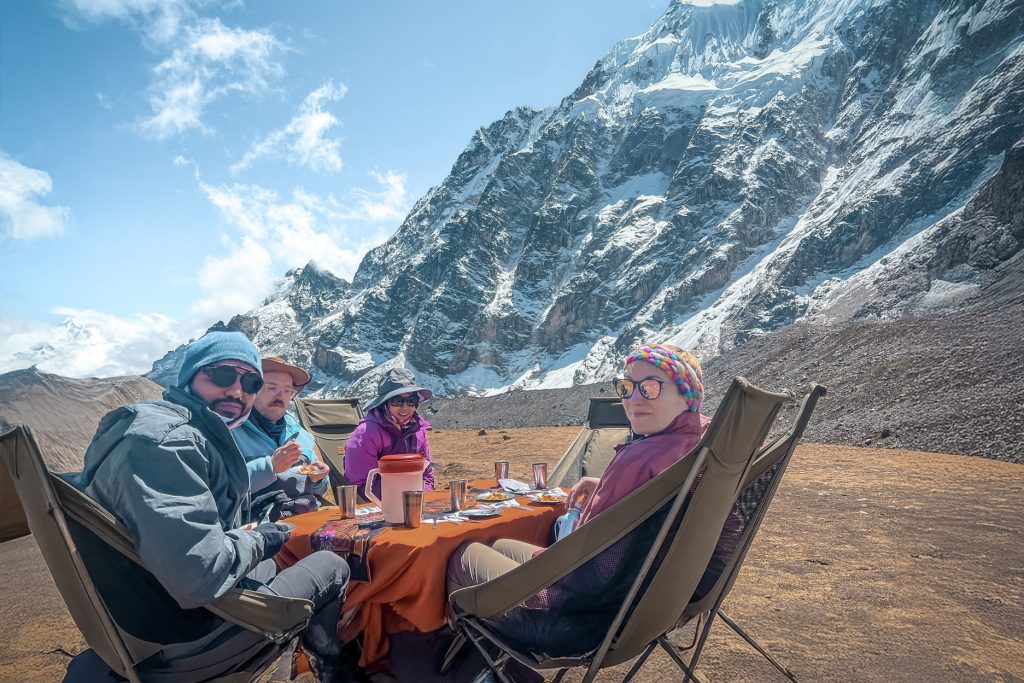
The Salkantay Trek is the only route to Machu Picchu that has incorporated permanent exclusive camps along the trail. This allows travelers to combine multiple days of high-altitude trekking with infrastructure designed for real rest—hot showers, insulated structures, and secure spaces in the middle of nature. The journey preserves the challenge of mountain trekking while removing the traditional discomfort associated with high-elevation camping.
Considered the second most popular route to Machu Picchu after the Inca Trail, Salkantay stands out for its expansive landscapes and the progression it offers. Crossing the Salkantay Pass at 4,630 meters (15,190 feet) is one of the most memorable moments of the trek. Along the way, hikers move through distinct ecosystems, from alpine terrain to warmer cloud forest zones, creating a dynamic journey that ends at the iconic Inca citadel.

The Best Glamping Camps Along the Salkantay Route
Throughout the Salkantay Trek, you’ll encounter accommodations that are central to the experience. This is not traditional mountain camping. Each camp is designed to blend into the landscape while allowing you to enjoy the scenery—even from inside your dome.
Sky Camp – Soraypampa (3,900 m / 12,795 ft)
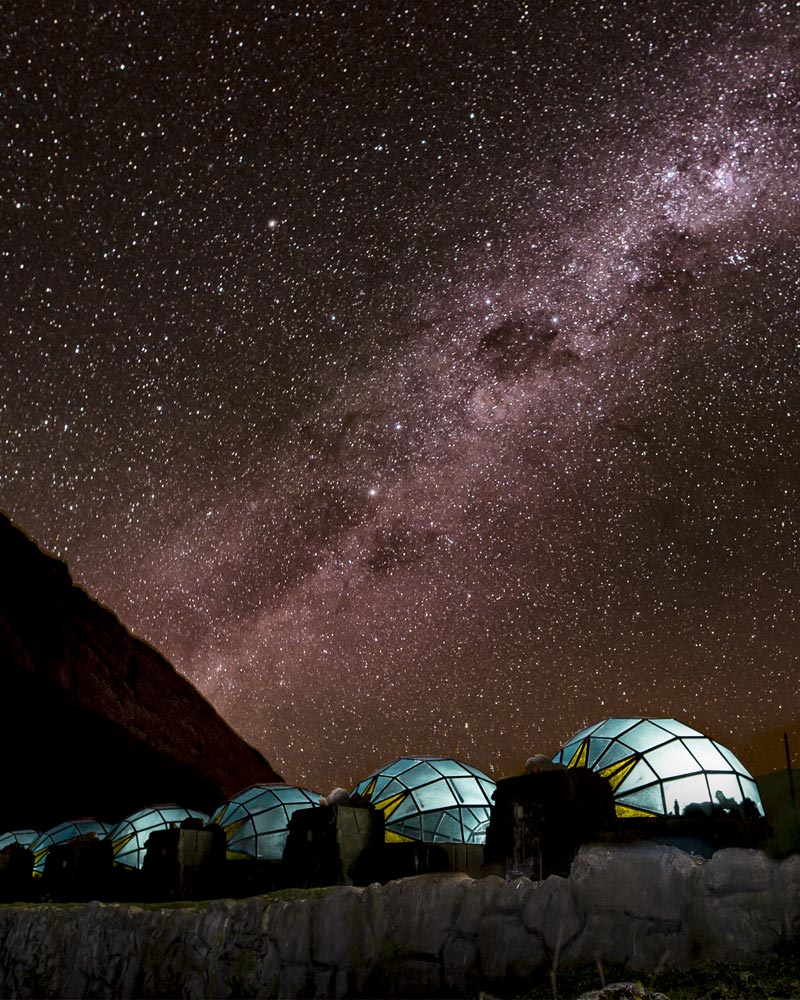
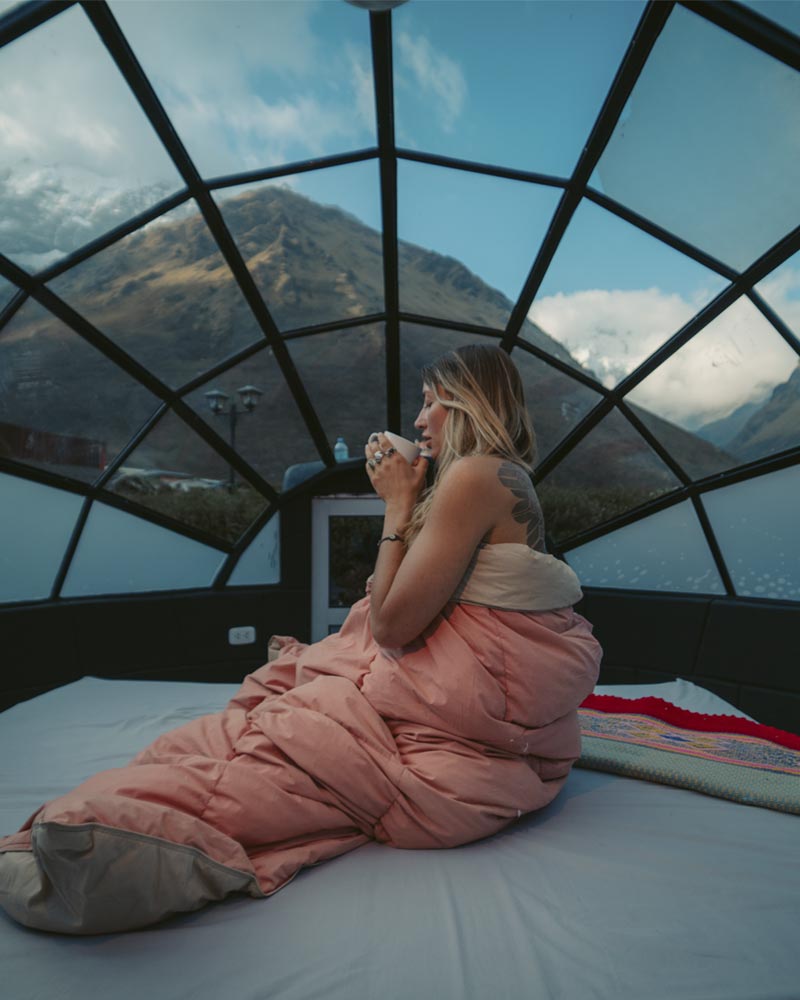
Located in a glacial valley between the snowcapped Humantay and Salkantay peaks, this is where you spend your first night on the trek. The camp features glass domes seamlessly integrated into the Andean landscape. From your bed, you can take in mountain views during the day and the star-filled sky at night.
Each dome accommodates two guests and includes:
- Group-access bathrooms
- A spacious semi-panoramic dome dining area
It’s the first major rest stop at altitude and a welcoming space to connect with fellow travelers before continuing the journey.
Mountain Sky View – Collpapampa (2,950 m / 9,678 ft)
After crossing the Salkantay Pass and descending into the cloud forest, both the scenery and the level of comfort evolve. Mountain Sky View represents a step up in exclusivity along the route.
These cabins combine traditional materials like ichu grass with large glass windows, offering panoramic views without leaving your lodge. Each unit accommodates two guests and includes:
- Comfortable beds
- Private bathroom
- Hot shower
- Toilet and sink
- Complimentary Wi-Fi
The camp is located in a warmer climate zone surrounded by lush greenery. It also features an Andean-themed dining space where dinner and breakfast are served, including local dishes and beverages adapted to dietary needs.

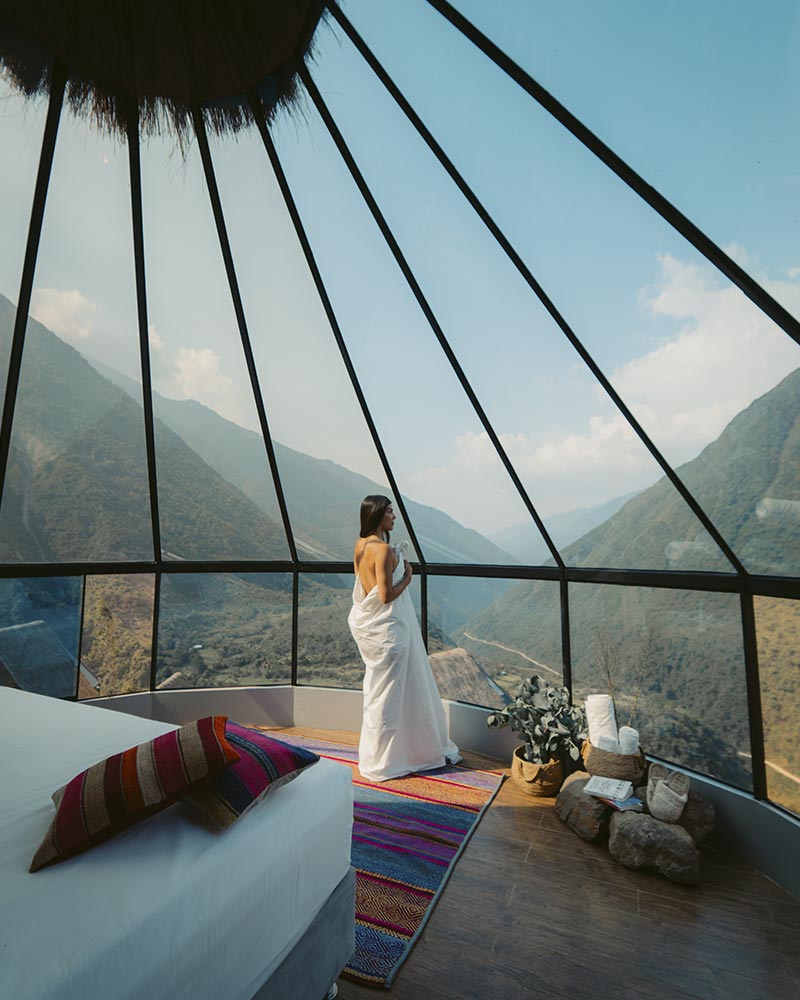
Super Jungle Domes – Lucmabamba (2,000 m / 6,562 ft)
Located in Lucmabamba, within a tropical climate zone, the Super Jungle Domes mark another transition in the Salkantay experience. They maintain the natural essence of the environment while offering increased comfort and upgraded services.
The structures are designed to maintain a pleasant interior temperature while providing protection from humidity, insects, and mosquitoes. Each lodge accommodates two guests and includes:
- Spacious beds
- Private bathroom with hot shower
- Electricity
- Wi-Fi
From the domes, guests enjoy panoramic views of the surrounding tropical forest and expansive green areas. The camp features a dining area where lunch, dinner, and breakfast are served, all within a sustainable setting with an environmental focus.


Sacred Jungle Lodge – Lucmabamba (2,000 m / 6,562 ft)
Also located in Lucmabamba, the Sacred Jungle Lodge represents the highest level of comfort along the Salkantay Trek. Designed for a premium experience, these lodges are more spacious and better ventilated, combining a modern dome structure with open views of the tropical forest.
Each lodge accommodates two guests (including queen-bed options) and includes:
- Spacious beds
- Private bathroom with hot shower
- Electricity
- Wi-Fi
- Environmentally conscious lighting
- Refined interior design
Their proximity to the river allows guests to fall asleep to the natural sound of flowing water and increases the chances of spotting the Andean cock-of-the-rock, Peru’s national bird. The camp includes a shared themed dining space, an outdoor fire pit area, and lunch, dinner, and breakfast service.
Additionally, the lodge is located about one hour from the Cocalmayo hot springs, offering an extra opportunity to relax before continuing toward Machu Picchu.


Nota: En los lodges del Salkantay Trek, al estar en zonas remotas, el agua puede no estar disponible todo el día. Si baja la presión, la terma no se activa, sobre todo si llegas tarde.
Comparing Salkantay to Other Glamping Destinations Around the World
To understand why the Salkantay Trek can be considered one of the best places to go glamping, it helps to look at what makes other destinations global benchmarks.
Most Famous Glamping Destinations Worldwide
- Africa – Safari Luxury Camps (Kenya, Tanzania)
These camps are known for:
- High-end safari experiences.
- Guests stay in lodge-style tents with private bathrooms.
- Wildlife and open savannah landscapes.
- The focus is exclusivity, service, and immersive nature.

- United States – National Park Glamping (Utah, Montana, Smoky Mountains)
Why they stand out:
- Location near iconic parks.
- Modern dome design.
- Easy access by car.
- Focus on landscaping + comfort.

- Patagonia (Chile and Argentina)
Why they stand out:
- Extreme landscapes.
- Domes facing iconic mountains.
- Changing climate.
- Feeling of true isolation.

How Does Glamping on the Salkantay Trek Compare?
The Salkantay Trek is not a single, static destination—it’s a multi-day journey that ends at Machu Picchu. That is its main distinction. While many glamping destinations offer one iconic landscape, Salkantay delivers a progression of environments: high-altitude mountains, glaciers, alpine lakes, and cloud forest along a single route.
The experience combines physical challenge, Inca heritage, and strategically placed comfort throughout the trek. Camps feature insulated domes, hot showers, and infrastructure adapted to Andean conditions without disrupting the natural setting. It’s not just about sleeping in a remote place—it’s about moving through a changing landscape with real comfort built into the journey.
In summary:
| Famous Glamping Destinations Offer | The Salkantay Trek Adds: |
| Iconic sceneryComfortExclusivity | A progressive multi-day journeyDiverse ecosystemsAuthentic high-altitude trekkingAccess to Machu PicchuPermanent exclusive and private camps |


Who Is This Glamping Experience Designed For?
The Salkantay Trek is designed for travelers who want more than simply arriving at Machu Picchu. It’s for those who want to experience the mountains, move through changing landscapes, and complete a meaningful journey—while maintaining enough organization and comfort to make the trek sustainable over several days.
Ideal For:
- Adventure travelers who want comfort without sacrificing the mountain experience
- Those seeking a more authentic route with open landscapes and fewer crowds
- Couples planning special celebrations such as honeymoons, anniversaries, or even proposals in a memorable natural setting
- Explorers who want to challenge themselves while discovering new landscapes and cultures
- Mature mountaineers who wish to continue traveling the world with infrastructure that supports their well-being

Best Time to Go Glamping on the Salkantay Trek
Although the Salkantay route can be trekked year-round, it’s important to understand how the climate works in the Cusco region. Because of its proximity to the equator, there are no four distinct seasons—only two primary ones.
Dry Season (May to October)
This is the most popular time to hike.
- Clearer skies
- More stable weather
- Higher number of travelers
If you prefer lower chances of rain, these months are typically ideal.
Rainy Season (November to April)
The landscape becomes greener and more vibrant, but weather conditions are more variable.
- Possible cloudy mornings
- Intermittent rainfall
- Proper gear required (waterproof jacket, quick-dry pants)
During this season, it’s important to pack mountain-appropriate clothing and be prepared for changing weather.
Traveler Tip: April and October are excellent transitional months. They often combine greener landscapes from recent rains with fewer visitors compared to peak months.
Frequently Asked Questions About Glamping in Peru
Glamping combines nature with hotel-style comfort. Unlike traditional camping, it includes real beds, insulated structures, and integrated services. In Peru—especially on routes like Salkantay—it allows high-altitude trekking with infrastructure designed for rest.
Pricing varies by destination and duration. On the Salkantay route to Machu Picchu, glamping typically ranges from $600 to $1,000 for a 5-day experience, including implemented camps, meals, guides, and full logistical support.
In well-established destinations, glamping includes private or exclusive-use bathrooms. On the Salkantay Trek, exclusive-category domes feature private bathrooms with hot showers adapted to mountain conditions.
It depends on the destination. In Peru, Salkantay glamping is not just lodging—it’s a multi-day trekking experience with logistics included. Pricing may be similar to a hotel stay but offers a more immersive nature-based journey.
Conclusion: A Different Way to Experience Glamping
The Salkantay Trek is more than an alternative route to Machu Picchu—it’s a different way to experience the journey. It reshapes the traditional idea of trekking by showing that it’s possible to cross the Andes with infrastructure designed for rest and safety, without losing the essence of adventure.
If you’re looking for more than transportation to a world wonder, the Salkantay Trek may be your next travel milestone. Choose the version that fits your pace and discover why this route has become one of the most compelling ways to reach Machu Picchu.

You may also be interested in:



Leave A Reply